

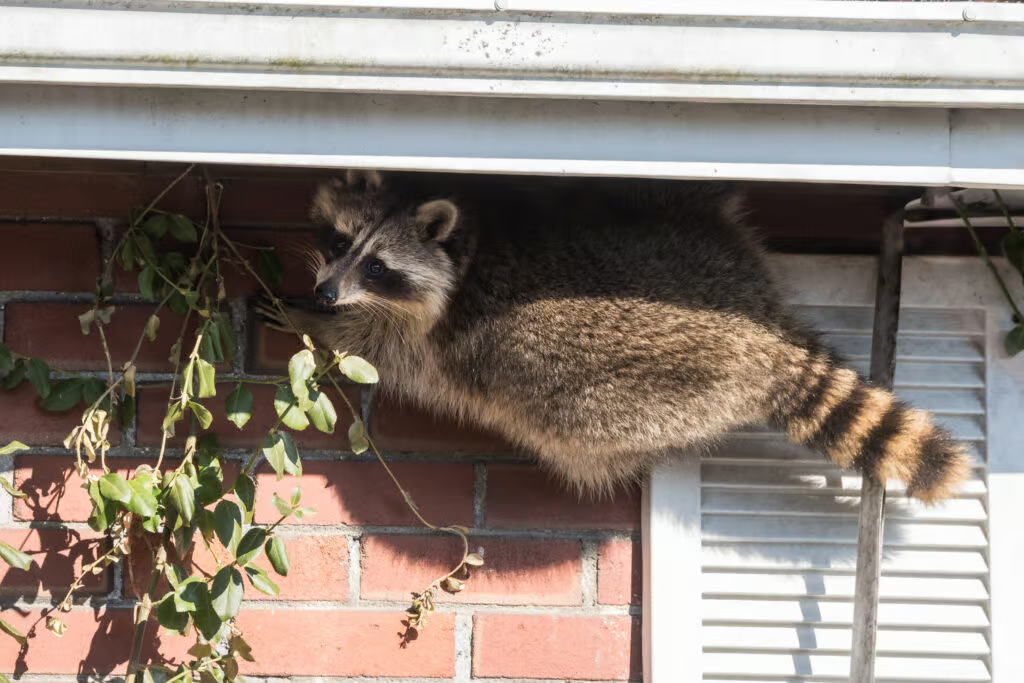
If you’ve got a raccoon in the chimney, a woodchuck under the shed, a chipmunk tunneling under the patio, or squirrels running laps in the attic, the first instinct is usually to handle it yourself. Buy a live trap, catch the animal, drive it somewhere and let it go. It sounds simple. In Maine, it isn’t quite that simple, and the rules catch a lot of well-meaning homeowners off guard.
I’m Eric, owner of Precision Pest Control here in Standish. I hold a Maine Animal Damage Control (ADC) license, which is a specific state certification for handling nuisance wildlife conflicts, separate from my pest control license. Part of that process involved learning exactly where the legal lines are drawn for trapping, relocating, and in some cases killing an animal that’s causing damage. Most homeowners have never seen these rules because there’s no reason they would have. Here’s what actually applies.
You Generally Need a License to Trap
Maine requires a trapping license to trap wild animals, and that requirement applies to almost everyone, including animal damage control agents and animal control officers. There’s a narrow landowner exception and an exception for children under 10 accompanied by a supervisor, but for most adult homeowners, setting a live trap for a raccoon, woodchuck, or squirrel on your own property requires the same trapping license a fur trapper would need.
That surprises people. Buying a cage trap at the hardware store doesn’t come with a legal disclaimer, but the license requirement exists whether or not the animal is causing damage to your property.
Possessing a Live Animal Isn’t Automatic Either
A trapping license covers the act of catching a wild animal. It doesn’t create a separate right to hold onto that animal afterward. Maine’s trapping regulations are direct about this: once an animal is in the trap, you either release it or humanely dispatch it. Keeping it alive beyond that requires a separate permit to possess captive wildlife. MDIFW’s own regulations page points people directly to the department for that permit, so it’s a real, available option, not just something reserved for zoos or licensed rehabbers. A trapping license or ADC permit doesn’t include this automatically, and someone can legally trap and hold onto an animal on their own property once IFW has actually granted that permission.
If you want to legally hold onto a live animal for any reason, that permission has to come from IFW directly. It’s not something you can assume just because you’re the one who caught it, and it’s not a gray area either: keeping a live raccoon in the garage for a few days while you decide what to do, without that permit in hand, is exactly the kind of thing the regulation is written to prevent.
This trips up more people than the trapping license requirement itself does. Catching the animal is often the easy part. What you’re allowed to do with it afterward, and how quickly, is its own separate legal question, one this post covers next.
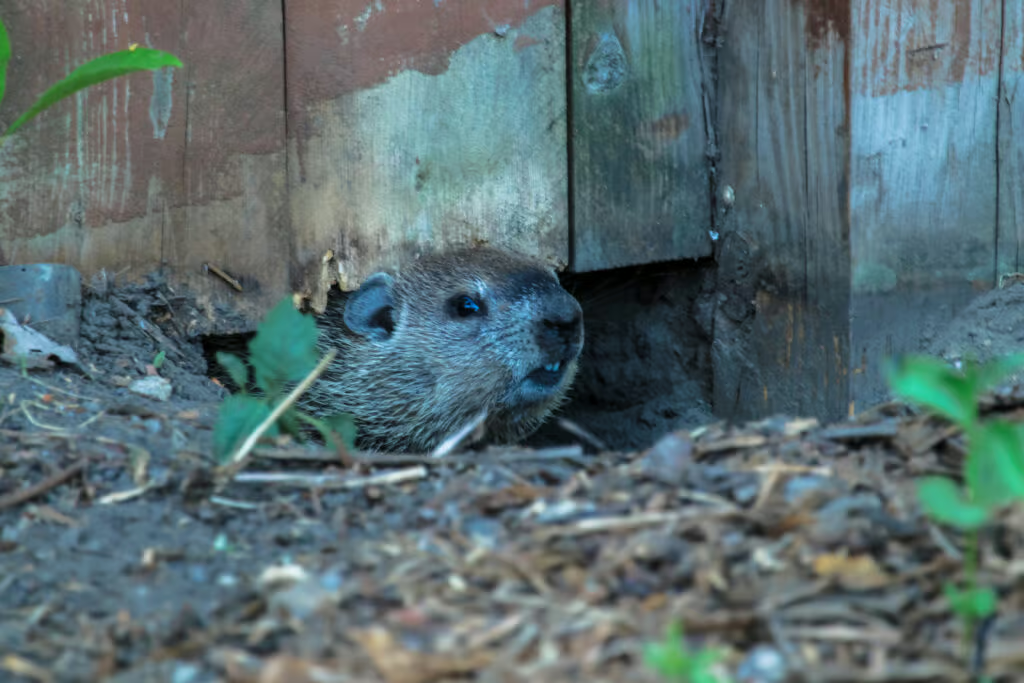
What You Can Do If an Animal Is Actively Damaging Property
Maine law does carve out a specific situation where a property owner can act without a trapping license. If a wild animal is caught in the act of attacking your domestic animals, or destroying your property, you may lawfully kill it. That’s a real legal allowance, not a myth. But it comes with conditions that trip people up.
First, the animal has to be caught in the act, meaning actively attacking or actively destroying property at that moment. This isn’t retroactive permission for the raccoon that tore up your garden last night but is nowhere in sight now, and it isn’t a green light to go looking for the animal afterward. Outside that narrow window, you’re back to the standard trapping license requirement. Second, you’re required to report the incident to the Maine Warden Service within 12 hours of the incident. Skipping that report is its own violation. Third, if firearms are involved, every normal firearm law still applies, including local ordinances on discharge within town limits, which many homeowners in more built-up areas don’t realize restrict this option entirely.
There are also species-specific carve-outs and exceptions layered into this law. Beaver, for example, generally cannot be taken this way without specific authorization. Migratory birds are protected under a separate federal law, the Migratory Bird Treaty Act, which makes it illegal to take or possess nearly any wild bird, including nests and eggs, regardless of the damage they’re causing. This is why the bird nest in your dryer vent is a very different legal situation than the woodchuck under your porch.
Possessing a Dead Animal Isn’t Automatic Either
Even in situations where taking an animal is legal, holding onto the carcass generally requires a permit or a warden’s certificate. A game warden investigates these reports and, if satisfied the animal was taken lawfully, issues a certificate before you’re entitled to keep it. Handling this incorrectly, even after doing everything else right, can turn a legal situation into a violation.
The Relocation Rules Are Tighter Than People Expect
If you do manage to trap an animal, the next question is what happens next. Any release must be in suitable habitat, and you need permission to be on the land where you release it. Releasing an animal on property you don’t have permission to access is trespassing, on top of whatever trapping violations might already apply.
As a licensed ADC agent, I can tell you that rabies vector species like raccoons and skunks may not be relocated more than 10 miles from where they were caught. That’s a hard limit, not a guideline, and it exists because moving these animals any real distance carries a genuine risk of spreading disease into a new area.
When releasing the animal on the same property after sealing up entry points isn’t a good option, the realistic choices narrow to relocation within that 10-mile limit or humane euthanasia. Which one applies depends on the property and the situation, with one exception that isn’t really a judgment call: if a person or pet has actually been bitten or exposed, the animal needs to be tested for rabies, which means euthanasia rather than relocation, and it has to be done in a way that keeps the head and brain intact so the test can be run at all. That’s worth knowing even if you never touch the animal yourself. It’s part of why a bite or scratch changes the situation from “deal with this trapped animal” to “this goes to animal control or a warden right now.”
This is one of the more common misconceptions I run into. People assume trapping and relocating far away is always the simple, humane fix. In practice, it’s more regulated and more situational than most people expect.
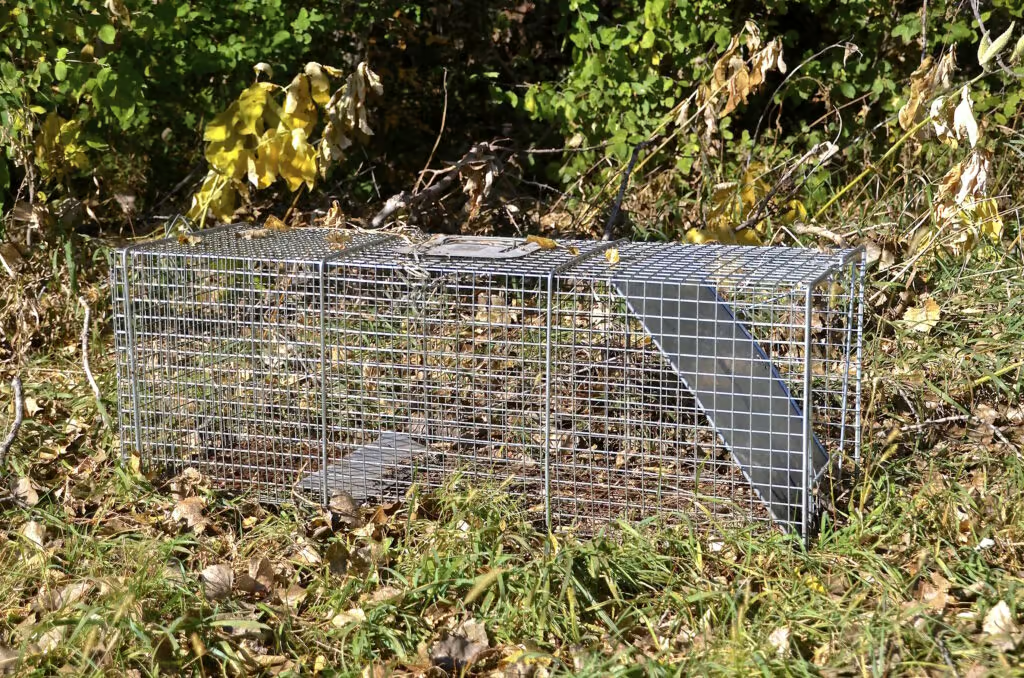
Why ADC Agents Don’t Jump Straight to Trapping
As an ADC agent, my approach isn’t to trap first and ask questions later. The standard practice, and frankly the more effective one, is to start with removing attractants and applying exclusion and deterrents before trapping ever enters the conversation. Trapping and removing one animal doesn’t fix an open foundation vent or an attic soffit gap. Another animal moves in behind it. Trapping has its place, but it’s a tool used after the underlying attraction is addressed, not a substitute for it.
Common Attractants Worth Knowing
A few of the animals I get called about most, and what tends to draw them in:
- Raccoons: unsecured trash, pet food left outside, chimney caps missing or damaged
- Woodchucks: open access under sheds, decks, and porches; gardens with easy forage
- Squirrels: overhanging tree limbs touching the roofline, gaps in fascia or soffit
- Skunks: crawl space and foundation gaps, grubs in lawns, denning under decks
- Chipmunks: foundation plantings, woodpiles, and hardscaping that give cover for tunneling
- Porcupines: salt residue on tools and tires, camps and cabins left vacant over winter
Addressing these is usually a bigger long-term win than trapping alone.
If You Want to Pursue a Permit or Have Questions About Your Situation
Maine’s Department of Inland Fisheries and Wildlife (MDIFW) is the authority on trapping permits, licensing, and reporting requirements, and regional offices vary by location. If you want to look into a permit yourself or have questions specific to your property, MDIFW’s website is the place to start: Maine Department of Inland Fisheries and Wildlife.
When It Makes Sense to Call Instead
None of this means homeowners can’t legally deal with wildlife on their own property in some situations. But between the licensing requirement, the reporting window, translocation restrictions, species-specific exceptions, and firearm considerations layered on top, it’s a lot more involved than most people expect when they buy a trap online.
I hold an ADC license specifically for this kind of work, and I handle these nuisance wildlife situations regularly in Cumberland and York Counties. If you’re dealing with a raccoon, woodchuck, skunk, squirrel, chipmunk, or porcupine issue and would rather not sort through the legal side yourself, feel free to reach out. You can also browse identification and prevention info for all the wildlife species I handle in the pest library.