


A bed bug report in a multi-unit building is never just a one-unit problem. By the time a tenant calls it in, the question is no longer whether you have bed bugs. The question is how many units are involved, how long it has been going on, and whether the treatment is going to actually work or just push the problem around the building.
After 16 years in the field, I can tell you the treatment itself is rarely what fails. The products work. What fails is everything around the treatment: the inspection scope, the prep, the coordination across units, reintroduction from an untreated unit next door or a piece of secondhand furniture, and the tenants quietly trying to handle it themselves before anyone is called. If you manage rental property in southern Maine, understanding where these jobs break down is the difference between resolving an infestation and chasing it for six months.
The law is the easy part
Maine sets a clear framework for bed bugs in rental housing under Title 14, Section 6021-A. Once a tenant notifies you, you have 5 days to inspect the unit, and if an infestation is confirmed, 10 days to bring in a certified pest control agent. You are required to give reasonable advance notice before entering for inspection or treatment, which under Section 6025 means at least 24 hours. Tenants are responsible for preparing their units, and if a tenant unreasonably refuses access or fails to cooperate with reasonable treatment measures, the cost can shift to them.
If you manage property for a living, none of that is news to you. This is not a legal explainer, and you should always confirm current requirements with your own counsel. The point is simpler: staying compliant and actually clearing an infestation are two different things. The statute tells you what notice to give. It does not tell you why a treated building still has bed bugs three months later. That part is operational, and it is where I spend most of my time.
Step one: confirm what you are actually dealing with
Before anyone schedules a treatment, get a positive identification. The best case is a specimen collected in a bag or a clear photo. Not every bite-like reaction is bed bugs. Skin reactions get blamed on bed bugs all the time when the real cause is something else entirely, and treating a unit that does not have bed bugs costs everyone money and proves nothing.
A real bed bug infestation leaves evidence. If someone has been getting bitten for months, there should be fecal spotting and other signs in the typical harborage areas. When I inspect and find no bugs and no evidence after a long reported timeline, that tells me to look harder at other causes before committing a building to treatment. A proper ID at the front end protects your budget and keeps you from treating the wrong problem.

Step two: inspect beyond the reported unit
Bed bugs travel. In a multi-family building they move through shared wall voids, outlets, and baseboards into adjoining units, often before the neighbors notice anything. Treating only the unit that called it in is one of the most common ways an infestation survives.
Once an infestation is confirmed, I inspect the units that share walls with it, and depending on what I find, sometimes the whole building. That can be a visual inspection, and for larger buildings I can bring in a trained canine inspection team, which covers far more units quickly and finds low-level activity a visual sweep can miss. The goal at this stage is to define the real footprint of the problem before treating, so you are not paying to treat one unit at a time while the bugs stay a step ahead. This is also how you prevent the most frustrating outcome in multi-unit work, where a unit gets cleared and then reinfested a few weeks later by an untreated neighbor that was carrying the same population the whole time.
Step three: prep is where treatments live or die
This is the part property managers underestimate. The single biggest factor in whether bed bug treatment succeeds is the prep, and prep is the one thing I cannot do for the tenant.
Here is what proper prep looks like:
In a unit being treated, items get pulled away from the walls about 18 inches so I can reach the harborage areas along the baseboards. The unit has to be vacated for 4 hours from the start of treatment. Tenants need to pack anything they will need during that window, including medications, food, and water, before they leave. Aquariums need to be covered, and I need to know about reptile heat lamps, pets, and any fire hazards in advance.
If bed bugs are confirmed in the unit, the laundry protocol matters: all clothing and linens go through the dryer for 30 minutes on high, or an hour on low for delicates. Anything that cannot go in the dryer gets hung in a closet, since there is not much else to be done with it.
For a tenant with a lot of laundry, there is a way to cut the workload in case a second treatment is needed. Have them set aside a small set they can live out of for a month or two, a few outfits and one set of bedding, process it, and seal it in one color of bag. Everything else gets processed and sealed in a different color. After the first treatment they open only the bag they are living out of and leave the rest sealed. If a follow-up treatment comes up, they only have to re-process that small in-use set instead of re-laundering the entire wardrobe all over again.
Touching units that do not have confirmed activity get lighter prep, mainly pulling items away from the shared walls so those areas can be inspected and treated as a precaution.
There are also small logistics that derail a treatment day if no one plans for them. Deadbolts are a classic one. If a unit only locks with a deadbolt and the tenant is gone, I have to be able to secure it behind me when I finish. Sorting out access and re-locking ahead of time keeps the whole schedule from stalling.
When prep is half-done, the treatment is half-effective, and you end up paying for repeat visits that should not have been necessary.
Step four: the self-treatment trap
This is the failure I see most often, and it is worth understanding because it is rarely malicious. By the time a tenant reports bed bugs, many of them have already spent weeks trying to handle it with store-bought products. That instinct is understandable, but it makes the job significantly harder.
Most consumer bed bug sprays are repellents. Instead of killing the population, they drive it out of the normal harborage areas near the bed and scatter it into places bugs do not usually travel: hallway ceilings, closets, bathrooms, kitchens, and through shared walls into adjacent units. Those are exactly the areas that do not get treated as thoroughly, because that is not where bed bugs normally live. So a tenant trying to help has quietly turned a contained problem into a spread-out one. It is one reason the EPA’s do-it-yourself bed bug guidance stresses that success depends on everyone in a building cooperating, not on one tenant’s spray can.
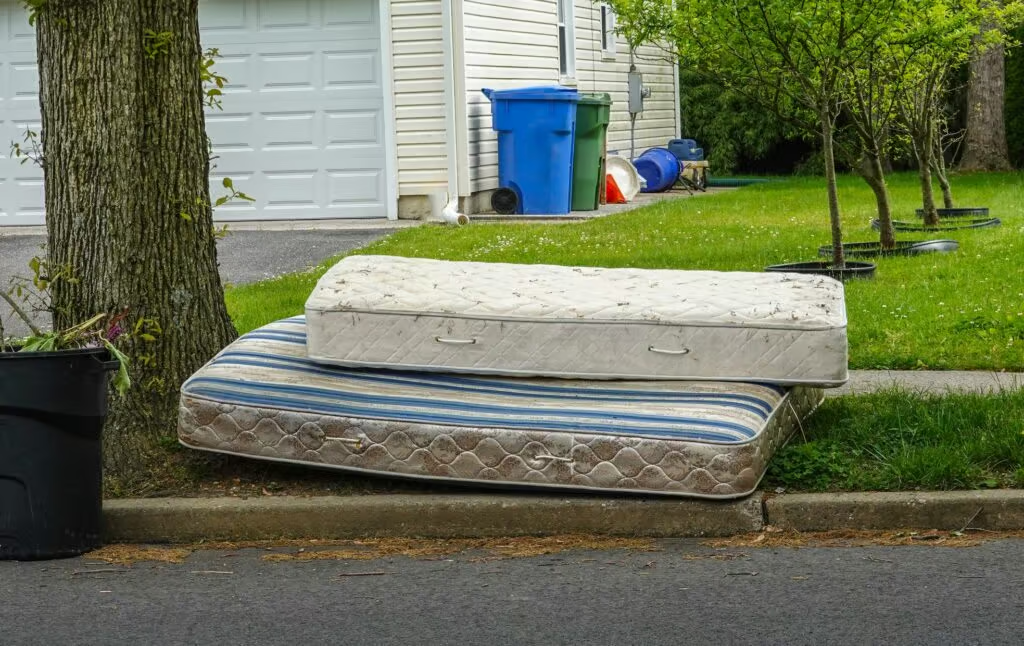
The laundry piece is its own trap. Tenants are often told to bag their belongings, and the intent is good, but bagging without actually heat-treating the items does nothing. Live bugs sit in the bag and ride right back into the bed. Prep is genuinely expensive, time-consuming, and overwhelming, and in multi-family housing a lot of tenants are stretched thin to begin with. None of this is about blaming tenants. It is about recognizing that prep does not happen reliably on its own, and that setting tenants up to do it correctly is part of the job, not an afterthought.
Step five: follow-up is part of the plan, not a sign something went wrong
One visit is rarely the whole job. Bed bug treatment almost always needs follow-up inspection and re-treatment to catch eggs hatching after the first round and to confirm the population is actually gone. Build that into your expectations and your tenant communication from the start so a second visit does not read as a failure. It is the normal arc of clearing an infestation correctly. It is also worth knowing the difference between a treatment that did not finish the job and a unit that was cleared and then reinfested. Bugs carried back in on secondhand furniture, from a neighboring unit, or after a tenant stayed somewhere infested are a reintroduction, not a failed treatment, and the right response is to track down the source rather than just re-treat the same unit.
What makes a job succeed
Clearing bed bugs from a multi-unit building works best as a partnership. The treatment is mine to get right, and I take that seriously. The prep and tenant cooperation are the variables that decide whether one round holds or turns into several. The property managers who get the best results are the ones who plan for the prep and the follow-up from the first day rather than treating them as afterthoughts. That is exactly why I put as much weight on the inspection and the prep guidance as I do on the treatment itself, and why I would rather tell you what a job actually requires up front than leave you guessing.
How I work with property managers
For property managers across Cumberland and York Counties, including Westbrook, Windham, Scarborough, and the surrounding towns, I handle the parts that actually decide whether a building gets cleared: positive identification, building-wide inspection including canine inspection for larger properties, clear written prep guidance your tenants can actually follow, and coordination across units so the whole footprint gets treated at once rather than one unit at a time. If prep is a barrier for a tenant, I can connect you with a vetted prep company so the work gets done right instead of left to chance. This multi-unit work is part of my broader commercial pest control for southern Maine businesses.
If you manage rental property in southern Maine and want a straight answer on a bed bug situation, reach out and I will walk you through what it would take to resolve it.