

Skunks in Southern Maine:
Identification, Prevention, and Control
Striped skunks are a familiar nuisance throughout Southern Maine, and the problems they cause go well beyond the obvious. Skunks that den under decks, sheds, porches, or crawl spaces can spray in response to any disturbance near the den entrance, including pets, lawn equipment, or HVAC equipment cycling on nearby. When that happens close to a foundation or an intake vent, the odor can permeate an entire structure. In suburban communities across Saco, Scarborough, Buxton, and Lyman, skunks are a consistent spring and summer presence wherever grubs, garbage, and accessible denning space are available. As a licensed Animal Damage Control (ADC) operator and Associate Certified Entomologist with 16 years of experience in the region, I handle skunk removal in full compliance with Maine IFW regulations. Browse the wildlife pest library to see other species I handle, or contact me if skunks are denning on your property.
What Are Skunks?
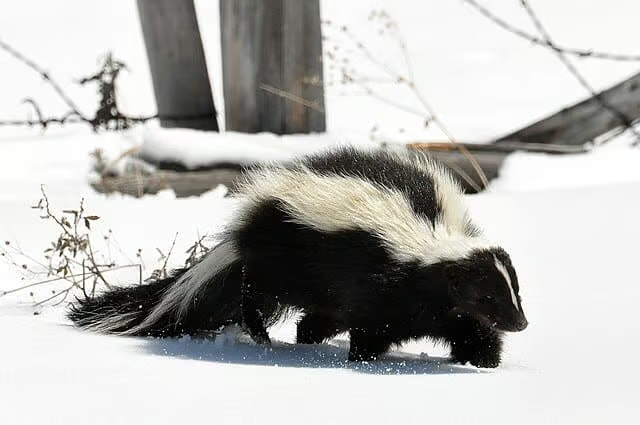
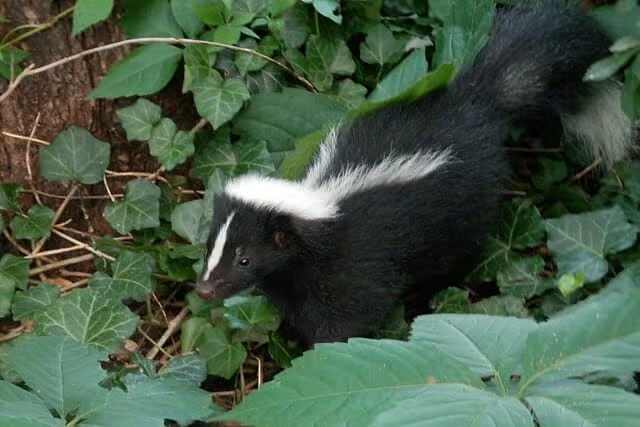
The striped skunk (Mephitis mephitis) is the only skunk species found in Maine and one of the most immediately recognizable wildlife species in the region. Adults measure 20 to 30 inches in total length including the tail and weigh between 6 and 14 pounds, roughly the size of a house cat. The fur is jet black with two broad white stripes that run from the back of the head down to the base of the tail, meeting in a V shape between the shoulders. A single white stripe runs between the eyes, and the bushy tail is black with white tips. The coloration is a warning signal, and the spray mechanism that backs it up is highly effective.
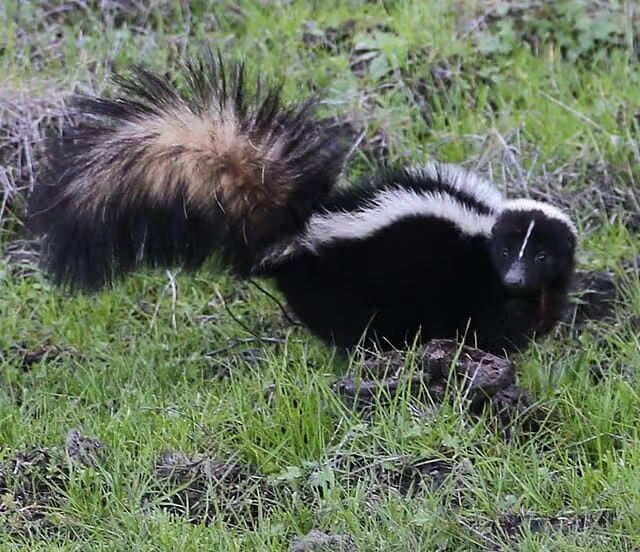
Skunks produce their defensive spray from a pair of scent glands on either side of the anus. They can accurately project spray up to 10 to 15 feet and can discharge multiple times before the glands need time to replenish. Before spraying, skunks typically give warning signals including foot stomping, tail raising, and arching the back. They spray as a last resort rather than a first response, which means a skunk that is cornered, surprised, or approached suddenly is most likely to spray. Skunks are primarily nocturnal and generally slow-moving, with poor eyesight but a well-developed sense of smell. They do not hibernate but become inactive during the coldest stretches of winter, often denning communally with several individuals sharing the same space. The Maine Department of Inland Fisheries and Wildlife provides additional species information including range and habitat for Maine.
Signs of Skunk Activity
Skunk presence is often detected by smell before any visual confirmation occurs, particularly around deck and foundation perimeters after dark.
Look for:
- Musky skunk odor in or around the yard at night, strongest near deck edges, foundation vents, and crawl space access points
- Small conical digging holes one to three inches across scattered across the lawn, particularly in areas with soft soil or recently watered turf, where skunks are digging for grubs and soil insects
- Tracks in soft soil or snow showing five toes on both front and rear feet, with visible claw marks extending well beyond the toe pads
- Tubular droppings one to two inches long often containing insect parts, berry seeds, or small bones, deposited near the den entrance or along regular travel routes
- Disturbed or excavated soil along the base of decks, sheds, porches, or crawl space skirting where skunks have been digging to access the space underneath
- Torn or pushed-aside screening, lattice, or hardware cloth at the base of decks and outbuildings
- Overturned garbage containers or disturbed compost with scattered food waste
- Patches of torn-up turf or sod where skunks have been digging extensively for grubs, which can resemble raccoon damage but at a smaller scale
Skunk denning activity is most common in spring and early summer, and suburban properties in Hollis and Dayton with raised decks and accessible crawl spaces tend to see consistent denning pressure during this period.
Risks in Southern Maine
Skunks present two distinct risk categories that are worth understanding separately.
The spray risk is the most immediate concern for most homeowners. Skunk spray contains sulfuric compounds called thiols that bind to surfaces and are extremely difficult to neutralize once absorbed into fabric, wood, insulation, or HVAC ducting. A skunk that sprays under a deck directly below a crawl space vent or HVAC intake can distribute odor throughout an entire structure within minutes. Pets that encounter a skunk near a den entrance are a common trigger for spraying near the home, and a dog sprayed near an entry point can carry the odor indoors. Skin and eye contact with spray causes irritation and temporary discomfort but is not medically dangerous in otherwise healthy individuals.
The health risk that receives less attention is rabies. Skunks are a rabies vector species in Maine, second only to raccoons in frequency of confirmed cases in the state. Any skunk that is active during daylight hours, moving erratically, appears disoriented, or is approaching people without hesitation should be treated as potentially rabid and reported to Maine IFW or local animal control immediately. Do not approach or attempt to handle the animal. Skunks also carry fleas, ticks, and intestinal parasites, and an active den under a deck contributes to flea and tick pressure on the property. According to the Maine DACF Got Pests skunk page, eliminating denning opportunities and food sources is the foundation of effective skunk conflict prevention.
Prevention Tips
Skunk prevention centers on eliminating denning access and reducing the food sources that draw them close to the structure:
- Install hardware cloth or a buried concrete apron along the base of all decks, sheds, porches, and outbuildings to deny access to the underside, burying the barrier at least 12 inches deep with an outward-facing foot-long horizontal skirt to stop digging
- Address any grub infestations in the lawn, as grubs are one of the primary food attractants that bring skunks into close contact with structures
- Secure all garbage in containers with locking lids and store them in a garage or outbuilding overnight where possible
- Remove pet food, bird feeders, and water dishes at night, as these are reliable skunk attractants in any season
- Keep compost in a wildlife-proof bin and avoid adding food scraps that generate strong odors
- Clear dense brush, woodpiles, and debris piles within 20 feet of the structure, as these provide both cover and alternative denning opportunities
- Seal all gaps larger than three inches at the base of the structure with hardware cloth before spring denning season begins in April
- Install motion-activated lighting around deck perimeters and foundation areas, as skunks prefer to den and forage in darkness
Commonly Confused With
Skunks are visually distinctive as adults and are rarely misidentified, but the signs of their activity are occasionally confused with other species.
The conical lawn digging characteristic of skunks is sometimes mistaken for raccoon damage, but raccoon digging tends to be broader and more disruptive, often flipping or rolling sections of turf rather than creating individual conical holes. Raccoon paw prints are also larger and show a longer digit spread than skunk tracks.
Opossums frequently share habitat with skunks and are active at the same hours, sometimes using the same denning spaces under decks and sheds. Opossums are pale gray with a pointed white face and a long hairless tail, with none of the black and white patterning of skunks. Opossum droppings and tracks are similar in size to skunk sign, but opossums do not dig and do not produce any defensive odor.
Professional Skunk Control in Southern Maine
Skunk removal requires a careful approach given both the spray risk and the rabies vector status of the species. The goal on every job is to resolve the conflict without triggering a spray event near the structure, which requires working with the animal’s behavior rather than against it. Every job starts with an inspection to confirm the den location, identify all access points, and determine whether a female with young is present. Skunks give birth in May and June, and excluding a female while young remain in the den creates additional problems. One-way exclusion devices installed at the den entrance allow skunks to exit on their own schedule without the stress of direct handling, which significantly reduces spray risk compared to live trapping and physical removal. All access points are sealed permanently once the den is confirmed vacant.
Because skunks are a rabies vector species, relocation under Maine IFW regulations must occur within 10 miles of the capture site in southern Maine. I handle all skunk work in full compliance with these requirements. As a licensed ADC operator I am authorized to handle skunk conflicts in compliance with Maine IFW regulations. Learn more about my background and credentials on the about page, or visit the nuisance wildlife control service page for a full overview of what I offer. Contact me to schedule a free inspection.
Frequently Asked Questions
Keep the dog outside and away from the house entry points until treatment is complete. The most effective neutralizing mixture is one quart of three percent hydrogen peroxide combined with a quarter cup of baking soda and one teaspoon of dish soap, applied to the affected areas while still wet and rinsed thoroughly. Do not use this mixture inside the house or on surfaces as it can cause bleaching. Commercial skunk odor neutralizers are also available and work on the same chemical principle. Tomato juice is not effective at neutralizing the spray compounds and only masks the odor temporarily.
Not necessarily. A female skunk with young will occasionally forage during daylight hours when nutritional demands are high. However, a skunk that is disoriented, moving erratically, vocalizing unusually, or approaching people without hesitation is showing abnormal behavior that warrants concern. If in doubt, do not approach the animal and contact Maine IFW or your local animal control officer to report the sighting.
The exclusion work itself, installing hardware cloth barriers along the base of the deck, is something homeowners can undertake on their own for a deck with no current occupants. The complication is confirming the space is actually vacant before sealing it. Sealing an active den with animals inside creates a different problem, and with skunks, attempting to work near an active den without experience significantly increases spray risk. A professional inspection to confirm vacancy before any exclusion work begins is the safer starting point.
Ready to Get Started?
If skunks are denning under your deck, digging up your lawn, or causing odor problems near your foundation, reach out for a free inspection and I will locate the den, identify all access points, and put together a removal and exclusion plan that resolves the problem without making it worse.