

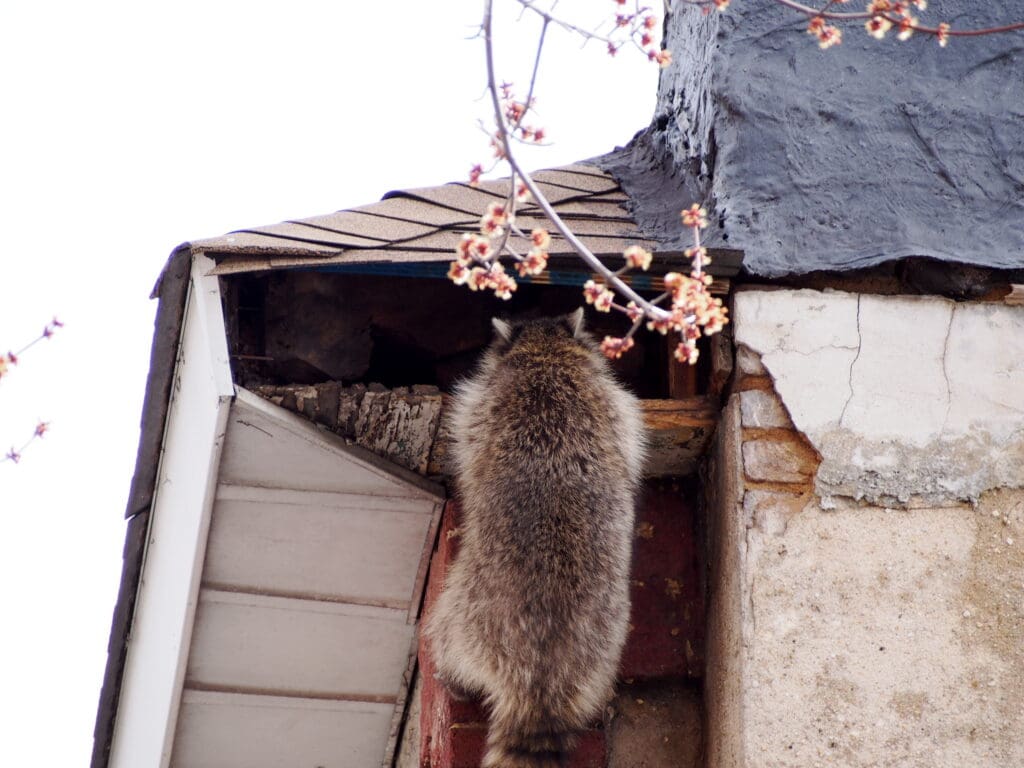
Raccoons are one of the most common and most misunderstood wildlife problems I get called about across Cumberland and York Counties. As an Associate Certified Entomologist and licensed Animal Damage Control agent with more than 16 years of experience, I have pulled raccoons out of attics, chimneys, and crawl spaces all over southern Maine. The animals are clever, strong, and surprisingly destructive, and the way most people assume you deal with them is usually the wrong way. Here is what you actually need to know.
Why raccoons end up in Maine homes
Raccoons thrive in exactly the kind of mixed woods, farmland, and developed land that covers southern Maine. They are opportunists looking for three things: food, water, and shelter. Your home offers all of it. A warm attic, a quiet chimney, the space under a deck or shed, or an open crawl space all look like ideal den sites, especially to a female looking for somewhere safe to raise young.
They are also stronger than people expect. A raccoon will tear at shingles, soffits, fascia boards, and vents to open or widen a gap, and an opening only a few inches wide is enough to let one in. Once inside, they shred insulation for nesting, soil the space with droppings and urine, and can chew wiring.
Signs you have a raccoon problem
The most common tip-off is noise. Raccoons are nocturnal, so heavy thumping, scratching, and movement overhead after dark is a strong sign. During denning season you may also hear chittering or crying, which usually means kits are present. Other signs include disturbed or torn roofline materials, a musky odor, droppings concentrated in one area, and the distinctive five-fingered, hand-shaped tracks near trash cans, gardens, or entry points.
The real risks: it is not just noise
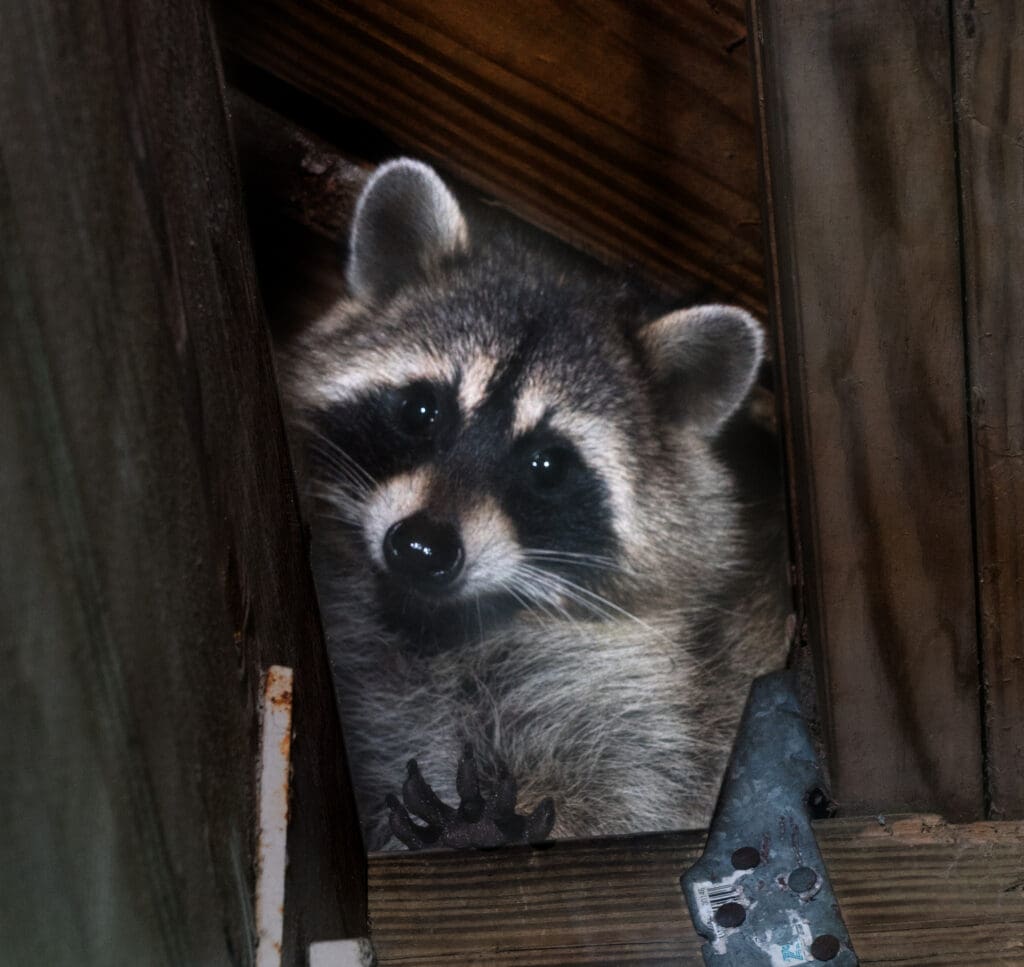
Raccoons matter for more than the racket. In Maine they are a rabies vector species, one of the animals most associated with carrying and spreading rabies, which is why they should never be approached or handled by a homeowner. They also carry raccoon roundworm, a parasite shed in their droppings that can pose a serious health risk to people and pets, so a raccoon latrine in an attic or yard is a genuine contamination concern, not just a mess. On top of that comes the structural damage: ruined insulation, soiled materials, chewed wiring, and the entry points themselves, which invite the next animal in if they are not sealed.
The spring and summer complication most people miss
Here is the part that trips up well-meaning homeowners. In Maine, raccoons breed in late winter and most kits are born in April and May, with some late litters into June. For the first six weeks or so those kits stay hidden in the den and are completely dependent on the mother. They do not begin following her out to forage until around two to three months old, and they do not strike out on their own until the fall, with some staying with the mother through the first winter.
That means from spring through midsummer, a raccoon in your attic is very likely a mother with a hidden litter. If you trap and remove her and seal the entry, the kits are left behind to die in the wall or attic, which leaves you with a decomposition and odor problem on top of the original one. This is why timing matters so much, and why the simple “set a trap” approach so often backfires.
Why you cannot just trap one and drive it away
A lot of people assume the plan is to live-trap the raccoon and release it somewhere in the woods nearby. It’s not that simple in Maine. Raccoons are a rabies vector species, and relocating one more than 10 miles from where it was caught isn’t allowed. When the property allows for it, releasing the raccoon on-site after entry points are sealed is the preferred outcome. When it doesn’t, the choice comes down to relocation within that 10-mile limit or humane euthanasia, depending on the situation. There’s one case where it isn’t really a judgment call: if a person or pet has actually been bitten, the raccoon needs to be tested for rabies, which means euthanasia rather than relocation, done in a way that keeps the head and brain intact for testing. For more on what Maine law actually allows homeowners to do with nuisance wildlife, trapping itself is governed by Maine’s trapping regulations regardless of which outcome applies.
The right approach
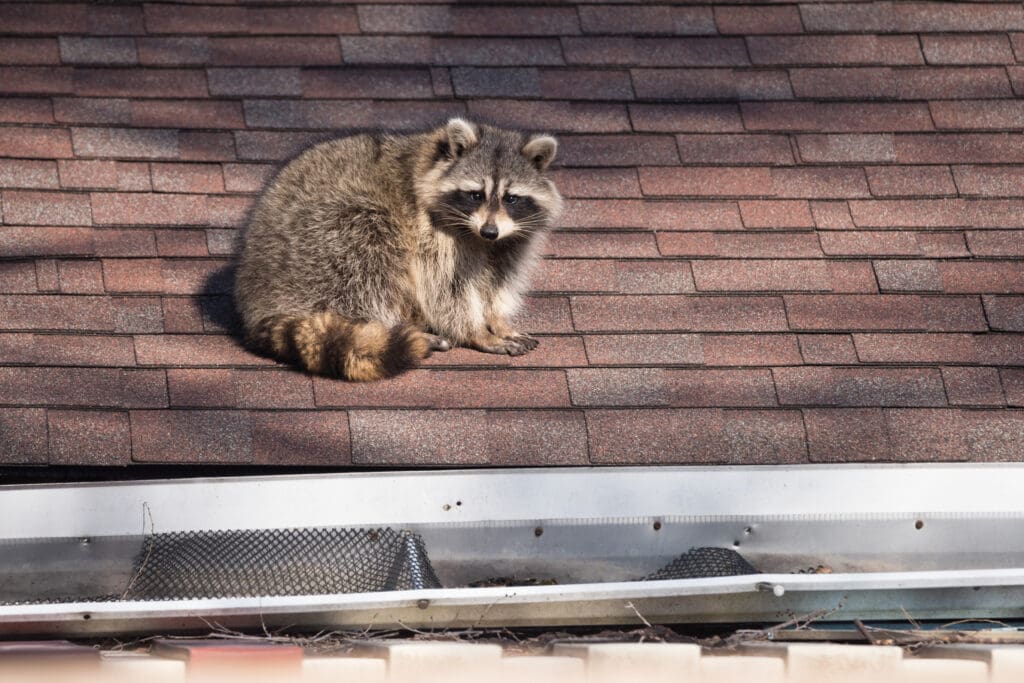
Handling a raccoon well is less about the trap and more about the strategy. It starts with a thorough inspection to confirm whether kits are present and to find every entry point. During denning season the goal is usually humane eviction, encouraging the female to move her own litter out, rather than separating her from dependent young. Once the whole family is out, the entry points get sealed properly with materials a raccoon cannot tear back through, and contaminated areas are dealt with safely. Done in the right order, the problem gets solved once instead of repeating every season.
How to keep raccoons away in the first place
Prevention comes down to removing the invitation and closing the openings. Secure trash cans with locking or weighted lids, bring pet food indoors, and clean up fallen birdseed and fruit. Cap your chimney, cover vents with heavy-gauge material, and trim tree branches back from the roofline so raccoons cannot use them as a ladder. Most important, seal the gaps around soffits, fascia, and rooflines before an animal finds them. Keeping those entry points closed and monitored is exactly what a Year-Round Protection Program is built to do.
When to call
If you are hearing movement in the attic, finding droppings, or seeing torn rooflines anywhere in Cumberland or York County, it is worth a professional assessment before the damage and the risk grow. As a licensed ADC agent, I handle humane raccoon removal and exclusion the right way: confirming whether young are present, getting the animals out without orphaning kits, and sealing the building so it does not happen again.