


Woodchucks are fully active across southern Maine right now, and spring is when they cause the most damage. If you have been noticing fresh digging near your foundation, deck, shed, or garden, you are not imagining it getting worse. You are right. Here is what is happening and what it means for your property.
Why Spring Is the High-Risk Window
Woodchucks emerge from true hibernation in late February and March. Unlike many animals that slow down in winter, woodchucks are physiologically inactive, meaning their metabolism, heart rate, and body temperature all drop significantly during the cold months. When they come out in spring, they are hungry, they are looking for territory, and they are ready to breed.
Females give birth in April and May, typically to litters of two to six young. Those young stay in the burrow until late June or July. That means right now, in late April and through May, there is a strong chance that any active woodchuck burrow on your property contains a female with young or is about to.
This timing matters for two reasons. First, it means the animal is highly motivated to establish and defend a burrow, which is when the digging is most aggressive. Second, it affects the options for removal. Attempting exclusion work while young are still in the burrow creates a situation where animals get sealed inside, which creates a different and worse problem. Proper timing and a thorough inspection of the burrow system before any work begins are not optional steps.
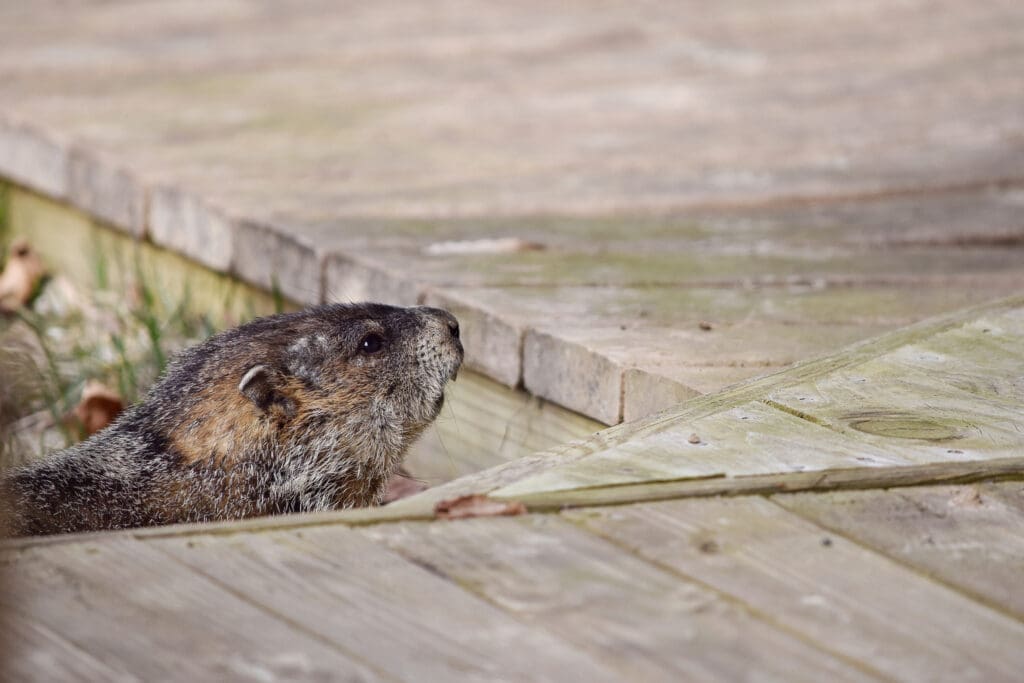
What the Damage Actually Looks Like
A woodchuck burrow is not a small hole. The main entrance is typically 6 to 8 inches in diameter with a prominent mound of excavated soil pushed out to one side. That mound is one of the clearest signs of active woodchuck activity. What is less obvious is the secondary or escape entrance, which is often present several feet away with no mound at all, making it easy to miss.
The burrow system itself can extend 25 to 30 feet in length and reach 5 feet in depth. A single animal can excavate 35 or more cubic feet of soil over the course of a season. When that volume of material is removed from under a concrete patio, retaining wall, deck footing, or foundation, the surface above loses support and begins to settle. The cracking and shifting that follows is regularly mistaken for frost heave or general settling until someone finds the burrow.
Garden damage is faster and more visible. Woodchucks can consume several pounds of vegetation per day during peak summer feeding, and they focus on exactly the things most people grow, including beans, peas, lettuce, broccoli, and other leafy crops. A vegetable garden without buried perimeter fencing is essentially an open invitation.
What I Look for on a Property
Every woodchuck job starts with a property inspection before any trapping or exclusion work. The goal is to find all burrow entrances including secondary exits, assess how close the system runs to any structural elements, and determine whether a female with young is present given the time of year.
This is not a detail that can be skipped. Removing one woodchuck without sealing the system and identifying all entrances simply means the next one moves in. And sealing a burrow without confirming what is inside creates a different problem entirely.
Once the picture is clear, the response depends on what the inspection shows. That might mean live trapping at active entrances with appropriate bait, exclusion work around the foundation or deck perimeter, eliminating the habitat features that made the spot attractive, or some combination of all three. I follow Maine IFW humane handling standards on every job.

Reducing What Draws Them In
Removing the animal is only part of the solution. A property that offers easy burrowing access and reliable food sources will attract the next woodchuck once the current one is gone. A few things worth addressing while the situation is active:
- Vegetable gardens without buried perimeter fencing are the single biggest attractant on most properties. A welded wire fence with the bottom buried at least 12 inches deep and bent outward underground is the most reliable deterrent.
- Brush piles, rock piles, and dense low cover near the foundation extend a woodchuck’s comfort zone toward your structure. Clearing these eliminates the cover they rely on between the burrow and food sources.
- Open access under decks, sheds, and porches invites re-establishment. Hardware cloth buried along the perimeter after removal prevents the next animal from moving into the same spot.
When to Call
The most straightforward window for woodchuck removal is early spring, shortly after emergence and before females have given birth. That window is closing fast, but addressing an active situation now is still far better than waiting until late summer when a full season of burrowing has already occurred.
If you are seeing fresh digging near your foundation, retaining wall, deck, or garden, reach out for a free consultation. I will assess the situation and tell you honestly what the best approach is for your property.
You can read more about woodchuck identification, behavior, and prevention on the woodchuck pest library page.