

Nuisance Wildlife in Southern Maine:
Identification & Prevention
Southern Maine’s mix of woodlands, wetlands, suburban neighborhoods, and rural properties puts homes and businesses in close contact with a wide range of wildlife year-round. Most nuisance wildlife situations fall into one of three categories: animals entering structures for shelter or nesting, animals causing damage to yards and gardens, and animals creating hazards through disease, odor, or defensive behavior. As a licensed Animal Damage Control (ADC) operator and Associate Certified Entomologist, I handle wildlife removal in compliance with Maine IFW regulations across Cumberland and York Counties, from the lake communities around Standish and Raymond to the coastal suburbs of Scarborough and Saco. Browse the species below or contact me for identification and removal help.
Quick Fact: Nuisance wildlife removal requires proper licensing in Maine. Not every pest control company holds an Animal Damage Control (ADC) operator license, which is a separate credential issued by Maine IFW that authorizes the legal trapping and handling of regulated species.
Common Wildlife in Southern Maine
Why Wildlife Conflict With Structures and Properties in Southern Maine
Wildlife does not distinguish between natural habitat and human-built structures when looking for shelter, food, or nesting sites. Attics, crawl spaces, chimneys, wall voids, and the spaces under decks and sheds offer the same warmth and protection as a hollow tree or rock outcropping, and are often easier to access.
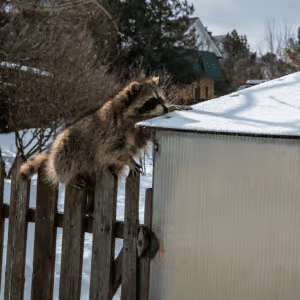
Structural entry species including gray squirrels, red squirrels, flying squirrels, and raccoons actively seek attic and wall void entry, particularly in fall. Squirrels chew through wooden soffits, fascia, and roof edges to create or enlarge entry points. Raccoons are strong enough to pull back soffit material, damaged shingles, or roof vents. Once inside, all of these animals nest, gnaw wiring, and contaminate insulation with urine and feces.
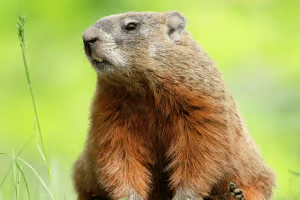
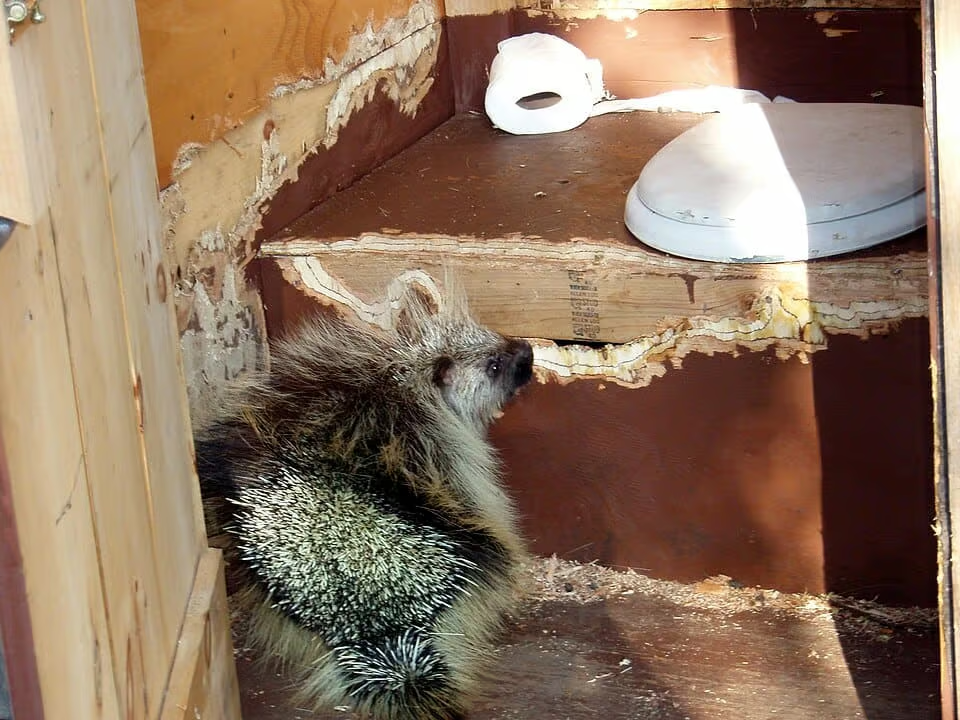
Yard and garden species including woodchucks, chipmunks, and porcupines cause damage primarily outdoors. Woodchucks excavate large burrows under foundations, decks, and sheds and cause significant garden damage. Chipmunks tunnel along foundations and under hardscaping. Porcupines are drawn to salt residue on tools, vehicle tires, and outbuilding wood and will gnaw extensively on camps and cabins left vacant over winter, a problem I see regularly across the seasonal properties around Naples, Casco, and Sebago.
Identification Tips for Wildlife in Southern Maine
Maine’s nuisance wildlife species are generally familiar, but distinguishing between the three squirrel species in particular can clarify what is causing attic noise and when:
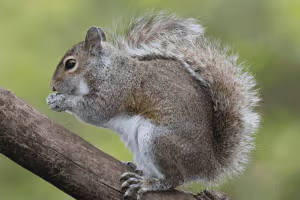
- Gray squirrels: medium-sized, gray with a white underside and large bushy tail; diurnal (active during the day); the most common attic-entering squirrel in southern Maine
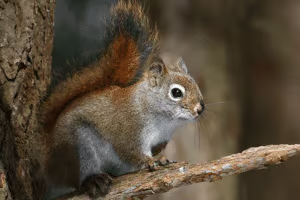
- Red squirrels: smaller than gray squirrels, reddish-brown with a white underside and white eye ring; diurnal; aggressive and territorial; common in wooded and rural areas; frequently enter attics and wall voids and cache food
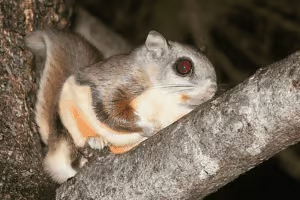
- Flying squirrels: small, large-eyed, with a flattened gliding membrane along the sides; strictly nocturnal; attic activity from flying squirrels is heard at night rather than during the day; colony-nesting species that can enter in groups of a dozen or more through small openings
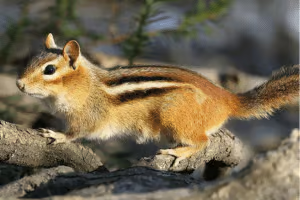
- Chipmunks: small, with distinctive alternating dark and pale stripes running from the head down the back; ground-dwelling; rarely enter structures but tunnel extensively around foundations
- Woodchucks: large and stocky, brown-gray fur, short legs; hibernating species absent through winter; burrow entrances are 5 to 6 inches in diameter with a mound of excavated soil nearby
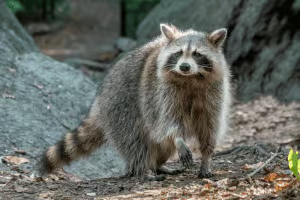
- Raccoons: medium-large, distinctive black facial mask and ringed tail; nocturnal; highly intelligent and dexterous; strong enough to force entry through weak points in a structure
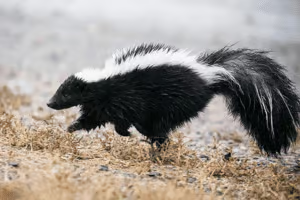
- Skunks: medium-sized, black with a prominent white stripe pattern; primarily nocturnal; slow-moving and generally non-aggressive unless cornered or threatened
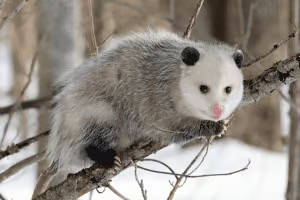
- Opossums: medium-sized, pale gray with a pointed white face, naked pink ears, and a long hairless tail; North America’s only marsupial; nocturnal; generally passive
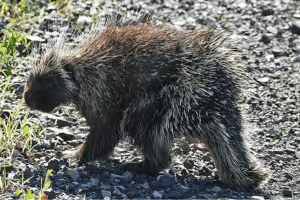
- Porcupines: large, slow-moving, dark brown with thousands of barbed quills; primarily nocturnal; found throughout forested areas of southern Maine
Behavior & Habits of Wildlife
Seasonal timing is one of the most useful diagnostic tools for wildlife problems. Gray squirrels and red squirrels are active year-round and seek attic entry most actively in late summer and fall as they establish winter caching sites. Flying squirrels are present year-round but attic problems are most noticeable in winter when colonies congregate for warmth. Raccoons seek denning sites in late winter and early spring when females are looking for maternity sites. Woodchucks are active from April through September and hibernate fully through winter. Skunks and opossums are active spring through fall and become less active but do not fully hibernate in winter.
All wildlife species that enter structures will establish a latrine area and nest, and the longer they remain, the more extensive the contamination and structural damage becomes. Prompt removal followed by exclusion of all entry points is essential to prevent return.
Risks & Threats from Wildlife
- Rabies: Raccoons are the primary rabies vector in Maine. Any raccoon behaving erratically or active during the day should be avoided and reported to Maine IFW. Skunks can also carry rabies, though cases are less common in this region.
- Raccoon roundworm: Raccoon latrines in attics and crawl spaces carry Baylisascaris procyonis, a roundworm hazardous to humans and pets. Cleanup requires respiratory protection and careful handling and should not be attempted without proper equipment.
- Structural damage: Squirrel and raccoon gnawing on wiring is a genuine fire hazard. Insulation saturated with urine loses its thermal value and must be replaced. Entry holes allow ongoing water infiltration if not sealed promptly.
- Skunk spray: Skunk spray near an HVAC intake, crawl space vent, or under a deck can permeate an entire structure. Pets sprayed near entry points can transfer odor indoors.
- Porcupine quills: Dogs and other pets that encounter porcupines face painful quill injuries requiring veterinary attention. Quills work their way deeper into tissue over time and cannot simply be pulled out.
The Maine IFW Living with Wildlife resource and the CDC wildlife and disease page provide additional detail on health risks and legal handling requirements for Maine residents.
Legal Considerations
In Maine, the trapping and relocation of most nuisance wildlife species is regulated by the Maine Department of Inland Fisheries and Wildlife and requires a licensed Animal Damage Control (ADC) operator. Homeowners may handle certain species under specific conditions, but improper trapping, handling, or relocation of rabies vector species like raccoons is both illegal and carries real health risks. Precision Pest Control holds an ADC license and handles all wildlife removal in full compliance with Maine IFW regulations.
General Prevention Tips for Wildlife
- Cap and screen all roof vents, chimney openings, and attic louvers with heavy-gauge hardware cloth before fall. Standard aluminum screen is not adequate to stop squirrels or raccoons.
- Keep tree branches trimmed back at least 8 to 10 feet from the roofline to eliminate the most common launching point for squirrels accessing the roof.
- Secure garbage in containers with locking lids, and bring in pet food and bird feeders overnight to avoid attracting raccoons and skunks.
- Install hardware cloth or a concrete apron barrier along the base of decks and sheds to prevent woodchucks, skunks, and opossums from establishing dens underneath.
- When closing up a camp or cabin for the season, inspect for and seal all potential entry points before departure. Porcupines and red squirrels can cause extensive damage to an unoccupied structure over a Maine winter.
- Address openings around utility penetrations, foundation sills, and crawl space vents before fall, as these are common entry points for multiple species.
Frequently Asked Questions
The combination of easy food access, available water, and cover. In our region, wooded suburban properties offer all three in close proximity to heated structures. Unsecured garbage, bird feeders left out overnight, pet food on porches, and overgrown vegetation near the foundation are the most common attractants I find during inspections. Eliminating those draw points makes exclusion work far more effective.
Timing is often the first clue. Attic noise during the day points to gray or red squirrels. Attic noise at night in winter points to flying squirrels. A skunk smell under the deck is self-explanatory. Beyond that, entry hole size and location, droppings, footprints in soil or snow, and the type of damage all help narrow it down. If you’re unsure, a professional inspection is the quickest way to get an accurate identification before any removal work starts.
It depends on the species and situation. Raccoons are the primary rabies vector in Maine and should never be handled by homeowners. Raccoon latrines carry a roundworm that is hazardous to people and pets. Skunks can also carry rabies. Porcupine quill encounters with dogs are common and painful. Most other species including squirrels, chipmunks, woodchucks, and opossums pose limited direct health risk but can cause significant property damage and should still be handled by a licensed professional to stay within Maine regulations.
For raccoons and other rabies vector species like skunks, a licensed ADC operator is the legally appropriate choice. Improper trapping or relocation of rabies vector species is illegal under Maine IFW rules, and beyond the legal issue, relocating wildlife without addressing the entry point or attractant simply creates an opening for the next animal to move in. For Category I home and garden species like chipmunks, woodchucks, and squirrels, homeowners can legally handle the situation themselves, but removal without proper exclusion is generally not a lasting solution. A complete fix requires removing the animal, sealing entry points, and addressing whatever drew it to the property in the first place.
Faster than most homeowners expect. A single gray squirrel in an attic in September can become a family of four or five by spring. Flying squirrels are colony nesters and populations can expand significantly over a single winter. Raccoons using an attic as a maternity site in spring will raise a litter there. The contamination and structural damage scale with both the population and the length of time they’re present, which is why early intervention is consistently more straightforward and less costly.
Yes. My nuisance wildlife control service covers both residential and commercial properties across Cumberland and York Counties. Commercial situations often involve raccoons around dumpsters, squirrels in roof structures, or woodchucks under outbuildings, all of which I handle under my ADC license.
Professional Nuisance Wildlife Control in Southern Maine
Wildlife removal isn’t just trapping. It’s identifying the species, understanding the entry point and the behavior driving the problem, removing the animal humanely and legally, and then sealing the structure so it doesn’t happen again. I’ve been doing this work across Cumberland and York Counties for 16 years, and my ADC license means I can handle regulated species that most pest control operators in Maine cannot. Learn more about my approach on the about page, or visit my nuisance wildlife control service page for more detail. Contact me to schedule a free assessment.