

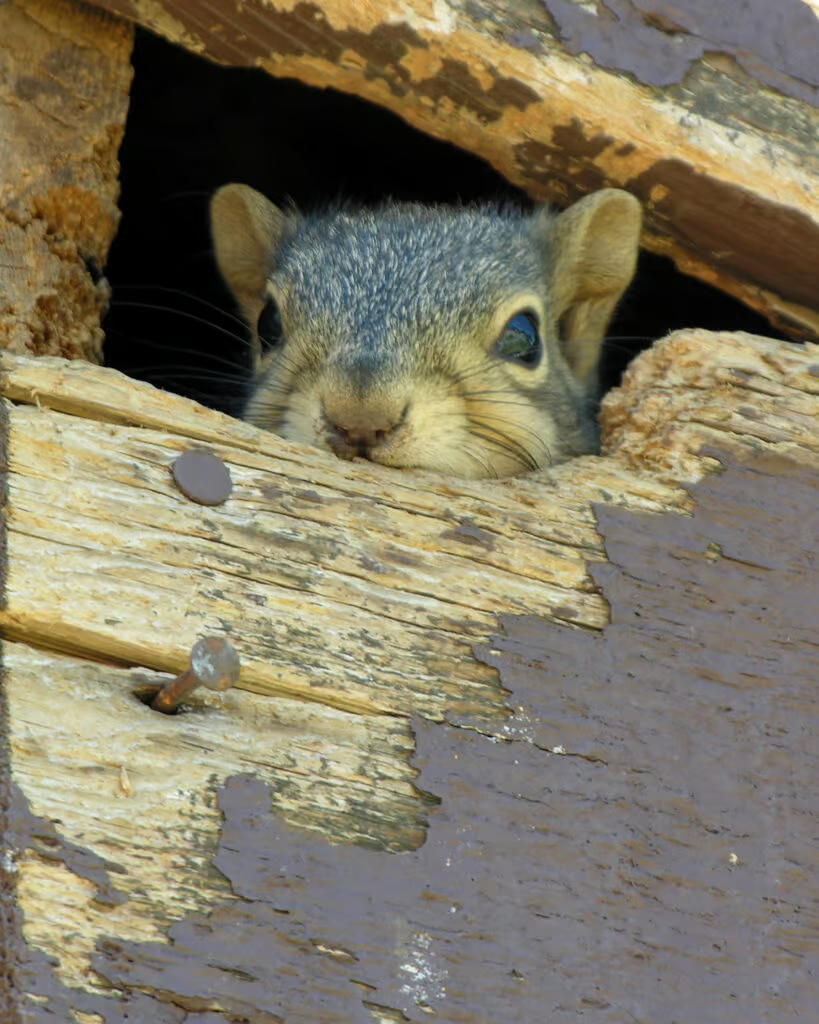
Squirrels are one of the most common wildlife problems I deal with across Cumberland and York Counties, and they are also one of the most misidentified. As an Associate Certified Entomologist and licensed Animal Damage Control agent with more than 16 years of experience, I can tell you that the first question worth answering is not “how do I get rid of it” but “which squirrel is it.” Maine has three kinds, and the one in your attic changes everything about how you handle it.
The three squirrels you will meet in Maine
Maine is home to three tree squirrels: the eastern gray squirrel, the red squirrel, and the flying squirrel. They look and behave differently enough that telling them apart is the most useful thing a homeowner can do.
The eastern gray squirrel is the big, familiar one. Silver-gray with a bushy tail, active during the day, and a constant presence at bird feeders and in gardens. Grays are strong and persistent, and they readily move into attics through soffits, vents, and rooflines.
The red squirrel is smaller, rusty-colored, and far louder and more territorial than its size suggests. Reds are extremely common in Maine’s wooded and rural areas, and they are frequent home invaders. They are relentless chewers and will tear into insulation for nesting material and gnaw on wiring and wood, often doing more interior damage than people expect from such a small animal.
The flying squirrel is the one most people never see and most often misidentify. Maine’s flying squirrels are small, soft-furred, big-eyed, and strictly nocturnal. They do not actually fly, they glide, and most homeowners never lay eyes on one. What makes them important is that they are colonial. They den together in groups, and a single attic colony can number a dozen or more animals, occasionally far more in a heavily infested home.
How to tell which one is in your attic
You can usually identify the culprit by when you hear it, without ever seeing the animal. Gray and red squirrels are active during daylight, so daytime scratching, rolling, and scampering overhead points to one of them. Flying squirrels are active at night, typically from mid-evening through the early morning hours, so noise that starts after dark and runs into the small hours is almost always flying squirrels. That single clue, the timing of the sounds, narrows it down fast and is the first thing I ask about on the phone.
Why squirrels in the attic are a serious problem
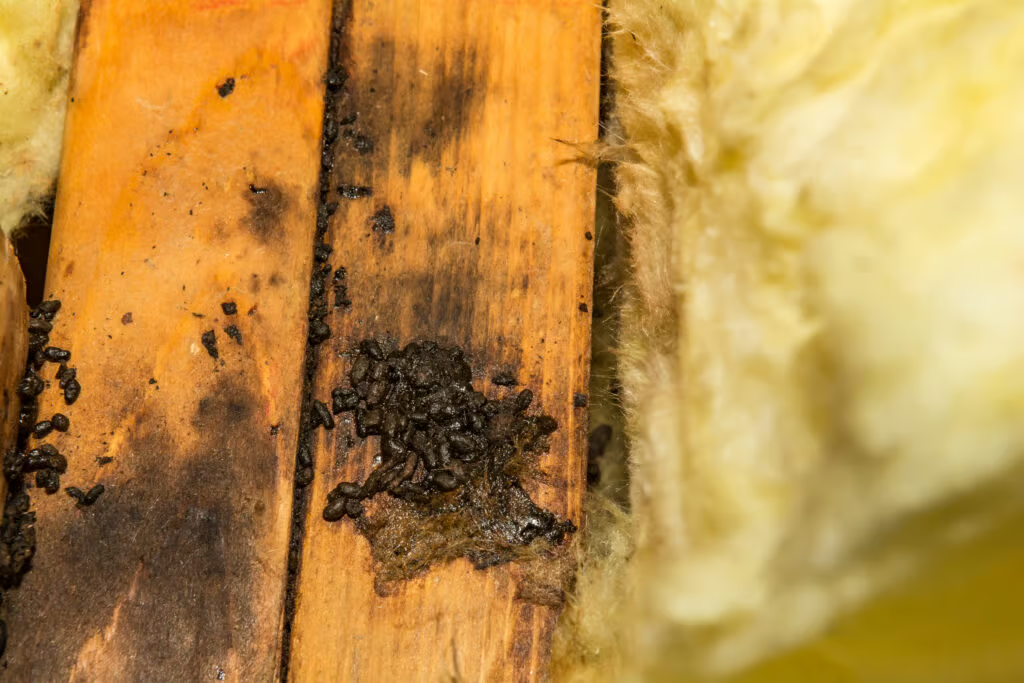
Squirrels are not just noisy. Like all rodents, their teeth grow continuously, so they gnaw constantly, and that is where the real danger lies. Squirrels chewing on electrical wiring in an attic are a recognized cause of house fires, which makes a squirrel infestation a genuine safety issue, not just a nuisance. On top of the fire risk, they shred insulation to build nests, which lowers its R-value, and they leave behind droppings and urine that create both an odor and a biohazard. That accumulated scent also signals to other squirrels that a site is a good den, so an unaddressed problem tends to attract more animals over time.
How they get in
Squirrels see your home the way they see a hollow tree. A gap in a soffit, a loose gable or roof vent, a hole at the eave, or a weak spot in fascia all read as a tree cavity to a squirrel, and they will gnaw a small opening into a large one to get inside. Once they decide your attic is home, they are stubborn about keeping it, which is why timing and technique matter so much in getting them out.
Why DIY trapping usually falls short
The instinct is to set a live trap, catch the squirrel, and drive it somewhere far away. That approach runs into two problems in Maine.
First, the law. Maine restricts what you can do with trapped wildlife. You generally cannot release a live animal you have trapped somewhere else without authorization from the state, and relocation is limited rather than a free-for-all. The rules are laid out in Maine’s trapping regulations, and they exist for good reasons, including disease spread and the fact that relocated squirrels usually do not survive in unfamiliar territory.
Second, the biology. Trapping one gray or red squirrel does little if there is a litter in the wall, and it does almost nothing against flying squirrels, since you are dealing with a whole colony rather than a single animal. Removing one and sealing up only guarantees the rest are trapped inside or that newcomers move into the same opening.
The right approach: exclusion, not just removal
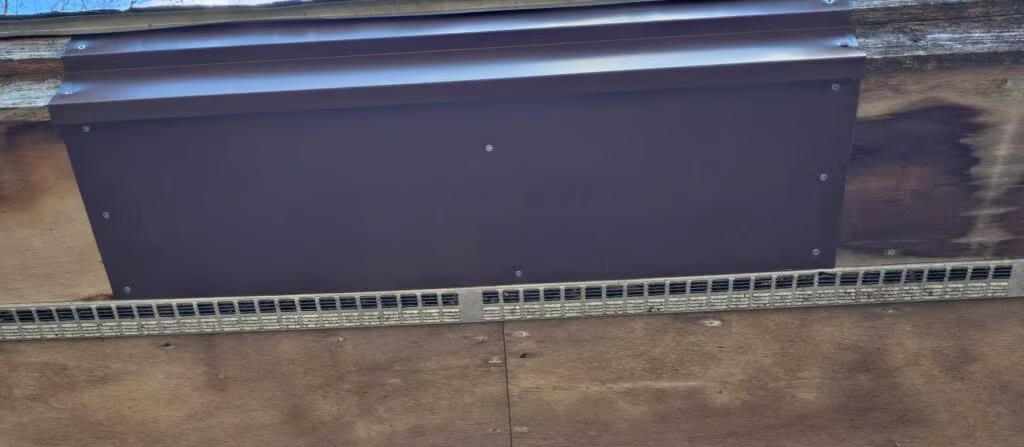
Handling squirrels well means getting every animal out and keeping the next one from getting in. It starts with a full inspection to identify the species and locate every entry point. The core tool is one-way exclusion: devices placed over the openings that let squirrels leave but not return, which is especially important for colonial flying squirrels, where the goal is to let the entire group filter out before sealing. Once the animals are out, the entry points get sealed with metal mesh and flashing that squirrels cannot chew through, and soiled areas are cleaned and decontaminated. Done in that order, the problem gets solved once instead of every season.
How to keep squirrels out in the first place
Prevention is mostly about closing the doors and removing the ladders. Trim tree branches back several feet from the roofline so squirrels cannot jump across. Cap the chimney, screen gable and roof vents with heavy-gauge hardware cloth, and seal gaps around soffits, fascia, and the eaves before an animal finds them. Cutting off easy food, like spilled birdseed, helps reduce the local population pressure too. Keeping those entry points sealed and monitored is exactly what a Year-Round Protection Program is designed to do.
When to call
If you are hearing activity overhead, by day or by night, anywhere in Cumberland or York County, it is worth identifying and addressing before the chewing reaches your wiring. As a licensed ADC agent, I handle humane squirrel removal and exclusion the right way: identifying the species, getting every animal out, and sealing the building so they cannot come back.