

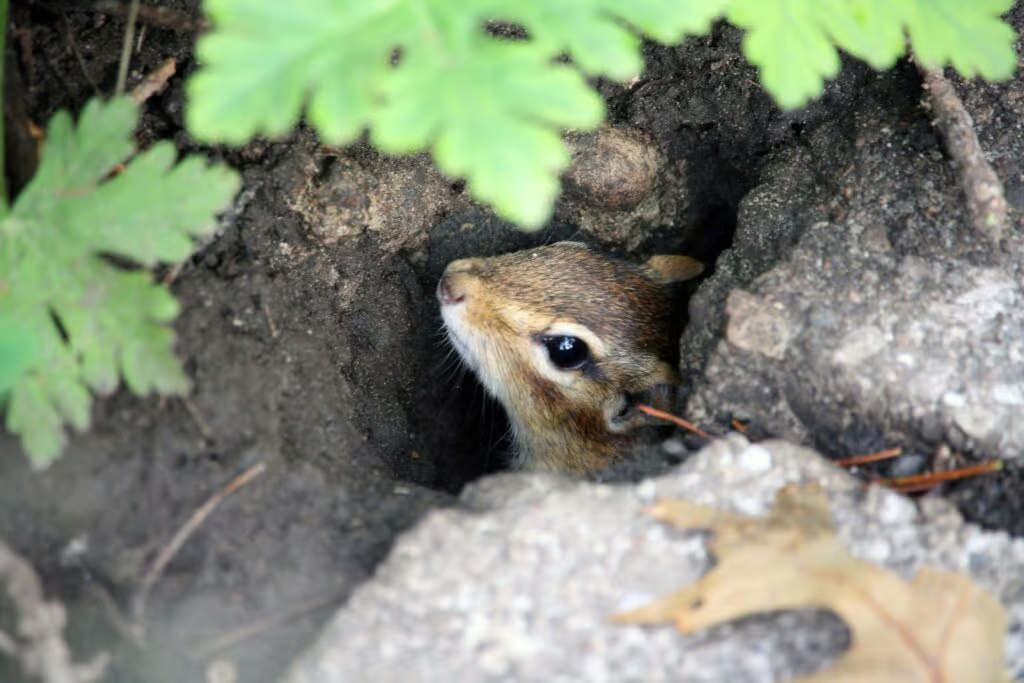
Chipmunks are one of those animals people tend to tolerate right up until they don’t. They’re small, they’re quick, and for most of the year they mind their own business. Then one day you notice the walkway settling, holes appearing along the foundation, or tulip bulbs vanishing from the garden bed, and suddenly that cute little striped rodent is a problem. After 16 years of pest control work in Cumberland and York Counties, I’ve seen chipmunk situations range from a minor annoyance to a genuine headache, and the difference usually comes down to how long the problem was ignored.
The Eastern Chipmunk in Maine
Maine has one chipmunk species, the eastern chipmunk. They’re active from early spring through late fall, then spend the winter mostly underground in a state of torpor, waking periodically to eat from food they cached during the warmer months. That caching habit drives a lot of their behavior. A chipmunk isn’t just eating your bird seed in October. It’s hauling it underground by the cheekful to survive the winter.
They breed twice a year in most of southern Maine, once in early spring and again in midsummer, which is why chipmunk activity often seems to explode in July and August. What looked like one or two animals in May can be a much busier situation by late summer.
What Attracts Chipmunks to Your Property
Chipmunks show up where food and cover are easy to find. The most common attractants I see on properties in this area:
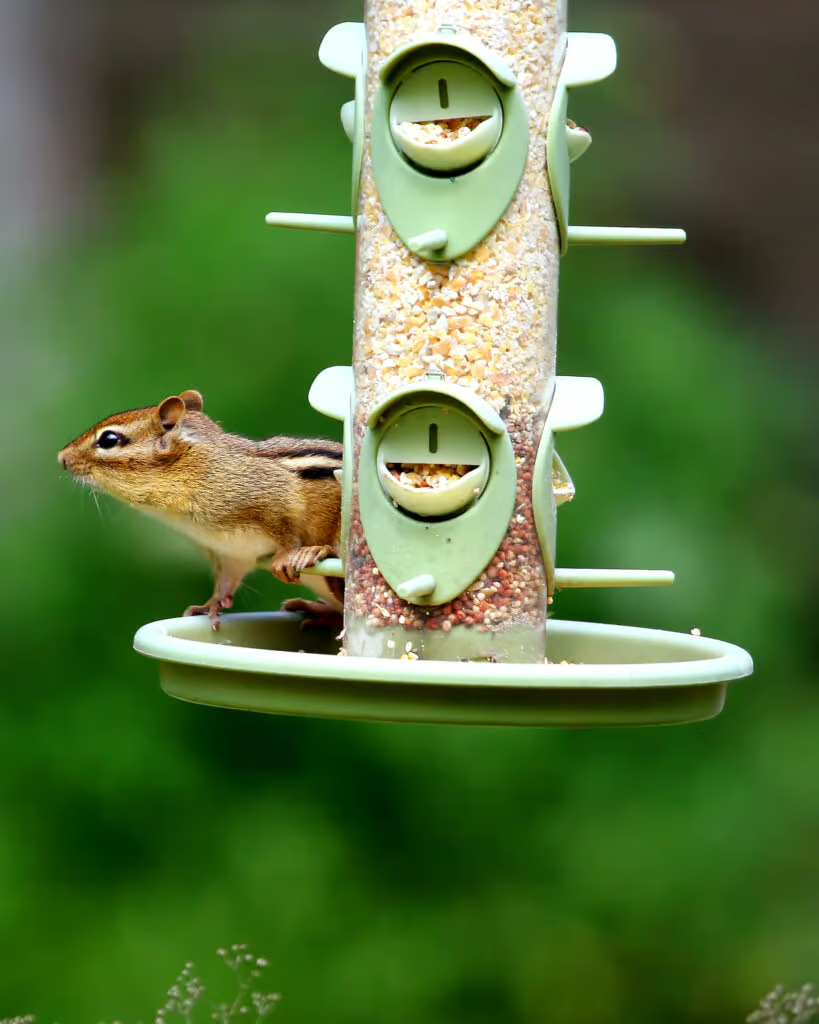
Bird feeders are the number one draw. Spilled seed under a feeder is a free buffet, and chipmunks will set up house close to a reliable food source. If you have a feeder within 20 or 30 feet of your foundation, you’re inviting them to burrow right next to the house.
Stone walls, rock piles, and retaining walls give them ready-made shelter. Southern Maine is full of old stone walls, and chipmunks love them. The gaps between stones offer protected travel routes and burrow entrances that are nearly impossible to spot.
Dense ground cover and low shrubs planted against the foundation give chipmunks concealed pathways. They don’t like crossing open ground where hawks and cats can see them, so heavily landscaped foundations are ideal habitat.
Gardens, bulbs, and fruit are seasonal draws. Chipmunks dig up flower bulbs, raid strawberries and tomatoes, and clean out low-growing fruit.
Pet food and unsecured trash round out the list. Anything edible left outside will eventually be found.
The Damage Chipmunks Cause
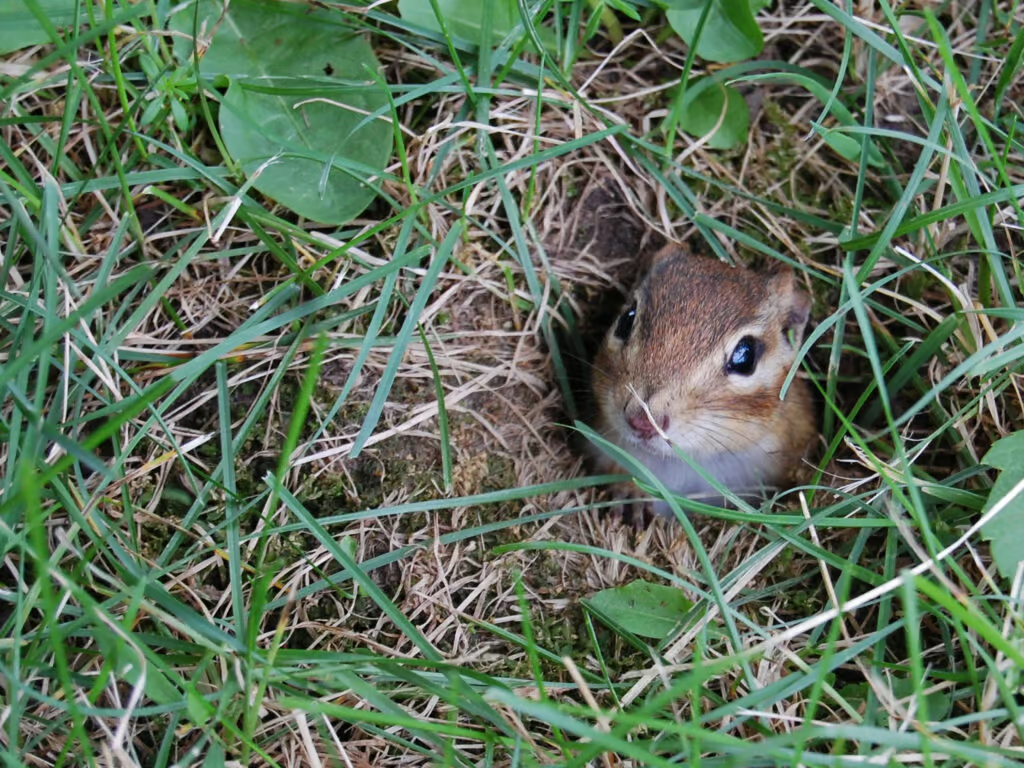
A chipmunk burrow system is more extensive than most people expect. The entrance is a clean, round hole about two inches across, usually with no mound of dirt around it because the chipmunk carries the excavated soil away in its cheeks and scatters it. Below that tidy little hole can be 20 to 30 feet of tunnels with food chambers, nesting chambers, and multiple escape exits.
The real trouble starts when those tunnels run under or alongside hardscape. Common problems I encounter:
- Burrows along foundations, under front stoops, and beneath concrete steps. The tunneling itself rarely damages a properly built foundation, but it channels water against the structure and accelerates erosion and settling.
- Undermined walkways, patios, and retaining walls. Pavers and slabs settle unevenly when the soil beneath them is honeycombed with tunnels.
- Garden and landscape damage. Dug-up bulbs, raided vegetable gardens, and girdled seedlings.
- Occasional home entry. Chipmunks sometimes end up inside garages, bulkheads, and basements, usually by accident while chasing food. Once inside, a panicked chipmunk can do a surprising amount of running around before it finds its way out.
One chipmunk is rarely a structural emergency. The concern is cumulative. Burrow systems get expanded and reused year after year, and a property that supports several chipmunks can end up with a network of tunnels in exactly the places you don’t want them.
How to Get Rid of Chipmunks
Effective chipmunk control comes down to two things: removing what attracts them and removing the animals that are already established.
Start with the attractants. Move bird feeders well away from the house or take them down for a season, and clean up spilled seed. Pull dense ground cover back from the foundation. Store pet food and trash in sealed containers. Seal gaps around bulkheads, garage doors, and utility penetrations so wandering chipmunks can’t end up inside. None of this evicts the chipmunks already living on the property, but it makes your property much less appealing to the next ones.
For the animals already established, trapping is the reliable answer. Repellents, ultrasonic devices, and home remedies like mothballs or used cat litter have poor track records, and I don’t recommend spending money on them. Trapping chipmunks effectively is about placement and timing: traps need to go on their travel routes, near active burrow entrances, and along the wall lines and stone features they use for cover.
Maine has rules about what homeowners can and can’t do with nuisance wildlife, including how animals may be trapped and what can legally be done with them afterward. The Maine Department of Inland Fisheries and Wildlife publishes the laws governing wildlife conflicts, and I covered how they apply to homeowners in my recent post on what Maine law actually says about trapping nuisance wildlife yourself. It’s worth reading before you buy a trap. As a licensed Animal Damage Control agent, I handle nuisance wildlife trapping within the framework of Maine law, which takes the guesswork and the legal risk off your plate.
Don’t Ignore the Empty Burrows
Here’s the part most people skip: what happens to the burrow after the chipmunk is gone.
An abandoned chipmunk burrow doesn’t stay empty for long. Two problems in particular show up on properties around here:
Yellow jackets. Ground-nesting yellow jackets frequently take over abandoned rodent burrows. A tidy two-inch hole near your walkway in May can be the entrance to a yellow jacket nest holding thousands of workers by August. A significant share of the ground nest stinging insect calls I get every summer trace back to an old rodent burrow that nobody filled in. If you’ve ever run a lawnmower over an in-ground yellow jacket nest, you know exactly how bad that discovery can be.
New tenants. Other chipmunks, mice, voles, and occasionally snakes will move into a vacant burrow system. An intact tunnel network is valuable real estate, and leaving it open is an invitation for the whole cycle to start over.
Open burrows also keep funneling rainwater and snowmelt into the soil along your foundation or under your hardscape, so the erosion problem continues even with no animal in residence.
Once you’re confident a burrow is inactive, fill it. Pack the entrance and as much of the tunnel as you can reach with soil, tamp it down firmly, and check it again after a few rains, since settling is normal. For burrows under walkways or against foundations, some people use a gravel and soil mix that’s harder to re-excavate. Then keep an eye on the spot. A filled burrow that gets reopened means you still have an active animal, and it’s time to go back to trapping.
When to Call
If you’re seeing multiple burrow entrances, settling in walkways or steps, repeated damage to gardens and bulbs, or you’ve already got yellow jackets coming out of a hole in the ground, it’s worth having someone take a look. I provide wildlife control throughout Cumberland and York Counties, backed by 16+ years of experience and a Maine Animal Damage Control license.