

Every fall, the same question comes up: why are there suddenly so many spiders in the house? Spiders in Maine homes are a normal part of September and October, and the vast majority of them are harmless to people. Seeing a few more than usual this time of year is not a sign that something is wrong with your house.
This post covers why spiders become more noticeable in the fall, which ones you are most likely seeing, the real story on brown recluse and black widows in Maine, and what actually cuts down on the number you find indoors.
Why You See More Spiders Indoors in the Fall
It is less about escaping the cold than most people think. A few things are going on at once.
Males are out looking for mates. Many common spiders, including wolf spiders and grass spiders, reach adulthood in late summer and fall. Adult males leave their usual hiding spots and wander in search of females. That wandering brings them across driveways, through garage doors, and under gaps at the bottom of exterior doors.
They follow the food. Spiders eat insects. Porch lights, warm foundations, and damp basements draw in moths, flies, crickets, and other insects, and spiders go where the meals are.
Some were already there. House spiders and cellar spiders live indoors year-round. Once people spend more time inside and the windows close up, those spiders simply get noticed more.
All of this tends to peak in September and October, then tapers off as the weather turns colder.
The Spiders in Maine Homes You Are Most Likely Seeing
Maine has hundreds of spider species, but a handful account for most of what turns up indoors.
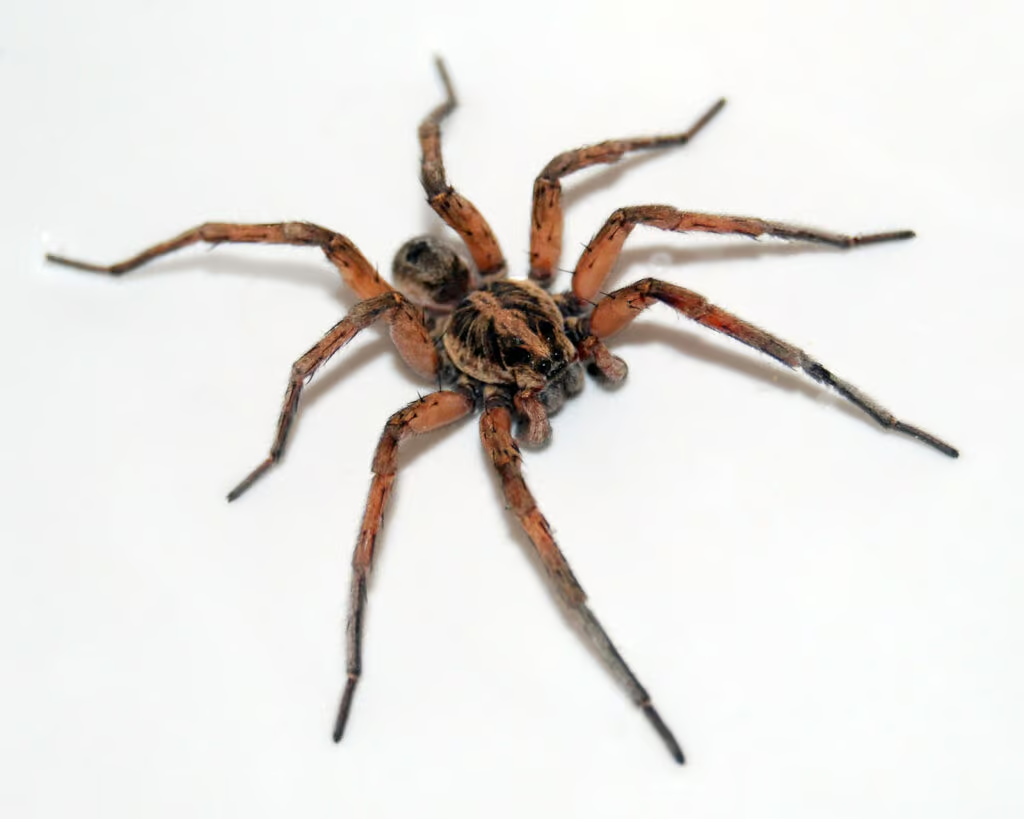
Wolf spiders. Fast, brown, hairy, and often startling in size. Unlike most spiders, wolf spiders hunt on the ground instead of building webs, which is why they show up crossing basement floors and garages.
Common house spiders. Small, brownish, and responsible for most of the tangled cobwebs in corners, window frames, and ceilings. They live indoors year-round.
Cellar spiders. The long, thin-legged spiders that hang upside down in loose webs in basements and crawlspaces, and shake their webs when disturbed. Cellar spiders favor damp areas, which is why basements are their usual home.
Grass spiders. Outdoors, they build the funnel-shaped sheet webs seen across lawns on dewy mornings. Wandering males often end up indoors in late summer and fall.
Fishing spiders. These are the big ones that cause the most alarm. Fishing spiders are Maine’s largest spiders. They live near water and sometimes turn up in basements, docks, and camps. They are not aggressive, and their bite is described as similar to a bee sting.
Are There Brown Recluse or Black Widows in Maine?
This is the question behind most spider calls, so here is the honest answer.
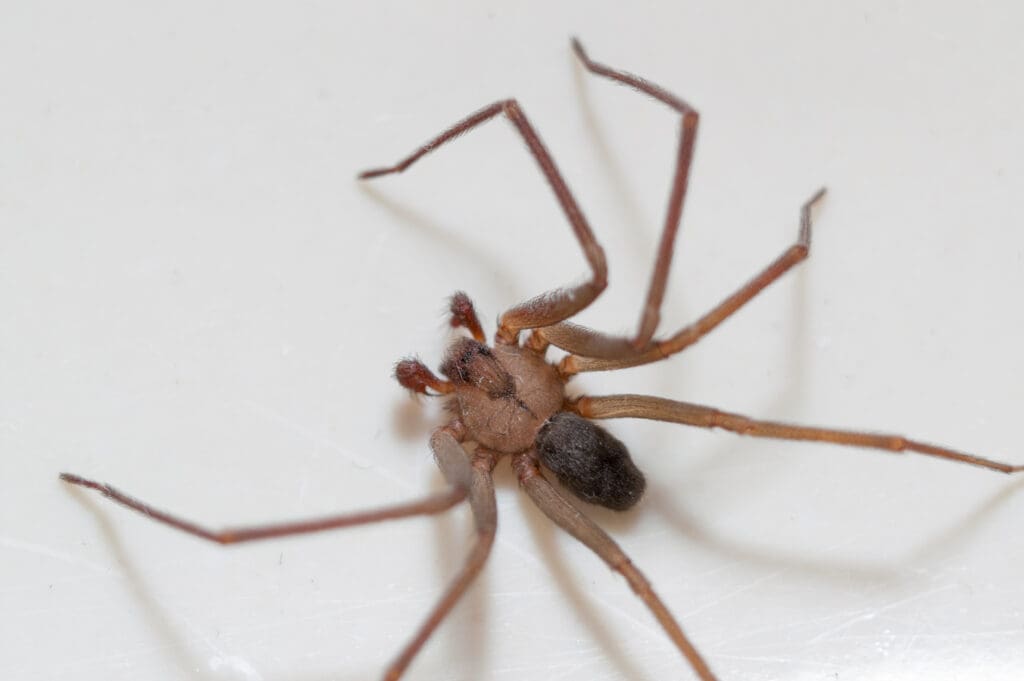
Brown recluse spiders are not established in Maine. They are not native to the state, and Maine has no native venomous spiders of medical concern. Brown wolf spiders and house spiders get mistaken for brown recluse all the time.
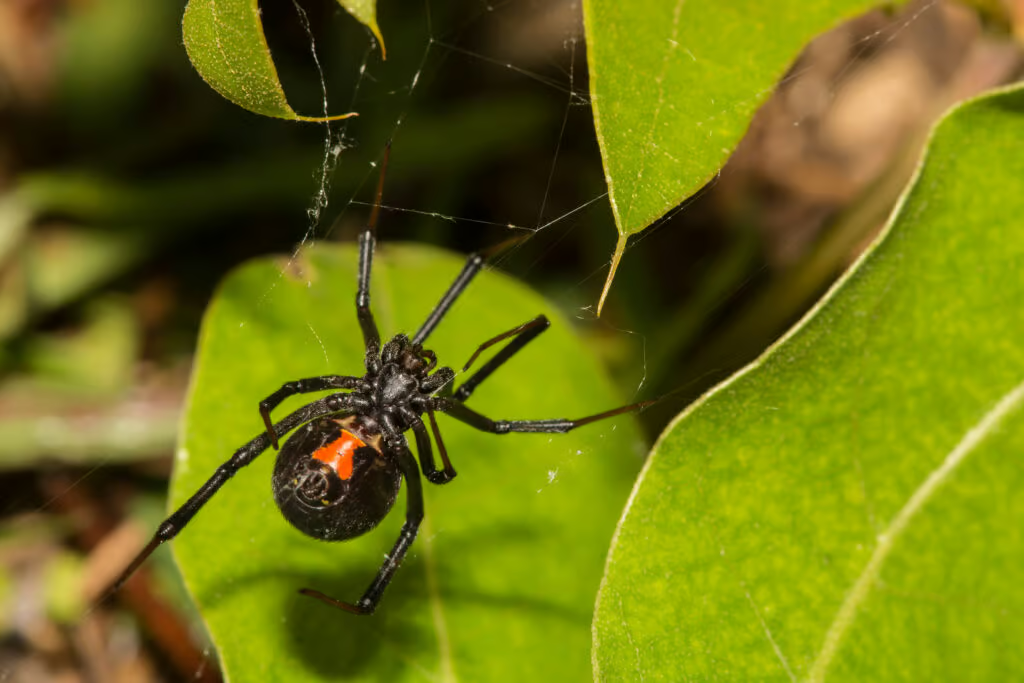
Black widows are a little more complicated. The southern black widow is not native to Maine. Its close relative, the northern black widow, has a range that reaches into New England and southeastern Canada. The species is considered uncommon near the northern edge of its range, though it may be slowly expanding northward. Most people in Maine will never see one.
The rare exceptions are hitchhikers. On rare occasions, black widows and brown recluse have arrived in Maine in produce shipments and construction materials from southern states, according to UMaine pest management specialist Jim Dill. Maine winters keep them from becoming established.
False widows are a common source of confusion. Spiders in the genus Steatoda, often called false widows, are dark, shiny, and round-bodied, and they regularly get reported as black widows. They lack the red markings on the underside of the abdomen that true widows have. On the northern black widow, that hourglass is often split into two separate marks.
What About Spider Bites?
All spiders have venom, which is how they subdue their prey. But few spiders can bite people at all, and even fewer have venom strong enough to cause serious health effects.
Spiders bite in self-defense, usually when they get pressed against skin in a shoe, a glove, or bedding. For most people, a bite from a Maine spider is about as bad as a bee sting. People who are allergic can react more strongly.
It is also worth knowing that many skin sores blamed on spiders turn out to be something else, including bacterial skin infections. If a bite or wound is spreading, getting worse, or comes with fever, see a doctor rather than assuming it was a spider.
What Actually Reduces Spiders Indoors
The most effective steps are about making your home less inviting to spiders and the insects they eat.
- Seal entry points. Add door sweeps, repair torn window screens, and caulk gaps around utility lines, foundation cracks, and sill plates.
- Change your outdoor lighting. Bright white porch lights pull in insects at night. Yellow or warm-toned LED bulbs attract fewer, which means less food for spiders near your doors.
- Dry out the basement. A dehumidifier makes a damp basement much less appealing to cellar spiders and the small insects they feed on.
- Clear webs and egg sacs. Vacuuming webs and egg sacs is one of the most effective things you can do, since it stops the next generation before it hatches. Empty the vacuum outside afterward.
- Cut back clutter. Boxes on basement floors, stacked firewood, and piles in the garage give spiders places to hide.
- Pull back mulch and vegetation. Keep plants, leaf litter, and mulch from touching the foundation, and store firewood away from the house.
- Use glue boards. Sticky traps along walls in basements and garages catch wandering spiders like wolf spiders, and they show you where spiders are coming in.
What Treatment Can and Cannot Do
With 16 years experience in pest control, I would rather be upfront about this than oversell it. Spiders are harder to control with pesticides than most crawling insects.
Spiders walk on the tips of their legs with their bodies held up, so they pick up less product from treated surfaces than an insect like a cockroach. They also do not groom themselves the way many insects do. Web-building spiders spend most of their time sitting in their webs, not walking across treated areas at all.
What treatment does well is reduce the insects spiders feed on, hit spiders where they hide in cracks and voids, and cut down on the number coming in from outside. Combined with the steps above, that can make a real difference. But no treatment will get a home to zero spiders, and anyone promising that is not being straight with you.
When spiders are a recurring problem, year-round pest protection covers them along with other common pests. Homes in Westbrook, Windham, and Scarborough see the same fall spider surge as the rest of southern Maine, and winter brings its own set of pests once the cold settles in.
Frequently Asked Questions
Why am I seeing so many spiders in my house this fall? Mostly because adult males are wandering in search of mates, and because insects drawn to your home bring spiders with them. House and cellar spiders that live indoors year-round also get noticed more once the windows close.
Are there brown recluse spiders in Maine? No. Brown recluse spiders are not established in Maine. Rare individuals have arrived in shipments from southern states, but they cannot survive Maine winters outdoors.
Are there black widows in Maine? The southern black widow is not native here. The northern black widow’s range reaches into New England, but it is uncommon at the northern edge of that range, and most Mainers will never see one.
Are wolf spiders dangerous? No. Wolf spiders can bite if handled or trapped against skin, but their bites are not considered medically significant for most people.
Do spiders come inside to get warm? Not as much as people think. Most of the fall increase comes from mating season and from spiders following their prey. Many of the spiders found indoors were already living there.