

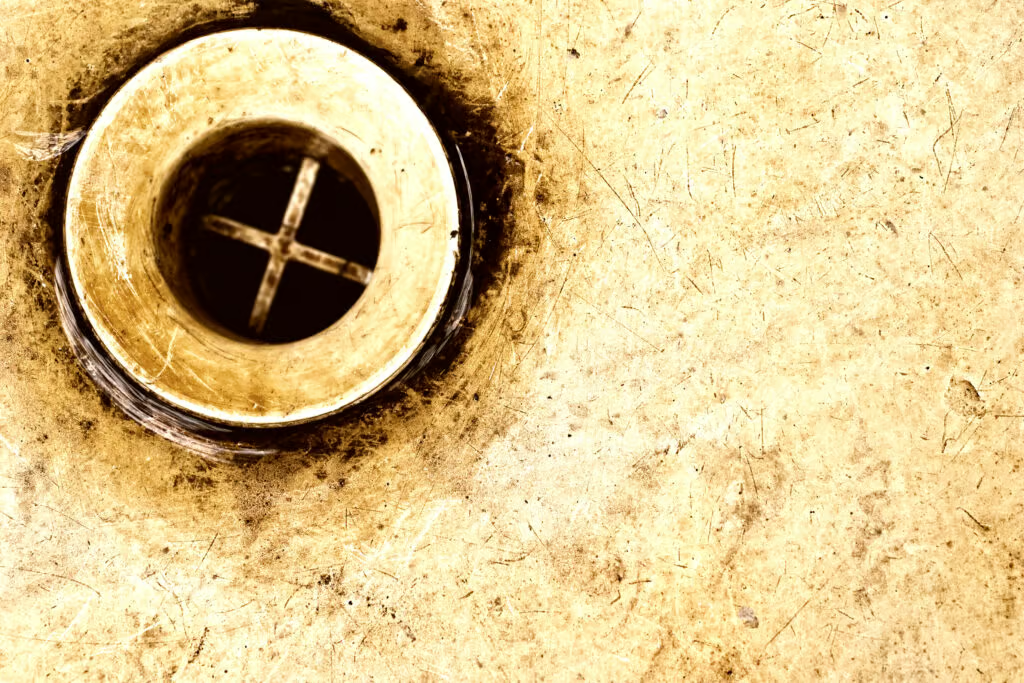
Small flies hovering around the kitchen sink, resting on the bathroom wall or popping up near a basement floor drain are one of the most common calls I get in southern Maine, all year round. Most of the time they’re drain flies, fruit flies or both, and very often they’re coming from the same place: the drain. As an Associate Certified Entomologist with 16+ years experience serving Cumberland and York Counties, I treat these two flies the same way, because they breed in the same buildup. This guide walks through how to find the source, how to fix it yourself, and when it makes sense to call me.
Two different flies, one breeding spot
Drain flies and fruit flies don’t look much alike, but in most homes they share a breeding site.
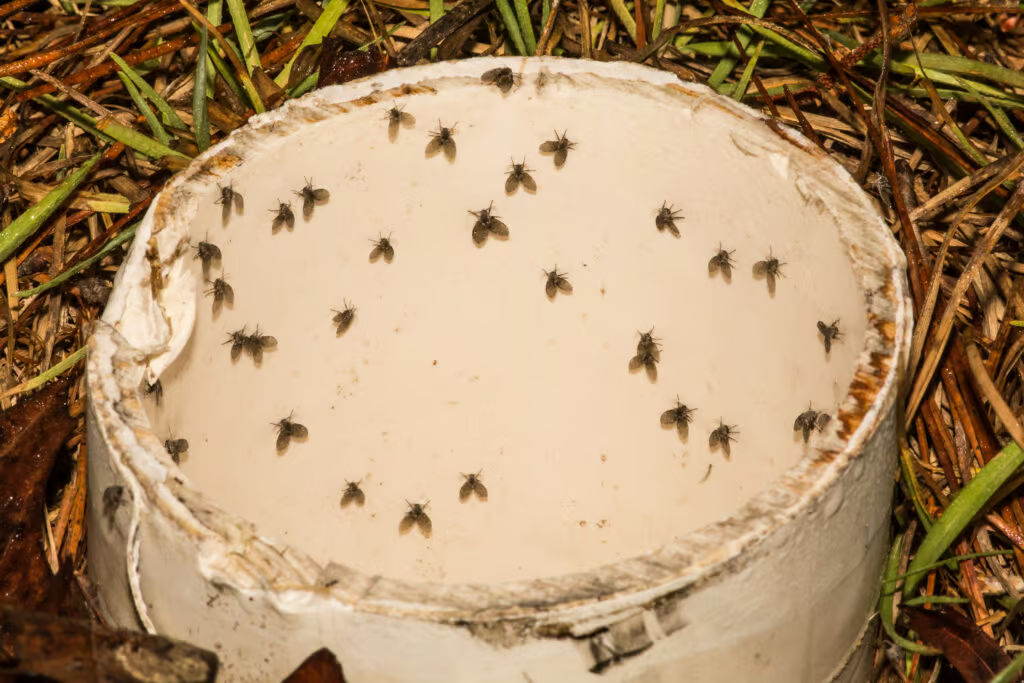
Drain flies are fuzzy and moth-like, with broad wings held like a tent when they rest. You’ll usually see them sitting on the wall near a sink, tub or shower, making short, weak hops when disturbed. According to University of Maryland Extension, their larvae live in the gelatinous film inside drains and traps, feeding on the bacteria, algae and fungi in it. More detail is on my drain flies page.
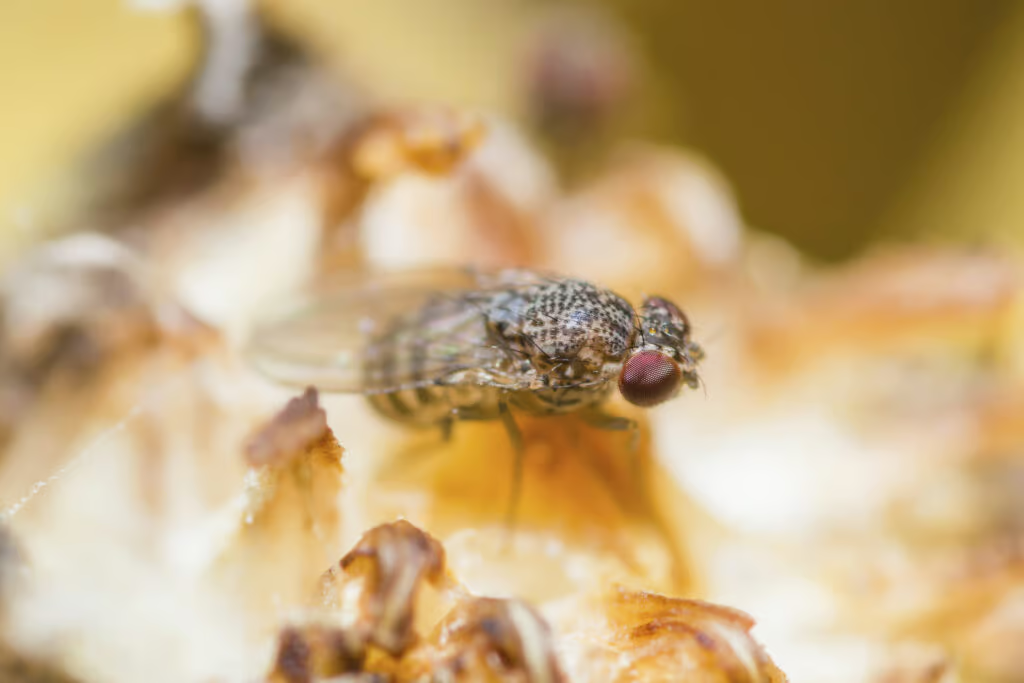
Fruit flies are smooth-bodied, quick and tend to hover. The one I find in drains most often is the dark-eyed fruit fly (Drosophila repleta), which is roughly twice the size of the common red-eyed fruit fly and breeds in wet, decaying material rather than ripe produce. The Cornell NYS IPM Program notes these flies develop in moist buildup that’s often out of sight, including around sinks and drains. The red-eyed fruit fly can breed in drains too, and honestly, eye color is hard to judge on a fly that won’t sit still. The practical test: if the flies keep coming after every piece of produce is gone, think drain. You can compare them on my fruit flies page.
One fly to keep an eye out for is the phorid fly, a humpbacked fly that runs across surfaces instead of flying off. Persistent phorid activity can point to a plumbing problem rather than a dirty drain, so it’s worth calling a professional if that’s what you’re seeing.
Why drains breed flies
Every drain slowly builds up a slimy, gelatinous film along the pipe walls, fed by food scraps, soap, toothpaste and hair. That film is where drain fly and fruit fly eggs and larvae live. Iowa State University Extension describes this layer of slime building up above the water line in sink, tub and floor drains as a common fruit fly breeding site. Running the tap doesn’t touch it, which is why the flies keep coming back no matter how clean the kitchen or bathroom looks.
Step 1: Find the drain that’s breeding them
Before you treat anything, figure out which drain is the problem. The tape test works for both flies:
- At night, put a strip of clear packing tape over each drain you suspect, sticky side down, leaving a small gap for air.
- Check the tape in the morning.
- Flies stuck to the underside tell you that drain is a breeding site.
Check every drain, not only the one where you see flies. That includes the garbage disposal, a guest bathroom sink that rarely gets used, the tub and shower, and any basement floor drain. While you’re at it, rule out other sources: a forgotten bag of potatoes, a recycling bin with sticky cans, or the drip pan under the refrigerator.
Step 2: Treat the drain with a gel or bacterial product
You don’t need to take your plumbing apart. A pour-in product that clings to the pipe walls does most of the work, and the same products work on drain flies and fruit flies.
There are two types worth looking at:
- Bacterial or enzyme drain treatments. These contain microbes or enzymes that break down the organic buildup the larvae feed on. Iowa State Extension lists a bacterial drain treatment as an option for drains you can’t scrub.
- Non-caustic drain fly gels. Products like Green Gobbler Fruit Fly Goodbye are thick gels made to coat the inside of the pipe, and they’re labeled for both drain flies and fruit flies. The label directs you to pour about 8 ounces into the drain toward the end of the day and repeat daily as needed.
A few tips that make either type work better:
- Apply at night, when the drain won’t be used for several hours, so the product has time to sit on the pipe walls.
- Plan on repeating it every night for at least a week. One dose rarely does it, because eggs and larvae already in the drain keep developing.
- Treat every drain the tape test flagged, not just the worst one.
- If your sink has a strainer basket or stopper that lifts out, pull it and wipe the slime off it. That piece is often coated.
Always read and follow the label on whatever product you choose, and never combine drain products.
Step 3: Knock down the adults
Traps catch the flies already flying around, but they won’t fix the source on their own.
- Fruit flies: a simple cup trap with apple cider vinegar works well for red-eyed fruit flies. Dark-eyed fruit flies tend to ignore vinegar, and some extension sources suggest red wine works better as bait for them.
- Drain flies: they aren’t drawn to vinegar the way fruit flies are. A sticky card placed near the drain catches the ones resting nearby.
Once the drain is treated, adult numbers should drop off within a week or two.
What to skip
- Caustic clog removers. Lye and acid drain openers are built to dissolve clogs like hair and grease. They run through the pipe quickly and do little to the film the larvae live in. They’re also hazardous to handle and dangerous if mixed with other cleaners.
- Bleach. It rushes past the buildup without breaking it down, and it should never be mixed with other drain products.
- Bug bombs and general sprays. Cornell’s IPM program points out that these do nothing to the breeding population, so the flies come right back.
When to call me
If you’ve treated consistently for a week or two and the flies are still coming, or you can’t find the source at all, that’s when a professional inspection is worth it. Sometimes the breeding site isn’t a drain. It can be a slow leak under a sink, buildup under a dishwasher, or a cracked pipe, and finding it is most of the job.
[Image break: bio-foam application photo]
When the drains are the source, here’s how I treat them, whether it’s drain flies, fruit flies or both. I use Invade Bio Foam, a microbial foam that expands to fill the whole pipe and cling to the walls, reaching buildup that a poured liquid runs past. The microbes digest the organic film, so the larvae lose their food and their breeding spot. I also mix in an insect growth regulator, which interrupts larval development so the flies already growing in the drain never become breeding adults.
I handle small fly problems in homes throughout southern Maine, from Windham to Scarborough, as part of my common pests service. For more on drain flies, fruit flies and fungus gnats, the Maine Board of Pesticides Control has a helpful fact sheet.
Frequently asked questions
How can I tell drain flies from fruit flies? Look at how they behave. Drain flies are fuzzy, sit flat against walls with their wings spread like a tent, and make short hops. Fruit flies are smooth, quick fliers that hover around sinks, trash and produce.
Why do I have drain flies or fruit flies in the winter? Drains in a heated house stay warm and wet all year, so the buildup inside them can keep breeding flies through a Maine winter even with nothing outdoors to attract them.
Will pouring bleach down the drain get rid of them? Usually not. Bleach moves through the pipe too quickly to break down the slimy film the larvae live in. A gel or bacterial drain treatment applied overnight does a better job.
How long does it take to get rid of them? With nightly treatment, most people see a big drop within one to two weeks. University of Maryland Extension puts drain fly development from egg to adult at 7 to 28 days, so flies already growing in the drain can keep emerging for a while after you start.
Are drain flies and fruit flies harmful? They don’t bite and they don’t damage your home. They’re mainly a nuisance, but they do breed in dirty, wet material, so it’s worth fixing the source rather than living with them.
This article is general information. Products mentioned are examples, not endorsements. Always read and follow product label directions.