

Spiders in Southern Maine:
Identification & Prevention
Spiders are one of the most common reasons people contact me across Cumberland, York, and parts of Oxford County, though they’re also one of the most misunderstood. The overwhelming majority of spider species found in Southern Maine are harmless to people and are actually beneficial, feeding on the flies, mosquitoes, and other insects that cause real problems. That said, a heavy spider presence inside a home or business almost always signals something else worth addressing: an insect prey population, a moisture issue, or gaps in the building envelope that need attention. I encounter wolf spiders regularly in rural properties in Standish and Hollis, cellar spiders in the damp basements of older homes in Westbrook and Biddeford, and house spiders in structures of every kind throughout the region. Learn about the species found in Southern Maine below, or contact me for identification help.
Quick Fact: Spiders are arachnids, not insects. They have two body segments, eight legs, and no antennae. Their presence indoors often indicates an active prey insect population worth identifying.
Common Spiders in Southern Maine
Why Do Spiders Invade Structures in Southern Maine?
Spiders follow their food supply. When insects are active indoors, spiders will be too, and Maine’s combination of humid summers, wooded landscapes, and older housing stock creates consistent conditions for both. House spiders and cellar spiders establish themselves inside year-round wherever moisture and prey are available. Wolf spiders are more seasonal, wandering indoors in late summer and fall, when adult males roam in search of mates and follow ground-level insects toward the foundation.
Beyond food, spiders enter through gaps around foundations, windows, doors, and utility penetrations, the same entry points that let in the insects they’re hunting. A persistent spider presence in a Scarborough basement or a Raymond camp that sits vacant through winter is usually a reliable indicator that moisture and insect activity are both worth addressing. Properties near Sebago Lake and other wetland areas in particular tend to see higher spider activity given the insect populations those environments support year-round.

Identification Tips for Spiders in Southern Maine
All spiders share the same basic features that set them apart from insects: two body segments, eight legs, no antennae, and multiple eyes. Beyond that, the three species you’re most likely to encounter indoors in Southern Maine are quite different from one another:
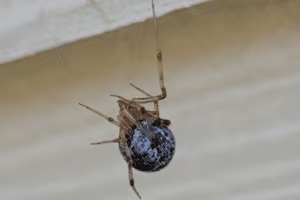
- House spiders (Parasteatoda tepidariorum): small (about a quarter inch), yellowish-brown with a dirty white abdomen and striped legs; build messy cobwebs in upper corners of rooms, windows, and garages
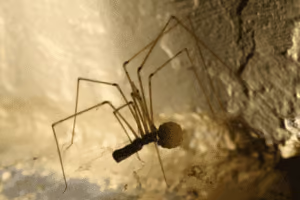
- Cellar spiders (Pholcus phalangioides): very long, thin legs with a small pale body; found in basement corners and crawl spaces, where they build loose, irregular webs and vibrate rapidly when disturbed
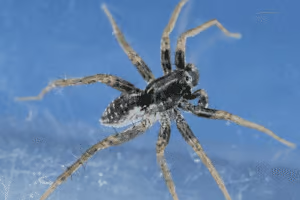
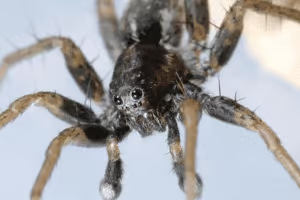
- Wolf spiders (Hogna and related genera): large and robust, brown with darker markings, no web; hunt actively on the ground and are often found on basement floors or entering through gaps at ground level; eyes reflect light clearly at night
Other signs of spider activity include egg sacs tucked into web corners, molted skins in undisturbed areas, and silk threads or funnels in closets, under furniture, and along baseboards.
Behavior & Habits of Spiders
Spider behavior varies considerably by species. House spiders and cellar spiders are web-builders that stay largely in one location once they’ve established a productive spot. They’re not aggressive and bite only when directly handled. Wolf spiders are active hunters that roam rather than web-build, covering significant ground at night in search of prey. All three species reproduce by laying eggs in silk sacs, and populations can build quickly in conditions that favor them. Spiders are largely nocturnal, which is why they’re often noticed at night or found resting in undisturbed areas during the day.
One important note for Southern Maine: the two spider species that generate the most concern from homeowners are black widows and brown recluses. Black widows are rare but occasionally found in Maine, typically in sheltered outdoor areas. Brown recluses are not established in Maine and sightings are almost always misidentifications of native species. If you’re unsure what you’re dealing with, accurate identification matters. According to UMaine Extension, most spiders encountered in Maine homes pose no meaningful threat to people.
Risks & Threats from Spiders
For most people, spiders in the home are a nuisance rather than a health risk. The species found most commonly indoors in Southern Maine, house spiders, cellar spiders, and wolf spiders, are not medically significant. Bites are rare and typically cause only minor, localized irritation.
The more relevant concern is what a heavy spider presence tells you about the property. Spiders don’t establish themselves indoors without a food supply, and that food supply is almost always an insect population worth identifying. In some cases the insect activity is connected to a moisture problem. In others it points to a rodent issue, since rodent activity attracts flies and other insects that in turn support spider populations. Properties with active nuisance wildlife near the foundation, raccoons, skunks, or squirrels getting into crawl spaces and wall voids, often develop secondary insect and spider problems as a result. Spiders are frequently the visible symptom of a chain of activity that starts somewhere else on the property.
Wooded and lakeside properties in towns like Windham, Casco, and Naples also tend to see higher tick and flea pressure alongside elevated spider activity, since all of these are driven by the same combination of wooded edges, high humidity, and abundant wildlife host populations.
General Prevention Tips for Spiders
- Seal gaps around doors, windows, foundations, and utility penetrations with caulk or weatherstripping to reduce entry points for both spiders and their prey
- Reduce indoor clutter, particularly in basements, garages, and storage areas where spiders establish undisturbed harborage
- Address moisture issues in basements and crawl spaces, as high humidity supports both cellar spiders and the insects they feed on
- Vacuum regularly in corners, along baseboards, and under furniture to remove webs, egg sacs, and spiderlings before populations build
- Minimize outdoor lighting near entry points, as lights attract the flying insects that draw spiders to the perimeter of a structure
- Reduce outdoor harborage near the foundation by keeping woodpiles, leaf litter, and dense vegetation away from the building
- Address any known rodent activity around the property, as rodents attract the secondary insect populations that support spider activity indoors
- Consider a year-round protection plan if spider activity is persistent, as addressing the underlying prey insect population is usually the most effective long-term approach
Frequently Asked Questions
Spiders follow their food supply. If insects are active inside a structure, spiders will be too. The combination of Maine’s humid climate, wooded surroundings, and older housing stock with gaps and moisture issues creates reliable indoor conditions for both. Reducing the insect population and sealing entry points is the most effective long-term approach.
Finding a spider occasionally is normal in any Maine home. A problem worth addressing looks different: persistent webs in multiple areas, egg sacs present, repeated sightings of larger species like wolf spiders, or a sudden increase in activity. That level of presence usually signals an underlying condition worth investigating.
The species found most commonly indoors in Southern Maine, house spiders, cellar spiders, and wolf spiders, are not medically significant. Black widows are occasionally found in Maine but are rare. Brown recluses are not established here and most suspected sightings are misidentifications. If you’re unsure what species you’re dealing with, professional identification is the most reliable answer.
Spiders bite in defense, not as a hunting behavior. Bites from common indoor species typically cause minor irritation similar to a mosquito bite. The best way to avoid bites is to avoid handling spiders directly and to wear gloves when working in areas where spider activity is heavy.
It depends on the species and conditions, but a single egg sac can contain dozens to several hundred eggs. Under favorable indoor conditions, populations can build significantly over a season. Addressing the issue before egg sacs hatch is considerably more effective than dealing with an established population.
Yes, fall is when spider activity increases noticeably in Maine basements and ground-level areas. Many spiders reach adulthood in late summer and fall, and wandering males searching for mates often end up indoors. Wolf spiders in particular show up on basement floors this time of year.
Commonly Confused With
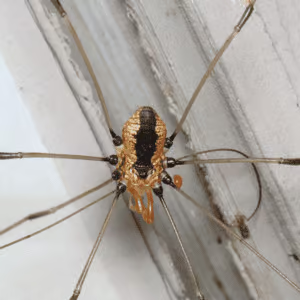
Harvestmen (daddy longlegs): Harvestmen are arachnids but are not spiders. They have only one body segment (spiders have two), no silk glands, and no venom. They are completely harmless and do not bite. The confusion is understandable since they look superficially similar to cellar spiders and are sometimes called by the same common name. Harvestmen are frequently found on exterior walls, in woodpiles, and in damp areas around foundations.
Professional Spider Control in Southern Maine
Persistent spider activity indoors is rarely just a spider problem. My approach starts with identifying what’s attracting them, whether that’s a moisture issue, an insect infestation, structural gaps, or wildlife activity creating secondary pressure, and addressing the source rather than just the symptom. I’ve been doing this work for 16 years across Cumberland and York Counties, and as an Associate Certified Entomologist (A.C.E.) I can accurately identify the species present and tell you what that presence likely means for the property overall. My common pests control service covers spiders and the full range of insect prey species that support them, and my commercial pest control service is available for businesses throughout the region. Contact me to schedule a free consultation.