

Woodchucks in Southern Maine:
Identification, Prevention, and Control
Woodchucks, also known as groundhogs, are one of the more destructive burrowing wildlife species in Southern Maine, particularly in properties with gardens, open yards, and structures built on or near soil rather than continuous concrete foundations. A single woodchuck can excavate an extensive burrow system running 25 to 30 feet in length with multiple chambers, and when those burrows run under a concrete patio, foundation wall, retaining wall, or deck footing, the soil displacement causes settling and cracking that can be difficult and expensive to address. In agricultural and rural communities across Hollis, Buxton, Limerick, and Dayton, where properties mix open fields with older foundations and established gardens, woodchuck pressure is a consistent warm-season issue. As a licensed Animal Damage Control (ADC) operator and Associate Certified Entomologist with 16 years of experience in the region, I provide targeted removal and exclusion tailored to each property. Browse the wildlife pest library to see other species I handle, or contact me if woodchucks are burrowing on your property.
What Are Woodchucks?
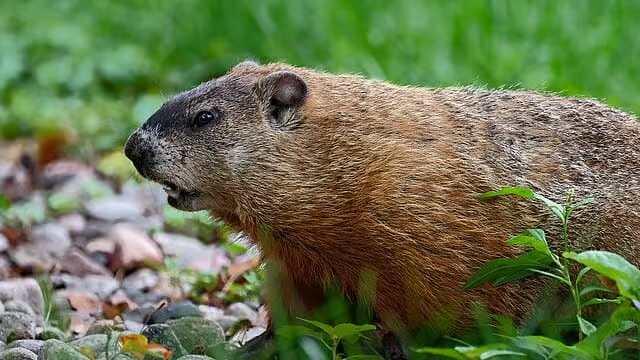
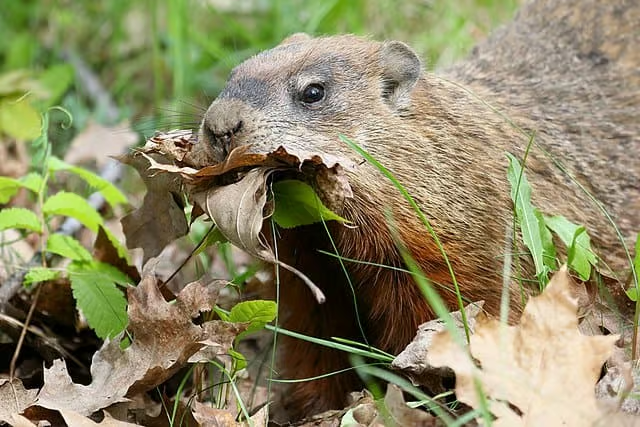
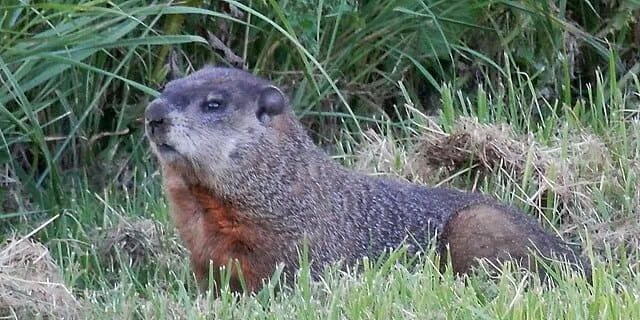
The woodchuck (Marmota monax), also called the groundhog, is the largest member of the squirrel family in Maine and one of the few true hibernators among Maine’s wildlife. Adults measure 16 to 27 inches in total length including the short bushy tail and weigh between 5 and 14 pounds, with animals at the upper end of that range being fairly common in Maine’s productive agricultural areas. Fur is coarse and grizzled brown on the back, paler on the underside, with reddish-brown tones on the legs and feet. The body is stocky and low to the ground with short powerful legs adapted for digging, small rounded ears, and prominent incisors used for gnawing vegetation and excavating soil.
Woodchucks are among the few Maine mammals that enter true hibernation, becoming physiologically inactive from approximately October through March with significantly reduced heart rate, body temperature, and metabolism. They emerge in early spring, typically late February through March in southern Maine, at which point males become active quickly and begin breeding. Females give birth in April and May to litters of two to six young that remain in the burrow until late June or July. Woodchucks are diurnal and most active in the two to three hours after sunrise and again in the late afternoon. They are solitary and territorial outside of the brief breeding season.
The burrow system is the defining feature of woodchuck biology from a nuisance management standpoint. A single animal typically maintains a primary burrow for breeding and hibernation plus one or more secondary burrows used for escape and daytime resting. The primary burrow can extend 25 to 30 feet in length, reach 5 feet in depth, and include distinct chambers for nesting and waste. The entrance is typically 6 to 8 inches in diameter with a prominent mound of excavated soil. A secondary or escape entrance is often present at a separate location without a mound, making complete burrow identification an important part of any removal approach. The Maine Department of Inland Fisheries and Wildlife provides additional species information including habitat range and behavior in Maine.
Signs of Woodchuck Activity
Woodchuck activity is generally straightforward to identify because of the distinctive burrow entrances and the highly visible garden and vegetation damage they produce.
Look for:
- Large burrow entrances 6 to 8 inches in diameter with a prominent fan-shaped mound of excavated soil at the main entrance, typically located along fence lines, under structures, or at the edge of wooded areas
- Secondary burrow entrances without a soil mound, often harder to find and located several feet from the main entrance
- Clipped, chewed, or entirely consumed garden vegetables, particularly beans, peas, lettuce, broccoli, and other leafy crops, often with clean angled bite marks at the stem
- Stripped or chewed vegetation along the ground near burrow entrances as the animal forages close to its escape route
- Short, high-pitched whistle alarm calls when the animal is disturbed, which is how the species earned the regional name whistlepig
- Five-toed tracks in soft soil near burrow entrances, with the front feet showing four toes
- Settled or sunken soil over tunnel pathways in lawns and garden beds
- Gnaw marks on wooden garden structures, fencing, and the bases of fruit trees
Woodchuck burrowing under foundations, retaining walls, and concrete pads is most active in spring and early summer in Standish and Scarborough properties with open yard areas adjacent to the structure, as newly emerged animals seek both food sources and secure denning locations close to cover.
Risks in Southern Maine
Woodchucks present two primary risk categories: structural damage from burrowing and garden damage from feeding. Both can be substantial when a well-established animal is left to operate on a property through a full growing season.
The structural concern is the more serious of the two. Burrow systems that run under concrete patios, foundation walls, steps, retaining walls, or deck footings displace significant volumes of soil, and the voids created by that displacement cause the surface above to settle, crack, and shift over time. A burrow that begins at the field edge and extends toward the foundation over successive seasons can eventually undermine structural elements in ways that are expensive to repair and difficult to diagnose without knowing the cause. Stone retaining walls are particularly vulnerable, as burrow excavation removes the soil that holds stones in alignment and can destabilize entire sections.
The garden damage woodchucks cause can be extensive and rapid. A single animal can consume several pounds of vegetation per day during peak summer feeding, and a vegetable garden that is not protected with buried fencing can be effectively destroyed over the course of a few weeks. Fruit trees and ornamental shrubs near burrow sites are also subject to gnawing at the base.
Woodchucks carry fleas and ticks, and active burrow systems on the property contribute to flea and tick pressure in the surrounding area. According to the Maine DACF Got Pests woodchuck page, live trapping combined with burrow exclusion and habitat modification is the most effective long-term approach for woodchuck conflicts on residential properties.
Prevention Tips
Woodchuck prevention centers on excluding access to garden areas and eliminating the denning opportunities that make a property attractive:
- Install welded wire fencing around vegetable gardens with the bottom portion buried at least 12 inches deep and bent outward in an L-shape underground to prevent burrowing under the fence line
- Add a single strand of electric fencing at 4 to 5 inches above ground along the outside of the garden fence, which is one of the most effective deterrents for persistent animals
- Install hardware cloth or a concrete apron barrier along the base of decks, sheds, and outbuildings, buried at least 12 inches deep with an outward-facing underground skirt to prevent burrowing access
- Remove brush piles, rock piles, and dense ground cover within 20 feet of gardens and foundations, as these provide both cover and alternative denning opportunities that extend the animal’s foraging range toward the structure
- Keep lawns and field edges mowed short adjacent to the property, as woodchucks prefer areas with cover close to their burrow entrances and will avoid more exposed locations
- Protect individual fruit trees and ornamental shrubs with hardware cloth cylinders around the trunk base where gnawing has occurred
- Fill abandoned burrow entrances with compacted soil and rock to discourage reuse by the same or new animals after removal
Commonly Confused With
Woodchuck burrow entrances are occasionally confused with the work of other burrowing species found in Southern Maine:
Chipmunks also burrow around foundations and garden areas, but chipmunk entrances are much smaller, typically 2 inches in diameter, with no soil mound at the entrance. Chipmunk burrow systems are also shallower and shorter than woodchuck systems. If the hole is large enough to put your fist through and has a prominent dirt mound beside it, it is almost certainly a woodchuck rather than a chipmunk.
Skunks occasionally dig under the same structures that woodchucks burrow under, but skunk digging is shallower and less extensive, and skunk burrow entrances are smaller and rounder than the large oval openings woodchucks create. The presence of a strong musky odor near a den entrance is a reliable indicator that skunks rather than woodchucks are involved.
Opossums also den under decks and outbuildings, but they do not excavate their own burrows. They occupy existing cavities or spaces under structures rather than digging them, so there will be no fresh soil mound or excavation evidence at the entrance if an opossum is the occupant.
Professional Woodchuck Control in Southern Maine
Woodchuck removal requires attention to timing as well as technique. Females with young in the burrow from May through late June present a situation where exclusion alone without confirming the young are mobile can seal animals inside, creating additional problems. Every job starts with a thorough inspection of the property to locate all burrow entrances including secondary escape exits, assess how close the system runs to any structural elements, and determine whether a female with young is present based on the time of year and behavioral indicators. Depending on what I find, the response may involve habitat modification, eliminating food attractants, exclusion fencing, or live trapping under Maine IFW humane handling standards, often some combination. Once the conflict is resolved, all burrow entrances are sealed and exclusion barriers are installed to prevent the same or new animals from re-establishing.
Woodchucks are a Category I home and garden species under Maine IFW guidelines. I follow all applicable Maine IFW regulations on every job. Learn more about my background and credentials on the about page, or visit the nuisance wildlife control service page for a full overview of what I offer. Contact me to schedule a free inspection.
Frequently Asked Questions
More than most homeowners expect. A primary woodchuck burrow can extend 25 to 30 feet and reach 5 feet in depth, excavating 35 or more cubic feet of soil in the process. When that volume of material is removed from under a concrete pad, retaining wall, or foundation footing, the surface above loses support and begins to settle unevenly. The visible cracking and shifting that results is often misattributed to settling or frost heave until the burrow system is discovered. Addressing woodchuck activity before the burrow extends under structural elements is considerably less expensive than repairing the damage afterward.
The most straightforward window is in early spring shortly after emergence, before females have given birth, or in late summer and fall after the young of the year have dispersed. Attempting removal from May through late June when females may have young in the burrow requires confirming that the young are mobile before any exclusion work, which adds complexity to the job. Woodchucks can also be addressed at any point during the active season with live trapping, but the burrow system should be fully identified and sealed after removal regardless of timing.
Not reliably. A woodchuck that has an established burrow system will typically reopen a filled entrance within a day or two if the animal is still present on the property. Filling entrances can be a useful diagnostic tool to confirm whether a burrow is actively occupied, but it is not a removal method on its own. Effective resolution requires removing the animal and then sealing all entrances with barriers that prevent re-excavation.
Ready to Get Started?
If woodchucks are burrowing under your foundation, deck, or retaining wall, or destroying your garden, reach out for a free inspection and I will locate all active burrow entrances, assess how close the system runs to any structural elements, and put together a plan to remove the animal and seal the property against return.