

Chipmunks in Southern Maine:
Identification, Prevention, and Control
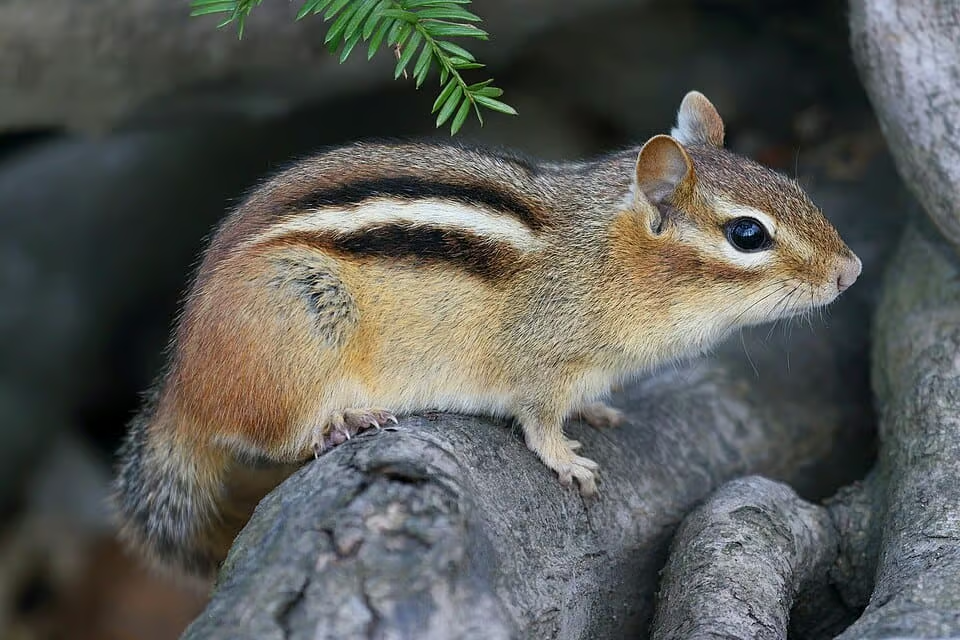
Eastern chipmunks are one of the most familiar wildlife nuisances I deal with across Southern Maine, showing up in yards, gardens, and foundations throughout Cumberland and York Counties. In towns like Standish, Windham, Hollis, and Scarborough, properties with wooded edges, stone walls, and established landscaping tend to see the most activity. Chipmunks look harmless, and most of the time they are, but when they start burrowing under foundations, steps, or retaining walls, the damage can add up quickly and go unnoticed until it becomes a structural problem. As a licensed Animal Damage Control (ADC) operator and Associate Certified Entomologist with 16 years of experience in the region, I provide humane, targeted removal and exclusion tailored to each property. Browse the wildlife pest library to see other species I handle, or contact me if you’re seeing signs and aren’t sure what you’re dealing with.
What Are Chipmunks?
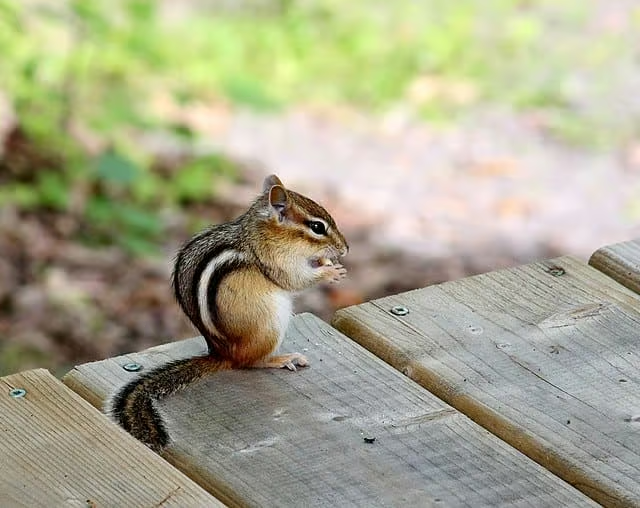
Eastern chipmunks (Tamias striatus) are small, ground-dwelling members of the squirrel family native to the eastern United States. Adults measure 5 to 6 inches in body length with a 3 to 4 inch tail, and weigh roughly 3 ounces. The most recognizable feature is the striping: five dark brown to blackish stripes running down the back separated by tan stripes, with two additional pale stripes framing each eye. The tail is bushy but narrower than a squirrel’s, and the rump has a reddish-brown tint where the back stripes end.
Chipmunks are strictly diurnal, active during daylight hours and rarely seen at dusk or after dark. They are solitary outside of breeding season and highly territorial around their burrow entrances. Unlike woodchucks, chipmunks do not enter true hibernation in winter. Instead, they cache large quantities of seeds, nuts, and berries in underground chambers and enter a torpor, waking periodically to feed from their stores on warmer days. This means burrow systems are year-round structures, not seasonal ones. The Maine Department of Inland Fisheries and Wildlife provides a full species overview including habitat range and seasonal behavior in Maine.
Signs of Chipmunk Activity
Chipmunk problems typically make themselves known around foundations, patios, garden beds, and the bases of steps or retaining walls. Because chipmunks carry excavated soil away in their cheek pouches and scatter it rather than mounding it at the entrance, burrow openings are often surprisingly clean and easy to overlook.
Look for:
- Clean, smooth-edged holes roughly 2 inches in diameter in soil or mulch, with no dirt mound around the opening
- Small, elongated droppings scattered near burrow entrances, along foundations, or inside garages and crawl spaces
- Chewed or missing flower bulbs, seeds, and seedlings in garden beds
- Caches of seeds, nuts, or plant material discovered in wall voids, crawl spaces, or basement corners
- Tunnels running along the undersides of sidewalks, steps, decks, or retaining walls, visible where soil has settled or cracked
- Gnaw marks on plastic irrigation lines, wiring, or wooden trim at or near ground level
- Daytime chattering or rapid chip-chip vocalizations near the foundation, often a response to disturbance near the burrow
- Visible travel paths worn through ground cover or mulch between burrow entrances and food sources
Chipmunk activity spikes sharply in late summer and early fall when populations are in peak food-caching mode before winter, and properties near wooded edges and shorelines in Casco and Raymond see some of the most consistent pressure during this period.
Risks in Southern Maine
Chipmunks are not aggressive and rarely transmit disease directly to people, but the structural damage from burrowing is the real concern, particularly on older properties. Burrow systems can extend 20 to 30 feet underground with multiple chambers, and when they run under concrete steps, patio slabs, foundation walls, or retaining walls, the soil displacement causes settling and cracking over time. What looks like a minor landscaping issue can become a costly repair if the burrowing continues unchecked through multiple seasons.
In homes with stone foundations common throughout older rural communities in York and Cumberland Counties, chipmunks find natural entry points into crawl spaces and basements, where they cache food, leave droppings, and occasionally gnaw on wiring or plastic pipes. While direct disease transmission to people is uncommon, chipmunks do carry fleas and ticks, and an active population close to the structure contributes to tick pressure on the property. According to the Maine DACF Got Pests chipmunk page, populations in suburban areas can reach densities high enough to cause significant cumulative damage to landscaping and hardscaping when left unmanaged.
Prevention Tips
Most chipmunk prevention comes down to reducing the conditions that make a property attractive for burrowing and caching:
- Seal foundation cracks and gaps larger than half an inch with concrete, mortar, or metal flashing before fall when chipmunks are most actively seeking shelter
- Lay quarter-inch hardware cloth flat under garden beds and around the base of retaining walls, buried 6 to 8 inches deep to block burrowing access
- Store birdseed, pet food, and other attractants in sealed metal containers rather than plastic bins, which chipmunks can gnaw through
- Pull mulch and leaf litter at least 12 inches back from the foundation to eliminate the loose, easy-to-burrow substrate they prefer right at the house
- Remove brush piles, rock piles, and dense low ground cover within 20 feet of the structure, which provide both cover and foraging habitat
- Fill existing burrow entrances with soil and compacted gravel after confirming they are unoccupied, to discourage reuse
- Install metal flashing along the base of wooden decks and steps to deny access to the underside
- Inspect retaining walls and patio edges each spring for signs of new tunneling, and address early before the system expands
These measures are particularly important in Limerick, Hollis, and Buxton properties with extensive landscaping, stone walls, or wooded lot edges where chipmunk pressure tends to be ongoing rather than occasional.
Commonly Confused With
Eastern chipmunks are occasionally confused with two other species common in Southern Maine:
Red squirrels share similar reddish-brown coloring and overlapping habitat in wooded and suburban areas. The key differences are size and behavior. Red squirrels are noticeably larger, more aggressive, and primarily arboreal, spending most of their time in trees rather than on the ground. Chipmunks have distinct facial and back striping that red squirrels lack, and chipmunks are burrowing animals while red squirrels nest in trees or attic cavities. If the animal is running up trees and entering the roofline, it is almost certainly a red squirrel, not a chipmunk.
Gray squirrels are significantly larger than chipmunks, gray rather than brown, and have no striping. Confusion between the two is less common, but juvenile gray squirrels seen in early summer are sometimes mistaken for chipmunks due to their smaller size. Juvenile gray squirrels lack the prominent facial and dorsal stripes chipmunks have, and they move with a bounding gait rather than the quick darting movement of a chipmunk.
Professional Chipmunk Control in Southern Maine
When prevention alone is not enough, I provide thorough, low-impact removal and exclusion tailored to each property. Every job starts with a detailed inspection to locate active burrow entrances, travel paths, food sources, and any points where chipmunks are accessing the structure. From there I develop a plan specific to that property, whether that means live trapping and relocation, targeted snap trapping, or exclusion work around foundation gaps and hardscaping. I handle the entire process myself from start to finish, and follow-up visits are included until the problem is fully resolved.
Chipmunks are a Category I home and garden species under Maine IFW guidelines, meaning homeowners can legally address them on their own, but professional removal paired with proper exclusion consistently produces better and longer-lasting results than DIY trapping alone. Removing a chipmunk without sealing the burrow entrance and eliminating the conditions that attracted it simply invites the next one in. I follow Maine IFW humane handling standards on every job. Learn more about my background and credentials on the about page, or visit the nuisance wildlife control service page for a full overview of what I offer. Contact me to schedule a free inspection.
Frequently Asked Questions
Chipmunks have five dark stripes running down the back and two pale stripes framing each eye, which neither squirrel species has. They are also ground-dwellers, running along foundations and disappearing into burrow holes rather than climbing trees. Red squirrels are larger, lack the striping, and are much more likely to be seen on fences, in trees, or near attic entry points. Juvenile gray squirrels are also unstriped and move with a slower bounding gait rather than the quick darting motion of a chipmunk.
Yes, given enough time. A single chipmunk burrow is a minor inconvenience, but multiple burrows running under a patio, set of steps, or foundation wall displace enough soil to cause settling and cracking over time. I regularly inspect properties in Southern Maine where what started as a chipmunk in the yard situation turned into a repair bill because the burrowing went unaddressed for a few seasons.
No. Chipmunks do not migrate or abandon established burrows. They enter torpor in winter and rely on food cached in those burrows, so the burrow system remains active and occupied year after year. Addressing the problem before winter simply means you will have less visible activity, but the chipmunks will return to the same burrows in spring.
Ready to Get Started?
If chipmunks are burrowing near your foundation, damaging your garden, or getting into your garage or crawl space, reach out for a free inspection and I will locate the active burrows, identify any entry points into the structure, and put together a plan to get them out and keep them out.