

Opossums in Southern Maine:
Identification, Prevention, and Control
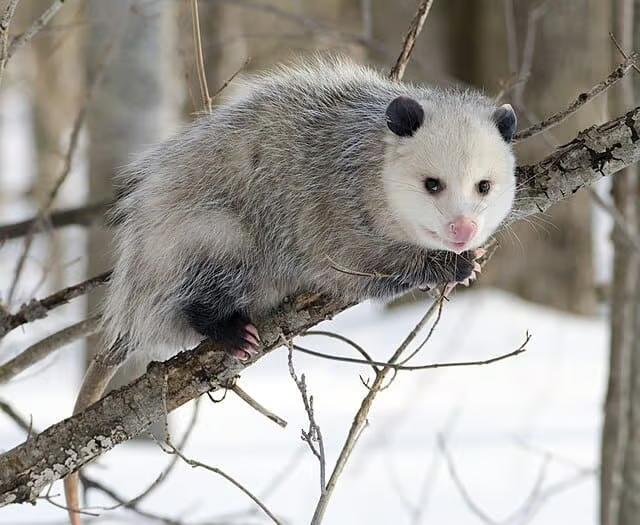
Virginia opossums are a relatively recent addition to Southern Maine’s wildlife roster, having expanded their range northward significantly over the past few decades as winters have moderated. They are North America’s only marsupial and one of the more misunderstood nuisance species in the region. Opossums are generally passive, slow-moving, and transient, which means a single opossum passing through a yard is a very different situation than a nesting animal that has established a den under a deck or shed. In suburban communities across Saco, Biddeford, Scarborough, and Westbrook, opossums are most commonly encountered raiding garbage, denning under decks and sheds, and occasionally entering garages or crawl spaces in search of food and shelter. As a licensed Animal Damage Control (ADC) operator and Associate Certified Entomologist with 16 years of experience in the region, I provide humane, targeted removal and exclusion tailored to each property. Browse the wildlife pest library to see other species I handle, or contact me if opossums are causing problems on your property.
What Are Opossums?
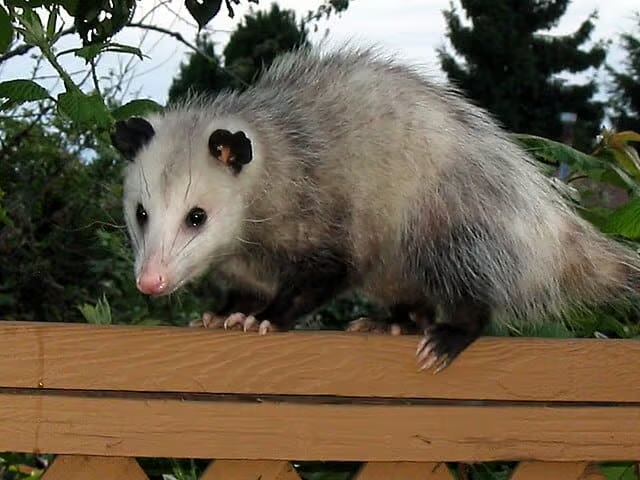
The Virginia opossum (Didelphis virginiana) is the only marsupial native to North America and the only opossum species found in Maine. Adults measure 24 to 40 inches in total length including the tail and weigh between 4 and 14 pounds, roughly the size of a house cat though they appear larger due to their fur. The fur is coarse and grizzled gray to white, with a pale white face, a long pointed snout, prominent naked pink ears, and small dark eyes. The tail is long, hairless, and prehensile, used for gripping branches and stabilizing the animal when climbing. Opossums have 50 teeth, more than any other North American land mammal, though they use them primarily for processing their varied omnivorous diet rather than for defense.
As marsupials, opossums give birth to undeveloped young after a gestation of only about 13 days. The tiny joeys crawl to the mother’s pouch where they nurse and develop for approximately two months, then ride on the mother’s back for several more weeks before becoming independent. Opossums have two to three litters per year. They are solitary, nomadic, and generally do not defend territories, which is why a single opossum seen in the yard may simply be passing through rather than indicating an established population. Maine represents the northern edge of the species’ range, and opossums here are frequently observed with frostbitten ear tips and tail ends, a consequence of their tropical evolutionary origins and their relative lack of cold adaptation. The Maine Department of Inland Fisheries and Wildlife notes that the opossum’s range in Maine has expanded northward substantially in recent decades.
Signs of Opossum Activity
Because opossums are transient and do not mark or defend territories, their signs can appear suddenly and disappear just as quickly if an animal is simply passing through.
Look for:
- Overturned or raided garbage containers with scattered food waste, typically visited opportunistically rather than on a predictable nightly schedule
- Distinctive hand-like tracks in mud or snow, showing five toes on both front and rear feet with the rear inside toe set wide apart and lacking a claw, resembling a small human handprint
- Droppings similar in size to those of a cat or small raccoon, roughly one to two inches long, often deposited near food sources or den entrances
- Disturbed pet food, birdseed, or compost visited at night
- Evidence of denning under decks, sheds, or porches including scraped or pushed-aside soil at the entrance and accumulated bedding material inside
- A hissing, clicking, or low growling sound when the animal is cornered or disturbed near a den
- A pale gray animal with a white face moving slowly through the yard after dark, or occasionally found motionless and apparently dead when stressed
Opossum denning activity under decks and outbuildings is most common in late fall and winter, when properties with accessible warm shelter in Cornish and Limerick tend to see the most consistent activity.
Risks in Southern Maine
Opossums are one of the lower-risk nuisance wildlife species in Southern Maine from a health standpoint, and understanding what they do and do not pose is useful context for responding proportionately.
On the rabies question specifically: opossums are frequently assumed to be a rabies risk because they are wild mammals, but this concern is generally considered to be overstated in the scientific literature. Their body temperature runs lower than that of most mammals, which makes the rabies virus less likely to survive and replicate in their system. Documented cases of opossum rabies are extremely rare. This does not mean opossums should be handled, but it does mean that an opossum seen moving normally in the yard is not the same public health concern as a raccoon or skunk behaving erratically.
The more realistic risks from opossums are property-related. Denning under a deck or shed involves digging that can undermine structures over time. Opossums will raid garbage, pet food, bird feeders, and garden produce. They carry fleas, ticks, and mites, contributing to flea and tick pressure on the property. Their droppings can carry leptospirosis and other pathogens and should not be handled without gloves. Opossums in a crawl space or garage will contaminate the space with droppings and urine and can damage stored items. According to the Maine Department of Inland Fisheries and Wildlife, the most effective long-term approach with opossums is eliminating attractants and denning access rather than repeated removal of individual animals.
Prevention Tips
Because opossums are transient and opportunistic rather than territorial, prevention is largely about eliminating the specific attractants and access points that cause them to stop and stay rather than pass through:
- Secure all garbage in containers with locking lids and store them in a garage or outbuilding overnight where possible
- Bring in pet food, bird feeders, and water dishes at night, as these are among the most reliable opossum attractants around residential properties
- Install hardware cloth or a buried concrete apron barrier along the base of all decks, sheds, and outbuildings to deny denning access underneath, burying the barrier at least 12 inches deep with an outward-facing horizontal skirt
- Remove fallen fruit from the yard promptly, as opossums are strongly attracted to fermenting and overripe fruit
- Keep compost in a wildlife-proof bin and avoid adding food scraps that generate odor
- Clear dense brush, woodpiles, and debris piles within 20 feet of the structure, as these provide cover and alternative shelter that encourages opossums to linger
- Seal gaps larger than three inches at foundation sills, crawl space vents, and the base of garage doors before fall when opossums begin seeking winter shelter
- Secure chicken coops and poultry housing with hardware cloth, as opossums will prey on eggs and young birds given access
Commonly Confused With
Opossums are fairly distinctive in appearance as adults but are occasionally confused with other species at a distance or in poor light.
Raccoons are sometimes confused with opossums when seen briefly at night, but raccoons are significantly larger, stockier, and have the distinctive black facial mask and ringed tail that opossums lack entirely. Raccoons also move with much more agility and speed than opossums.
Skunks share the same nocturnal habits and often use the same denning spaces under decks and sheds, but skunks have the distinctive black and white patterning that opossums lack. Signs of activity can overlap, with both species raiding garbage and leaving droppings of similar size near the same structures.
Domestic cats are occasionally mistaken for opossums at a distance given similar body size, but the opossum’s pointed white face, naked ears, and hairless tail are immediately distinguishing once the animal is clearly visible.
Professional Opossum Control in Southern Maine
Because opossums are transient by nature, the first step on every job is confirming whether the animal is actually denning on the property or simply passing through. A single opossum seen in the yard on one or two occasions may require nothing more than securing attractants and monitoring. A denning animal under a deck or in a crawl space is a different situation that warrants exclusion work.
When removal is appropriate, I use live trapping placed at active den entrances and tend traps on a schedule consistent with Maine IFW humane handling standards. Once the animal is removed, all access points are sealed with hardware cloth buried to prevent re-entry by the same or other animals. Because opossums are nomadic, addressing the attractants that caused the animal to stop is as important as the removal itself. Opossums are a Category I home and garden species under Maine IFW guidelines. I follow all applicable Maine IFW regulations on every job. Learn more about my background and credentials on the about page, or visit the nuisance wildlife control service page for a full overview of what I offer. Contact me to schedule a free inspection.
Frequently Asked Questions
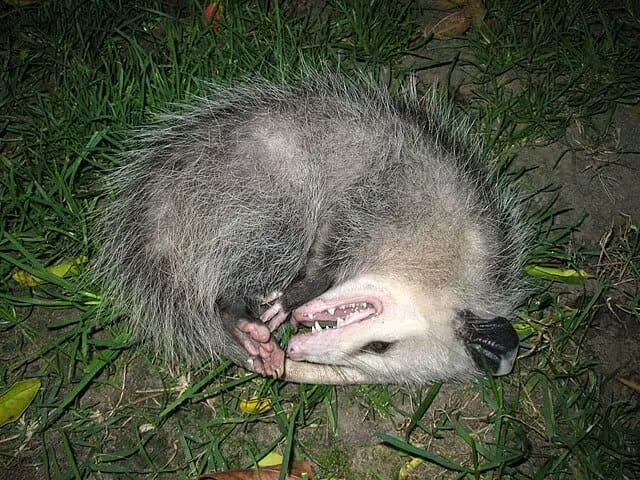
No. The behavior commonly called playing dead or playing possum is an involuntary physiological response to extreme stress rather than a deliberate strategy. The animal enters a catatonic state, goes limp, its heart rate and breathing slow, and it may emit a foul-smelling secretion from its anal glands to reinforce the impression of a dead animal. The opossum cannot control when this happens or how long it lasts, and it typically recovers within minutes to hours once the perceived threat is gone.
The rabies risk from opossums is generally considered to be significantly lower than from raccoons, skunks, or foxes. Their naturally low body temperature is thought to make their physiology less hospitable to the rabies virus, and documented cases are rare. That said, any wild animal should not be handled, and an opossum displaying truly abnormal behavior such as unprovoked aggression or severe disorientation should be reported to Maine IFW rather than approached.
Consistent nightly activity at the same location, a strong musky odor near a specific den entrance, droppings accumulating in one spot, and visible bedding material inside the space are all indicators of a denning animal. A single sighting or occasional scattered evidence without a clear den location is more consistent with a transient animal moving through the area.
Ready to Get Started?
If opossums are denning under your deck or outbuilding, raiding your garbage, or getting into your garage or crawl space, reach out for a free inspection and I will assess whether the situation calls for removal and exclusion or simply attractant management, and put together a plan accordingly.