

Red Squirrels in Southern Maine:
Identification, Prevention, and Control
Red squirrels are a persistent and frequently underestimated attic pest throughout Southern Maine, particularly in the more rural and forested communities across York and Cumberland Counties. Smaller and more agile than gray squirrels, they can enter through openings barely an inch across and are highly motivated to maintain access to any structure they have established as a food cache. In towns like Cornish, Parsonsfield, Newfield, and Limington, where conifer-heavy woodlands border residential properties, red squirrel pressure on structures is a consistent fall and winter issue. As a licensed Animal Damage Control (ADC) operator and Associate Certified Entomologist with 16 years of experience in the region, I provide thorough inspection, humane exclusion, and targeted removal tailored to each property. Browse the wildlife pest library to see other species I handle, or contact me if you are hearing sounds in your attic or noticing signs of activity near the roofline.
What Are Red Squirrels?
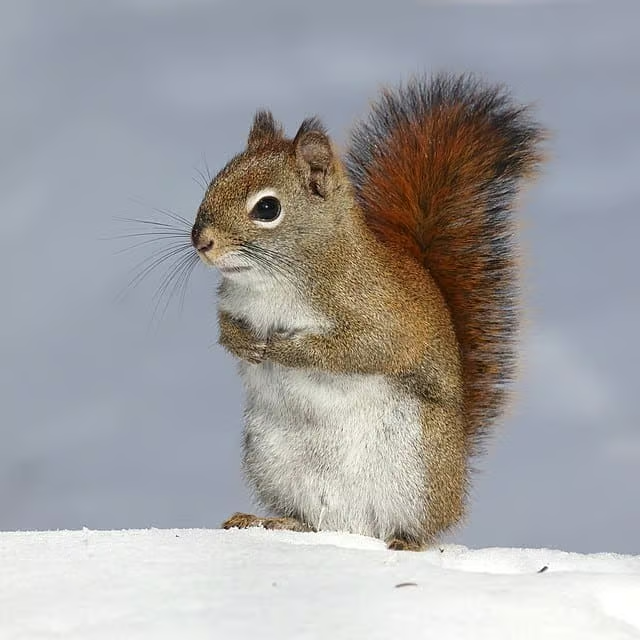
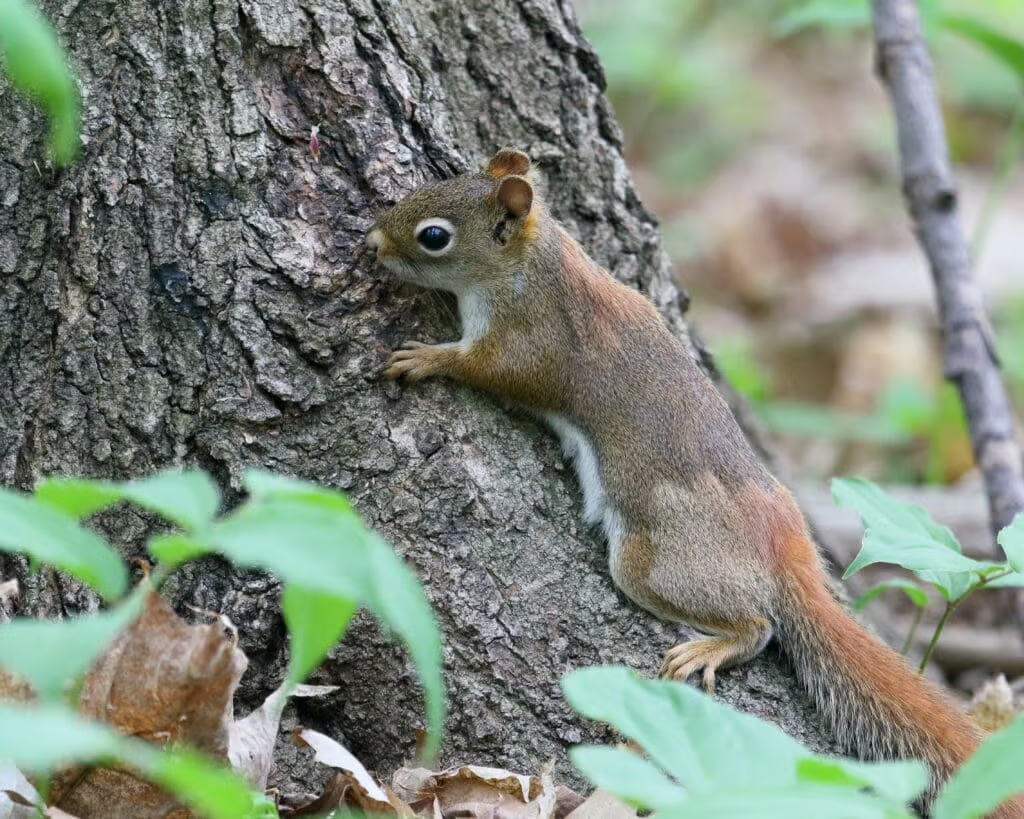
American red squirrels (Tamiasciurus hudsonicus) are small, territorial tree squirrels native to coniferous and mixed forest habitats throughout Maine. Adults measure 11 to 14 inches in total length including the tail and weigh between 5 and 9 ounces, making them noticeably smaller than eastern gray squirrels. Fur on the back and sides is reddish-brown to olive-gray, with a clearly defined white belly and a narrow dark line along each flank separating the two colors. The tail is bushy and often held erect or flicked rapidly when the animal is agitated. In winter, small ear tufts develop on many individuals. A pale eye ring is present year-round and is one of the more reliable identification features at close range.
Red squirrels are among the most vocal and territorially aggressive small mammals in Maine. They produce a rapid, rattling chatter that escalates to a loud scolding call when disturbed, which is often the first indication homeowners have that one is present. Unlike gray squirrels, which cache food in scattered locations across a broad range, red squirrels create centralized food stores called middens, large accumulations of conifer cone scales, seeds, and mushrooms built up over years in a single location. This behavior drives them to use attics and wall voids as cache sites, sometimes moving substantial volumes of material into the structure. The Maine Department of Inland Fisheries and Wildlife provides additional species information including habitat range and behavioral detail for Maine.
Signs of Red Squirrel Activity
Red squirrel activity in structures is typically loud and conspicuous because the animals are diurnal, vocal, and active throughout the day rather than primarily at dawn and dusk.
Look for:
- Loud chattering, scolding, or rapid clicking vocalizations audible from outside the structure, particularly when the animal is disturbed near its entry point
- Daytime scratching, scurrying, or gnawing sounds in the attic, wall voids, or ceiling, often concentrated in one area of the structure where the cache is located
- Small entry holes one to one and a half inches in diameter in soffits, fascia boards, roof vents, or roof edge junctions, typically with clean gnaw marks around the perimeter
- Large accumulations of conifer cone scales, seed husks, mushroom fragments, and other cached food discovered in attic corners, wall voids, or between ceiling joists
- Droppings scattered near the cache site and along travel routes, smaller than gray squirrel droppings and often mixed with cone debris
- Gnaw marks on electrical wiring, plastic pipe insulation, wooden structural members, and any materials near the cache location
- Nesting material gathered into insulation, shredded bark, leaves, or other soft material
- Stripped bark or chew marks on conifer branches near the roofline, and scattered cone scales on the ground below the entry point
Red squirrel entry into structures is most active in September and October as animals aggressively cache food ahead of winter, and homes bordering mixed conifer woodlands in Shapleigh and Waterboro see particularly consistent pressure during this period.
Risks in Southern Maine
Red squirrels present a more persistent exclusion challenge than their small size suggests, primarily because their food-caching drive keeps them highly motivated to maintain access to an established cache site. An animal that has been using an attic as a midden for one or two seasons may have moved a significant volume of material into the structure, and that cached food continues to attract the same individual and others even after removal if the entry points are not thoroughly sealed.
The structural risks are similar to those from gray squirrels: gnawing on electrical wiring is a fire hazard, urine and droppings in insulation cause contamination and odor that intensifies over time, and repeated gnawing on wooden elements at entry points causes progressive deterioration. Red squirrels are capable of enlarging a small gap considerably through persistent chewing, and their smaller size means they can exploit openings that would stop a gray squirrel. Camps and cabins in Casco and Sebago that sit vacant through winter are particularly vulnerable, as a single red squirrel with uncontested access to an empty structure can accumulate an extraordinary volume of cached material by spring. According to the Maine DACF Got Pests squirrel page, exclusion combined with thorough sealing of all entry points is the most effective long-term approach for squirrel conflicts in Maine structures.
Prevention Tips
Red squirrel prevention requires more thorough exclusion work than gray squirrel prevention because of the smaller entry size they can exploit:
- Trim all tree branches back at least 8 to 10 feet from the roofline and at least 6 feet from any wall or siding surface, paying particular attention to conifer branches that extend over or near the roof
- Seal all gaps and openings one inch or larger in soffits, fascia boards, roof vents, and roof edge junctions with heavy-gauge hardware cloth or metal flashing secured with screws
- Inspect and repair all wood rot in fascia, soffit, and trim boards promptly, as deteriorating wood creates entry opportunities that red squirrels find and exploit quickly
- Cap chimney openings and screen all attic vents with hardware cloth with openings no larger than half an inch
- Remove conifer seed sources close to the structure where possible, and clean up fallen cones and seeds regularly during fall caching season
- Install metal flashing at roof edges and along any wood-to-wood junctions where gaps develop over time
- For seasonal properties in Baldwin and Lyman that sit vacant through winter, a full exclusion inspection before closing for the season is essential, as unoccupied structures provide ideal undisturbed caching conditions
Commonly Confused With
Red squirrels are most often confused with two other species:
Gray squirrels are noticeably larger, gray rather than reddish-brown, and lack the flank stripe and eye ring that red squirrels display. Gray squirrels also tend to create larger entry holes and cause more visible damage to roof edges and soffits due to their greater size and strength. The behavior is similar in terms of daytime activity and attic entry, but the size difference is apparent at any reasonable viewing distance.
Flying squirrels are similar in size to red squirrels but are strictly nocturnal and have the distinctive flattened gliding membrane along their sides. If the attic is active at night rather than during the day, flying squirrels are the more likely species. Flying squirrels also lack the reddish-brown coloring and the aggressive vocal behavior that red squirrels display.
Eastern chipmunks share similar reddish-brown coloring and habitat overlap in wooded areas, but are significantly smaller, have the distinctive alternating dark and pale dorsal stripes that red squirrels lack, and are ground-dwelling rather than arboreal. Chipmunks burrow rather than enter attics, and their vocalizations are a sharp chip sound rather than the extended rattling chatter of a red squirrel.
Professional Red Squirrel Control in Southern Maine
Red squirrel removal requires thorough exclusion work because the food-caching drive means a displaced animal will persistently attempt to re-enter, and the cached material inside the structure continues to attract activity even after the original occupant is gone. Every job starts with a complete inspection of the roofline, all soffits and fascia, attic vents, chimney junctions, and any point where the animal has been observed entering or attempting to enter. I use one-way exclusion devices at active entry points to allow animals to exit without returning, then seal all openings permanently once the structure is clear. Where trapping is the appropriate approach I use properly sized live traps tended on a schedule consistent with Maine IFW humane handling standards. Cached food material in the attic should be removed as part of the resolution, as leaving it in place creates an ongoing attractant for the same or neighboring animals.
Red squirrels are a Category I home and garden species under Maine IFW guidelines. I follow all applicable Maine IFW regulations on every job. Learn more about my background and credentials on the about page, or visit the nuisance wildlife control service page for a full overview of what I offer. Contact me to schedule a free inspection.
Frequently Asked Questions
Size and timing are the most useful distinguishing factors. Red squirrels are noticeably smaller than gray squirrels and reddish-brown rather than gray, and they are diurnal like gray squirrels but tend to be louder and more vocal. The loud chattering scolding call is characteristic of red squirrels and is rarely produced by gray squirrels at the same intensity. Flying squirrels are similar in size to red squirrels but are strictly nocturnal, so if the attic noise is happening during the day, flying squirrels are not the species involved.
The most common reason is incomplete exclusion. Red squirrels have strong site fidelity to established cache locations, meaning they will persistently return to a structure where they have stored food even after being removed. If a single entry point is sealed but others remain, the animal will simply find the next opening. The cached material inside the structure is also an attractant that draws the same individual and neighboring animals back. Thorough sealing of every potential entry point combined with removal of cached food from the structure is what produces a lasting result.
Gnawing on electrical wiring is one of the documented risks of any squirrel infestation in an attic, and red squirrels are persistent gnawers. They gnaw on wiring as part of normal incisor maintenance and will chew on virtually any material near their cache site. An attic with cached food material, nesting material, and gnawed wiring present is a situation that warrants prompt attention.
Ready to Get Started?
If red squirrels are getting into your attic, caching food in your walls, or causing damage to your roofline or soffits, reach out for a free inspection and I will locate where they are entering, assess the extent of the caching activity inside the structure, and put together a plan to remove them and seal all entry points.