

Flying Squirrels in Southern Maine:
Identification, Prevention, and Control
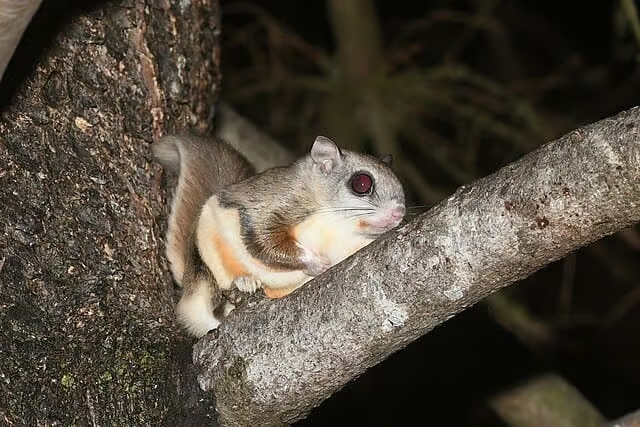
Flying squirrels are one of the more surprising wildlife problems I deal with across Southern Maine, because most homeowners have no idea they are there. Unlike gray or red squirrels, flying squirrels are strictly nocturnal and move silently, which means an attic infestation can go unnoticed for months while the colony grows and the contamination accumulates. Properties with mature trees near the roofline throughout Standish, Raymond, Windham, and Scarborough are particularly susceptible, especially older homes where soffits, fascia, and roof vents have developed small gaps over time. As a licensed Animal Damage Control (ADC) operator and Associate Certified Entomologist with 16 years of experience in the region, I provide thorough inspection, humane exclusion, and targeted removal tailored to each property. Browse the wildlife pest library to see other species I handle, or contact me if you’re hearing sounds at night and aren’t sure what you’re dealing with.
What Are Flying Squirrels?
Two species of flying squirrel are found in Maine: the northern flying squirrel (Glaucomys sabrinus) and the southern flying squirrel (Glaucomys volans). Both are present in Southern Maine, with the northern species more common in heavily forested areas and the southern species more frequently encountered in suburban and mixed-woodland settings. For practical pest control purposes the two are handled identically, but accurate identification is part of every inspection.
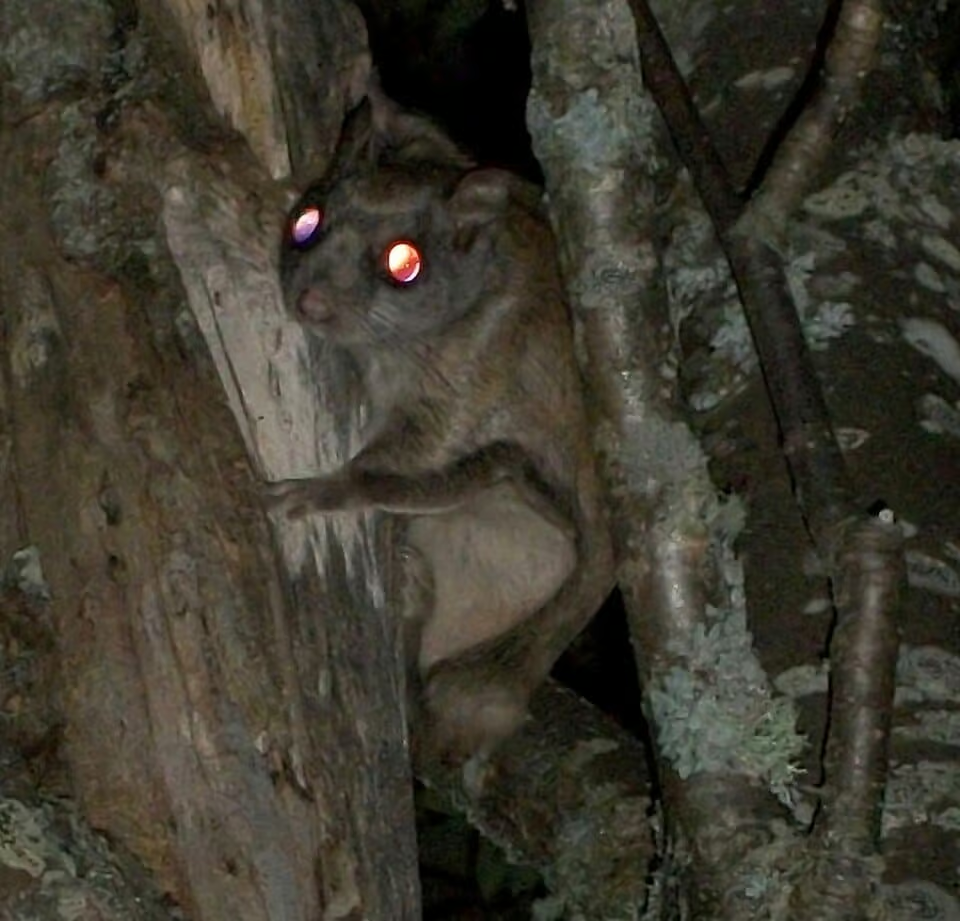
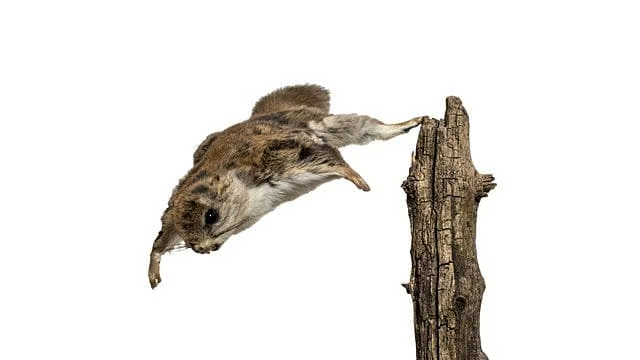
Both species are significantly smaller than gray squirrels, measuring 8 to 10 inches in total length including the tail. The most distinctive feature is the patagium, a furred gliding membrane that stretches between the front and back legs on each side and allows them to glide distances of 150 feet or more between trees. They have large, dark-adapted eyes, soft gray-brown fur on top, and a white or cream-colored belly. The tail is broad and flattened rather than round like a gray squirrel’s. Flying squirrels do not actually fly but launch from an elevated point and glide on the extended membrane, steering with their tail and limbs. The Maine Department of Inland Fisheries and Wildlife provides additional species information including range and habitat detail for both Maine species.
Signs of Flying Squirrel Activity
Because flying squirrels are nocturnal, the most reliable first sign is sound rather than sight. Homeowners typically describe soft thumping, scratching, or chittering noises coming from the ceiling or walls starting at dusk and continuing through the night. During the day the attic is quiet, which is one of the clearest ways to distinguish flying squirrels from gray or red squirrels, which are active during daylight hours.
Other signs include:
- Soft thumping, scratching, or high-pitched chattering sounds from attic or wall voids at night, absent during the day
- Small entry holes, typically half an inch to an inch and a half, in soffits, fascia boards, roof vents, or at roof edge junctions
- Droppings scattered broadly across attic floors and insulation rather than concentrated in one spot, reflecting multiple animals moving through the space
- Urine staining and odor in attic insulation, which intensifies with colony size and duration
- Nesting material gathered into insulation, including shredded paper, dried leaves, and plant fibers
- Chewed wiring, plastic pipe insulation, or wooden structural members in the attic
- Grease or smudge marks around entry holes from repeated use by multiple animals
- Evidence of food caching, including nut shells, seeds, and dried fungi stored in wall voids or attic corners
Risks in Southern Maine
The colony-nesting behavior of flying squirrels is what makes them a more serious structural concern than their small size suggests. A single entry point can allow a dozen or more animals to establish in an attic over a single winter, and the combined contamination from urine and droppings at that scale can saturate insulation, compromise air quality, and require full insulation replacement if left unaddressed long enough. Gnawing on electrical wiring is a genuine fire hazard, and chewing through plastic vapor barriers or pipe insulation creates secondary problems that aren’t always immediately obvious.
Flying squirrels carry fleas and other external parasites, and an active colony in the attic contributes to flea and tick pressure throughout the structure. Direct disease transmission to people is not a primary concern with flying squirrels, but the scale of contamination from a large colony warrants careful cleanup with appropriate respiratory protection. According to the Maine DACF Got Pests squirrel page, prompt exclusion combined with entry point sealing is the most effective long-term approach for squirrel conflicts in Maine structures.
Prevention Tips
Flying squirrels can enter through openings as small as half an inch, which makes thorough exclusion more demanding than it is for larger squirrel species:
- Trim all tree branches back at least 8 to 10 feet from the roofline and at least 6 feet from any wall surface to eliminate glide paths onto the structure
- Cap and screen all roof vents, attic louvers, and chimney openings with heavy-gauge hardware cloth with openings no larger than half an inch
- Inspect and repair all fascia boards, soffits, and roof edge junctions each fall before colony consolidation begins in October
- Seal gaps around utility penetrations, cable and wire entry points, and any junction where two roof planes meet
- Replace damaged or deteriorating soffit material promptly, as wood rot creates entry opportunities that flying squirrels find and exploit quickly
- Install metal flashing at roof edges and around dormer junctions where wood-to-wood contact creates natural gaps over time
- Keep bird feeders away from the structure and clean up spilled seed at night, as seed caches attract flying squirrels close to the building
- For camps and cabins in Casco and Sebago that sit vacant through winter, a full exclusion inspection before closing up for the season is the single most effective preventive step
Commonly Confused With
Flying squirrels are most often confused with two other squirrel species:
Gray squirrels cause similar attic damage but are significantly larger and strictly diurnal. If attic noise is occurring during the day, gray squirrels are the more likely culprit. Gray squirrels also tend to create larger, more obvious entry holes and leave more visible damage to roof edges and soffits.
Red squirrels are closer in size to flying squirrels and equally aggressive about entering structures, but red squirrels are active during daylight hours and lack the gliding membrane. Red squirrels also tend to be noisier and more territorial, often chattering audibly when disturbed. If the attic noise is loud and daytime, red squirrels are the more likely species.
The simplest diagnostic: if the attic is quiet all day and active starting at dusk, flying squirrels are almost certainly the species involved.
Professional Flying Squirrel Control in Southern Maine
Flying squirrel removal is more involved than it might appear, primarily because of the colony-nesting behavior. Trapping or excluding a few individuals without locating and sealing every entry point will not resolve the problem. The remaining colony members will find or create new openings, and new animals from the surrounding population will follow scent trails back to the same attic. Every job starts with a thorough inspection of the full roofline, all soffits and fascia, attic vents, chimney junctions, and any other potential entry point. I use one-way exclusion devices at active entry points to allow animals to exit without being able to return, then seal all openings once the colony has cleared. Where trapping is necessary I use appropriately sized live traps placed at entry points and tend them on a schedule consistent with Maine IFW humane handling standards.
Flying squirrels are a Category I home and garden species under Maine IFW guidelines. I follow all applicable Maine IFW regulations on every job. Learn more about my background and credentials on the about page, or visit the nuisance wildlife control service page for a full overview of what I offer. Contact me to schedule a free inspection.
Frequently Asked Questions
Timing is the clearest indicator. Flying squirrels are strictly nocturnal, so the attic will be quiet during the day and active starting at dusk. Gray and red squirrels are diurnal, so attic noise during daylight hours points to one of those species instead. Entry hole size can also help: flying squirrels use openings as small as half an inch, while gray squirrels typically need at least an inch and a half and often chew larger openings.
Yes. Flying squirrels are colony nesters, which means a single entry point can allow multiple animals to establish in the same attic. A small group entering in fall can expand significantly over a single winter. The contamination and structural damage scale with both the population size and the length of time they are present, which is why early intervention consistently produces better outcomes.
Not once they have established a colony in an attic. Flying squirrels use the same roost sites repeatedly across multiple years and follow scent trails back to familiar locations. Exclusion without sealing all entry points will not resolve the problem permanently. The remaining animals or new arrivals from the surrounding population will simply find their way back in.
Ready to Get Started?
If you are hearing sounds in your attic or walls at night and suspect flying squirrels, reach out for a free inspection and I will locate where they are entering, assess the extent of the activity, and put together a plan to get them out and seal the structure so they cannot return.