

Gray Squirrels in Southern Maine:
Identification, Prevention, and Control
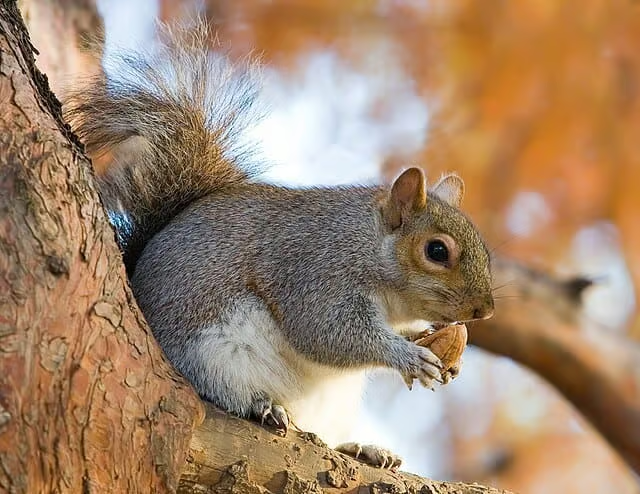
Eastern gray squirrels are the most common squirrel species I deal with in attics and rooflines across Southern Maine, and they are among the more persistent structural nuisances in the region. Unlike flying squirrels, which enter quietly at night, gray squirrels are active during the day and tend to make their presence known through audible scrambling in ceilings, visible damage to soffits and fascia, and obvious entry holes along the roofline. Properties with mature oak, beech, or hickory trees close to the structure are at the highest risk throughout Scarborough, Windham, Standish, and Westbrook. As a licensed Animal Damage Control (ADC) operator and Associate Certified Entomologist with 16 years of experience in the region, I provide thorough inspection, humane exclusion, and targeted removal tailored to each property. Browse the wildlife pest library to see other species I handle, or contact me if you are hearing sounds in your attic or noticing damage near the roofline.
What Are Gray Squirrels?
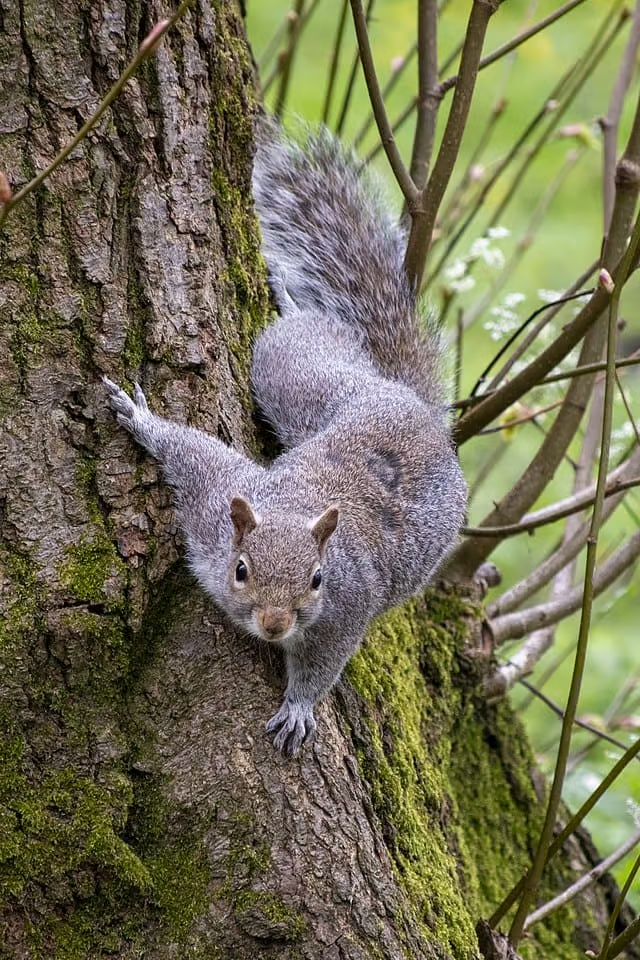
Eastern gray squirrels (Sciurus carolinensis) are medium-sized tree squirrels native to eastern North America and one of the most adaptable urban and suburban wildlife species in Maine. Adults measure 17 to 20 inches in total length including the tail and weigh between 14 and 21 ounces. Fur is predominantly gray with a white or pale underside and a large, full bushy tail that serves as a balance and communication tool. Some individuals in Southern Maine display the all-black melanistic color form, which is the same species and behaves identically but can cause confusion for homeowners who assume they are dealing with a different animal.
Gray squirrels are strictly diurnal, most active in the two to three hours after sunrise and again in the late afternoon before dusk. They are prolific food cachers, burying thousands of nuts and seeds each fall across a wide home range, and they locate cached food by spatial memory and smell rather than by remembering specific burial sites. This caching behavior makes them highly motivated to remain near mature nut-producing trees year-round. They breed twice annually, once in late winter and again in midsummer, with litters of two to four young each time. A pair that establishes a nest in an attic in fall can raise a litter there by early spring. The Maine Department of Inland Fisheries and Wildlife provides additional detail on the species’ range and behavior in Maine.
Signs of Gray Squirrel Activity
Gray squirrel problems in structures are generally easier to detect than flying squirrel problems because the activity occurs during daylight hours and the animals are large enough to make audible noise as they move through attic spaces.
Look for:
- Scratching, thumping, or scurrying sounds in the attic or ceiling during the day, typically most active in early morning and late afternoon
- Entry holes one and a half to two inches or larger in soffits, fascia boards, roof vents, or at roof edge junctions, often with gnaw marks around the perimeter
- Nesting material gathered in attic corners or wall voids, including leaves, insulation, and shredded materials
- Droppings scattered throughout the attic space, roughly the size and shape of a large raisin
- Gnaw marks on wooden structural members, electrical wiring, plastic pipe insulation, or HVAC ducting in the attic
- Urine staining and odor in attic insulation, which intensifies over time as the same areas are used repeatedly
- Visible squirrels running along the roofline, gutters, or power lines and entering the structure
- Stripped bark on tree branches near the roofline, or claw marks on siding where squirrels are climbing to access the roof
Gray squirrel entry into structures is most active in late summer and early fall as animals begin establishing winter caching and nesting sites, and homes with mature oak canopy close to the roofline in Hollis and Buxton see particularly consistent pressure during this period.
Risks in Southern Maine
Gray squirrels are capable of causing significant structural damage when they establish themselves in an attic, and the damage tends to compound the longer they remain. The primary concerns are gnawing on electrical wiring, which is a genuine fire hazard, and the accumulation of urine and droppings in attic insulation. Insulation saturated with urine loses its thermal value and can require full replacement depending on the extent and duration of the infestation. Entry holes left unrepaired allow ongoing water infiltration that leads to rot and mold in roof sheathing and framing.
Gray squirrels also gnaw on wooden soffits, fascia, and roof edge components as part of normal incisor maintenance, which means existing openings tend to enlarge over time rather than staying the same size. Females with young in the attic are particularly persistent about re-entering if excluded during the nesting period, so timing matters in the removal approach. Gray squirrels carry fleas and ticks, and an active population in or around the structure contributes to flea and tick pressure on the property. According to the Maine DACF Got Pests squirrel page, exclusion combined with entry point sealing is the most effective long-term approach for squirrel conflicts in Maine structures.
Prevention Tips
Gray squirrel prevention centers on eliminating access to the roofline and reducing the conditions that draw them close to the structure:
- Trim all tree branches back at least 8 to 10 feet from the roofline and at least 6 feet from any wall or siding surface
- Cap and screen all roof vents, attic louvers, and chimney openings with heavy-gauge hardware cloth
- Inspect and repair all fascia boards, soffits, and roof edge junctions each fall before squirrels begin seeking winter nesting sites
- Install metal flashing at roof edges, dormer junctions, and any point where two roof planes meet, as these natural gaps are common gray squirrel entry points
- Replace deteriorating soffit material promptly, as wood rot creates openings that squirrels enlarge quickly
- Use squirrel-baffled bird feeders or bring feeders in at night, and clean up spilled seed daily to reduce foraging activity close to the structure
- Install metal guards on downspouts to prevent squirrels from using gutters as access routes to the roof
- Secure compost and garbage in containers with tight-fitting lids to eliminate supplemental food sources that increase squirrel pressure on the property
Commonly Confused With
Gray squirrels are most often confused with two other species:
Red squirrels are similar in behavior but noticeably smaller, reddish-brown rather than gray, and more aggressively territorial. Red squirrels are just as likely to enter structures and cause attic damage, but they tend to cache food more extensively inside the structure and are noisier and more vocal. If the animal you are seeing is smaller than expected and reddish-brown with a white eye ring, it is almost certainly a red squirrel rather than a gray squirrel.
Flying squirrels are much smaller than gray squirrels and strictly nocturnal. If the attic is quiet during the day and active at night, flying squirrels are the more likely species. Flying squirrels also enter through much smaller openings, typically half an inch to an inch, compared to the larger gaps gray squirrels need or create.
The melanistic black color form of the gray squirrel occasionally causes homeowners to assume they are seeing a different or unusual species. Black squirrels in Southern Maine are eastern gray squirrels and are handled identically.
Professional Gray Squirrel Control in Southern Maine
Gray squirrel removal requires attention to timing as well as technique. Excluding a female with a litter in the attic requires confirming that young are mobile before deploying one-way exclusion devices, since sealing animals inside creates additional problems. Every job starts with a thorough inspection of the full roofline, all soffits and fascia, attic vents, chimney junctions, and any location where squirrels have been observed entering or attempting to enter. I use one-way exclusion devices at active entry points to allow animals to exit without returning, then seal all openings permanently once the structure is clear. Where trapping is the appropriate approach I use properly sized live traps tended on a schedule consistent with Maine IFW humane handling standards.
Gray squirrels are a Category I home and garden species under Maine IFW guidelines. I follow all applicable Maine IFW regulations on every job. Learn more about my background and credentials on the about page, or visit the nuisance wildlife control service page for a full overview of what I offer. Contact me to schedule a free inspection.
Frequently Asked Questions
Most commonly through gaps in soffits, fascia boards, and roof vents, or at roof edge junctions where two planes meet and wood-to-wood contact creates natural gaps over time. They are capable of chewing through wood, plastic, and thin aluminum to enlarge an existing opening or create a new one. Tree branches that overhang or touch the roof provide the most direct access route, which is why branch trimming is the single most effective preventive step on most properties.
Gnawing on electrical wiring is one of the more serious risks of a gray squirrel infestation in an attic. Squirrels gnaw on wiring as part of normal incisor maintenance and do not distinguish between wood and electrical insulation. Exposed wiring in an attic with nesting material present is a combination that warrants prompt attention rather than a wait-and-see approach.
Not reliably. Gray squirrels do not hibernate and are active year-round, so there is no season in which they naturally vacate an established nesting site. A female that raised young in your attic will return to the same location the following year. Addressing entry points while also removing the animals is the only approach that produces a lasting result.
Ready to Get Started?
If gray squirrels are getting into your attic, chewing on your roofline, or causing damage to your soffits or fascia, reach out for a free inspection and I will locate where they are entering, assess the extent of the activity, and put together a plan to remove them and seal the structure.