

I have been doing pest control in southern Maine for 16 years, and I can tell you the biggest factor in whether a bed bug treatment works is not the product, the equipment, or even the size of the infestation. It is how well the home was prepared before I walked in the door.
That is not me passing the buck. It is just how bed bug work goes. Bed bugs hide in places I can only treat if I can reach them, and they ride along on things I cannot treat at all, like your laundry. Preparation is the half of the job that only you can do.
Every home is different. Some customers have a spare bedroom stacked with totes. Some have three kids and a floor you cannot see. Some are elderly and cannot move a dresser. All of those situations are workable, but they take different plans. This post covers what good preparation looks like, why each step matters, and what to do when you cannot check every box.
Why Preparation Decides the Outcome
Two things have to happen for a bed bug treatment to succeed. I need access to every place bed bugs hide, which means baseboards, furniture backs, bed frames, outlets, and closet floors. And the bed bugs living in your fabric items need to be killed by heat, because I cannot treat your laundry with pesticide.
Skip either half and you leave survivors. Bed bugs reproduce fast enough that survivors become a new infestation within weeks. The UMaine Extension bed bug fact sheet covers their biology in detail if you want to know your enemy.
The Laundry Step, Done Right
This is the most important part of preparation, and the part people get wrong most often.
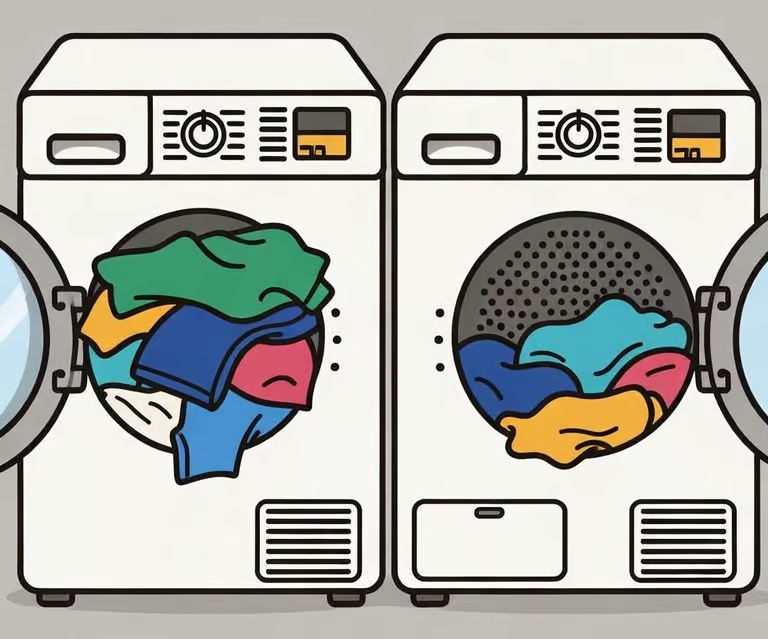
Here is what most people do not realize: you do not need to wash anything. Heat kills bed bugs and their eggs, and the heat comes from the dryer. Washing first is fine, but it is the dryer doing the work. That matters if you are facing a mountain of laundry, because running loads straight through the dryer is much faster than washing and drying everything.
The process:
Bag everything first. All clothes, bedding, towels, and curtains go into plastic trash bags before they leave the room. And seal the bags properly. Tying the drawstrings is not sealing. Bed bugs will crawl right out of a loosely tied bag while it sits in your hallway. Twist the top of the bag closed, fold the twisted section over on itself, and tie a knot around the fold. That is called a gooseneck seal, and nothing gets out of it. Tape works too if you wrap it tight around the twisted neck.

Do not overfill the dryer. This is the mistake that quietly ruins treatments. A dryer stuffed full stays cool in the middle of the load. The outside items get hot, the center never does, and bed bug eggs in the middle survive the whole cycle. You did all that work for nothing. Run smaller loads with room for hot air to move: high heat for 30 minutes for regular items, low heat for 60 minutes for delicates.
Bag it again after. Dried items go into brand new bags, sealed the same way, marked CLEAN. The old bags go straight into an outdoor trash can.
One exception: dry-clean-only items and anything that cannot go through a dryer should be left hanging in the closet, not bagged. This surprises people, but there is a reason. Bed bugs hiding on those items have to leave them to feed on you, and when they do, they cross treated surfaces and die. Sealing those items in a bag just protects the bugs.
The Black Bag and White Bag System
Here is a trick I recommend to customers facing a lot of laundry. As you finish drying loads, sort them into two kinds of bags.
Black bags get everything you will not need for a while: off-season clothes, spare linens, extra towels. Seal them and do not open them for at least 6 weeks.
White bags get what you need day to day: current bedding, work clothes, underwear. Open those right after treatment.

The payoff comes later. For lighter infestations, I often treat once and then inspect 4 to 8 weeks afterward before deciding whether a re-treatment makes sense, because that keeps costs down for the customer. If re-treatment does turn out to be necessary, everything sealed in black bags is already done. You only re-run the small amount of laundry you actually used.
Clearing the Room
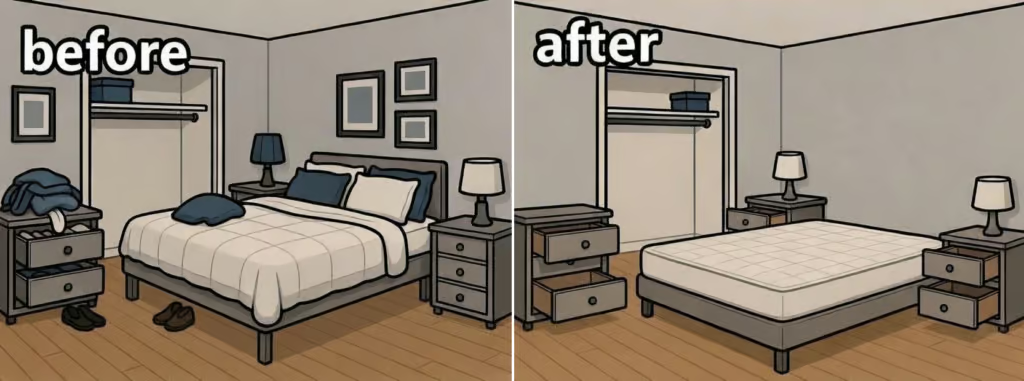
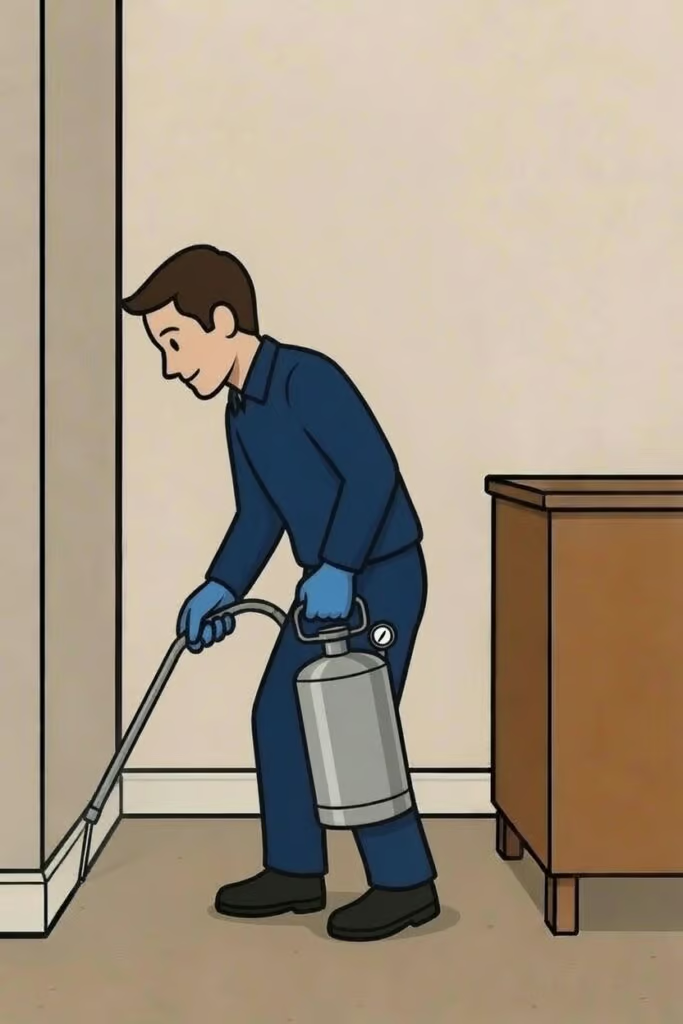
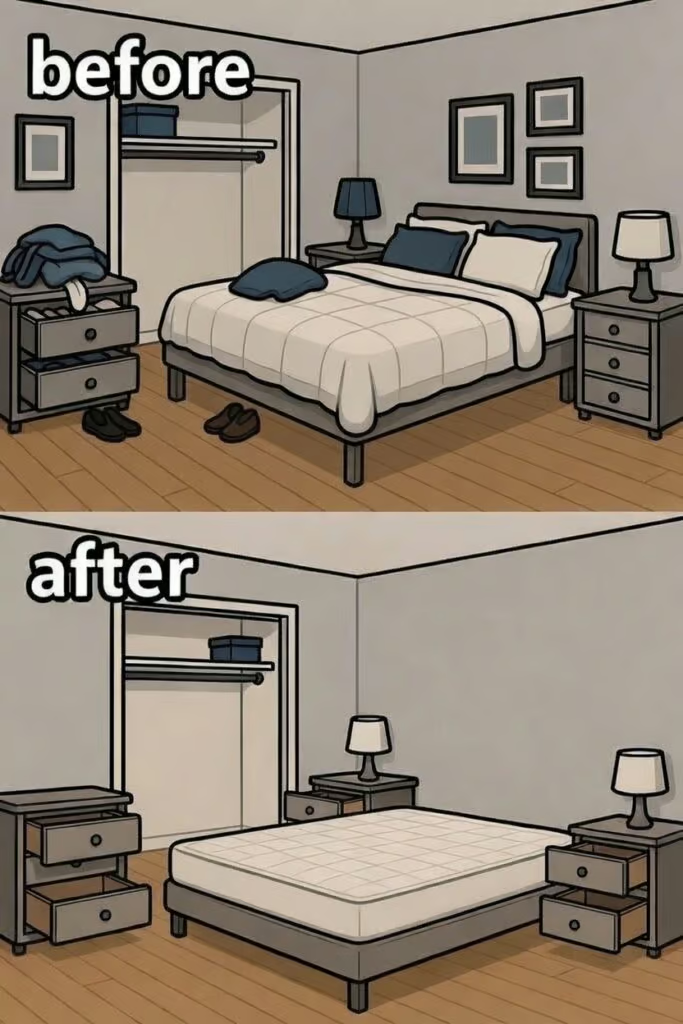
I need 18 inches between the furniture and the walls. Dressers, nightstands, beds, bookcases, all of it pulled out so I can reach the baseboards and the backs of the furniture, which are exactly where bed bugs like to tuck in.
Under the bed needs to be completely empty. Closet floors need to be clear. Drawers in bureaus and nightstands need to be emptied so the furniture can be moved and treated. Wall art comes down and gets laid flat on a table.
Cardboard deserves a special mention. Bed bugs love the corrugated channels inside cardboard boxes, and I cannot treat inside them. Shoeboxes, shipping boxes, paper bags, and stacks of newspaper from an infested room should be bagged and thrown out, not saved. If you are throwing out infested furniture or a mattress, wrap it in plastic before carrying it out so bed bugs do not drop off along the way, and damage it so it does not get picked up and carried into someone else’s home.
And one rule that trips people up: do not move belongings from the infested room into other rooms. I understand the instinct. You want your stuff away from the problem. But carrying an armload of clothes from the infested bedroom to the guest room is exactly how bed bugs spread through a house.
What If You Cannot Do It All?
This is the part most prep sheets skip, and it is the part I probably discuss with customers more than anything else.
If you are elderly or disabled and cannot move furniture, tell me before treatment day. Sometimes a family member can help beforehand. Sometimes I can shift things myself when I arrive if I know in advance. What does not work is finding out when I walk in, because a room I cannot access is a room I cannot fully treat.
If your home has heavy clutter, do not panic and do not feel judged. I have seen everything in 16 years. Clutter does not make treatment impossible, it makes it slower, and the fix is triage: we focus first on the rooms where people sleep, get those fully prepped, and work outward from there. Call me and we will make a plan that fits your actual house, not the perfect house on the checklist.
If you rent, talk to your landlord before scheduling anything. Maine law addresses bed bug treatment in rental housing, and the Maine CDC bed bug page covers the statute and what landlords and tenants are responsible for. Be careful moving items through shared hallways: everything leaving an infested unit should be sealed in a bag first. That protects your neighbors, and it protects you from getting reinfested through the wall you share.
The Mistakes That Ruin Treatments
After 16 years of bed bug work, these are the failures I see repeated:
Foggers and bug bombs. Do not use them, ever, and especially not before I arrive. Foggers do not kill bed bugs where they hide. They scatter them deeper into walls, ceilings, and neighboring rooms, and they turn a contained problem into a whole-house problem. The EPA says the same thing: fogger pesticides only work on contact, and they never reach the cracks and crevices where bed bugs actually are. The same goes for store-bought bed bug sprays. They’re usually repellents, not a real kill, and they scatter bed bugs deeper into walls instead of solving the problem.
Sleeping somewhere else. After treatment, keep sleeping in your own bed. I know that is the last thing you want to hear. But bed bugs find you by the carbon dioxide you breathe out, and when they come looking, they cross treated surfaces and die. Abandon the room and they simply wait, sometimes for months. Move to the couch and they follow you there.
Cleaning too soon. The products I apply keep working for weeks after I leave. Scrubbing or mopping baseboards and treated areas in the first 3 to 4 weeks removes the product before newly hatched bed bugs ever touch it.
Panicking at week two. Seeing a bed bug 10 days after treatment does not mean the treatment failed. Eggs continue hatching for weeks, and those new bugs have to cross treated surfaces to reach you. Activity that tapers off over 4 to 6 weeks is the treatment working. Activity that stays steady past 6 weeks is when to call me.
What Treatment Day Looks Like
Everyone, including pets, leaves the home and stays out for 4 hours after I finish. Before you go, grab what you will need during that window: medications, phone, chargers, keys, wallet. Pets that absolutely cannot leave can be closed in the bathroom with a towel under the door and a note for me. Aquariums and terrariums get the pump or heat lamp turned off first, then covered with a towel. Covering a lamp that’s still running can overheat the towel and start a fire.
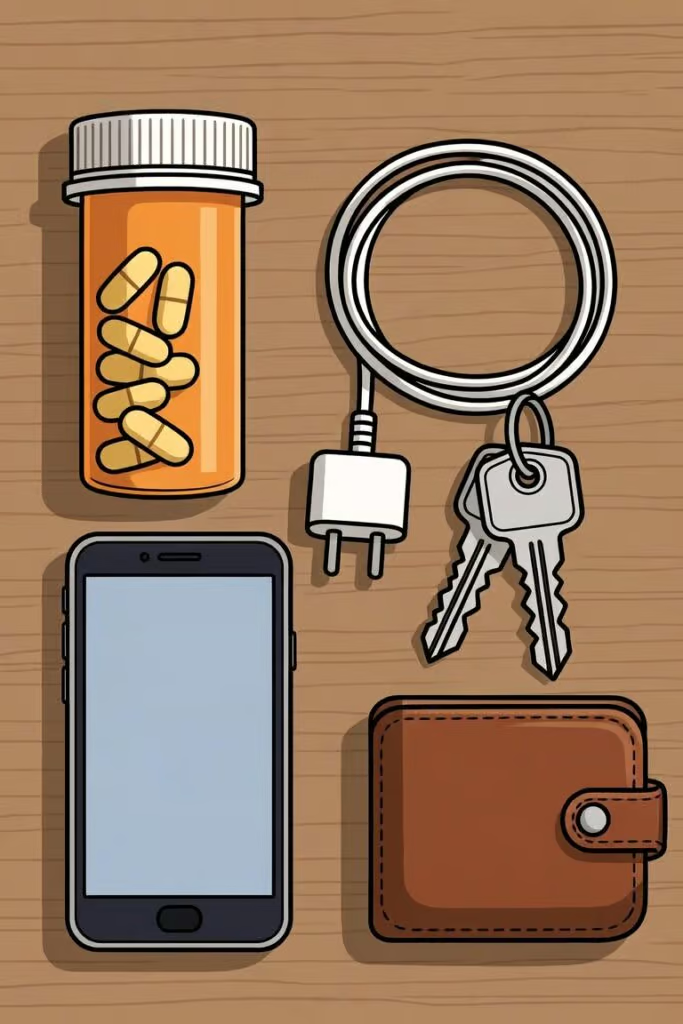
When you come back, open windows if you notice any odor, put your white-bag laundry back into service, and sleep in your own bed that night.
Get the Prep Sheet
I give every bed bug customer a printed version of these instructions. You can download the same prep sheet here.
If you are dealing with bed bugs in Cumberland or York County, call or text me at 207-291-0840. I will tell you honestly what your situation needs, including what it does not need. Learn more about bed bug treatment in southern Maine.