
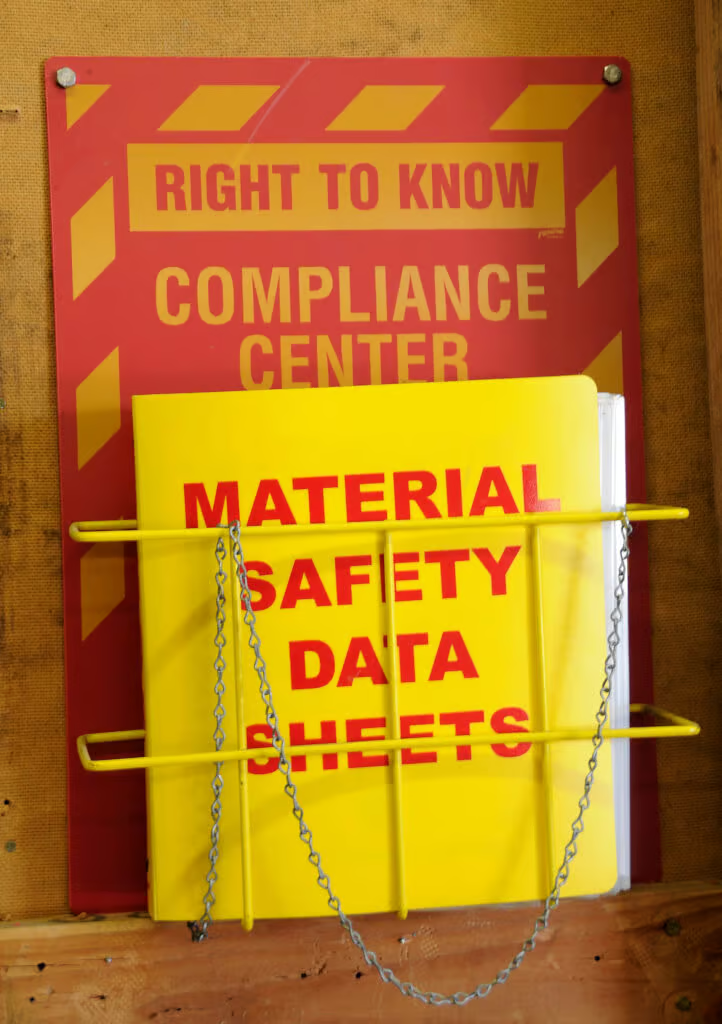
If you’ve ever asked a pest control technician “is this stuff safe for my kids or my dog,” you’ve probably been handed a document called a Safety Data Sheet, or SDS, and left wondering what you were actually looking at. SDS sheets are dense, technical, and written for regulatory compliance, not for the person asking whether a treatment is safe for their kids or their pets. But they’re also public documents, and you have every right to see one for any product used in or around your home or business.
This guide walks through how an SDS is organized and what each section is actually telling you, using the real, current Safety Data Sheet for Talstar P Professional Insecticide as the example. Talstar P is one of the most common tools in the pest control industry, and it’s the product I reach for most often for general pest work, and for tick and mosquito treatments, so it’s a good real-world one to walk through rather than a hypothetical.
A quick note before we start: this article is meant to help you understand the document, not to tell you whether a product is personally safe for you, your kids, or your pets. Individual sensitivities vary, and if you have specific health questions, concerns about a medical condition, or are pregnant, that conversation belongs with your doctor, not a blog post or a pest control technician. What we can do is help you read the label yourself and have an informed conversation.
Why the SDS Exists
Every SDS follows the same 16-section format required by OSHA’s Hazard Communication Standard. That structure is actually helpful once you know it, because it means you can find the same type of information in the same place no matter which product’s SDS you’re looking at. You don’t need to read all 16 sections to get useful information. A handful of them answer almost every question people actually have.
Section 1: Identification
This is just the product name, manufacturer, and emergency contact numbers. Worth noting: this section always includes a poison control or medical emergency number. That’s not filler, it’s meant to be called if something actually happens, and it’s good to know it’s there before you ever need it. For Talstar P specifically, the manufacturer is Environmental Science U.S. LLC (Envu), and the section also lists the product’s EPA registration number, which you can independently verify with the EPA if you ever want to confirm a product is legitimately registered.
Section 2: Hazards Identification
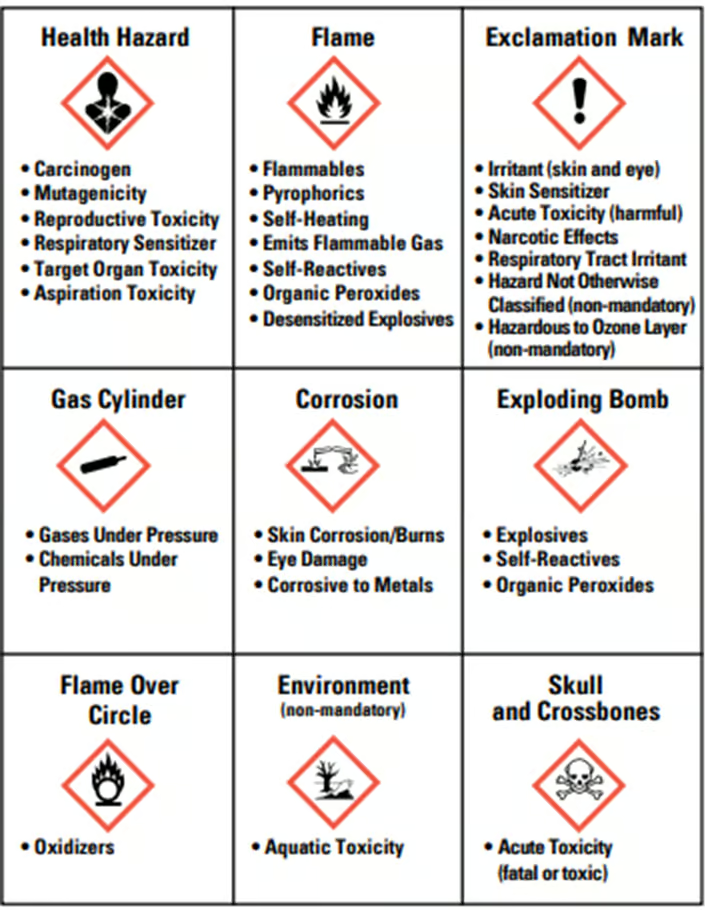
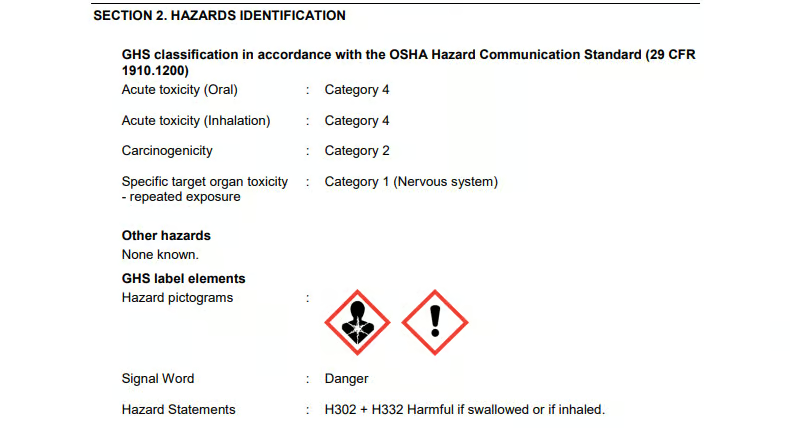
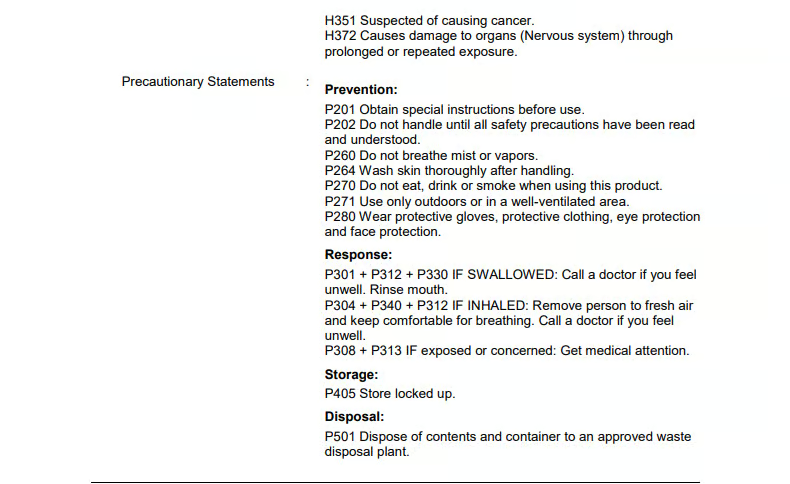
This is usually the section people care about most, and it’s where the product’s signal word lives. Talstar P carries the signal word “Danger,” which sounds alarming out of context, but signal words on SDS sheets follow a standardized scale (Danger, Warning, Caution) tied to specific toxicity thresholds, not a general sense of risk. This section also lists hazard statements in a standardized numbered format (H-codes). For Talstar P, these include statements that it’s harmful if swallowed or inhaled, and can affect the nervous system with prolonged or repeated exposure.
This section also lists a Carcinogenicity classification of Category 2, with the hazard statement “Suspected of causing cancer.” I want to be straightforward about this rather than skip past it: Category 2 is the GHS classification for substances with limited evidence of carcinogenicity from animal studies, one step below Category 1, which is reserved for substances with strong human or animal evidence. The same section notes that no ingredient in this product, at the concentration present, is listed as a known or confirmed carcinogen by IARC, OSHA, or the National Toxicology Program. Those are three separate, independent bodies that maintain their own carcinogen lists, and none of them list this product’s ingredients at these levels. This is exactly the kind of detail an SDS exists to surface, and exactly the kind of thing worth reading yourself rather than taking anyone’s summary of it, mine included.
It’s also important to understand what these statements are describing: concentrated, undiluted product, handled without protective equipment, over repeated occupational-level exposure. That’s a very different scenario from a treated baseboard or lawn after a licensed application, but the SDS doesn’t distinguish that context, it’s describing the raw material as manufactured, which is exactly why reading the actual document matters more than a secondhand description of it.
You don’t have to take my summary for it, either. You can view the full current Talstar P Safety Data Sheet directly from Envu and check it against anything written here.
Section 3: Composition
This lists the active ingredient and its concentration. For Talstar P, the active ingredient is bifenthrin, a pyrethroid, at 7.9% of the total product. Pyrethroids are synthetic versions of a compound naturally found in chrysanthemum flowers, and they’re among the most widely used insecticide classes in both professional pest control and consumer products you’d find at a hardware store. The National Pesticide Information Center, a federally-funded, non-advocacy resource run jointly with Oregon State University, has a plain-language fact sheet on bifenthrin if you want to dig deeper into this specific active ingredient.
Section 4: First Aid Measures
This section tells you what to do in case of skin contact, eye contact, inhalation, or ingestion of the concentrated product. It’s a good section to skim once, mainly so you know it exists, but for licensed applications this is describing exposure to concentrate, not a treated surface after drying.
Section 8: Exposure Controls / Personal Protective Equipment
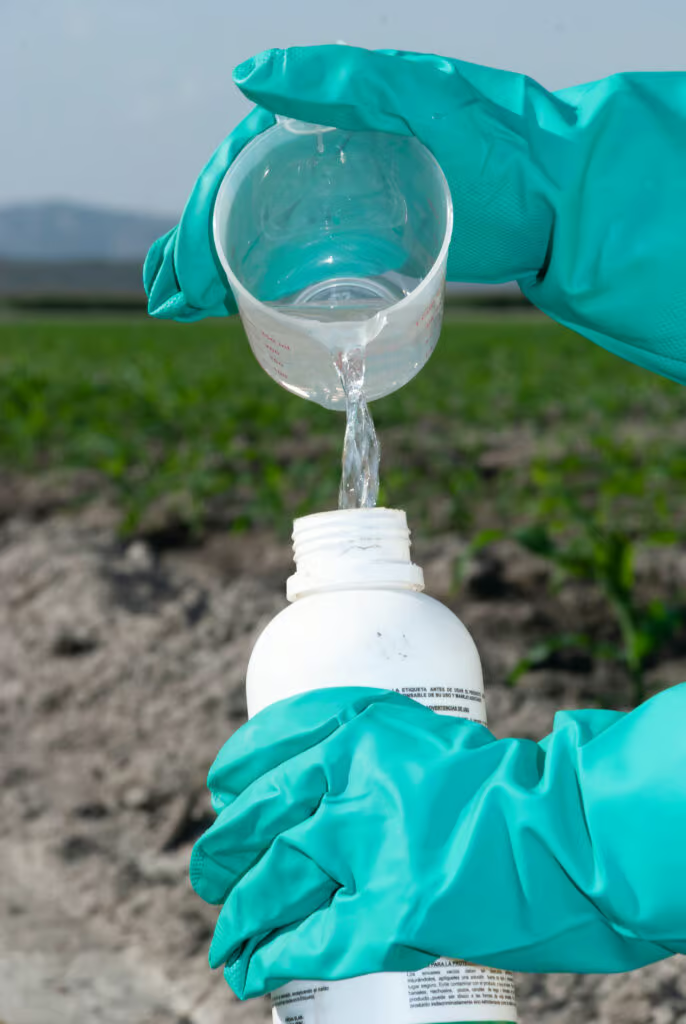
This is genuinely one of the most useful sections for anyone asking about a treatment, because it tells you what protective equipment the people mixing and applying this product are supposed to be using: gloves, eye protection, and appropriate clothing. If you’re ever curious about why a technician is gloved up while mixing but the treated area is safe for you to walk on later, this section is part of the answer, the protective equipment is for handling concentrate, not for entering a treated space after the labeled re-entry interval.
Section 11: Toxicological Information
This is the deep-dive science section, and it’s where most of the intimidating-looking numbers live: LD50 values, test results on lab animals, exposure studies. For Talstar P, this section documents that skin and eye irritation are not classified as hazards based on available testing, meaning standard animal testing showed no significant irritation from the product.
This section also documents the underlying study behind the carcinogenicity classification mentioned above: a mouse study over 104 weeks found a positive result, which the SDS itself characterizes as “limited evidence of carcinogenicity in animal studies.” That specific, qualified language, limited evidence, one positive study, one species, is worth reading in its own words rather than through a summary, because it’s a meaningfully different statement than an unqualified “causes cancer” would be, and the document itself makes that distinction deliberately.
This is a good example of why reading the primary document matters more than a summary: these sections report study results directly, out of context from marketing or from fear, which is exactly the point of an SDS.
Section 12: Ecological Information
This section is genuinely important and often overlooked: pyrethroids, including bifenthrin, are highly toxic to fish and aquatic invertebrates. This is why any responsible technician is careful about drift near ponds, streams, and drainage areas, and it’s a legitimate reason to mention any water features on your property before a treatment.
Section 15: Regulatory Information
This confirms the product’s EPA registration status and lists any state-specific reporting requirements. Every pesticide legally sold and applied in the U.S. has gone through EPA registration, which involves reviewing toxicology, environmental fate, and residue data before a product can carry an EPA registration number. Maine additionally regulates pesticide use through the Maine Board of Pesticides Control, which licenses applicators and can impose state-specific restrictions beyond federal requirements.
What This Means in Practice
Reading an SDS isn’t about deciding whether a product is “safe,” that’s not really a yes-or-no question an SDS is built to answer, and it’s not a question I can answer for you either. What it does give you is the actual data: what’s in the product, how it’s classified, what protective measures are recommended for people handling it directly, and what’s known about its environmental and toxicological profile. That’s a much better starting point for a conversation with your doctor, or just for your own peace of mind, than guessing.
If you ever want to see the SDS for a specific product being used on your property, ask. It’s a public document, and any pest control company should be able to hand it to you without hesitation. You can learn more about my background and licensing here.
This is the first in a two-part series. The next post tackles the question this one sets up: is a given pesticide actually safe for your kids or pets, and how to think about that question honestly.