

Raccoons in Southern Maine:
Identification, Prevention, and Control
Raccoons are one of the more serious wildlife nuisances I deal with across Southern Maine, and not just because of the physical damage they cause. As the primary rabies vector species in Maine, raccoons carry real health risks that make them a fundamentally different category of problem than squirrels or chipmunks. They are strong, intelligent, and persistent, capable of pulling back damaged soffits, tearing through roof vents, and forcing entry through weak points in a structure that smaller animals could never access. In towns like Saco, Biddeford, Scarborough, and Portland, where suburban development borders wooded areas and food sources are abundant, raccoon pressure is a year-round reality rather than a seasonal one. As a licensed Animal Damage Control (ADC) operator and Associate Certified Entomologist with 16 years of experience in the region, I handle raccoon removal in full compliance with Maine IFW regulations. Browse the wildlife pest library to see other species I handle, or contact me if you are dealing with raccoon activity on your property.
What Are Raccoons?
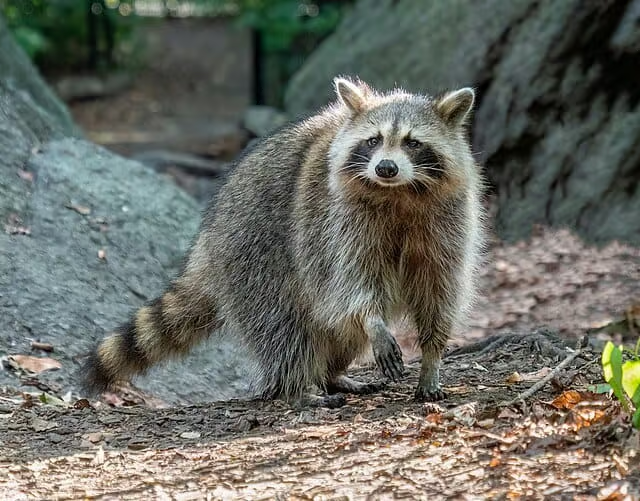
Raccoons (Procyon lotor) are medium to large omnivorous mammals native to North America and among the most adaptable urban and suburban wildlife species in the eastern United States. Adults in Maine typically weigh between 10 and 30 pounds and measure 24 to 38 inches in total length including the tail. The black facial mask across the eyes and the bushy tail with four to seven alternating dark and pale rings make raccoons one of the most immediately recognizable wildlife species in the region.
Raccoons have highly dexterous front paws that function almost like hands, allowing them to manipulate latches, open containers, peel back roofing materials, and investigate any opening they encounter. They are primarily nocturnal but will forage during daylight hours when food is readily available or when a female has young to feed. Raccoons are opportunistic omnivores that consume virtually anything available, including garbage, garden produce, pet food, birdseed, insects, amphibians, bird eggs, and carrion. They do not hibernate, remaining active year-round in southern Maine, though activity slows during the coldest stretches of winter. The Maine Department of Inland Fisheries and Wildlife describes raccoons as one of Maine’s most widespread and adaptable mammals, found in every county statewide.
Signs of Raccoon Activity
Raccoon activity is generally easier to detect than smaller wildlife because of the animal’s size and the scale of the damage and evidence it leaves behind.
Look for:
- Heavy thumping, dragging, or vocalizing sounds in the attic, chimney, or crawl space at night
- Large entry holes four inches or larger in soffits, roof vents, fascia boards, or at roof edge junctions, often with torn or bent material rather than clean chew marks
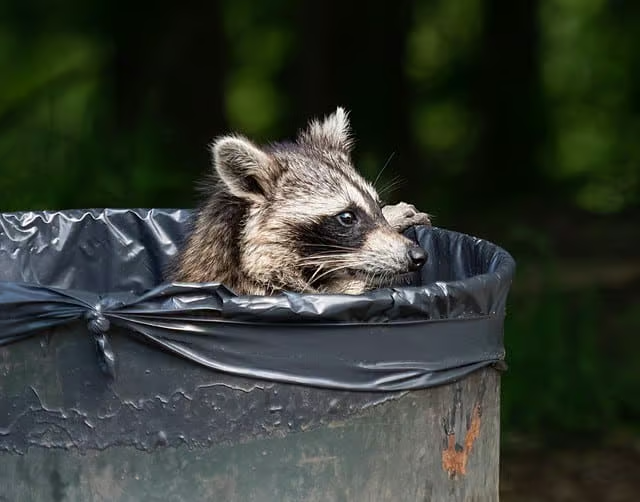
- Overturned or ripped-open garbage containers with scattered food waste, often visited on a predictable nightly schedule
- Large tubular droppings two to three inches long, frequently containing seeds, berries, insect parts, or other identifiable food remains, deposited in consistent latrine locations
- Five-toed paw prints roughly two to three inches wide in mud, soil, or snow near the structure, deck, or garden
- Damaged garden beds, pulled-up sod (where raccoons are digging for grubs), raided corn or squash, or emptied bird feeders
- Torn or compressed attic insulation with nesting material and an accumulating latrine area
- Greasy rub marks along fence rails, siding, and soffits from repeated travel along the same routes
Raccoon attic entry is most common in late winter and early spring when pregnant females seek maternity den sites before giving birth in April and May. Properties near wooded shorelines and lake communities in Windham and Standish see particularly consistent pressure during this period given the combination of mature tree cover and older housing stock with accessible rooflines.
Risks in Southern Maine
Raccoons present a more serious and multi-layered risk profile than most other nuisance wildlife species in the region, and that distinction matters for how a problem is handled.
Rabies is the primary concern. Raccoons are the number one rabies vector species in Maine, and the risk is real rather than theoretical. Any raccoon that is active during daylight hours, moving erratically, appears disoriented, or is approachable without fleeing should be considered potentially rabid and reported to Maine IFW immediately. The Maine CDC monitors raccoon rabies activity across the state annually. Direct contact with a potentially rabid raccoon or being scratched or bitten requires immediate medical evaluation.
Baylisascaris procyonis, commonly called raccoon roundworm, is a less well-known but serious hazard. Raccoons establish communal latrine sites, including in attics and crawl spaces where they den, and the roundworm eggs shed in feces are highly resistant and can remain viable in the environment for years. Accidental ingestion of microscopic eggs, which can occur through contact with contaminated surfaces or airborne particles during cleaning, can cause severe neurological disease in humans and pets. Cleanup of raccoon latrines requires appropriate respiratory protection, disposable gloves, and careful disposal. This is not a task that should be approached casually.
Beyond health risks, raccoons cause structural damage at a scale that smaller wildlife cannot match. They are strong enough to pull back damaged shingles, tear open roof vents, and force entry through weak soffits or fascia. A female raccoon that has selected an attic as a maternity site is particularly determined to maintain access and will re-enter through a new location if her original entry point is sealed while she has young inside. Insulation in a raccoon-occupied attic typically requires replacement after removal due to the volume of urine and feces deposited.
Raccoon activity also attracts fleas and ticks onto the property, as raccoons carry both in significant numbers. According to the Maine DACF Got Pests raccoon page, securing attractants and eliminating denning opportunities are the foundational steps in reducing raccoon conflicts on residential properties.
Prevention Tips
Raccoon prevention centers on eliminating the food sources and access points that draw them to the property and into the structure:
- Secure all garbage in containers with locking or bungee-secured lids, and store containers in a garage or outbuilding overnight where possible
- Bring in pet food, bird feeders, and water dishes at night, as these are among the most reliable raccoon attractants on residential properties
- Cap all chimneys with a properly fitted commercial chimney cap rated for wildlife exclusion, as open chimneys are a preferred raccoon denning site
- Screen attic vents, soffit vents, and crawl space vents with heavy-gauge hardware cloth secured with screws rather than staples
- Repair all damaged soffits, fascia, and roof vents promptly, as raccoons investigate and exploit any existing weakness in the roofline
- Install hardware cloth or a concrete apron barrier along the base of decks and outbuildings to deny denning access underneath
- Secure compost in a wildlife-proof bin and avoid adding food scraps that generate strong odors
- Address any fruit trees, garden produce, or unsecured livestock feed on the property, as these extend the foraging range of local raccoon populations toward the structure
Commonly Confused With
Raccoons are one of the most visually distinctive wildlife species in Southern Maine and are rarely misidentified as adults. Juvenile raccoons encountered in late spring and early summer are occasionally mistaken for other species before their mask and rings have fully developed, but the general body shape, dexterous paws, and behavior quickly distinguish them.
The species most likely to create similar signs of activity around a property are opossums and skunks, both of which raid garbage, den under decks, and are active at night. Opossums are pale gray with a pointed white face, pink ears, and a hairless tail, with none of the mask or ringed tail of the raccoon. Skunks are smaller and more distinctively patterned with black and white coloring. Neither species approaches the raccoon’s size or its capacity for structural damage.
Professional Raccoon Control in Southern Maine
Raccoon removal requires careful attention to timing, method, and legal compliance in a way that distinguishes it from handling smaller wildlife species. Because raccoons are the primary rabies vector species in Maine, improper trapping, handling, or relocation carries genuine health risks in addition to legal ones. Under Maine IFW regulations, relocated raccoons must be released within 10 miles of the capture site in southern Maine. I handle all raccoon work in full compliance with these requirements.
Every job starts with a thorough inspection to locate all entry points, identify whether a female with young is present, and assess the extent of the contamination and structural damage. Removing a female with a litter in the attic requires confirming that the young are mobile before exclusion, since sealing the female out while young remain inside creates additional problems. Once the animals are removed I seal all entry points with materials appropriate to the level of force raccoons can apply, which is substantially more than what is adequate for squirrels. I also advise on safe cleanup procedures for any latrine areas in the attic, which is an important step that carries real health implications if skipped.
As a licensed ADC operator I am authorized to handle raccoon conflicts in full compliance with Maine IFW regulations. Learn more about my background and credentials on the about page, or visit the nuisance wildlife control service page for a full overview of what I offer. Contact me to schedule a free inspection.
Frequently Asked Questions
For attractant removal and basic exclusion work like securing garbage and installing chimney caps, homeowners can and should take those steps independently. For trapping, handling, or removing raccoons from inside a structure, professional handling is the appropriate choice given the rabies vector status of the species and the roundworm risk from latrine cleanup. Improper handling of a potentially rabid animal carries real health consequences, and relocation must comply with Maine IFW distance restrictions.
A raccoon that is active during daylight hours and appears disoriented, is moving erratically, or does not flee when approached should be treated as potentially rabid. Do not approach or attempt to handle the animal. Keep children and pets away from it and contact Maine IFW or your local animal control officer to report the sighting. Daytime activity alone is not always a sign of rabies, as females with young will forage during the day, but disorientation or loss of fear of people combined with daytime activity is a concern that warrants reporting.
The most reliable indicators are a single female entering and exiting consistently rather than a group, vocalizations from the attic that include high-pitched chittering or crying sounds distinct from adult raccoon sounds, and the timing of the year. Raccoons in Maine give birth in April and May, and a female that entered an attic in late winter or early spring is very likely to have young there by April. Attempting to exclude or trap in this situation without accounting for the litter creates additional problems and is something I assess carefully at the start of every raccoon job.
Ready to Get Started?
If raccoons are getting into your attic, denning under your deck, raiding your garbage, or causing damage to your property, reach out for a free inspection and I will assess the situation, identify all entry points, and put together a removal and exclusion plan that addresses the problem safely and in compliance with Maine regulations.