

Solitary Wasps & Bees in Southern Maine:
Identification, Prevention, and Control
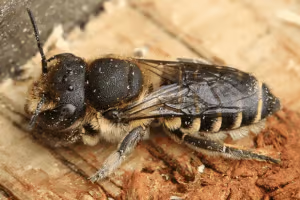
Solitary wasps and bees are some of the most ecologically valuable insects in Southern Maine, and they’re also among the most frequently misidentified. I get calls about them regularly from homeowners in Waterboro, Shapleigh, Limerick, and Cornish who notice bees in the ground or mud tubes under their eaves and assume they’re dealing with a pest problem. In the vast majority of cases, they’re not. As an Associate Certified Entomologist (A.C.E.) with 16 years of experience in the region, part of my job is helping people distinguish between insects that genuinely need to be addressed and insects that are doing exactly what they should be doing. Solitary wasps and bees almost always fall into the second category. Browse the stinging insects pest library to compare species, or contact me if you’re unsure what you’re dealing with.
What Are Solitary Wasps & Bees?
Unlike yellowjackets, bald-faced hornets, and paper wasps, which form colonies with queens and workers, solitary species nest and provision their young individually. Each female builds her own nest, lays her own eggs, and provisions them herself with no cooperative colony defense. This behavioral difference is what makes them so much less threatening than colonial species: there’s no colony to defend and no workers to mobilize in a defensive response.
The solitary wasps and bees found in Southern Maine include a wide variety of species across several families:
Ground-nesting bees such as mining bees (Andrena species) and sweat bees (Halictus and Lasioglossum species) are among the most abundant native pollinators in Maine. They nest in sandy or bare soil, creating small entrance holes with loose dirt around them. Females are docile and will not sting unless physically handled.
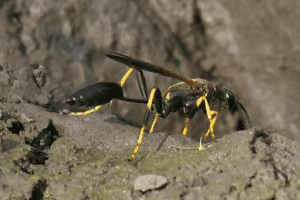
Mud daubers (Sceliphron caementarium and related species) are slender, black and yellow wasps with an extraordinarily narrow waist that build distinctive mud tube nests on exterior walls, under eaves, and inside outbuildings. They provision their nests with paralyzed spiders and are completely non-aggressive.
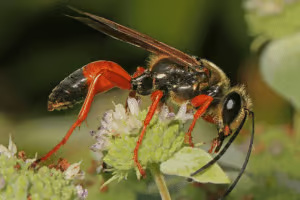
Digger wasps such as the great golden digger wasp (Sphex ichneumoneus) are large, impressive wasps that nest in the ground and provision their tunnels with paralyzed insects. They are active and visible but docile, and encounters near their nests are almost always uneventful.
Leafcutter bees (Megachile species) cut neat circular pieces from leaves to line their nest cells in pre-existing holes in wood, stems, or bee boxes. Their leaf-cutting activity is noticeable but causes no meaningful damage to plants.
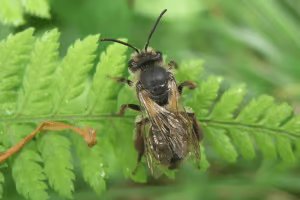
Mason bees (Osmia species) are important early-season pollinators that nest in existing cavities, hollow stems, and bee nesting structures. They are gentle and rarely encountered in any threatening way.
According to the UMaine Extension guide on bees, hornets, and wasps, solitary bees and wasps are among Maine’s most valuable native insects for both pollination and natural pest control.
Signs of Infestation
The signs of solitary wasp and bee activity are worth recognizing so they can be distinguished from the colonial species that do require attention:
- Small, perfectly round holes in bare soil or sandy areas with individual bees flying in and out
- Loose mounds of excavated soil around ground nest entrances
- Mud tubes or pot-shaped nests attached to exterior walls, under eaves, or inside sheds and garages
- Neat circular or oval cutouts in rose, lilac, or other broadleaf plant foliage from leafcutter bees
- Individual bees entering and exiting small holes in untreated wood, hollow stems, or nesting structures
- Large solitary wasps carrying paralyzed spiders or caterpillars back to ground nests
- Increased activity around flowering plants, gardens, and vegetable beds through summer
In Waterboro and Shapleigh yards with sandy soil and diverse plantings, this activity is most visible from May through August and is a reliable indicator of a healthy local ecosystem rather than a pest problem.
Risks in Southern Maine
Solitary wasps and bees present minimal risk to people or pets. Without a colony to defend, they have no behavioral drive to sting proactively. Most will only sting if directly handled or stepped on barefoot. Their venom is mild compared to colonial species, and mass stinging incidents are not possible since they do not recruit nestmates to defend a threat.
The rare exception worth knowing: people with known hymenoptera venom allergies should exercise the same caution around solitary species as they would around any stinging insect, since the allergy responds to venom chemistry rather than species aggression level. If you have a known venom allergy and are seeing significant nesting activity near a frequently used area, that’s worth a conversation.
Beyond that, solitary wasps and bees cause no structural damage, contaminate no food, and carry no disease. Their presence in a yard or garden is a positive ecological indicator.
Commonly Confused With
Solitary species are frequently mistaken for their more aggressive colonial relatives, which is the most common reason people call about them.
Mud daubers with their slender black bodies and narrow waists are often confused with paper wasps. The distinction is the nest: mud daubers build mud tube nests, while paper wasps build open-celled paper combs. Mud daubers are also far more slender and have a far more pronounced waist than paper wasps.
Ground-nesting mining bees and sweat bees are regularly mistaken for yellowjackets when homeowners see them entering and exiting holes in the ground. Yellowjacket ground nests have heavy, constant traffic with dozens of workers per minute flying in and out. Mining bee and sweat bee activity is much calmer, with individual females coming and going on their own schedule. Yellowjackets are also smooth, bright yellow and black, while most ground-nesting bees are fuzzier and less vivid in color.
Large digger wasps like the great golden digger wasp are sometimes alarming simply because of their size, but their calm, purposeful movement and complete lack of defensive behavior near their nests distinguishes them from the colonial wasps that would react aggressively to proximity.
When Treatment Might Be Warranted
In the vast majority of cases, solitary wasps and bees do not need to be treated and should be left alone. There are a few narrow situations where redirection or exclusion makes sense:
Ground-nesting bees establishing in a lawn area that gets heavy foot traffic, particularly in households with young children or people with venom allergies, can be gently discouraged by watering the area regularly, as most ground-nesters prefer dry, well-drained soil.
Mud dauber nests on exterior walls or inside frequently used structures like garages or sheds can be removed once the nesting season ends and the nest is no longer active, typically in late fall.
If solitary wasp or bee activity is occurring in a location where it genuinely creates a concern, I’m glad to do an assessment and discuss options. My honest assessment in most cases will be that the activity is beneficial and does not warrant treatment. If you’re not sure whether what you’re seeing is a solitary species or something more aggressive like yellowjackets, that identification question is absolutely worth a professional look. My stinging insect control service includes full inspection and identification so you know exactly what you’re dealing with. Learn more about my approach on the about page, or contact me for a free consultation.
Frequently Asked Questions
No, not in any practical sense for most people. Without a colony to defend, solitary species have no behavioral drive to sting proactively. Most will not sting unless directly handled or stepped on. People with known venom allergies should exercise reasonable caution around any stinging insect activity, but solitary species pose a fraction of the risk that colonial wasps like yellowjackets or bald-faced hornets do.
Solitary bees, including mining bees, mason bees, and leafcutter bees, are among the most important native pollinators in Maine. Many garden vegetables, fruits, and native plants depend on them. Solitary wasps, including mud daubers and digger wasps, are active predators of caterpillars, spiders, and other pest insects, providing free natural pest control. Both groups are worth protecting wherever possible.
Usually no. These nests are small, temporary, and actively beneficial. Ground nests typically last one season. Mud tubes are abandoned once larvae have developed. The insects themselves are doing meaningful ecological work. Removal is worth considering only when a nest is in a location that creates a genuine safety concern, such as directly in a high-traffic path for someone with a venom allergy.
Ready to Get Started?
If you’re seeing stinging insect activity and aren’t sure whether it’s a beneficial solitary species or something that needs professional attention, reach out for a free consultation and I’ll give you an honest identification and assessment.