

Paper Wasps in Southern Maine:
Identification, Prevention, and Control
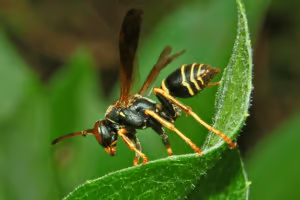
Paper wasps are one of the most commonly encountered stinging insects on Southern Maine structures, and they’re also one of the most frequently misidentified. I find their nests regularly under eaves, on porch ceilings, inside grills, and in doorframes throughout Buxton, Standish, Scarborough, and Saco. Paper wasps are less aggressive than yellowjackets or bald-faced hornets, and in many cases a small nest in a low-traffic location doesn’t require treatment at all. When nests are near doorways, children’s play areas, or high-traffic outdoor spaces, though, they’re worth addressing before they grow. As an Associate Certified Entomologist (A.C.E.) with 16 years of experience in the region, accurate identification is always my starting point, because paper wasps are handled differently from the more aggressive colonial species. Browse the stinging insects pest library to compare species, or contact me if you need help identifying or treating a nest.
What Are Paper Wasps?
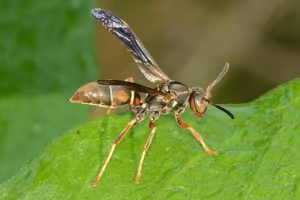
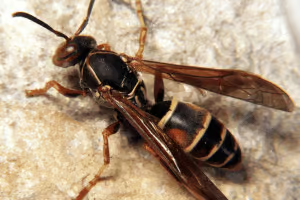
Paper wasps are slender social wasps in the genus Polistes, with the northern paper wasp (Polistes fuscatus) being the most common species in Southern Maine. Adults measure about three-quarters of an inch with a distinctly narrow, pinched waist and long legs that dangle visibly during flight. Coloring is reddish-brown to dark brown with yellow or orange markings on the abdomen and thorax. Their slender profile and dangling legs in flight are the clearest visual cues for identification.
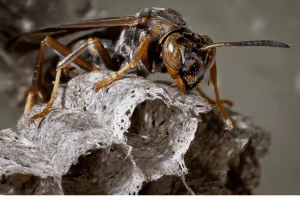
The nest is equally distinctive: an open-faced, umbrella-shaped paper comb with no outer envelope, attached to a surface by a single thin stalk. Individual hexagonal cells are visible without removing any covering, which is the key difference from yellowjacket and bald-faced hornet nests, both of which have a gray paper outer layer. Colonies are small relative to other colonial species, typically reaching 20 to 75 workers at peak, with a single season lifespan. The colony dies off with the first hard frost and the nest is not reused, though queens frequently return to the same area the following spring. According to the UMaine Extension guide on bees, hornets, and wasps, paper wasps are among the most beneficial stinging insects found in Maine, providing significant natural pest control by hunting caterpillars, flies, and other garden insects.
Signs of Paper Wasp Activity
Paper wasp nests are usually visible rather than hidden, which makes detection straightforward:
- A small open-celled umbrella-shaped paper nest hanging by a thin stalk under eaves, porch ceilings, deck railings, window frames, or light fixtures
- Slender wasps with long dangling legs flying steadily to and from the nest
- Workers scraping weathered wood from fences, siding, or deck boards to gather nest material
- Increased activity around the nest on warm sunny days from late May through September
- Wasps hovering at nest entries in the evening before settling for the night
- Nests appearing inside grills, shutters, outdoor furniture, or stored equipment at the start of warm weather
In Buxton and Standish homes, new nests appear reliably each spring as overwintered queens begin building in late April and May. Nests found early in the season when they contain only a few cells are the easiest and safest to address.
Risks in Southern Maine
Paper wasps are significantly less aggressive than yellowjackets or bald-faced hornets and will generally tolerate moderate proximity to the nest without stinging. They become defensive when the nest is directly disturbed or when someone reaches into a space where a nest is hidden, such as inside a grill, behind a shutter, or in stored outdoor furniture. Stings cause localized pain and swelling and can trigger allergic reactions in sensitized individuals.
The most common paper wasp sting incidents in Southern Maine involve nests built in places people reach into without looking first: grills being opened at the start of the season, storage sheds, outdoor furniture covers, and window boxes. In commercial settings such as restaurant patios, outdoor retail, and recreation facilities, nests near customer areas represent both a safety concern and a liability issue regardless of the species’ relatively docile nature.
Prevention Tips
Paper wasp prevention is largely about removing the sheltered surfaces they prefer and detecting new nests early in the season:
- Check eaves, porch ceilings, doorframes, window frames, and light fixtures weekly in May and June when queens are establishing new nests while they’re still small
- Remove old nests in late fall or winter after the colony has died, as returning queens are attracted to previous nest sites
- Seal gaps around soffits, eaves, and exterior trim to reduce sheltered attachment points
- Paint or seal weathered and unpainted wood surfaces, which paper wasps scrape for nest material
- Before using outdoor grills, furniture, and stored equipment at the start of warm weather, inspect them carefully for nests that formed while they were stored
- Keep outdoor garbage and food covered to reduce the food sources that draw wasps to the perimeter of a structure
- Consider a year-round protection plan that includes a spring inspection pass for early nest detection
Commonly Confused With
Paper wasps are most commonly confused with two other species:
Yellowjackets are stockier, with brighter yellow and black banding and a less pronounced waist. Their legs do not dangle noticeably during flight. Most importantly, yellowjacket nests have a gray paper outer envelope and are built in enclosed spaces such as ground burrows, wall voids, and soffits, not in open, exposed locations. Any nest with a visible outer paper covering is a yellowjacket or bald-faced hornet colony, not paper wasps.
Bald-faced hornets are larger, predominantly black with white markings, and build fully enclosed football-shaped nests in aerial locations. They are far more aggressive than paper wasps and their nests require a different treatment approach entirely.
European hornets (Vespa crabro) are occasionally found in Maine and are sometimes confused with large paper wasps. European hornets are significantly larger, yellow and brown rather than reddish-brown, and are most active at night. They are uncommon but worth knowing about if you’re seeing a large, unfamiliar wasp species.
Professional Paper Wasp Control in Southern Maine
For small nests in accessible locations well away from high-traffic areas, treatment is often straightforward. For nests near doorways, in hidden spots that are regularly reached into, or in commercial settings where any sting incident is a liability concern, professional treatment is the right call. I treat active nests at dusk or after dark when wasps are settled, applying targeted products directly to the nest and removing the structure once the colony is eliminated. No broadcast spraying and no unnecessary chemicals. I’ve been handling paper wasp calls across Cumberland and York Counties for 16 years, and my stinging insect control service covers residential and commercial properties throughout the region. Learn more about my background on the about page, or contact me to schedule a free consultation.
Frequently Asked Questions
Paper wasps are the least aggressive of the colonial stinging insects found in Southern Maine. They will sting when the nest is directly disturbed or when someone inadvertently reaches into a space where a nest is hidden, but they are unlikely to pursue or attack people moving near the nest without disturbing it. Stings cause localized pain and swelling. People with known venom allergies should treat any stinging insect nest as a potential risk and seek professional removal.
The nest is the clearest indicator. Paper wasp nests are open-faced with visible cells and no outer paper covering, attached by a single stalk to an exposed surface. Yellowjacket nests have a gray paper outer envelope and are built in enclosed spaces such as ground burrows, wall voids, and soffits. On the insect itself, paper wasps are slender with a pronounced narrow waist and long dangling legs visible in flight. Yellowjackets are stockier with brighter yellow banding and shorter legs.
Early season removal in May or June when nests are small and colonies contain only a few workers is always the easiest and safest option. Nests near doorways, grills, play areas, or any space that is regularly accessed should be addressed promptly. For nests in low-traffic locations well away from people, leaving them until fall when the colony naturally dies off is a reasonable option, since paper wasps provide genuine pest control value in gardens and yards.
Ready to Get Started?
If paper wasps have built a nest in a location that’s creating a safety concern, reach out for a free consultation and I’ll assess the situation and take care of it.