

Stinging Insects in Southern Maine:
Identification & Prevention
Stinging insects are a common seasonal concern across Southern Maine, with colonies building through summer and reaching peak populations and aggression in late August and September. The species covered here range from highly defensive colonial wasps to mostly docile solitary bees, and the distinction matters significantly when deciding whether and how to respond. Yellowjackets, bald-faced hornets, and paper wasps are the species most likely to require professional treatment. Carpenter bees can cause cumulative structural damage over time. Solitary wasps and bees are rarely a pest concern at all. Stinging insects are the most profitable service I handle, and the work I do in this category reflects 16 years of experience and an A.C.E. credential that puts species-level accuracy at the center of every treatment decision. Browse the species below or contact me for identification and treatment help.
Quick Fact: Yellowjacket colonies in Southern Maine can reach several thousand workers by late summer, and their aggression increases significantly as the season peaks. A colony that was manageable in June can be genuinely dangerous by September.
Common Stinging Insects in Southern Maine
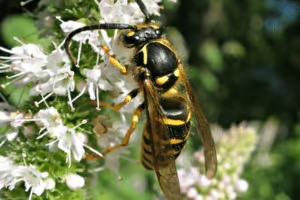
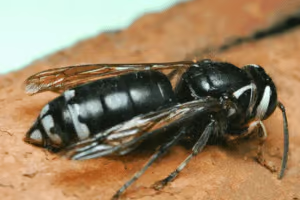
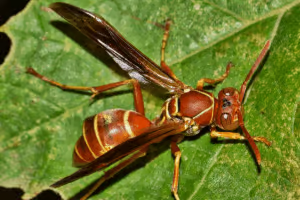
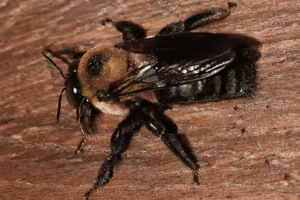
Why Do Stinging Insects Nest Near Structures in Southern Maine?
Stinging insects don’t invade structures the way rodents or cockroaches do. They nest near or on them because structures provide protected, elevated, or enclosed spaces that suit their colony-building needs.
Yellowjackets are the most varied nesters in this region, building in ground burrows, wall voids, under decks, inside soffits, and in hollow trees. Ground nests are particularly hazardous because they are easy to disturb accidentally while mowing or walking. In rural areas like Hollis, Buxton, and Limington, where wooded edges and old stone walls are common, ground-nesting yellowjackets are a consistent late-summer hazard. Bald-faced hornets build the large, distinctive gray paper nests visible in trees, shrubs, and on the sides of buildings. Paper wasps build the smaller, open-comb umbrella-shaped nests commonly found under eaves, in doorframes, on porch ceilings, and inside grills and outdoor furniture.
Carpenter bees are drawn to unpainted or weathered softwood, drilling round entry holes to create nesting galleries in decks, railings, siding, fascia boards, and wooden trim. Unlike colonial species, they are solitary and do not sting defensively as a group, but repeated use of the same wood over multiple seasons causes cumulative structural damage.
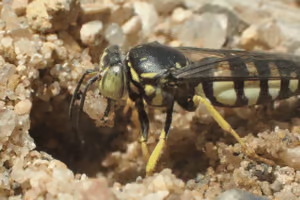
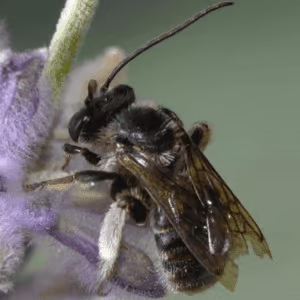
Solitary wasps and bees nest individually in the ground, in pre-existing holes, or in small cavities and are almost never a pest control concern. They are non-aggressive and ecologically beneficial as predators of pest insects and as pollinators.
Identification Tips for Stinging Insects in Southern Maine
The species in this category are frequently confused with one another and with honeybees and bumblebees. Correct identification matters because it affects how dangerous a nest is and what treatment approach is appropriate:
- Yellowjackets: slender, smooth-bodied, bright yellow and black banding, approximately half an inch; aggressive defenders capable of stinging repeatedly; nest in ground, wall voids, and enclosed aerial spaces
- Bald-faced hornets: larger than yellowjackets (about three-quarters of an inch), black with white markings on the face and abdomen; build large gray paper football-shaped nests in exposed aerial locations; highly defensive and will pursue perceived threats well away from the nest
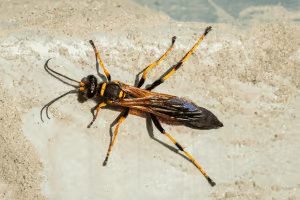
- Paper wasps: slender with a distinct narrow waist, reddish-brown to dark brown with yellow markings, approximately three-quarters of an inch; nest is an open-celled paper comb visible without a covering; less aggressive than yellowjackets but will sting when the nest is disturbed
- Carpenter bees: large (approximately one inch), robust, and superficially resemble bumblebees; abdomen is smooth and shiny black rather than fuzzy; males are territorial and may hover aggressively near nesting sites but cannot sting; females can sting but rarely do
- Solitary wasps and bees: highly variable in appearance depending on species; include ground-nesting mining bees, mud daubers, and sand wasps; generally slender, non-aggressive, and nest individually rather than in colonies
Behavior & Habits of Stinging Insects
Colonial species, yellowjackets, bald-faced hornets, and paper wasps, all follow the same seasonal pattern in Southern Maine. New queens overwinter in protected sites and begin building nests from scratch each spring. Colonies grow steadily through summer and reach maximum size in August and September. Aggression peaks late in the season as colonies defend large populations of larvae and stored food. All colonies die off by the first hard frost with the exception of newly mated queens, which overwinter and restart the cycle the following spring. Nests are not reused between years, though the same sites are often selected again.
Carpenter bees overwinter as adults in their galleries and return to the same wood in spring. Existing tunnels are enlarged and new ones added each season, which is why damage compounds over time on structures that are not treated.
Yellowjackets shift their diet later in the season from protein, hunting insects and spiders, toward sugars and carbohydrates, which is why they become a persistent nuisance around outdoor food and drinks in August and September. Properties near Saco and Scarborough where outdoor dining and late-summer gatherings are common see this pattern reliably every year.
Risks & Threats from Stinging Insects
- Anaphylaxis: stings from any colonial species can trigger severe allergic reactions in sensitized individuals; people with a known venom allergy should carry an epinephrine auto-injector and avoid nest proximity; the Maine CDC is the appropriate local reference for health guidance
- Multiple stings: colonial wasps can sting repeatedly, and bald-faced hornets and yellowjackets will pursue and attack in numbers when a nest is disturbed; even people without known allergies can have serious reactions to a large number of stings
- Structural damage: carpenter bees cause cumulative wood damage that worsens each season; carpenter bee galleries also attract woodpeckers that cause additional damage excavating the tunnels
- Hidden nests: yellowjacket colonies in wall voids are particularly hazardous because the nest can grow very large before it is discovered, and treatment requires locating the nest accurately before disturbing it
- Late-season aggression: all colonial species become noticeably more defensive in August and September as colony size peaks; nests that were easy to avoid earlier in the season can become a genuine safety concern by late summer in Windham, Standish, and other wooded communities where nest sites are abundant
General Prevention Tips for Stinging Insects
- Inspect the exterior of structures each spring for early-stage nests before colonies grow large; small nests found in April and May are far easier and safer to address than mature late-summer colonies
- Seal gaps around soffits, eaves, and exterior trim to reduce access points for yellowjackets seeking wall void nesting sites
- Paint or seal exposed softwood surfaces on decks, railings, and trim to deter carpenter bees, which strongly prefer weathered and unpainted wood
- Keep garbage and compost bins tightly sealed from late July onward when yellowjackets are actively foraging for sugars
- Cover outdoor food and drinks during late-summer gatherings and avoid leaving sweet beverages unattended, as yellowjackets will enter open cans and bottles
- Do not attempt to remove an active bald-faced hornet nest or a wall void yellowjacket colony without professional equipment and protective gear; disturbing these nests without preparation carries a serious risk of mass stinging
- Consider a year-round protection plan that includes spring inspection for early nest activity before colonies reach dangerous size
Frequently Asked Questions
Sheltered nesting sites are the primary draw: wall voids, soffits, eaves, ground burrows, and wooded edges all provide the protected spaces colonial species need. Food sources also matter, yellowjackets are attracted to garbage, compost, pet food, and outdoor dining areas, particularly from late July onward when their diet shifts toward sugars. Properties with abundant flowering plants also attract solitary bee and wasp species, which are beneficial and rarely a concern.
Repeated flight activity near a specific point, particularly heavy traffic going in and out of a gap in siding, a hole in the ground, or under an eave, is the clearest indicator. A visible gray paper nest in a tree or on a structure is a bald-faced hornet colony. Round holes drilled into weathered wood with sawdust below are carpenter bee activity. If you’re seeing stinging insect activity but can’t locate the source, a professional inspection is the safest next step.
Colonial species, yellowjackets, bald-faced hornets, and paper wasps, are capable of delivering multiple stings and will do so aggressively when a nest is disturbed. For people with venom allergies, a single sting can trigger anaphylaxis, which is a medical emergency. Even without a known allergy, a mass stinging event from a large colony carries real health risk. Carpenter bees and solitary species rarely sting and are not a meaningful health concern.
Early in the season when colonies are small is always preferable for safety and effectiveness. For most colonial species, treatment is most practical in late evening or early morning when workers are inside the nest and activity is lowest. Late-season nests in August and September are at peak size and aggression and should always be handled professionally. Never attempt to treat a wall void yellowjacket colony or a large bald-faced hornet nest without professional equipment.
A yellowjacket queen starts a colony alone in spring with a handful of workers. By August a typical ground nest or wall void colony can contain several thousand workers. Bald-faced hornet colonies follow a similar trajectory. Paper wasp colonies are smaller, typically a few dozen to a few hundred workers, and grow more gradually. This is why early spring inspection and treatment of small nests produces far better outcomes than waiting until late summer.
Colonial species do not reuse nests, but they frequently return to the same sites. A yellowjacket ground burrow that was active last year is a likely candidate again the following spring. A bald-faced hornet nest removed in fall will not be reoccupied, but a new queen may build nearby in spring. Sealing access points and treating the nesting area after removal reduces the likelihood of return.
Commonly Confused With
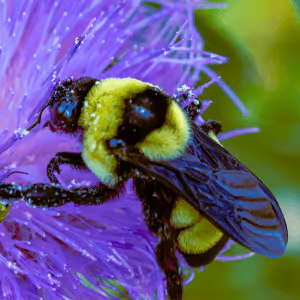
Bumblebees (Bombus species) are large, fuzzy, and slow-moving, with a distinctly round, heavily haired abdomen that distinguishes them from carpenter bees (smooth, shiny abdomen) and yellowjackets (slender, smooth-bodied). Bumblebees nest in the ground or in dense grass and are not generally aggressive unless the nest is directly disturbed. They are important native pollinators and should not be treated as a pest unless a nest is in a location that makes conflict unavoidable.
Honeybees are occasionally confused with yellowjackets by homeowners who see a swarm or a nest. Honeybees are golden-brown and fuzzy rather than smooth and bright yellow, and are generally docile unless protecting a hive. Established honeybee colonies in wall voids are a distinct situation from wasp nests and are typically handled by local beekeepers rather than pest control operators.
Professional Stinging Insect Control in Southern Maine
Stinging insect work is the service I get called for most often across Southern Maine, and it’s the category where accurate identification and proper timing matter most. Treating a yellowjacket ground nest the wrong way, or attempting to remove a bald-faced hornet nest without the right equipment, can result in a genuinely dangerous situation. I identify the species, locate the nest accurately, and apply targeted treatment at the right time using professional-grade products and protective equipment that isn’t available over the counter. I’ve been handling stinging insect calls across Cumberland and York Counties for 16 years, and as an Associate Certified Entomologist (A.C.E.) I bring species-level accuracy to every job. My stinging insect control service covers all colonial and structural pest species for both residential and commercial properties. Contact me to schedule a free consultation.