

Porcupines in Southern Maine:
Identification, Prevention, and Control
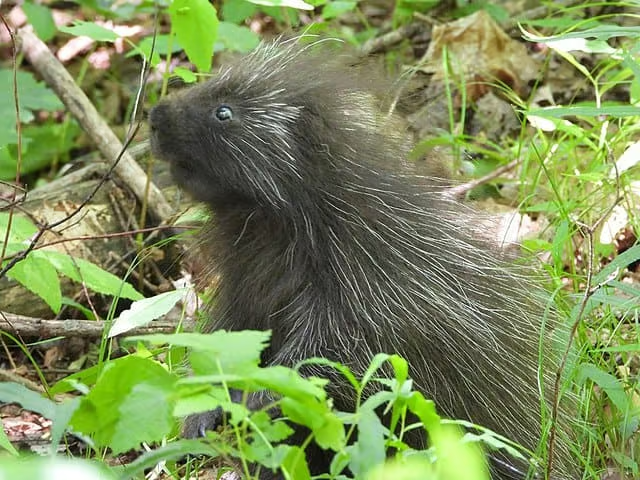
Porcupines are a common sight throughout Southern Maine, especially in the wooded neighborhoods of Biddeford and Saco. These slow-moving, quill-covered mammals frequently gnaw on wooden structures, trees, and tools while seeking salt and shelter in older homes. If you notice stripped bark on trees, large tooth marks on siding or plywood, or quills scattered near the house, get your free inspection today.
What Are Porcupines?
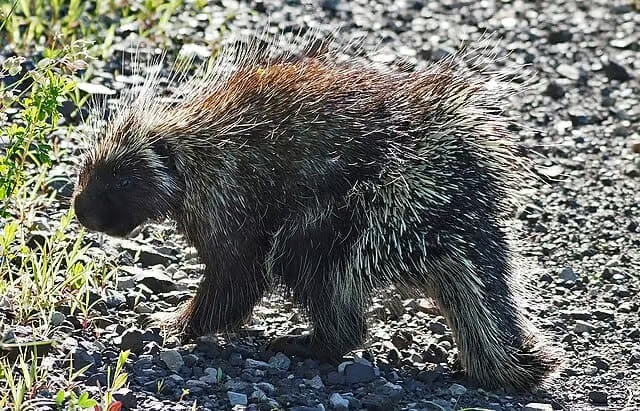
Porcupines in Southern Maine are the North American porcupine (Erethizon dorsatum). They are large rodents with a stout body covered in up to 30,000 sharp quills, yellowish-brown to black fur, and a small head with orange teeth. Adults weigh 10 to 30 pounds and measure about 2 to 3 feet long.
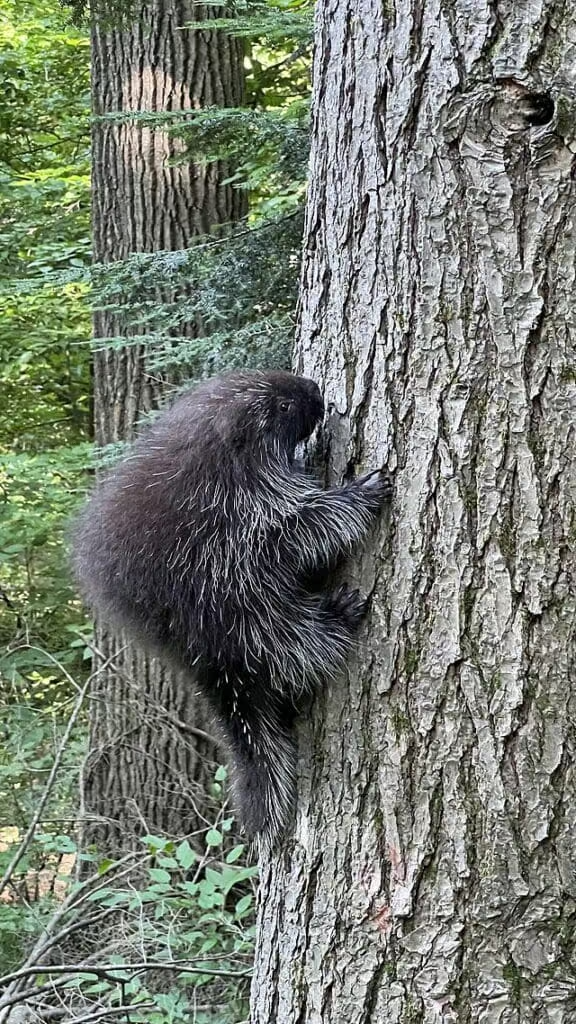
They move slowly but are excellent climbers and swimmers. Nocturnal and solitary, they thrive in our humid coastal climate in coniferous and mixed forests where they feed on bark, twigs, and buds. They are one of the more distinctive nuisance wildlife species found in Southern Maine, and the only one whose damage is driven primarily by a craving for salt rather than a search for food or shelter.
According to the Maine Department of Inland Fisheries and Wildlife they are found statewide and are most active at night.
Signs of Infestation
These clues usually appear first on trees, wooden structures, or around foundations.
- Stripped bark on trees with large horizontal tooth marks
- Large ½-inch wide gnaw marks on plywood, siding, or tool handles
- Scattered quills on the ground near the house or trees
- Large oval droppings ¾–1 inch long often containing wood fibers
- Small dens or entry holes under sheds, porches, or rock piles
- Chewed wooden steps, decks, or outdoor furniture for salt
- Strong musky odor near den sites
- Clipped twigs or branches on the ground under favorite feeding trees
In Cornish and Parsonsfield homes these signs often increase in winter when porcupines seek salt and shelter.
Risks in Southern Maine
In our damp, wooded region porcupines can cause significant damage to trees and wooden structures by gnawing for salt and minerals, weaken siding or decks, and leave quills that can injure pets or people. Older coastal homes with wooden trim and nearby conifers are especially vulnerable.
While they are not aggressive, their quills embed easily and their activity can lead to costly repairs. My low-impact approach follows best practices from the Maine DACF Got Pests – Porcupine page and focuses on safe, targeted solutions for local conditions. Porcupines are sometimes confused with woodchucks, which are similarly large and slow-moving but cause burrowing damage rather than gnawing damage and lack quills entirely, or with raccoons, which are active in the same wooded yards at night but are identifiable by their masked faces and much more varied, destructive behavior.
Prevention Tips
Simple exclusion and habitat modification steps protect your home in Southern Maine.
- Store tools, plywood, and wooden items indoors or in sealed containers
- Seal gaps and holes 4 inches or larger with heavy-gauge metal flashing or hardware cloth
- Install tree trunk guards or wire mesh around favorite feeding trees
- Remove salt sources such as road salt residue or sweat-stained wood
- Trim tree limbs at least 6–8 feet away from the roof and walls
- Keep woodpiles and brush at least 20 feet from the house
- Inspect and seal foundation vents, crawl space doors, and shed gaps every season
- Use motion-activated lights around decks and porches
These steps prove especially effective in Lyman and Hollis homes with dense conifer stands and older wooden structures.
Professional Treatment
When prevention is not enough I provide targeted, low-impact control. I locate active den sites and gnawing areas in trees, structures, and foundations. Treatments are customized for each property. A single family home in Biddeford may need different focus than a business in Saco. I handle the entire process myself from start to finish.
Learn more about my background and methods on the About page. Contact me today to schedule your free inspection on the Contact page. If porcupines are gnawing on your siding, trees, or wooden structures, my nuisance wildlife control services in Southern Maine provide humane removal and targeted exclusion to stop the damage and protect your property.
Frequently Asked Questions
They climb structures and squeeze or gnaw through gaps 4 inches or larger around foundations, soffits, vents, and wooden trim.
Yes, they are native wildlife. I always follow Maine regulations and prioritize humane exclusion and relocation whenever possible and permitted.
Rarely once they have established a den or food source near or inside your home. Prompt exclusion is the most effective way to encourage them to move out permanently.
Related Resources
- Read the full species profile from the Maine Department of Inland Fisheries and Wildlife
- Find practical identification and control tips on the Maine DACF Got Pests – Porcupine page
Why Choose Precision Pest Control?
Your local solo specialist, I offer customized, low-impact pest control fitted to Southern Maine challenges for homes and businesses. Protect your property today. Reach out for your free inspection.