


Bed bug inspections look different depending on what’s actually in the unit. A vacant turnover with no furniture left behind is a different job than an occupied unit with a bed, a couch, and a dresser still in place. Property managers who run the same checklist for both end up missing evidence in one scenario or wasting time in the other, and either mistake gets expensive. A bed bug problem caught during turnover is a spot treatment. The same problem missed and discovered three months later, after it’s spread to the unit next door, is a multi-unit job with unhappy tenants and a lease dispute attached to it.
Here’s how to approach each scenario, plus what the evidence actually looks like when it’s found. For background on what bed bugs look like at a glance, the bed bug pest library page has photos and identification details worth keeping bookmarked for maintenance staff.
Vacant Turnover Units (No Furniture)
When a unit is empty, bed bugs don’t have much to hide in besides the structure itself. That’s actually an advantage for an inspection, since there’s no mattress or upholstery to search through. A flashlight and a flat tool like a putty knife or an old credit card, for running along tight seams, are all that’s needed. Focus on:
- Baseboards. Bed bugs tuck into the gap where baseboard meets wall or floor, especially in corners where two runs meet. Run the flashlight along the full length of every baseboard in the bedroom and any other room where furniture used to sit, not just the bedroom closest to where the bed was.
- Trim and door casings. Same logic as baseboards. Any wood-to-wall seam, including window casings, is a potential harborage point, particularly if the trim has separated slightly from the wall over time.
- Outlet and switch covers. Remove the cover plates on outlets and switches near where furniture used to sit. Bed bugs travel behind the plate and into the wall void, and this is one of the most commonly skipped spots in a quick walkthrough because it takes an extra minute with a screwdriver.
- Where the furniture used to sit. Even with the bed and dresser gone, check the flooring or carpet under the old bed frame footprint and the wall section directly behind where the headboard was. Indentations in carpet from furniture legs are a good landmark for exactly where to look closest.
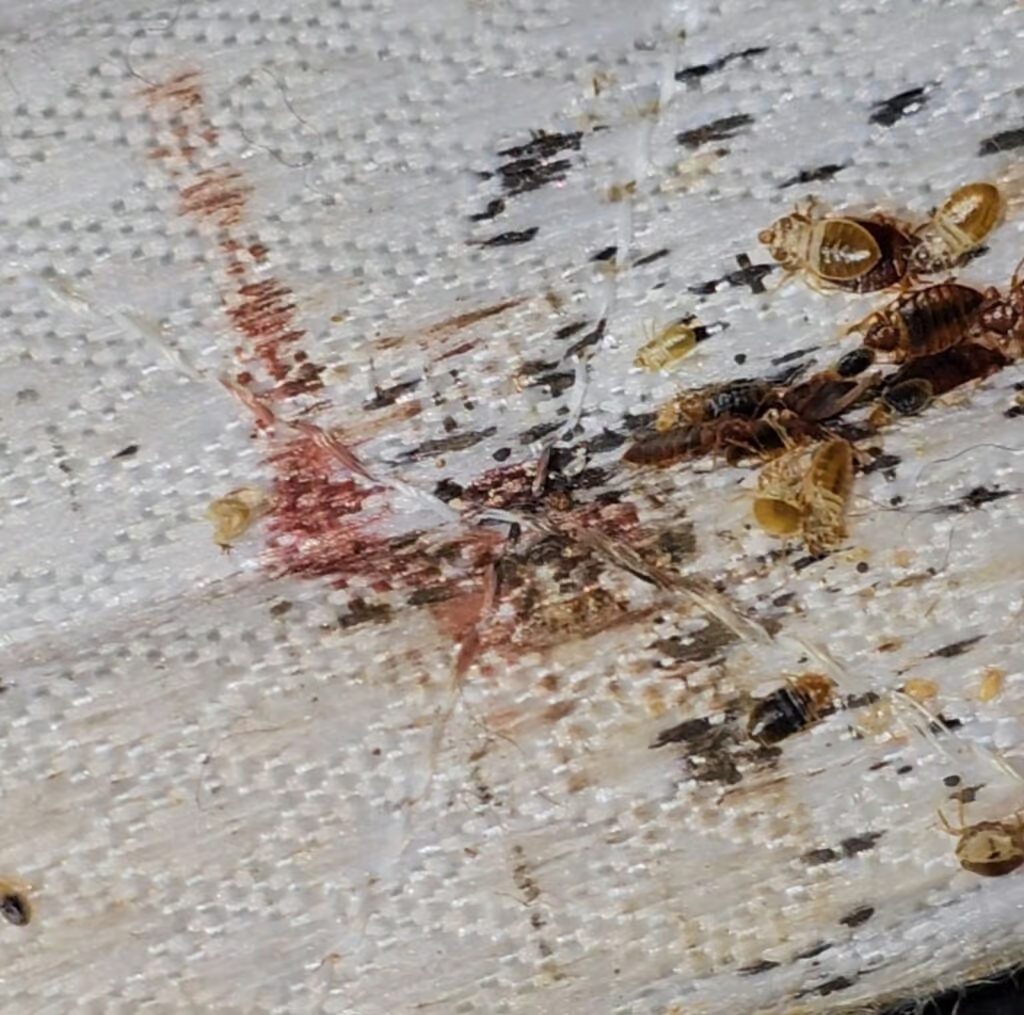
If a tenant left furniture behind at turnover, don’t treat the unit as a vacant-unit inspection just because the tenant is gone. Left-behind furniture needs the same scrutiny as an occupied unit below, since abandoned furniture carrying an infestation forward into the next lease is one of the most common ways bed bugs move between tenants in the first place.
Occupied and Annual Inspection Units
When furniture is present, that’s where bed bugs concentrate, since they need to be close to a host to feed. This applies both to move-in-ready units getting a pre-lease check and to units getting an annual or welfare-program inspection with a tenant still living there.
- Mattress seams. This is the single most productive spot to check in the entire unit. Pull back the sheets and run the light along every seam, the piping, and the tag, since bed bugs favor the tight, dark folds along the edge of the mattress over the open surface.
- Headboard. Especially where the headboard attaches to the wall or the bed frame. Bed bugs favor tight wood-to-wood joints over open surfaces, the same reason they cluster in mattress seams.
- Bed frame joints. Check where the frame rails meet the headboard and footboard, and any corner brackets or hardware, since these are additional tight joints close to where a person sleeps.
- Nightstands and furniture immediately next to the bed. Bed bugs don’t need to be on the bed itself. Drawer joints and the underside of nightstands within a few feet of where someone sleeps are worth a quick check too.
What You’re Looking For
Three things tend to show up together, and finding any one of them on its own is worth treating as a lead worth following further before ruling anything out:
- Rusty crush spots. Small reddish-brown smears on the mattress or sheets, usually left behind after a fed bug is crushed by the sleeper’s own movement.
- Fecal specks. Small dark spots, often clustered along seams, that look like a marker was dabbed against the fabric. These are digested blood, and they’re usually the first thing to notice since they show up clearly against light-colored bedding.
- Castings. The shed skins bed bugs leave behind as they grow through each life stage. These are pale, empty, and roughly bug-shaped, and they’re often found in the same seams and joints as the fecal specks, since a bug tends to molt in the same tight space it’s already hiding in.
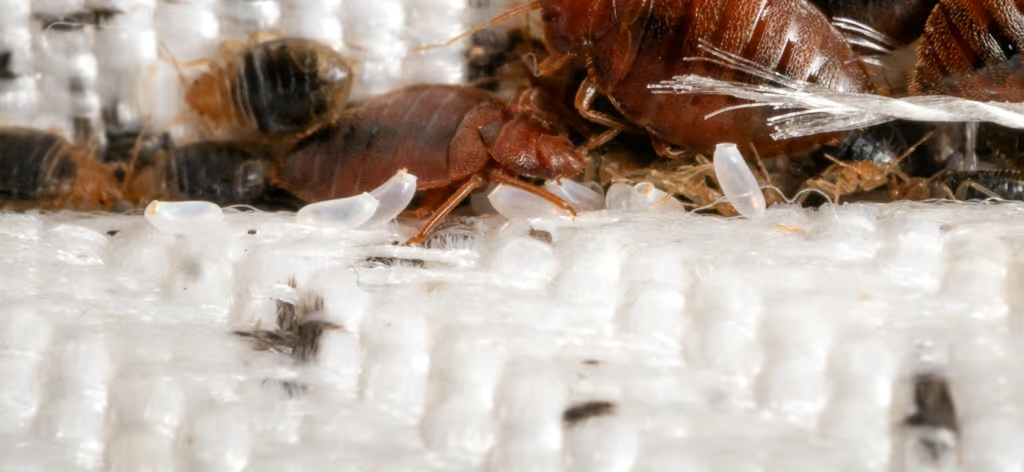
Finding castings and fecal specks together in a mattress seam is about as clear a sign as it gets without spotting a live bug crawling. Light-colored sheets make all three easier to spot than patterned bedding, which is worth keeping in mind if a unit gives any choice in the matter during a pre-lease walkthrough.
Why This Matters for Property Managers Specifically
Bed bugs don’t respect unit boundaries. An infestation left in place in one unit will eventually move through shared walls, hallway carpet, or a tenant’s own belongings into the units around it, which is exactly what turns a single-unit treatment into a building-wide problem. Maine law also puts real obligations on both landlords and tenants once bed bugs are identified, under Title 14 §6021-A, which spells out inspection, notification, and treatment duties on both sides of the lease. Catching evidence early during a routine turnover or annual inspection is what keeps a property manager on the right side of that statute instead of reacting to it after a tenant complaint.
For a closer look at what bed bugs look like at each life stage, the EPA’s bed bug identification page is a solid reference to keep on hand for maintenance staff who aren’t sure what they’re looking at.
This kind of turnover risk shows up most in dense, high-turnover rental markets, which is exactly the property type common in Westbrook, Windham, and Scarborough, where a mix of multi-family housing and seasonal rentals keeps turnover frequent year-round.
A Printable Checklist
There’s a one-page, room-by-room checklist below covering both scenarios above, made to hand to maintenance staff or run through during a turnover walkthrough without missing a step. [Download the checklist here.]
If an inspection turns up evidence in either scenario, catching it before new tenants move in, or before it spreads to neighboring units, is what actually keeps it manageable. More on bed bug control in southern Maine is available here, or reach out directly if a second set of eyes on a unit before it turns over would help.