

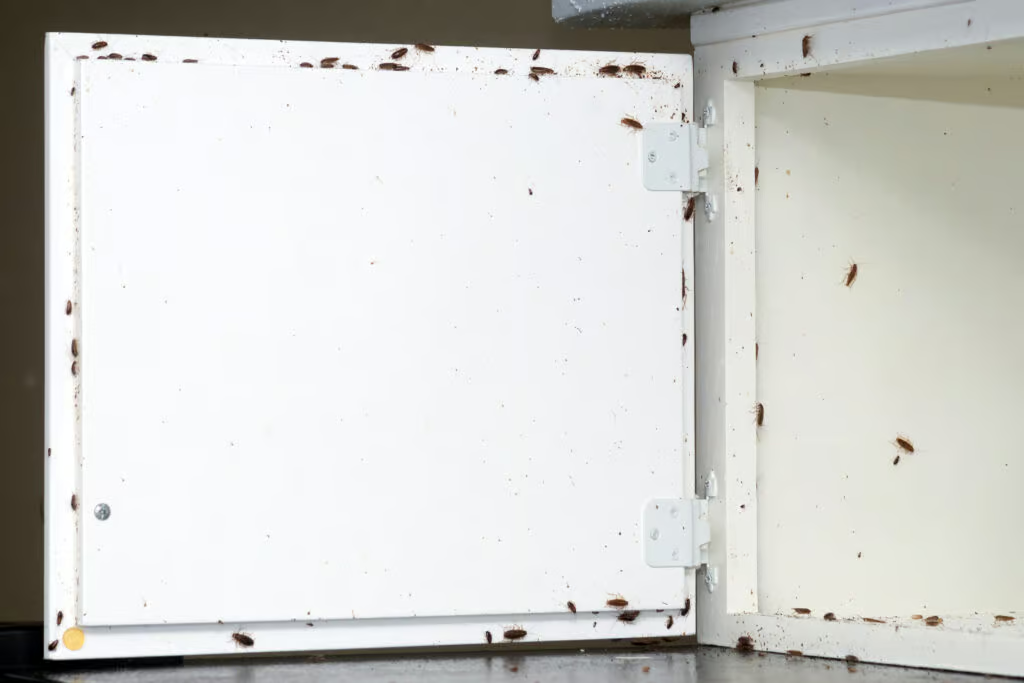
German cockroaches are one of the most common calls I get from property managers in Cumberland and York Counties, and they’re also one of the most misunderstood. Unlike a lot of pests, German cockroaches almost never come from outdoors. They travel in on grocery bags, secondhand furniture, delivery boxes, and moving trucks, then settle into warm, moist spots near food and water. Once they’re established in one unit, the way that unit is handled determines whether the problem stays contained or spreads through the whole building.
Why Self-Treatment Makes the Problem Worse
The single biggest issue I see in multi-unit housing is a tenant reaching for a can of spray from the store. German cockroaches don’t just die when they’re sprayed. Many of them scatter, and they scatter toward cooler, less-disturbed areas of the unit. That means roaches that would normally stay confined to the kitchen and bathroom, where the food and moisture are, start showing up in bedrooms and living rooms instead. Worse, that scattering doesn’t stop at the wall. Roaches move through shared plumbing lines, wall voids, and electrical chases into neighboring units, which is exactly how a one-unit problem becomes a three- or four-unit problem.
This is why, once German cockroaches are confirmed in one unit, I always recommend inspecting the units directly next to it, above it, and below it. Even if a neighboring tenant hasn’t reported anything, an early, unnoticed population is much easier to knock down than one that’s had months to build up.
This is why, once German cockroaches are confirmed in one unit, I always recommend inspecting the units directly next to it, above it, and below it. Even if a neighboring tenant hasn’t reported anything, an early, unnoticed population is much easier to knock down than one that’s had months to build up.

Why Sanitation Makes or Breaks Bait Performance
Modern German cockroach control relies heavily on gel and station baits rather than broadcast spraying. Baits let us target roaches directly, which limits the amount of pesticide going into an occupied living space. But bait only works well when it’s the most attractive food source available. If a kitchen has other easy meals lying around, roaches may never find the bait at all.
Grease and food residue left on stovetops is one of the most overlooked feeding sources in a kitchen. A little spilled cooking oil that never gets wiped up is a steady buffet for a growing population. Even a kitchen that looks clean at a glance can have a serious sanitation gap. Cardboard food packaging is a good example. German cockroaches can enter through the flaps of a cereal box and feed directly from the cereal bag that’s inside, so part of an effective plan often includes something as simple as clipping cereal bags shut or moving dry goods into sealed containers.
I do use targeted sprays in a treatment, but I keep them limited to lower areas like baseboards rather than broadcasting them across a unit. The bait is doing much of the real work. Sanitation is what lets it work reliably.
Health Reasons This Isn’t Just a Nuisance Complaint
German cockroach populations are more than an inconvenience for property managers dealing with tenant complaints. Cockroach droppings, shed skin fragments, saliva, and decomposing bodies all contribute allergens that become airborne in dust. For tenants with asthma or allergies, especially children, this can be a real health concern and not just a cleanliness issue, which is part of why prompt treatment across affected units matters.
A Notice Requirement Worth Knowing
Maine landlords and property managers should also be aware that liquid pesticide applications inside a rental unit, treatments beyond spot crack-and-crevice work, generally require advance written notice to tenants under Chapter 26 of the Maine Board of Pesticides Control rules. Coordinating that notice ahead of a scheduled treatment keeps everyone on the same page and avoids access issues on treatment day.

Working With a Pest Control Provider
If you manage rental property in southern Maine and you’re dealing with a German cockroach problem in one or more units, professional German cockroach control that includes a building-wide inspection approach tends to resolve things faster and more permanently than unit-by-unit spot treatment. I service properties throughout Scarborough, Westbrook, and the surrounding southern Maine area, and I’m happy to walk a property manager through what a treatment plan looks like before committing to anything. You can also read more on the German cockroach pest library page for identification and biology details.
For more on the health effects of cockroach allergens, the EPA’s page on cockroaches and asthma is a good outside resource, and Maine’s notice requirements for pesticide application in rental housing are outlined in Chapter 26 of the Maine Board of Pesticides Control rules.