

As the temperature drops, mice start looking for a warm place to spend the winter, and a house is exactly what they’re looking for. Every fall I get calls for rodent control from homeowners who have already tried bait stations on their own, sometimes for weeks, and are still hearing scratching in the walls. The problem usually isn’t the bait itself. It’s that bait alone never addresses how the mice, most often house mice, are getting in to begin with.
Why Rodenticide Alone Often Falls Short
Bait can work, but it has real limits when it’s the only tool in play.
In wet seasons, bait left in crawl spaces or along foundation walls can go moldy, and mice won’t touch it once that happens. Slugs are a surprisingly common problem too. They crawl over bait blocks and coat them in slime, and mice avoid anything that’s been slimed over just as fast as they avoid moldy bait.
There’s also a pressure problem. If a house still has open entry points, bait might knock down the mice for a while, but new mice keep pushing in even when the bait is fully consumed and gone. This allows mice back into living space to leave droppings, and some die inside wall voids, which can bring on fly activity and odor problems. I only place bait outside for this reason. Some companies do bait indoors, but once mice die inside a wall or void, there’s no controlling where that happens. There’s also a common myth, repeated by some in the industry, that baited mice instinctively head outside looking for water before they die. They don’t. Where they die is random, which is exactly why indoor placement carries that risk.
Why Exclusion Is the Better Long-Term Approach
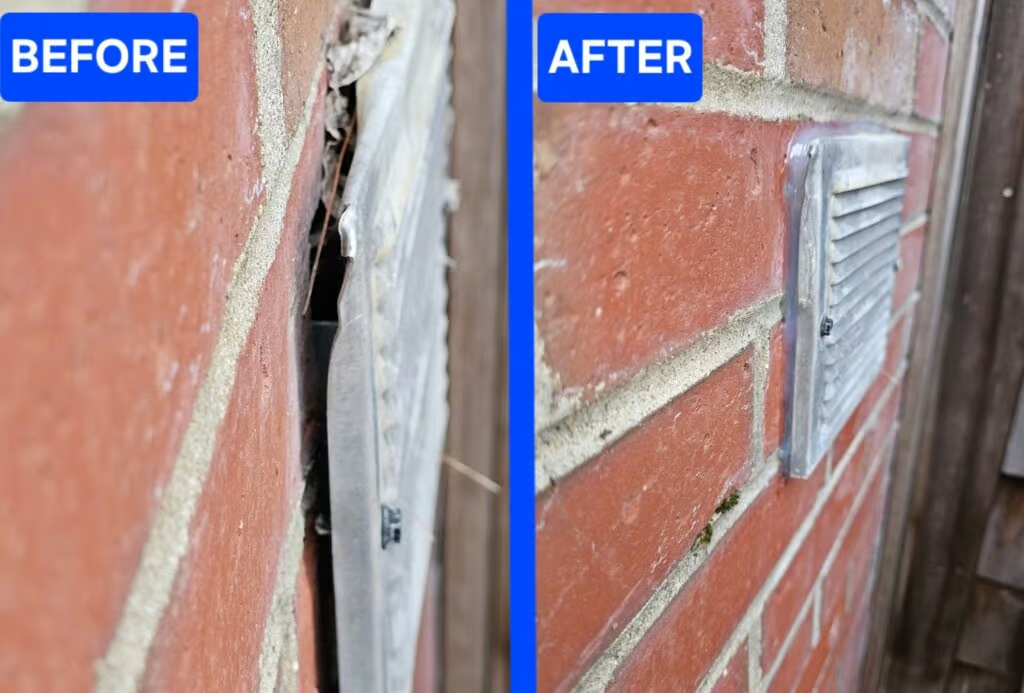
Sealing up entry points addresses the actual cause instead of just the symptom. A house that’s properly sealed stops being an easy target, and that holds true winter after winter, not just for one season.
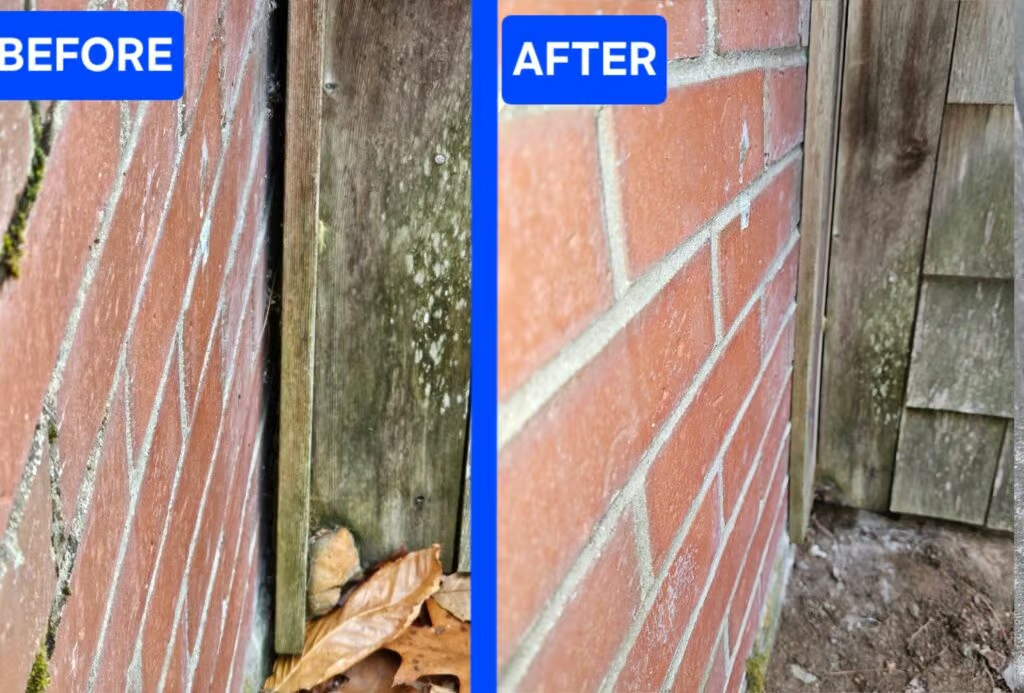
The places I check most often on a Southern Maine home are garage doors, especially where the bottom seal has worn down or gapped, and where the foundation meets the house framing, particularly around sill plates. I also look closely at rot in the sheathing behind siding, which often goes unnoticed until it’s directly inspected, along with gaps around where decks and entry doors attach to the house, deteriorating door sweeps on both entry doors and garages, and branches or vegetation that touch the house or roofline and give mice a bridge in.
A mouse only needs a gap about the width of a pencil to get through, so these small, easy-to-miss spots matter more than most homeowners expect.
A Note on Expandable Foam
Expandable foam is common in a lot of exclusion work, and it does have a place. It fills irregular gaps well and works fine for general draft sealing and air leaks. But foam alone isn’t a reliable barrier against mice regardless of the size of the opening, since mice are capable of chewing through it over time. StopPests.org notes plainly that expandable foam works as a filler, but rodents can chew through it fairly easily on its own.
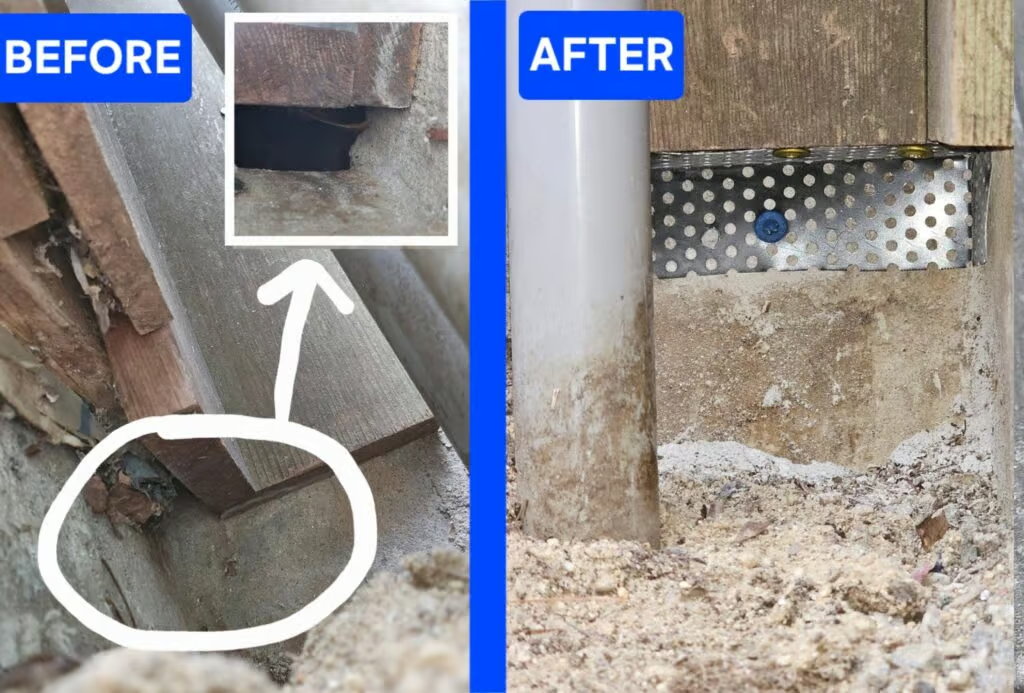
I don’t rely on foam by itself for entry points that see real rodent pressure. On those spots I use more durable materials designed to hold up against gnawing, paired with sealant, rather than foam as a standalone fix. It costs a little more effort up front, but it holds up instead of needing to be redone the following year.
Exclusion Has Real Limits Too
It’s worth being honest that exclusion isn’t a guaranteed 100% seal on every house. Older homes with stone foundations are a common example. Mice can get in between the stones themselves, and sealing that kind of foundation completely can be extremely expensive. Dirt crawl spaces present a similar problem, since mice can burrow underneath a concrete foundation edge rather than going through it.
In those cases, exclusion still helps a lot. It just isn’t a one-time fix that eliminates the issue completely. It’s an aid that meaningfully lowers activity, not a guarantee.
How I Handle It
My general process is to seal the entry points I can find and address, then trap inside the house to clear out whatever mice are already in there. I leave traps in place for a stretch afterward as a check, not just to catch stragglers. The location where a mouse gets caught after the sealing work tells me something useful. It often points to exactly which gap got missed, so I can go back and close it instead of guessing.
I also tell homeowners to keep a couple of snap traps along the basement sill permanently, just to glance at whenever they’re down there. If one goes off months later, that’s a signal something reopened, whether it’s a new gap or a door that got left open. It gives you an early warning instead of finding out the hard way when activity is already back up.
If you’re hearing activity in the walls or want the entry points on your property checked before winter sets in, contact me and I can take a look.