

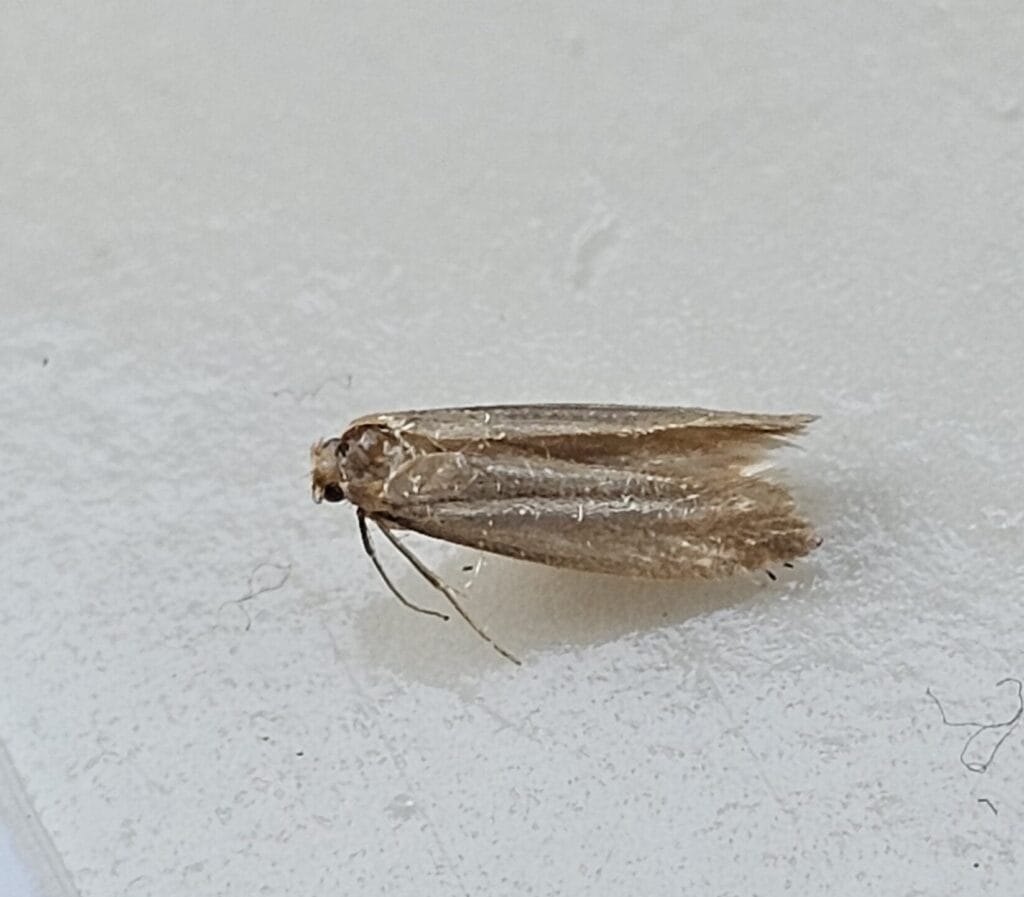
When a business owner in Maine reached out about tiny golden moths appearing around the office, we quickly identified them as webbing clothes moths (Tineola bisselliella). These small, harmless-looking insects belong to the Tineidae family and are well known in Maine for infesting natural fibers.
The larvae do the real damage. They feed on keratin-rich materials such as wool, hair, fur, feathers, and even accumulated lint or skin flakes. Adults do not eat at all. They simply fly around, mate, and lay eggs near a suitable food source.
Our first step was classic integrated pest management: source reduction. We searched thoroughly for the origin of the infestation. We checked closets, storage areas, upholstery, carpets, and any spots where animal fibers or organic debris might accumulate. Despite a detailed inspection, we could not locate an obvious source such as infested clothing, old rugs, or spilled materials.
That is when we moved to the next tool in the toolbox. We installed pheromone lures specifically designed for webbing clothes moths. These traps use a synthetic sex pheromone to attract male moths, which then stick to the glue board. The traps serve two purposes. They reduce the number of males available to mate, and more importantly in this case, they help pinpoint concentrations of activity.
By placing traps strategically and monitoring where the highest numbers appeared, we hoped to narrow down the hidden larval feeding site. One possibility we discussed was dead rodents inside wall voids. A mouse that dies behind drywall or in an attic space can dry out over time and become an ideal food source for clothes moth larvae. The larvae thrive on the dried hair, skin, and remains long after the carcass has stopped smelling.
This situation is a perfect example of how one pest problem can quietly fuel another. Rodent activity that seems resolved on the surface can leave behind a reservoir that supports clothes moths for months or even longer. In commercial buildings, these hidden spots are especially common around pipes, wiring, or seldom-disturbed areas.
Even without finding the exact source immediately, the combination of thorough cleaning, vacuuming of crevices and baseboards, proper disposal of any suspect materials, and consistent use of pheromone traps is the most effective way to bring an infestation under control. In Maine’s climate, where heating systems create warm, dry indoor conditions year-round, these moths can persist if the food source is not addressed.
If you are dealing with webbing clothes moths in your home or business, remember these key points:
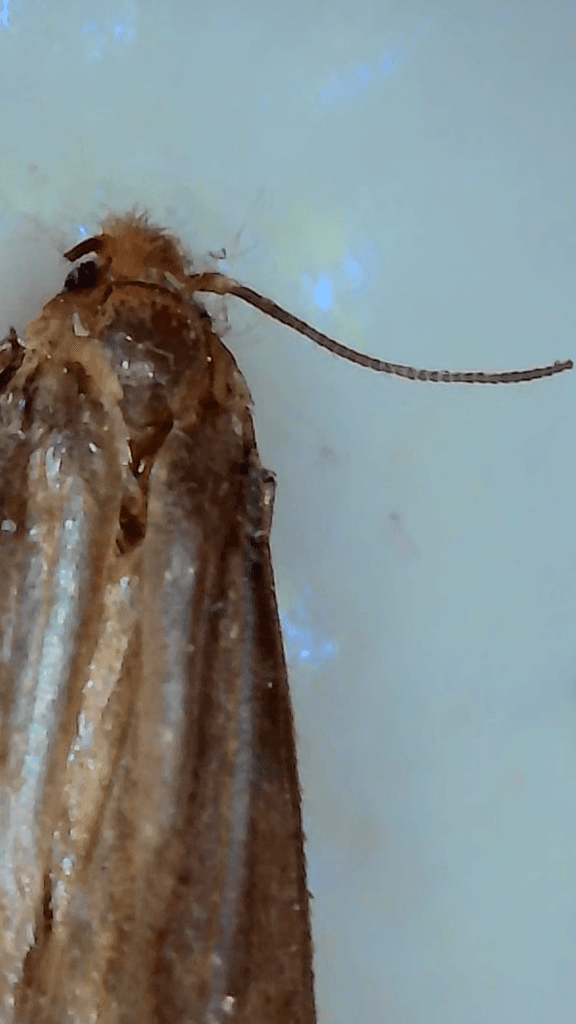
- Identify the moth correctly. The webbing clothes moth has a distinctive golden-copper sheen and a fuzzy reddish head tuft.
- Focus on source reduction first. Remove or clean any keratin materials and vacuum dark, undisturbed areas.
- Use pheromone traps to monitor and reduce adult males. They work only on webbing clothes moths, not on other species.
- Consider hidden reservoirs. Dead rodents, bird nests, or old animal debris in walls or attics can sustain populations.
- Be patient. The life cycle can take several weeks to months depending on temperature and food availability.
Pest issues like this show why a thorough, step-by-step approach works better than quick chemical fixes. If traps start filling up in one particular area, that is your best clue to dig deeper. If you are dealing with webbing clothes moths in your Maine business or home, focus first on thorough source reduction and strategic placement of pheromone traps. Consistent monitoring and deep cleaning of hidden areas are usually the most effective path to long-term control.