

Porcupines in Southern Maine:
Identification, Prevention, and Control
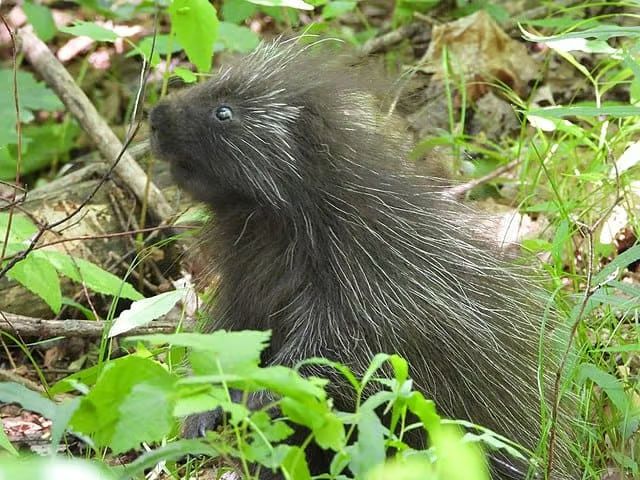
North American porcupines are a familiar part of the Maine landscape, but they become a genuine nuisance when they set their attention on wooden structures. Their primary motivation around human property is salt, and they will gnaw extensively on anything that carries a salt residue, including tool handles, vehicle tires, plywood, wooden decks, siding, and the structural components of camps and cabins left vacant over winter. In the more rural and forested communities of Parsonsfield, Newfield, Cornish, and Baldwin, seasonal properties left unoccupied for months are particularly vulnerable to porcupine damage that goes undetected until the owners return in spring. As a licensed Animal Damage Control (ADC) operator and Associate Certified Entomologist with 16 years of experience in the region, I provide targeted removal and exclusion tailored to each property. Browse the wildlife pest library to see other species I handle, or contact me if porcupines are causing damage on your property.
What Are Porcupines?
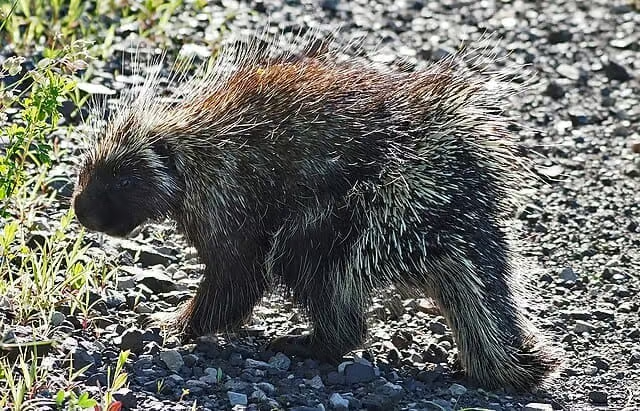
The North American porcupine (Erethizon dorsatum) is the second-largest rodent in North America, after the beaver, and the only quilled mammal found in Maine. Adults measure 25 to 36 inches in total length including the tail and weigh between 10 and 30 pounds. The body is covered in a dense undercoat of dark brown to black fur overlaid with approximately 30,000 quills, which are modified hairs with microscopic backward-facing barbs at the tips. Quills on the back and tail range from one to four inches in length and are white with dark tips, giving the animal a distinctive salt-and-pepper appearance.
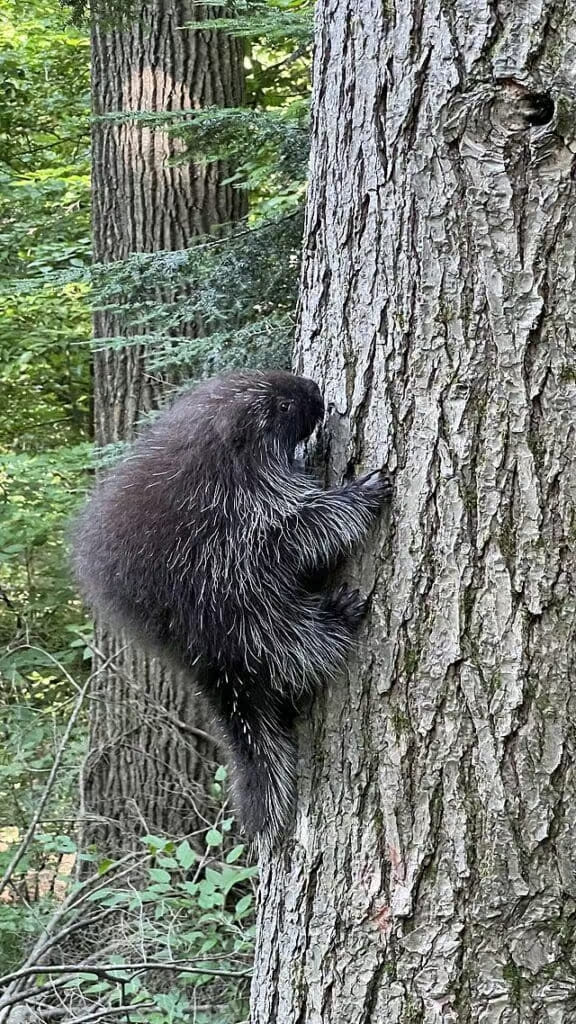
Porcupines are primarily nocturnal and solitary, spending most of their time in trees or moving slowly along the ground between feeding and denning sites. They are capable climbers, using their curved claws and quilled tail for grip and balance in trees. They do not hibernate, remaining active through the Maine winter by feeding on conifer needles, inner bark, and woody stems. Porcupines have a strong craving for salt and minerals, which explains their attraction to human property: sweat-soaked tool handles, salt residue on plywood from treated lumber, vehicle tires where road salt accumulates, and wood stains or preservatives containing mineral salts all draw porcupines to structures and vehicles. One common misconception worth addressing: porcupines cannot throw or project their quills. Quills detach on contact and remain embedded in whatever surface or animal presses against them. The Maine Department of Inland Fisheries and Wildlife provides additional species information including habitat range and behavior in Maine.
Signs of Porcupine Activity
Porcupine damage is distinctive and not easily confused with other wildlife once you know what to look for. The tooth marks are much larger than those left by rodents like mice or squirrels, and the gnawing pattern tends to follow the grain of the wood across broad surface areas rather than concentrating on edges.
Look for:
- Large, roughly half-inch-wide gnaw marks on plywood, siding, wooden steps, decks, railings, or structural trim, often exposing raw wood across broad areas
- Stripped bark on tree trunks and branches with large horizontal tooth marks exposing the pale inner wood, sometimes girdling entire sections
- Scattered quills on the ground near gnawing sites, den entrances, or along regular travel routes
- Large oblong droppings three quarters to one inch long, dark brown to black, often containing woody fiber, scattered in clusters near feeding trees or den sites
- Chewed tool handles, wooden-handled equipment, hoses, or rubber-coated cables stored in outbuildings
- Damage to vehicle tires, brake lines, or rubber components if vehicles are left parked near forested areas for extended periods
- A musky odor near active den sites under sheds, rock piles, or log piles
- Clipped twigs and branch tips on the ground beneath preferred feeding trees, along with bark debris at the base of the trunk
Risks in Southern Maine
Porcupine damage is primarily structural and economic, and the scale can be substantial when a property is left unattended for an extended period. A single porcupine gnawing on a camp or cabin over a winter season can damage siding, expose structural framing to water infiltration, destroy wooden steps and railings, and chew through rubber components on stored equipment and vehicles. The cost of repairs from a single winter’s undetected porcupine activity can easily run into thousands of dollars on older properties.
The pet injury risk is also significant and worth taking seriously. Dogs encounter porcupines regularly in wooded areas of Southern Maine and almost always approach with predictably painful results. Porcupine quills embed quickly and deeply on contact, and the backward-facing barbs cause them to work progressively deeper into tissue with muscle movement rather than staying in place. Quills in the face, mouth, and around the eyes require prompt veterinary attention, and quills that are not fully removed can migrate internally and cause serious injury. Attempting to remove quills at home without the proper technique and tools is generally not recommended and often leaves broken quill tips embedded in the tissue.
Beyond pets and property, porcupines occasionally den under sheds and outbuildings and will gnaw on any structural element accessible from inside, including floor joists and sheathing. According to the Maine DACF Got Pests porcupine page, eliminating salt attractants and excluding denning access are the two most effective steps in reducing porcupine conflicts on residential and seasonal properties.
Prevention Tips
Porcupine prevention is primarily about removing salt attractants and physically blocking access to structures and stored materials:
- Store all tools, wooden-handled equipment, and salt-treated materials inside a secured building when not in use
- Wrap tree trunks and the bases of valuable ornamental shrubs with hardware cloth or aluminum flashing to prevent bark stripping, extending at least 30 inches above anticipated snow depth
- Avoid using wood stains, sealers, or preservatives that contain mineral salts on structures where porcupines are active, or apply metal flashing over treated surfaces
- Seal all gaps larger than four inches at the base of sheds, outbuildings, and crawl spaces to prevent denning access
- Before closing a camp or cabin for the season, remove or store any wooden items, tool handles, hoses, or rubber-coated materials that carry salt residue and could attract porcupines over winter
- Apply metal flashing to the lower sections of wooden siding, stairs, and decking on structures that have experienced previous gnawing damage
- Park vehicles away from wooded edges during extended periods of non-use, or protect exposed rubber components if storage near forested areas is unavoidable
- Inspect the property thoroughly on return from any extended absence, paying particular attention to areas below windows, around door frames, and along the base of siding where gnawing typically begins
Commonly Confused With
Porcupines are visually distinctive and not easily confused with other species at close range, but their damage signs can occasionally be mistaken for other wildlife.
Porcupine gnaw marks on wood are sometimes attributed to woodchucks or beavers, but porcupine tooth marks are broader and less cleanly beveled than beaver marks, and woodchucks gnaw primarily on foundation elements and garden materials rather than siding and wooden structural components at height. The presence of scattered quills near a gnaw site is a definitive confirmation of porcupine activity.
Tree damage from porcupines is occasionally mistaken for deer browse or beaver work, but porcupines remove bark in broad patches higher on the trunk than deer typically reach, and the tooth marks are distinctly different from the clean, angled cuts that beavers leave at the base of trees.
Professional Porcupine Control in Southern Maine
Porcupine conflicts generally involve one of two scenarios: an animal actively gnawing on a property and accessible for trapping, or damage discovered after the fact at a seasonal property where the animal may no longer be present. Every job starts with an inspection to assess the extent of the damage, identify active gnawing sites and any den locations, and determine whether an animal is currently using the property. Depending on the situation, the response may center on eliminating salt and mineral attractants, applying metal flashing to gnawed surfaces, exclusion work, or live trapping under Maine IFW humane handling standards, often some combination of these. The right approach depends on what I find. Once the conflict is resolved, exclusion work and attractant elimination are the steps that prevent recurrence.
Porcupines are a Category I home and garden species under Maine IFW guidelines. I follow all applicable Maine IFW regulations on every job. Learn more about my background and credentials on the about page, or visit the nuisance wildlife control service page for a full overview of what I offer. Contact me to schedule a free inspection.
Frequently Asked Questions
No. This is one of the most persistent misconceptions about porcupines. Quills detach on contact when an animal or surface presses against the porcupine, and the backward-facing barbs cause them to remain embedded rather than pulling free cleanly. A porcupine that feels threatened will turn its back, raise its quills, and may swing its tail toward the threat, but the quills themselves are passive rather than projectile.
Get the dog to a veterinarian as promptly as possible. Quills continue to migrate deeper into tissue with every muscle movement, and quills in or around the mouth, eyes, or throat require professional removal. Attempting to pull quills without proper technique frequently breaks the shaft and leaves the barbed tip embedded, which is harder to remove and more likely to cause infection or internal migration. Do not wait to see if the dog improves on its own.
Fresh gnaw marks are pale and light-colored, with the raw wood exposed and no weathering. Older damage will be gray or darkened at the exposed surface. Fresh droppings are dark and moist, while older droppings are dry and lighter in color. Fresh quills found on the ground are also a reliable indicator of recent activity. If you are not certain, a professional inspection can assess the evidence and determine whether an active animal is present.
Ready to Get Started?
If porcupines are gnawing on your home, outbuilding, or seasonal camp, or if your dog has had a porcupine encounter near your property, reach out for a free inspection and I will assess the extent of the activity and put together a plan to remove the animal and protect the property going forward.