

Carpenter Bees in Southern Maine:
Identification, Prevention, and Control
Carpenter bees are one of the more interesting pest calls I handle in Southern Maine, because they’re genuinely beneficial as native pollinators and genuinely problematic as structural pests at the same time. I find their activity regularly on decks, eaves, fascia boards, and siding in wooded lakeside communities like Raymond and Casco, and on older homes throughout Hollis and Waterboro where weathered softwood is abundant. The damage a single season of carpenter bee activity causes is modest. The damage from the same bees returning to the same wood year after year, which they do reliably, compounds into a real structural concern. As an Associate Certified Entomologist (A.C.E.) with 16 years of experience in the region, I approach carpenter bee work with both the structural problem and the pollinator value in mind. Browse the stinging insects pest library to compare species, or contact me if you’re seeing drilling activity on your structure.
What Are Carpenter Bees?
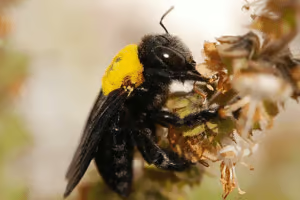
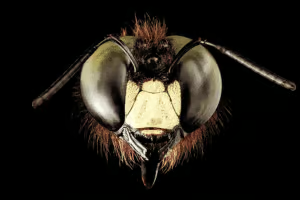
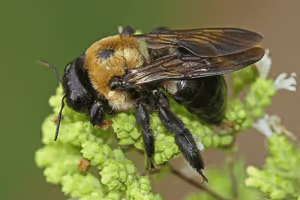
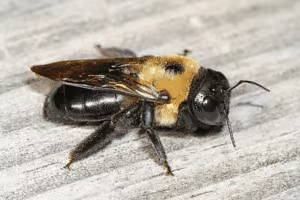
The eastern carpenter bee (Xylocopa virginica) is the species found in Southern Maine. Adults are large, approximately one inch in length, and superficially resemble bumblebees. The key visual distinction is the abdomen: carpenter bees have a smooth, shiny black abdomen, while bumblebees have a fuzzy yellow-and-black abdomen. Males have a distinctive yellow patch on the face and hover actively near nesting sites but are completely harmless as they cannot sting. Females have all-black faces and are capable of stinging but rarely do so unless directly handled.
Carpenter bees are solitary, not colonial. Each female excavates her own gallery in bare, unpainted softwood, drilling a perfectly round entrance hole approximately half an inch in diameter and then turning to bore horizontally along the wood grain. She creates individual chambers inside the gallery, stocks each one with a pollen and nectar provision, lays a single egg, and seals the cell. New adults overwinter in the gallery and emerge the following spring, often returning to the same wood to expand existing tunnels. According to Penn State Extension, carpenter bee galleries used over multiple seasons can extend a foot or more into structural wood, and the same sites are revisited generation after generation without intervention.
Signs of Carpenter Bee Activity
Carpenter bee activity is usually straightforward to identify because the evidence is visible and distinctive:
- Perfectly round, smooth-edged holes approximately half an inch in diameter drilled into eaves, fascia boards, deck rails, siding, window frames, or outdoor furniture
- Fine yellow sawdust or frass piled directly below active entrance holes
- Yellow-brown staining on wood surfaces below holes from bee waste
- Large black bees hovering near or darting in and out of the same wood areas repeatedly
- Multiple holes clustered in the same section of wood, often appearing in a line or group as galleries are expanded
- Males hovering aggressively near nesting sites, chasing other insects or approaching people
- Fresh holes appearing each spring in the same locations as previous seasons
In Raymond and Casco properties with older decks and unpainted wood near the tree line, I regularly find activity sites that have been in use for multiple consecutive seasons, with galleries that have grown considerably from the original entry point.
Risks in Southern Maine
Carpenter bees pose almost no sting risk. Males are incapable of stinging. Females can sting but are docile and will not do so unless physically handled or pressed against skin. They carry no disease and cause no immediate structural collapse.
The real concern is cumulative structural damage from repeated use. A single carpenter bee gallery drilled into a deck railing in one season is a minor cosmetic issue. The same gallery expanded and added to by returning bees over three, five, or ten seasons becomes a meaningful structural problem. The open holes also allow moisture to penetrate wood that would otherwise be sealed, accelerating rot in Maine’s wet climate. Carpenter bee galleries additionally attract woodpeckers, which excavate the wood aggressively in search of the larvae inside, causing damage that far exceeds what the bees themselves created. In Windham and Standish homes where woodpeckers are common, a carpenter bee infestation that goes untreated often results in significant secondary woodpecker damage to fascia and siding.
Prevention Tips
Carpenter bee prevention is straightforward and highly effective when applied consistently:
- Paint, stain, or seal all exposed exterior wood surfaces, as carpenter bees strongly prefer weathered, bare, unpainted softwood and will rarely drill into finished surfaces
- Fill existing holes completely with steel wool packed inside followed by exterior-grade caulk or wood filler, as open galleries invite both returning bees and moisture intrusion
- Use pressure-treated lumber, hardwood, or composite materials for new decks, railings, and trim, as carpenter bees rarely target these materials
- Install metal flashing along the edges of fascia boards and other vulnerable horizontal wood surfaces
- Inspect eaves, deck rails, siding, and outdoor wood furniture each spring before bees become active, as catching new holes early prevents gallery expansion
- Remove old unpainted wood piles and debris near the structure that provide additional nesting opportunities
- Consider a year-round protection plan that includes a spring inspection pass for early detection before galleries are established for the season
Commonly Confused With
Carpenter bees are most commonly confused with bumblebees, and the mistake is understandable given their similar size and coloring. Bumblebees (Bombus species) have a fuzzy, heavily haired yellow and black abdomen, while carpenter bees have a smooth, shiny black abdomen. Bumblebees nest in the ground or in dense grass clumps and do not drill into wood. If the bee is associated with a round hole in a wood surface, it is a carpenter bee. If it’s a large fuzzy bee near ground-level vegetation with no wood involvement, it’s almost certainly a bumblebee.
Paper wasps are occasionally mistaken for carpenter bees by homeowners who notice a large bee-like insect near eaves or wood surfaces, but paper wasps are slender with a narrow waist and build open paper nests rather than drilling into wood.
Yellowjackets are sometimes confused with carpenter bees when found near wood structures, but yellowjackets are much smaller, bright yellow and black, and are chewing wood to gather nest material rather than drilling nesting galleries.
Professional Carpenter Bee Control in Southern Maine
Effective carpenter bee treatment requires treating active galleries, sealing them properly to prevent re-entry, and addressing the wood conditions that attracted bees in the first place. I apply targeted dust insecticide directly into each active gallery at dusk when bees are inside, then seal the holes with steel wool and exterior-grade caulk or wood filler once treatment is complete. I treat only confirmed nesting sites with no broadcast spraying. On properties where woodpecker damage has accompanied the carpenter bee activity, I assess the full scope of the wood damage as part of the inspection. I’ve been handling carpenter bee calls across Cumberland and York Counties for 16 years, and my stinging insect control service covers residential and commercial properties throughout the region. Learn more about my background on the about page, or contact me to schedule a free consultation.
Frequently Asked Questions
Males cannot sting at all despite their aggressive hovering behavior near nesting sites. Females can sting but are docile and will only do so if directly handled or pressed against skin. Carpenter bees are not a meaningful sting risk in normal circumstances, which is quite different from the colonial stinging insects like yellowjackets and bald-faced hornets that will defend a nest aggressively.
Not immediately, but the damage compounds significantly over time. A single season of activity creates small entry holes and short galleries. Bees returning to the same wood year after year extend those galleries substantially, the open holes allow moisture to penetrate and accelerate rot, and woodpeckers attracted to the larvae can cause damage that far exceeds what the bees themselves created. Structures in Southern Maine’s wet climate are particularly vulnerable to the moisture intrusion that open carpenter bee holes allow.
The most effective approach combines treating active galleries, sealing every hole completely, and painting or sealing all exposed wood surfaces. Carpenter bees are strongly attracted to bare, weathered softwood, and finished surfaces are a reliable deterrent. Treating and sealing in spring before new eggs are laid breaks the cycle most effectively.
Ready to Get Started?
If carpenter bees are drilling into your deck, eaves, or siding, reach out for a free consultation and I’ll assess the extent of the activity and treat it before the damage compounds further.