

Occasional Invaders in Southern Maine:
Identification & Prevention
Occasional invaders are a broad category of pests that share one defining characteristic: they live and breed outdoors but move inside when conditions drive them to seek shelter, moisture, or warmth. In Southern Maine, this typically means fall entry as temperatures drop, summer entry during hot dry spells when they seek moisture, or opportunistic entry through gaps that simply never got sealed. Most are nuisance-level problems rather than structural or health threats, but some, like silverfish and firebrats, can establish indoors and cause real damage to paper, fabric, and stored goods if populations build over time. As an Associate Certified Entomologist (A.C.E.) with 16 years of experience in the region, accurate identification is always my starting point, because the right response depends entirely on which species is actually present. Browse the species covered below, or contact me for identification and treatment help.
Quick Fact: Most occasional invaders cannot survive or reproduce indoors long-term and will die off on their own if entry points are sealed. A few species, including silverfish, firebrats, and house centipedes, are exceptions and can establish permanent indoor populations given the right conditions.
Common Occasional Invaders in Southern Maine
Why Do Occasional Invaders Invade Structures in Southern Maine?
The motivations vary by species, but most fall into one of three categories: overwintering, moisture-seeking, and accidental entry.
Overwintering species enter structures in fall as temperatures drop and use wall voids, attics, and the spaces behind siding as protected sites to survive winter. Asian lady beetles, boxelder bugs, western conifer seed bugs, and brown marmorated stink bugs all follow this pattern. They are not foraging indoors for food or water, they are simply using the structure as a warm shelter. They become visible again in late winter and early spring when warming temperatures cause them to emerge, often appearing confused and moving toward light sources inside the living space.
Moisture-seeking species move indoors in response to dry conditions outside or seek out the consistently damp environments that basements, crawl spaces, and bathrooms provide. Springtails, millipedes, earwigs, and house centipedes are drawn to high humidity and will concentrate wherever moisture levels are elevated. Addressing the moisture source is generally more effective than treating the insects directly for these species.
Species like silverfish, firebrats, and crickets enter through gaps and can establish indoors if conditions are suitable, feeding on starchy materials, paper, fabric, and organic debris. Unlike the overwintering species, these can develop persistent indoor populations if the underlying conditions that support them are not addressed. For larger animals entering structures for similar reasons, the nuisance wildlife section covers those species separately.
Identification Tips for Occasional Invaders in Southern Maine
The range of species in this category is broad, and many look superficially similar at a glance. A few key features help narrow down which species is present:
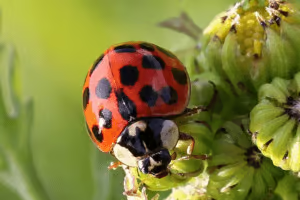
- Asian lady beetles: round, dome-shaped, orange to red with variable black spots; the spot count and color vary considerably; distinguished from native ladybugs by the white M-shaped marking behind the head; aggregate in large numbers on south-facing walls in fall and release a yellowish defensive fluid with a strong odor when disturbed
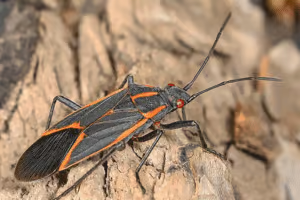
- Boxelder bugs: flat, elongated, black with red-orange markings along the edges and on the wings; about half an inch long; found clustering on sunny exterior walls and boxelder or maple trees in late summer and fall
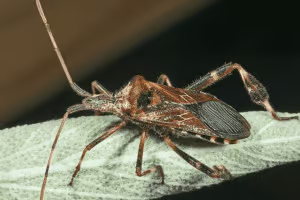
- Western conifer seed bugs: large, brown, about three quarters of an inch; distinctive leaf-like flattening on the hind legs; release a pine-like odor when disturbed; commonly found walking on interior walls and ceilings in fall and early spring
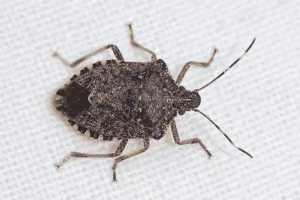
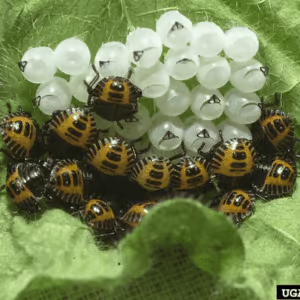
- Brown marmorated stink bugs: shield-shaped, mottled brown, about five eighths of an inch; banded antennae and alternating light and dark banding on the abdomen edge; release a strong cilantro-like odor when crushed or handled
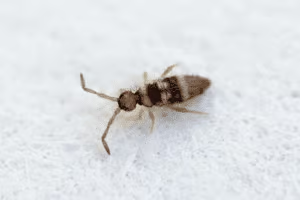
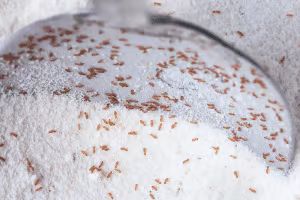
- Springtails: tiny, typically under one sixteenth of an inch; gray, white, or dark; distinguished by their ability to jump suddenly when disturbed via a forked appendage tucked under the abdomen; found in large numbers in damp areas
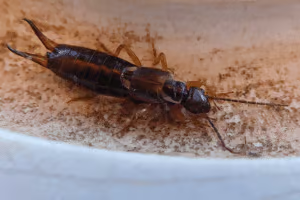
- Earwigs: elongated, brown, about five eighths to three quarters of an inch; the pair of curved forceps-like appendages at the tail end is the defining feature; nocturnal and found under debris, in damp soil, and along foundation edges
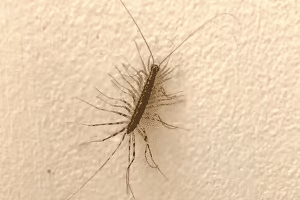
- House centipedes: long, flattened, yellowish-gray with dark banding; 15 pairs of very long legs that extend well beyond the body; move extremely fast; found in damp basements, bathrooms, and crawl spaces
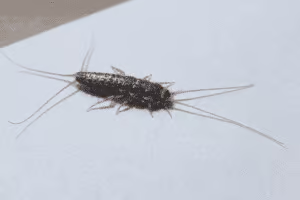
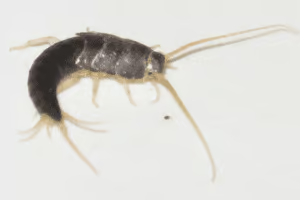
- Silverfish: slender, wingless, silvery-gray with a tapered body and three long tail filaments; move in a fish-like wriggling motion; found in humid areas near paper, books, and stored goods
- Firebrats: similar to silverfish but mottled gray-brown rather than silver; prefer hot, dry areas near furnaces, boilers, and hot water pipes rather than cool damp areas
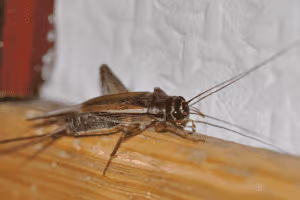
- Crickets: brown to black, cylindrical body with long hind legs adapted for jumping; long antennae; males produce the familiar chirping sound by rubbing the wings together
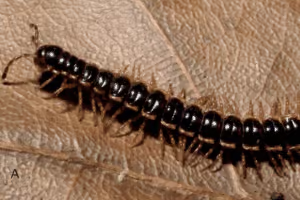
- Millipedes: cylindrical, dark brown, with two pairs of short legs per body segment; move slowly; curl into a tight coil when disturbed; found in damp soil, leaf litter, and along foundation edges
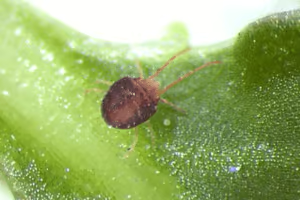
- Mites: eight-legged arachnids, most species barely visible to the naked eye; clover mites are the most common occasional invader species, red to green-brown and found on sunny exterior walls in spring and fall
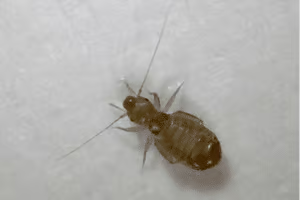
- Booklice: tiny, soft-bodied, pale gray to translucent; sometimes mistaken for bed bug nymphs but are smaller, slower, and lack the reddish-brown color; found in humid areas near paper, cardboard, and stored food
Behavior & Habits of Occasional Invaders in Southern Maine
Seasonal timing is one of the most useful diagnostic tools for occasional invaders. A sudden appearance of large numbers of identical insects in fall almost always points to one of the overwintering species, particularly asian lady beetles, boxelder bugs, western conifer seed bugs, or stink bugs. These species aggregate on sun-warmed exterior surfaces before finding entry points, which is why the south and west-facing walls of a structure often show the heaviest activity.
Most occasional invaders are completely harmless to the structure itself and to the people inside it. They do not feed on wood, fabric, or stored food, and they do not reproduce indoors. House centipedes are an exception in a useful way: they are active predators that feed on other small insects and arthropods, which means their presence in a basement or crawl space often indicates that other prey species are present. Silverfish and firebrats are the most structurally relevant occasional invaders because they can establish persistent indoor populations and cause real damage to paper goods, book bindings, wallpaper, and natural fiber fabrics given enough time and suitable conditions. According to the UMaine Extension home and garden IPM fact sheets, identification and moisture management are the two most important steps in addressing occasional invader problems in Maine homes.
Risks & Threats from Occasional Invaders in Southern Maine
The risk profile for occasional invaders is generally low, but varies by species:
- Overwintering species (asian lady beetles, boxelder bugs, stink bugs, western conifer seed bugs): primarily nuisance problems; asian lady beetles can bite lightly and produce a defensive fluid that stains surfaces and triggers allergic reactions in sensitive individuals; stink bugs and western conifer seed bugs release strong odors when crushed or handled; neither group causes structural damage
- Moisture-associated species (springtails, millipedes, earwigs, house centipedes): earwigs can deliver a mild pinch with their forceps but do not sting and are not venomous; house centipedes can bite but rarely do and the bite is minor; millipedes release a defensive fluid that can irritate skin and cause temporary staining; springtails are entirely harmless
- Fabric and paper feeders (silverfish, firebrats): the most practically damaging group; silverfish and firebrats feed on starchy materials including paper, book bindings, wallpaper paste, and natural fiber fabrics such as linen and cotton; an established population can cause noticeable damage to stored documents, books, and clothing over time
- Mites and booklice: clover mites are harmless but leave a red stain when crushed on light-colored surfaces; some mite species can trigger respiratory irritation in sensitive individuals; booklice are harmless but their presence indicates elevated humidity and potential mold growth, which is the more important issue to address
Prevention Tips for Occasional Invaders in Southern Maine
- Seal all gaps around door frames, window frames, utility penetrations, and foundation sills with caulk or weatherstripping before fall, as this is the primary entry window for overwintering species
- Install and maintain tight-fitting door sweeps on all exterior doors, including garage doors
- Address moisture issues in basements and crawl spaces, as elevated humidity is the primary attractant for springtails, millipedes, earwigs, silverfish, and house centipedes
- Keep exterior vegetation, mulch, and leaf litter pulled back at least 12 inches from the foundation, as these are the primary outdoor habitat for most moisture-associated occasional invaders
- Store paper goods, books, and natural fiber fabrics in sealed plastic containers rather than cardboard boxes in humid storage areas to eliminate silverfish and firebrat food sources
- Replace white exterior lights with yellow-spectrum bulbs, which attract fewer flying insects that occasional invaders prey on or travel alongside
- Repair damaged window screens and door screens before summer to reduce incidental entry by crickets, earwigs, and other mobile species
- Contact me if populations are large, if species identification is uncertain, or if prevention steps have not resolved the problem
Frequently Asked Questions
True indoor pests like cockroaches, bed bugs, and pharaoh ants complete their entire life cycle indoors, establish permanent colonies, and will not resolve on their own without treatment. Occasional invaders live and breed outdoors and enter structures incidentally, meaning that sealing entry points and addressing the conditions that attract them is often sufficient to resolve the problem without chemical treatment. Silverfish and firebrats are the exception in this category, as they can establish genuine indoor populations if conditions allow.
A sudden large appearance of identical insects in fall almost always indicates an overwintering species using the structure as shelter. Asian lady beetles, boxelder bugs, western conifer seed bugs, and stink bugs all aggregate in large numbers before entering through gaps in the exterior. The appearance seems sudden because the insects move from outdoor aggregation on the exterior walls into the structure as temperatures drop. Sealing those entry points before fall is the most effective prevention.
For most overwintering species, vacuuming and sealing entry points is the right response. Chemical treatment of living spaces for these species is generally not warranted since they are not reproducing inside and will not persist once the season changes and entry points are sealed. For silverfish, firebrats, and house centipedes that indicate a more persistent situation, a professional assessment to identify the moisture or food source driving the population is the more productive starting point.
Not always. Many occasional invader problems respond well to sealing entry points, reducing exterior moisture, and removing harborage from around the foundation. A professional is most useful when the species is difficult to identify, when populations are large enough to indicate an underlying condition that is not obvious, or when DIY steps have not produced results.
The vast majority do not. Occasional invaders in Southern Maine are not known vectors for human pathogens. Some mite species can contribute to respiratory irritation in sensitive individuals, and any pest that contacts food surfaces is a minor contamination concern, but occasional invaders as a group do not carry the disease transmission risks associated with rodents, mosquitoes, or ticks.
Most come down to two factors: gaps in the exterior that allow entry, and conditions inside or immediately outside the structure that make staying worthwhile. A house with unsealed utility penetrations, weatherstripping that has deteriorated, a damp basement, and dense mulch against the foundation is going to attract a broader range of occasional invaders than a well-sealed, dry structure regardless of the surrounding landscape. Addressing those underlying conditions is more effective than treating any individual species in isolation.
Professional Pest Control for Occasional Invaders in Southern Maine
Most occasional invader problems are manageable with the right identification and targeted prevention, but when populations are large, the species is difficult to identify, or the underlying cause is not obvious, a professional inspection is the most efficient starting point. I carry an Associate Certified Entomologist (A.C.E.) credential, which means accurate identification is something I take seriously rather than treating every small insect the same way. The right response for a silverfish problem is different from the right response for western conifer seed bugs, and treating them identically wastes time and money. Learn more about my background and credentials on the about page, or visit the common pests service page for more detail on how I handle occasional invader situations. Contact me to