

Mites in Southern Maine:
Identification, Prevention, and Control
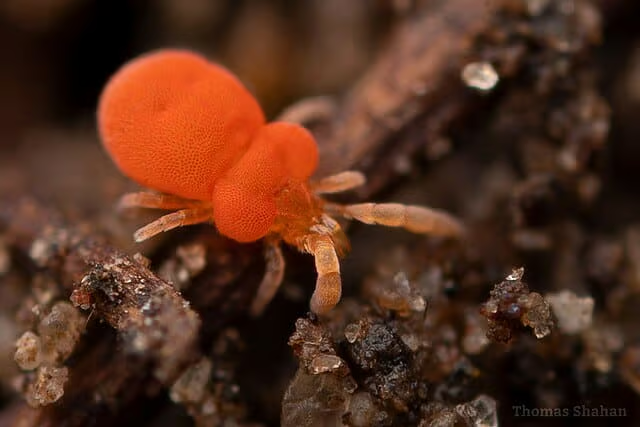
The mite page requires a different framing than most occasional invader pages because “mites” encompasses several species that have little in common beyond being tiny eight-legged arachnids. Clover mites swarm sunny building exteriors in spring and fall and are the most recognizable occasional invader mite in Southern Maine. Bird mites enter structures from abandoned bird nests and bite people aggressively in the absence of their bird hosts. Dust mites are a chronic indoor allergen that never enter from outside and require a completely different management approach. Chiggers are an outdoor biting pest rather than a household invader at all. Understanding which type of mite is actually present is the essential starting point, because the response differs significantly depending on the species. Properties throughout Standish, Windham, Buxton, and Scarborough encounter each of these species in different seasonal contexts. As an Associate Certified Entomologist (A.C.E.) with 16 years of experience in the region, accurate identification is always my starting point. Browse the occasional invaders pest library to see other species found in the area, or contact me for identification and treatment help.
What Are Mites?
Mites are arachnids in the subclass Acari, making them more closely related to spiders and ticks than to any insect. All mite species have eight legs as adults (larvae have six), no antennae, no distinct head-body separation, and most are so small they require magnification to examine closely. The four species or groups most commonly encountered in Southern Maine homes differ substantially in biology and management:
Clover mites (Bryobia praetiosa) are the most common occasional invader mite in the region. Adults are bright red to reddish-brown, round, and less than one millimeter long, with front legs noticeably longer than the other pairs. They are plant feeders that live outdoors in lawns, feeding on grasses and clover, and are entirely harmless to people: they do not bite, do not sting, and cause no health effects. They become nuisance pests when they aggregate on sun-warmed exterior walls in spring and fall and migrate into structures through small gaps. When crushed they leave a distinctive red stain on light-colored surfaces. The Maine DACF Got Pests clover mites page provides detailed local identification and notes that clover mites are common throughout Maine, with spring and fall the primary occurrence windows.
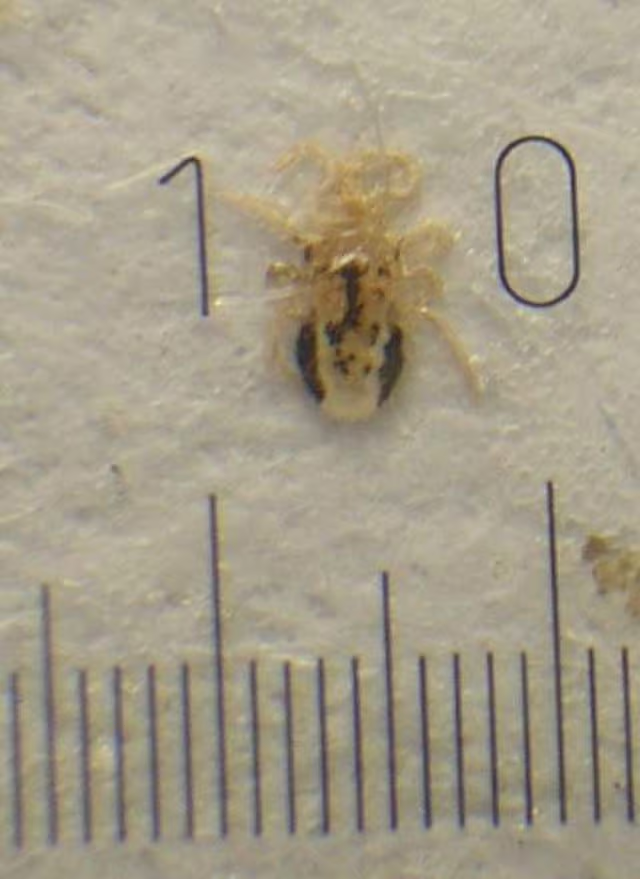
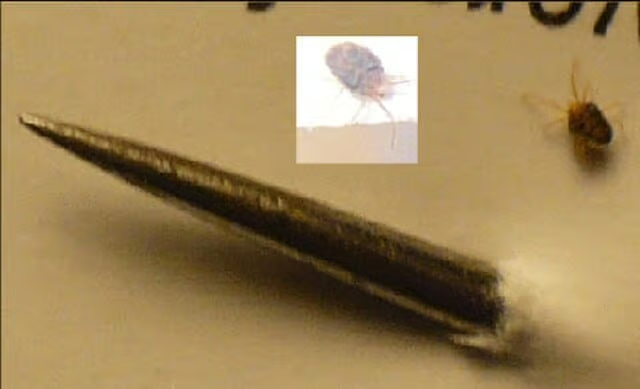
Bird mites, primarily northern fowl mites (Ornithonyssus sylviarum) and house sparrow mites (Ornithonyssus bursa), are parasites of birds that enter structures when a nest in or on the building is abandoned or when nestlings fledge. They are grayish when unfed and reddish-brown after a blood meal, and they will bite people and pets in the absence of their bird host. Bird mite bites cause intense itching and raised welts. An unexplained biting problem that begins in late spring or summer after birds have nested in a soffit, attic vent, or gutter is almost always bird mites. The mites cannot survive long without their bird host and will die out within a few weeks once the nest and source birds are removed.
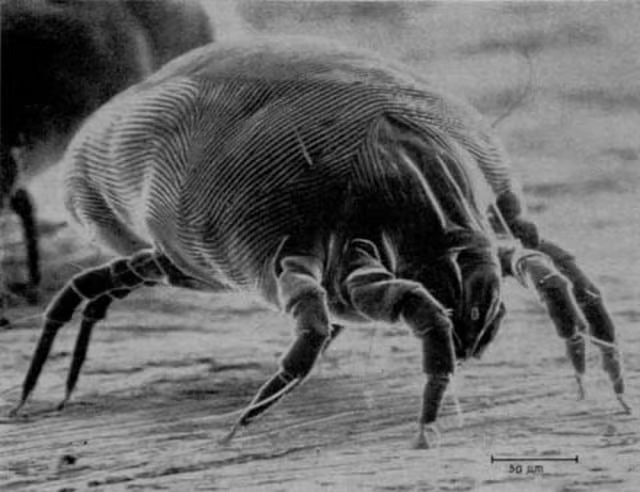
Dust mites (Dermatophagoides spp.) are microscopic, entirely indoor arachnids that are not occasional invaders in any sense. They live year-round in mattresses, upholstered furniture, carpeting, and similar warm, humid household environments, feeding on shed human skin cells. They do not bite, are not visible to the naked eye, and their significance is entirely as allergen producers. Dust mite body parts and fecal material are among the most common indoor allergens triggering asthma and rhinitis in sensitive individuals.
Chiggers (Trombicula spp.) are the bright red larval stage of trombiculid mites. They are outdoor parasites that attach to passing mammals and feed briefly on skin cells before dropping off. They cause intensely itchy red welts but are not household pests in any meaningful sense and do not establish indoors. According to the Penn State Extension clover mites page, clover mites are the most practically significant occasional invader mite species for Northeast homeowners.
Signs of a Mite Problem
The sign pattern varies considerably by species and is the most useful first step in identifying which type of mite is involved.
For clover mites: tiny bright red specks moving slowly on south and west-facing exterior walls, window sills, and foundation surfaces in spring (March through May) and again in fall (September through October); red staining on window sills, curtains, or walls where they have been crushed; activity concentrated at the transition between lawn and foundation.
For bird mites: unexplained biting and intense itching by invisible or nearly invisible pests, beginning in late spring or summer; bites that produce small red welts, often on arms, neck, and torso; biting activity concentrated in rooms adjacent to a known or suspected bird nest site; tiny grayish specks visible moving on window sills or walls near the nest site.
For dust mites: chronic year-round allergy symptoms including sneezing, runny nose, itchy eyes, and asthma-like respiratory symptoms that worsen in the bedroom; symptoms that are worst in the morning or after time spent in upholstered furniture; no visible insect activity of any kind since dust mites are microscopic.
For chiggers: intense itching that begins four to eight hours after time spent outdoors in grassy or brushy areas; clusters of small red welts at skin-clothing boundaries such as waistbands, sock lines, and collar lines; no biting activity inside the home.
Clover mite pressure is most concentrated in Hollis and Dayton properties with well-fertilized lawns directly against light-colored south-facing walls during the April and October activity peaks.
Risks in Southern Maine
The risk profile differs significantly by species. Clover mites are entirely harmless, the only concern being the red staining from crushing. Bird mites cause genuine biting discomfort and should be addressed promptly by locating and removing the nest and sealing the entry point, after which the mite population collapses on its own within weeks. Dust mites are the most medically significant group for a substantial portion of the population, contributing to chronic respiratory allergy symptoms that substantially affect quality of life for sensitive individuals. Chiggers cause discomfort that resolves on its own but do not establish indoors and do not require household treatment.
Prevention Tips
Prevention varies by species:
For clover mites: seal all gaps around window frames, door frames, and foundation sills before spring and fall activity periods; create a bare soil or gravel border at least two feet wide directly against the foundation, as clover mites avoid crossing bare ground; reduce heavy lawn fertilization immediately adjacent to the foundation since lush grass supports larger clover mite populations.
For bird mites: inspect soffits, attic vents, gutters, and any exterior openings for active bird nests in early spring before nesting season; remove inactive nests and seal openings after birds have fledged; install hardware cloth or mesh over attic vents and soffit openings to prevent nesting access.
For dust mites: maintain indoor relative humidity below 50 percent year-round using air conditioning and dehumidification, as dust mites cannot survive in dry conditions; wash bedding weekly in hot water; use allergen-impermeable covers on mattresses and pillows; vacuum carpets and upholstered furniture regularly with a HEPA-equipped vacuum.
For chiggers: wear long pants tucked into socks in grassy and brushy outdoor areas; apply permethrin to clothing or DEET to exposed skin before outdoor activities in peak season; shower promptly after outdoor exposure.
Commonly Confused With
Clover mites are most commonly confused with two other tiny red arthropods found in similar locations: velvet mites and spider mites. Velvet mites are larger, bright red, and found outdoors in spring on sidewalks and foundations but are entirely harmless soil predators. Spider mites are plant pests found on garden plants and houseplants but are not household invaders. All three look similar at a glance but occupy different ecological niches and require different responses.
Bird mite biting is most commonly confused with bed bug bites, scabies, and allergic skin reactions. The distinguishing factor is the direct connection to bird activity: if biting begins after birds nest on or in the structure and intensifies after the birds leave, bird mites are the diagnosis until proven otherwise. Bed bug evidence, including cast skins, dark fecal spots, and live insects in mattress seams, is absent in bird mite situations.
Dust mite allergies are often confused with pollen allergies, pet dander allergies, and mold allergies since all produce similar respiratory symptoms. Dust mite allergy characteristically worsens in the bedroom and in winter when windows are closed, rather than in spring and fall when outdoor pollen is high, which is one useful distinguishing pattern. Allergy testing provides a definitive answer.
Professional Mite Control in Southern Maine
Clover mite problems are best addressed with exterior sealing and lawn management and rarely require chemical treatment indoors. Bird mite situations require nest removal, entry point sealing, and in cases of significant indoor infestation, targeted treatment of affected rooms. Dust mite management is primarily environmental and rarely involves pesticide application. Confirming which species is present before deciding on a treatment approach is essential, since the management for each differs substantially.
As an A.C.E.-credentialed pest professional I can confirm identification across mite species, distinguish bird mites from other biting pest scenarios, and recommend the most appropriate and targeted response. Learn more about my background and credentials on the about page, or visit the common pests service page for more detail. Contact me to schedule a free inspection.
Frequently Asked Questions
Clover mites are distinctive in their timing and location. They appear specifically in spring and fall, are concentrated on south and west-facing walls and window sills, are bright red, move slowly, and do not bite. If you are seeing tiny red specks on the exterior or on window sills during these seasons and nobody is being bitten, clover mites are almost certainly the explanation. Any biting component, especially concentrated near a room adjacent to a bird nest site, points toward bird mites and warrants a different response.
Yes, and that is the correct approach for indoor clover mites. Vacuuming rather than wiping or crushing prevents the red staining they leave on surfaces. The vacuum bag should be disposed of promptly. Sealing the entry points through which they are coming in is the lasting solution, since indoor clover mites are always coming from an outdoor population moving through gaps in the building envelope. Chemical treatment indoors for clover mites is generally not warranted.
Start by confirming whether there is or recently was a bird nest on or in the structure. Check soffits, attic vents, gutters, and any exterior opening accessible to birds. If a nest is present and birds have recently fledged or the nest is abandoned, that is the source. Remove the nest using gloves and a mask, seal the entry point to prevent future nesting, and the mite population will decline and die out on its own within a few weeks. If the indoor infestation is heavy, a targeted treatment of the affected rooms can speed resolution. Contact me if the source is unclear or if indoor biting persists after nest removal.
Ready to Get Started?
If you are dealing with a mite problem and are uncertain which species is involved, reach out for a free inspection and I will identify the species and recommend the most appropriate approach.