

Mosquitoes in Southern Maine:
Identification, Prevention, and Control

Mosquitoes are the most medically significant biting insect in Southern Maine, and managing them effectively requires more than spraying the yard. Maine is home to over 40 mosquito species, and the ones that pose the greatest disease risk are not always the same ones that are most actively biting around your deck at dusk. As an Associate Certified Entomologist (A.C.E.) with 16 years of experience in the region, I treat mosquito pressure across Cumberland and York Counties with a combination of source reduction, targeted larvicide applications, and adult control timed to the species active on your specific property. This is a pest where getting the approach right matters, both for effectiveness and for protecting the beneficial insects that share the same outdoor spaces. Browse the flies pest library to compare other species common in Maine, or contact me to discuss a treatment program for your property.
What Are Mosquitoes?
Mosquitoes belong to the family Culicidae, and Maine is home to more than 40 species, though only about half regularly bite humans. Adults are slender with long legs, scaled wings, and a prominent proboscis. Females require a blood meal to develop eggs while males feed only on nectar. The high-pitched whine of a female mosquito in flight is produced by the rapid beating of her wings and is one of the most recognizable sounds of a Maine summer evening.
Common species in Southern Maine include floodwater mosquitoes in the genus Aedes, which emerge in large numbers after heavy rains and are responsible for much of the nuisance biting around residential properties, and woodland species that breed in shaded pools and are active in forested areas throughout the season. Females lay eggs in any standing water, from birdbaths and clogged gutters to woodland pools and low spots in lawns. Under warm conditions the full life cycle from egg to adult can complete in as little as seven to ten days. Browse the flies pest library to see other species found in the area.
According to the University of Maine Cooperative Extension, mosquitoes are active in Maine from late spring through early fall, with peak populations typically occurring from June through September depending on rainfall and temperature patterns.

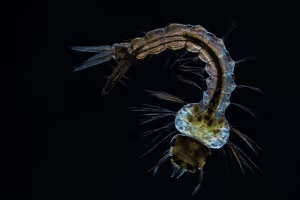
Signs of Mosquito Activity
Mosquito activity is rarely subtle during peak season. Look for:
- Persistent biting, particularly at dawn and dusk when most species are most active
- The characteristic high-pitched whine of females in flight near the ears
- Itchy red welts appearing after time spent outdoors, often on exposed ankles, arms, and neck
- Larvae or wrigglers visible in birdbaths, gutters, clogged drains, or low-lying puddles after rain
- Swarms near wooded edges, pond margins, wetlands, or poorly drained sections of the property
- Mosquitoes resting on shaded vegetation, walls, and screens during the day
In Southern Maine locations such as Biddeford and Scarborough these signs typically peak from June through September when coastal humidity and frequent rainfall create consistent breeding conditions across the landscape.
Risks in Southern Maine
Mosquitoes are the most medically significant pest covered in this library. Beyond the nuisance of bites and welts, two diseases carried by Maine mosquitoes warrant serious attention.
Eastern Equine Encephalitis (EEE) is the more severe of the two. It is rare but carries a high fatality rate and can cause permanent neurological damage in survivors. The Maine CDC monitors EEE activity annually and issues public health advisories when the virus is detected in wildlife or mosquito surveillance pools. The mosquito species that transmits EEE most efficiently breeds in Atlantic white cedar swamps and woodland pools, habitats common throughout Cumberland and York Counties.
West Nile Virus is more widespread and detected regularly through the Maine DACF mosquito surveillance program, though serious illness in humans remains relatively uncommon in our region.
Both diseases are the reason that professional mosquito management in Southern Maine is about more than outdoor comfort. For properties near wetlands, woodland pools, or areas with documented EEE activity, mosquito and tick control is a genuine public health consideration.
Prevention Tips
Standing water elimination is the foundation of mosquito prevention and the single most effective thing a property owner can do:
- Empty birdbaths, wading pools, plant saucers, and any containers that hold water at least once a week
- Clean and unclog gutters and downspouts, which are among the most productive mosquito breeding sites on residential properties
- Fill or drain low spots, tree holes, and depressions in lawns and gardens where water accumulates after rain
- Store buckets, tarps, wheelbarrows, and other items upside down to prevent water collection
- Keep grass mowed and trim dense shrubs away from the house to reduce adult resting habitat
- Install or repair tight-fitting screens on windows and doors
- Use fans on porches and patios since mosquitoes are weak fliers easily disrupted by air movement
- For unavoidable water features like ornamental ponds, use Bti-based larvicide dunks to prevent larval development without harming other wildlife
For properties with persistent standing water that cannot be eliminated, such as low-lying areas adjacent to wetlands, professional source treatment combined with adult control provides the most meaningful seasonal reduction.
Commonly Confused With
Mosquitoes are most often confused with black flies and no-see-ums, all of which bite during the warmer months. Black flies are smaller, dark and humpbacked, bite during daylight hours near running water in spring, and do not produce the characteristic whine of mosquitoes in flight. No-see-ums are nearly invisible biting midges active at dawn and dusk near wetlands and coastal areas. Crane flies, which are large and often called mosquito hawks, are completely harmless and do not bite at all despite their superficial resemblance to an oversized mosquito. The long proboscis, long banded legs, scaled wings, and audible whine of mosquitoes in flight make them fairly distinctive once the features are known.
Professional Mosquito Control in Southern Maine
Effective mosquito management starts with a property inspection to identify standing water sources and adult resting habitat before any product is applied. I locate breeding sites including gutters, low spots, ornamental water features, and woodland pools on or adjacent to the property, apply Bti-based larvicides to unavoidable water sources, and use targeted residual treatments on adult resting vegetation timed to the species and conditions present. This approach avoids broad-area fogging that affects beneficial insects and pollinators while delivering meaningful reductions in biting pressure where people actually spend time outdoors. You can learn more about my approach on the about page. For seasonal mosquito and tick management across your entire property, visit my dedicated mosquito and tick control service page. For year-round protection that includes mosquito management as part of a broader seasonal program, a year-round protection plan may be the right fit. Contact me to schedule a free consultation.
Frequently Asked Questions
Floodwater mosquitoes in the genus Aedes are responsible for most of the nuisance biting around residential properties, emerging in large numbers after heavy rain events and remaining active through the summer. Woodland species that breed in shaded pools and forested wetland areas are active throughout the season and include some of the species associated with EEE transmission. The mix of species varies by property type, proximity to wetlands, and seasonal rainfall patterns.
EEE is rare but it is the most serious mosquito-borne disease present in Maine and should not be dismissed. It has a high fatality rate among people who develop the neurological form of the illness, and survivors often face permanent neurological effects. Maine CDC and DACF conduct annual mosquito surveillance and issue public health advisories when EEE activity is detected in the state. Properties adjacent to Atlantic white cedar swamps and woodland pools in Cumberland and York Counties are in habitat where the primary EEE vector is active. This is a real public health concern worth taking seriously.
The approach I use is targeted rather than broadcast. Larvicide applications use Bti, a naturally occurring bacterium that affects only mosquito and certain other fly larvae with no impact on bees, butterflies, or other beneficial insects. Adult treatments use residual products applied to vegetation in specific resting areas rather than fogged across the entire yard. Treating selectively where mosquitoes actually rest, rather than blanket-treating the property, is both more effective and significantly safer for the broader outdoor environment.

Ready to Get Started?
If mosquitoes are limiting your time outdoors or you are near an area with documented EEE activity, reach out to discuss a treatment program for your property.