

Black Flies in Southern Maine:
Identification, Prevention, and Control
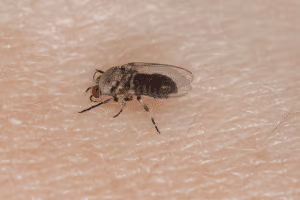
Black flies are one of the most notorious seasonal nuisances in Southern Maine, and for good reason. The late May and June swarms that descend on wooded areas, lakesides, and river corridors throughout Cumberland and York Counties are a genuine quality-of-life issue for anyone spending time outdoors. As a pest professional with 16 years of experience in this region, I want to be direct about black flies: they are not a pest I treat, and professional pest control is not an effective solution for them. Their breeding happens in fast-flowing streams across a wide geographic area, well beyond the scope of any property-level treatment. What I can offer is accurate identification and practical prevention guidance. Browse the flies pest library to see other fly species found in Southern Maine, or contact me if you are unsure what you are dealing with.
What Are Black Flies?
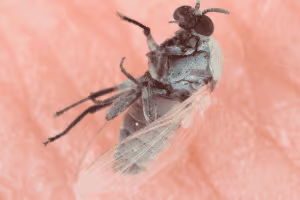
Black flies belong to the family Simuliidae and are sometimes called buffalo gnats or turkey gnats. Adults are tiny, reaching only about one-eighth inch in length, with a distinctive humpbacked profile, short antennae, and dark gray to black coloring. Only females bite, requiring a blood meal to develop eggs, while males feed on nectar. They are strong fliers and will track hosts by carbon dioxide, body heat, and dark colors from a considerable distance.
In Southern Maine they breed exclusively in fast-flowing, well-oxygenated streams and rivers, where larvae attach to rocks and submerged vegetation. The life cycle from egg to adult takes roughly two to three weeks under warm conditions, with the main adult flight season running from mid-May through late June in most of the region, though activity can extend into July at higher elevations or in cooler years. Browse the flies pest library to compare other species found in the area.
According to the University of Maine Cooperative Extension, Maine is home to numerous black fly species within the family Simuliidae, with peak nuisance activity closely tied to stream conditions, temperature, and daylight length in spring.

Signs of Black Fly Activity
Black fly activity is hard to miss once it starts. Look for:
- Swarms of tiny dark flies hovering persistently around the head, neck, and ears during daylight hours
- Painful bites followed by intensely itchy red welts, often with a small central hemorrhagic spot, concentrated on the upper body, face, hairline, and behind the ears
- Flies that continue landing despite swatting, particularly on calm warm days
- Activity peaking in mid-morning through late afternoon, diminishing in strong wind or rain
- Swarming near wooded edges, stream corridors, and lakeshores, especially in towns like Windham, Standish, Limerick, and Shapleigh where running water and forest cover are abundant
Risks in Southern Maine
Black flies in Maine do not transmit diseases to humans. Their primary impact is the discomfort of bites, which cause immediate sharp pain followed by itchy welts that can persist for days. People with sensitivities can experience more pronounced swelling and localized allergic reactions, and heavy exposure can result in secondary skin infections from scratching. For people who spend significant time outdoors for work or recreation during the peak season, the cumulative impact is real.
It is worth noting that black flies are actually an indicator of healthy water quality in Maine. Their larvae require clean, fast-moving, well-oxygenated water to survive, which means their presence near a stream or river is a sign of a functioning ecosystem rather than a pollution problem. This is part of why property-level treatment is neither practical nor appropriate for this species.
Prevention Tips
Since professional treatment is not a realistic option for black flies, personal protection and property management are the practical tools:
- Wear long sleeves, long pants, and light-colored clothing when outdoors during peak season in May and June
- Apply EPA-approved repellents containing DEET, picaridin, or oil of lemon eucalyptus to exposed skin and clothing
- Use head nets when working near streams or in dense wooded areas
- Run fans on porches and patios since black flies are weak fliers and even a modest breeze disrupts them significantly
- Avoid being outdoors during calm, warm mid-morning to afternoon hours at the height of the season when activity peaks
- Install or maintain tight-fitting screens on windows and doors to keep wandering individuals out of the home
- Trim dense vegetation and clear brush near outdoor living areas to reduce the sheltered, low-wind conditions black flies prefer
Commonly Confused With
Black flies are most often confused with no-see-ums, which are even smaller, nearly invisible, and tend to bite at dawn and dusk near wetlands and coastal areas rather than during the day near running water. Mosquitoes are larger, have long legs and a visible proboscis, make an audible whine in flight, and are active from dusk onward rather than during daylight hours. Deer flies are significantly larger with patterned wings and iridescent eyes, and their bite is sharper and more immediately painful. The humpbacked profile and the daytime swarming behavior near moving water are the most reliable identifiers for black flies.
Professional Fly Control in Southern Maine
Black flies breed across stream systems and natural areas throughout the region, well beyond the reach of any property-level treatment. Because their breeding habitat spans the broader landscape, targeted pest control is not an effective solution for this species. Personal protection and the prevention steps above are the most practical tools available during peak season. If you are seeing flies indoors or are not certain what species you are dealing with, I am happy to help with identification. My common pests control services cover a wide range of fly species that do respond to professional treatment. Contact me any time.
Frequently Asked Questions
Maine’s combination of clean fast-flowing rivers and streams, extensive forest cover, and cool spring temperatures creates nearly ideal breeding conditions for black flies. The same clean water quality that supports healthy fisheries and wildlife also supports large black fly populations. Southern Maine towns near river corridors and lake outlets consistently see heavy activity in May and June regardless of what property owners do.
You can reduce your personal exposure significantly through repellent, protective clothing, fans on outdoor spaces, and avoiding peak activity hours. There is no practical property-level treatment that meaningfully reduces the black fly population since they breed in stream systems that extend well beyond any individual property. Landscape changes like clearing brush and improving airflow around outdoor living areas can make conditions less favorable but will not eliminate the seasonal pressure.
Peak season typically runs from mid-May through late June in most of Cumberland and York Counties, with activity tapering off as summer temperatures rise and stream levels drop. In cooler, wetter years or in more rural wooded areas the season can stretch into July. Once you get past the Fourth of July in most of Southern Maine, black flies are largely a non-issue for the rest of the summer.
Ready to Get Started?
If you are dealing with flies indoors or are unsure what species you have, reach out and I can help with identification.