

Larder Beetles in Southern Maine:
Identification, Prevention, and Control
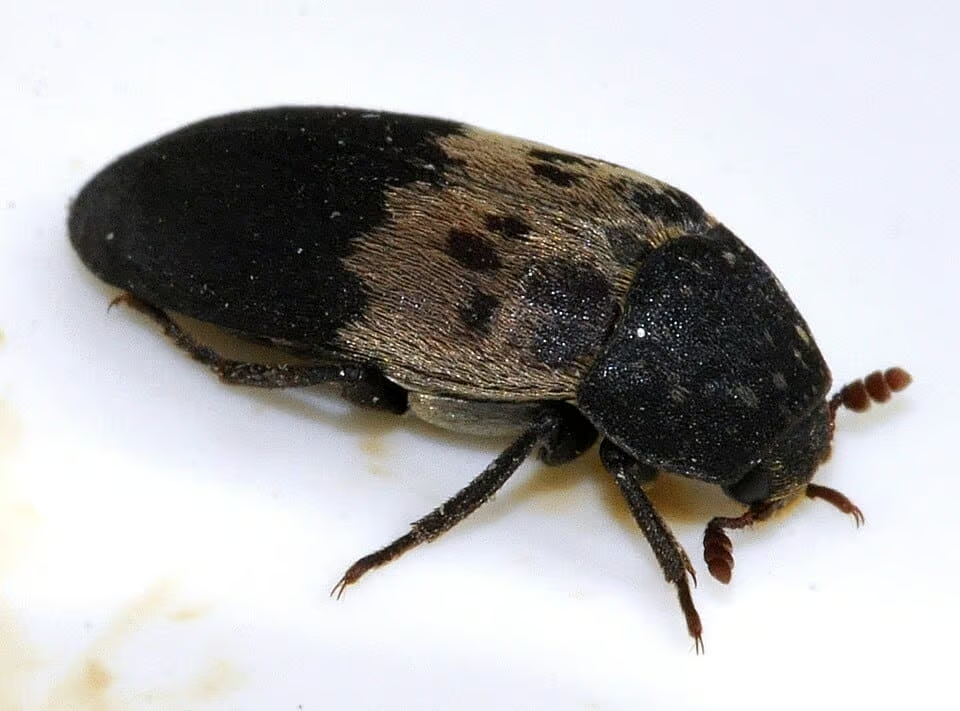
Larder beetles are one of the more distinctive stored product pests I encounter in Southern Maine, easily recognized by the broad pale band across their otherwise dark wing covers. They’re a different kind of pantry pest than most: rather than infesting grain and flour products, larder beetles are drawn to high-protein animal-derived materials including dried meats, pet food, cheese, feathers, hides, and dead insects. I find them regularly in homes throughout Lyman and Standish as well as in Hollis and Buxton, often in situations involving accumulated dead insects in wall voids, bird or rodent carcasses in attics, or pet food stored in inadequate containers. As an Associate Certified Entomologist (A.C.E.) with 16 years of experience in the region, the source material is always my first focus with larder beetles because the infestation won’t resolve until that source is found and addressed. Browse the stored product pests library to compare species, or contact me for identification and treatment help.
What Are Larder Beetles?
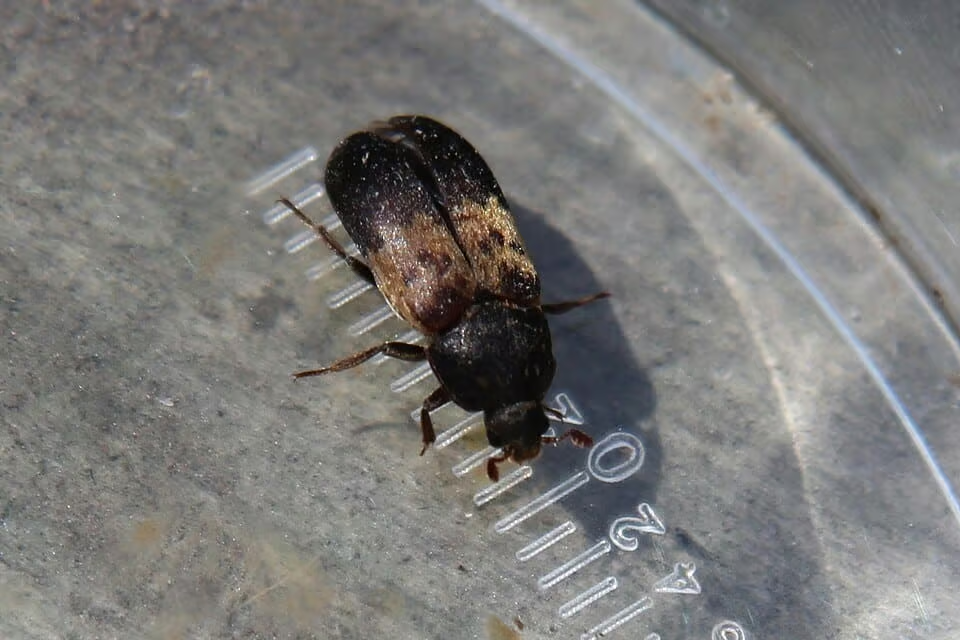
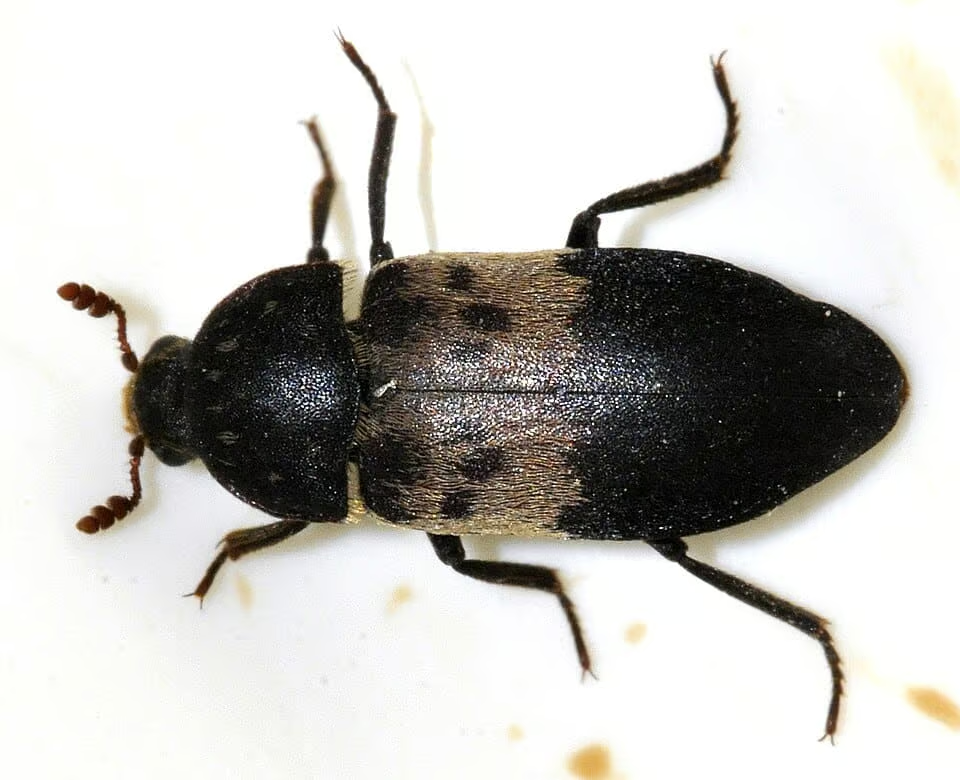
The larder beetle (Dermestes lardarius) belongs to the family Dermestidae, the same family as carpet beetles. Adults are medium-sized, approximately 1/3 inch in length, with a distinctive appearance: the body is mostly black with a broad pale tan or yellowish band across the front portion of the wing covers, typically containing six small black spots within the band. Adults can fly and are often found near windows or light sources.
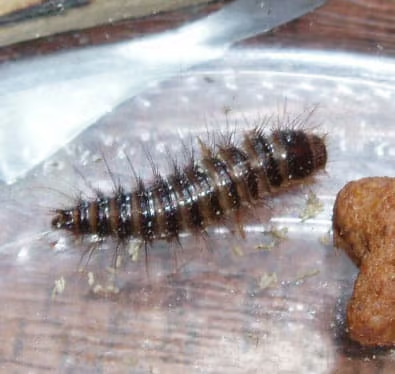
The larvae are the feeding stage and are unmistakable once you know what to look for. Dark brown, heavily bristled, and roughly 1/2 inch in length when mature, they have two distinctive curved spines projecting from the rear end. This combination of heavy bristle covering and rear spines distinguishes larder beetle larvae from the larvae of other dermestid beetles. Larvae bore into food products and other organic materials to feed and also tunnel into wood, cork, or other materials when seeking pupation sites, which is why they sometimes cause damage beyond the food source itself. Larder beetles are strongly associated with high-protein animal-derived materials: cured meats, dried fish, pet food, cheese, feathers, hides, wool, dead insects, and animal carcasses. According to the UMaine Extension larder beetles fact sheet, larder beetles are common throughout Maine and are frequently found in situations involving accumulated dead insects, bird nests, or animal remains in and around structures.
Signs of a Larder Beetle Infestation
Larder beetle activity produces several distinctive signs that are relatively easy to recognize:
- Adult beetles crawling on windowsills, countertops, or flying toward lights, particularly in spring when adults emerge
- Dark brown, heavily bristled larvae with visible rear spines crawling on shelves, floors, or inside packages
- Small round bore holes or tunneling in dried pet food, cured meat, cheese, or other high-protein stored items
- Fine frass mixed with shed larval skins in pantry corners, on shelves, or near infested items
- Round bore holes in wood, cork, or soft materials adjacent to food sources where larvae have tunneled to pupate
- Adult beetles or larvae associated with dead insects accumulated in wall voids, windowsills, or light fixtures
- Damage to wool, feathers, hides, or taxidermy if soiled with food oils or animal-derived residue
In Lyman and Standish homes, a spring emergence of adult beetles indoors with no obvious pantry source often indicates larvae that have been developing on accumulated dead insects or an animal carcass in a wall void or attic over winter.
Risks in Southern Maine
Larder beetles pose no health risk to people or pets. They do not bite, sting, or spread disease. Their impact is on food products and organic materials.
The scope of potential damage is worth understanding. Unlike most pantry beetles that stay in the kitchen, larder beetles can establish on sources throughout a structure: accumulated dead cluster flies or other insects in wall voids, a dead rodent or bird in an attic or wall cavity, pet food stored in a garage, or a hide or taxidermy mount in a living area. Finding the actual source material is essential because larvae will continue to emerge until it is removed or treated. In commercial settings such as butcher shops, food processing facilities, natural history museums, or any business handling animal-derived products, larder beetle activity represents a serious product integrity concern.
The boring behavior larvae exhibit when seeking pupation sites can also cause minor incidental damage to wood, cork, or other soft materials adjacent to food sources, which is occasionally mistaken for wood-boring beetle activity.
Prevention Tips
Larder beetle prevention requires attention to both obvious food sources and the less obvious organic accumulations that can sustain populations:
- Store all pet food, dried meats, and other high-protein items in airtight hard-sided containers
- Clean up pet food spills and grease residue promptly and thoroughly
- Remove dead insects from windowsills, light fixtures, and accumulated areas in basements and attics regularly
- Check attics and crawl spaces for bird nests, rodent carcasses, or other animal remains, particularly after addressing a rodent or wildlife problem through my nuisance wildlife control service or rodent control service
- Inspect and clean behind appliances, under refrigerators, and in areas where pet food or food residue may have accumulated unnoticed
- Store wool, hides, feathers, and taxidermy in sealed containers or bags, particularly if they have been exposed to food oils or animal residue
- Keep indoor humidity below 50 percent, as humid conditions support larder beetle development
- Consider a year-round protection plan for properties with recurring activity, as larder beetles can establish on sources that aren’t immediately obvious
Commonly Confused With
Larder beetles are most commonly confused with two other pests:
Carpet beetles are in the same family (Dermestidae) and have similar bristly larvae, which is the most common point of confusion. Carpet beetle adults are much smaller, oval, and distinctively patterned with mottled scales in varied carpet beetles or uniformly black in black carpet beetles, without the pale banded pattern of larder beetles. Carpet beetle larvae are also smaller and more carrot-shaped, without the pronounced rear spines that characterize larder beetle larvae. Both species can be present simultaneously in homes with accumulated animal-derived materials.
The hide beetle (Dermestes maculatus) is a close relative occasionally found in similar situations. It is similar in size but lacks the clear pale band across the wing covers and instead has a more mottled dark and pale pattern on the underside. Hide beetles are more commonly associated with animal processing and rendering facilities than household pantries in Maine, but they can appear in rural properties with significant livestock activity nearby.
Professional Larder Beetle Control in Southern Maine
Larder beetle treatment always starts with finding the source material sustaining the population, because no amount of surface treatment resolves an infestation if larvae are still feeding on an undiscovered carcass in a wall void or a bag of pet food in a garage. I start every job with a thorough inspection of all food storage areas, attic spaces, crawl spaces, and wall void access points to identify every possible source. Once the source is found and removed or treated, targeted residual treatments are applied to confirmed activity areas, cracks, and crevices. I also assess whether the larval boring behavior has caused any incidental damage to structural materials adjacent to the source. I’ve been handling larder beetle calls across Cumberland and York Counties for 16 years, and my common pests control service covers larder beetles alongside the full range of stored product and fabric pests. Learn more about my background on the about page, or contact me to schedule a free inspection.
Frequently Asked Questions
No. Larder beetles do not bite, sting, or spread disease. Their impact is on animal-derived food products and organic materials. The bristly hairs on larvae occasionally cause mild skin irritation in sensitive individuals, similar to carpet beetle larvae, but they pose no meaningful health risk.
They enter through several routes: adults fly in from outdoors and are attracted to light, particularly in spring; they arrive on infested pet food, dried goods, or secondhand items; and they establish on sources already present inside the structure such as accumulated dead insects, bird nests in soffits, or rodent carcasses in wall voids. The spring emergence of adults indoors with no obvious pantry source often points to larvae that developed on an organic source inside the structure over winter.
Once the source material is found and removed, most active infestations resolve within four to eight weeks as remaining adults die off and no new larvae are produced. If the source is not found, the infestation will persist regardless of surface treatments. This is why source identification is the essential first step in every larder beetle job.
Ready to Get Started?
If you’re finding hairy dark larvae or the distinctive banded adult beetles in your home, reach out for a free inspection and I’ll find the source and put together a plan to resolve it.