

American Cockroaches in Southern Maine:
Identification, Prevention, and Control
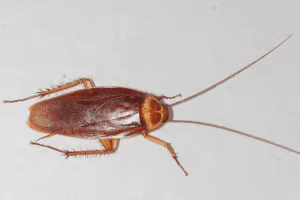
American cockroaches are the largest cockroach species I encounter in Southern Maine, and while they are less common than German cockroaches in kitchens, finding one in your basement or crawl space is not something to ignore. They are established in older structures throughout Cumberland and York Counties, particularly in areas with aging sewer infrastructure, damp basements, and commercial food service buildings. As an Associate Certified Entomologist (A.C.E.) with 16 years of experience in the region, I identify the species before any treatment begins because American cockroaches require a different approach than the smaller indoor species. Browse the cockroach pest library to compare other species common in Maine, or contact me for a professional assessment.
What Are American Cockroaches?
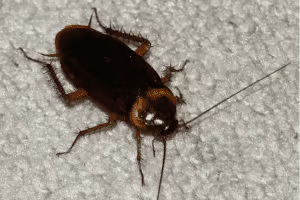
American cockroaches (Periplaneta americana) are the largest house-infesting roach in Southern Maine, reaching up to two inches in length. They are reddish-brown with a distinctive light yellow band around the edge of the pronotum (the shield behind the head). Despite having fully developed wings, they rarely fly and instead move quickly on foot. Nymphs go through multiple molts over several months before reaching adulthood, and adults can live well over a year, making established populations slow to build but persistent once they are present.
They prefer warm, moist environments and are most commonly found in basements, crawl spaces, floor drains, and utility areas rather than kitchens. Despite the name, they are not native to North America and arrived via shipping routes centuries ago. Browse the cockroach pest library to see other species found in the area.
According to the University of Maine Cooperative Extension, American cockroaches are less commonly encountered in Maine homes than German cockroaches, though they are a regular presence in commercial kitchens, restaurants, and older residential structures with basement or sewer access.
Signs of an American Cockroach Infestation
Because American cockroaches prefer basements and utility areas, signs are often found away from the main living space. Look for:
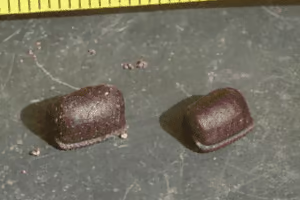
- Large dark droppings with ridged sides near floor drains, pipes, or basement walls, often mistaken for mouse droppings
- Dark brown oval egg cases (oothecae) glued to surfaces in damp, sheltered areas
- A strong musty or oily odor in basements, utility rooms, or crawl spaces
- Live cockroaches near floor drains or sinks after dark, or scurrying when a light is switched on
- Shed skins or reddish-brown smear marks along baseboards and wall junctions in moist areas
In Southern Maine locations with older plumbing infrastructure, such as Portland or Biddeford, these signs often appear first near floor drains, sump pumps, or utility penetrations.
Risks in Southern Maine
American cockroaches are capable of carrying bacteria including Salmonella and E. coli on their bodies and legs, contaminating food preparation surfaces and stored goods. Their droppings, shed skins, and saliva are known allergen sources that can trigger asthma and allergic reactions, particularly in children. In commercial food service environments they represent a serious sanitation and regulatory risk. In residential settings the concern is more about moisture-driven entry from sewers or drains than a true indoor infestation, but that distinction matters for treatment.
Prevention Tips
Keeping American cockroaches out is largely a matter of moisture control and exclusion:
- Fix leaks and improve drainage in basements, crawl spaces, and around foundations
- Seal cracks around utility penetrations, floor drains, windows, and foundation walls
- Install drain covers or backflow preventers on floor drains that see infrequent use
- Keep basements and crawl spaces dry with a dehumidifier where needed
- Store food in airtight containers and eliminate clutter that provides harborage
- In commercial settings, maintain strict sanitation around grease traps, drains, and food storage areas
A year-round protection plan is worth considering for commercial properties or older homes with recurring activity near basement drains.
Commonly Confused With
American cockroaches are most often confused with Oriental cockroaches, which prefer similar damp, cool environments but are noticeably darker (nearly black), shorter, and slower-moving. German cockroaches are far smaller and lighter in color and stay near kitchens and bathrooms rather than basements. Wood roaches are similar in size and reddish-brown coloring but are outdoor insects that wander inside accidentally and cannot establish a colony indoors. If you are finding a large reddish-brown roach near a basement drain, American cockroach is the most likely candidate, but Oriental cockroach is worth ruling out.
Professional American Cockroach Control in Southern Maine
American cockroach treatment focuses on moisture remediation, entry point exclusion, and targeted product placement rather than broad spraying. I inspect the full perimeter including drains, crawl spaces, and utility entries to understand where they are coming from before applying any treatment. Gel baits and residual products placed precisely in harborage areas are far more effective than perimeter sprays for this species. I handle every job personally from initial inspection through follow-up visits. My cockroach control services cover the full range of species found in Cumberland and York Counties. Contact me to schedule a free consultation.
Frequently Asked Questions
Not necessarily. A single American cockroach, particularly near a basement drain or crawl space, is often a wanderer that entered through a sewer or exterior gap rather than evidence of a breeding population indoors. That said, it is worth a closer look because where there is one there may be harborage nearby. I am happy to assess the situation during a free visit.
Floor drains, sump pits, and utility penetrations are the primary entry points for this species. They move up through sewer lines and drain pipes, especially in older plumbing systems common in Southern Maine’s historic neighborhoods. Sealing or covering infrequently used drains and addressing any moisture buildup in the area is usually the first step.
They are different rather than harder. German cockroaches breed rapidly indoors and require intensive colony elimination. American cockroaches are slower to reproduce and more likely entering from outside, so exclusion and moisture control often do as much work as chemical treatment. Getting the identification and entry point correct is what makes the difference.
Ready to Get Started?
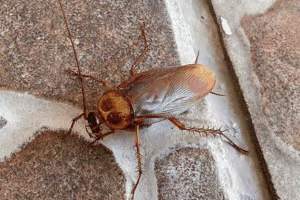
If you are finding large cockroaches near your basement drains or crawl space, reach out for a free consultation.