

Cockroaches in Southern Maine:
Identification & Prevention
Cockroaches are among the most resilient pests I encounter in Southern Maine, and correct species identification before treatment is essential since different species require completely different approaches. German cockroaches infesting a kitchen in Portland have nothing in common with a wood roach that wandered in from the woods in Standish. As an Associate Certified Entomologist (A.C.E.), I identify the species first and build the treatment plan from there. Browse the species below to identify what you are dealing with, or contact me for a professional assessment.
Quick Fact: Cockroaches can survive for weeks without food but only days without water, making moist areas prime spots for infestations.
Common Cockroaches in Southern Maine
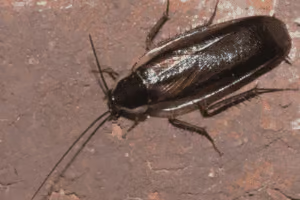
Why Cockroaches Invade Homes in Southern Maine
Cockroaches are drawn indoors by three things: warmth, moisture, and food. In Southern Maine, where winters are cold and summers humid, cockroaches that make it inside find conditions that allow them to reproduce year-round. German cockroaches and brown-banded cockroaches are the two species most likely to establish true indoor infestations, thriving in heated kitchens, bathrooms, and commercial food service environments. American and Oriental cockroaches prefer cooler, damper areas like basements and crawl spaces, and are more commonly found in older structures. Wood cockroaches are a different situation entirely and are covered in the Commonly Confused With section below.
Cockroaches enter structures through gaps around pipes and utility penetrations, in cardboard boxes and grocery bags, through floor drains, and occasionally through shared walls in multi-unit housing. According to the University of Maine Cooperative Extension, German cockroaches are by far the most likely species to infest Maine homes, while American cockroaches, though large and recognizable, are less commonly encountered.
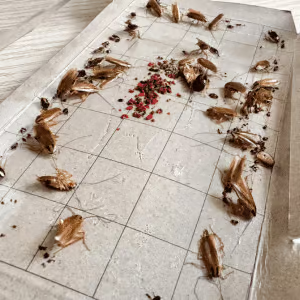
Identification Tips for Cockroaches in Southern Maine
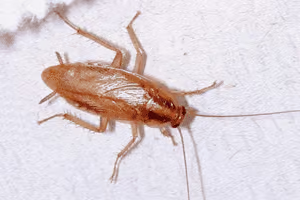
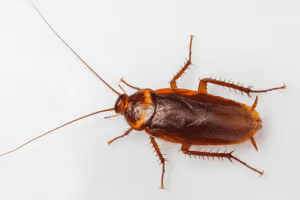
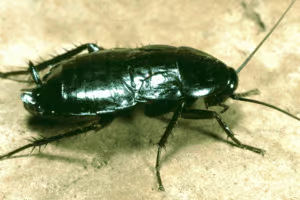
All cockroaches share a few consistent features: flattened oval bodies, long spiny legs, and long constantly-moving antennae. Size, color, and behavior vary significantly by species:
- German cockroaches are small at about 1/2 inch, light brown, with two dark lengthwise stripes behind the head. Most likely to be found in kitchens and bathrooms.
- American cockroaches are large at up to 2 inches, reddish-brown with a light yellow band around the head shield. Most likely in basements and drains.
- Oriental cockroaches are medium-sized, very dark brown to shiny black, and associated with damp cool areas.
- Brown-banded cockroaches are small like German cockroaches but have two lighter bands across the wings and are more likely to be found in upper cabinets, bedrooms, and electronics.
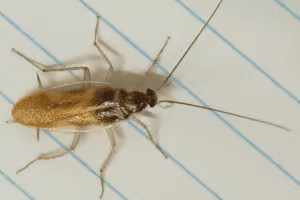
- Wood cockroaches look similar to American cockroaches but are outdoor insects that wander inside accidentally.
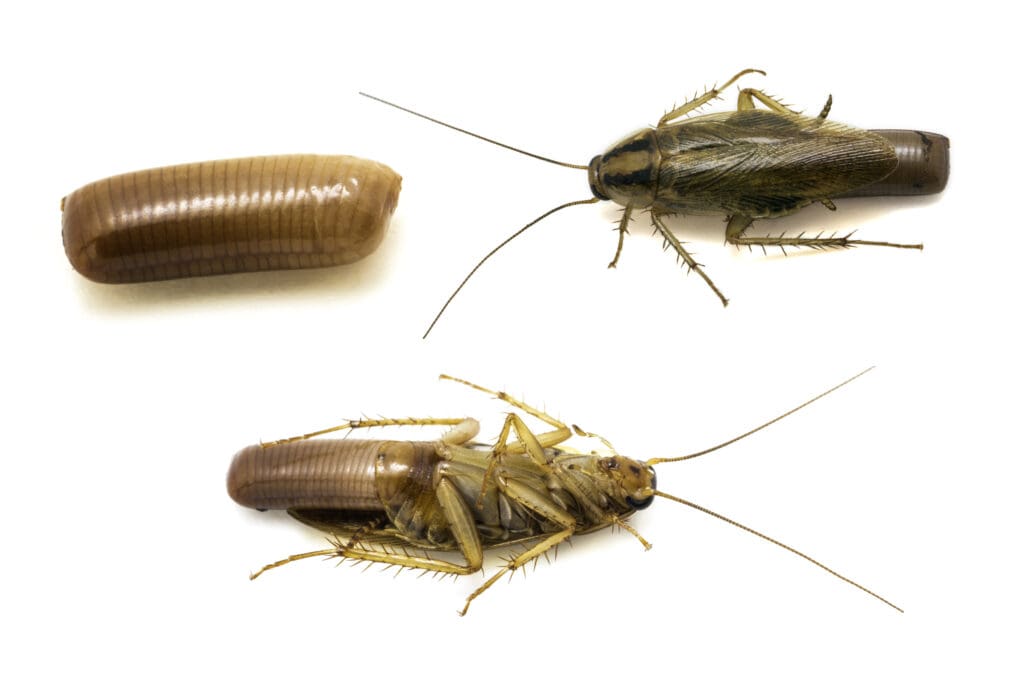
Signs of an active infestation include dark fecal droppings resembling black pepper or coffee grounds, oval egg capsules in cracks and crevices, a musty or oily odor in heavily infested areas, and sightings during the day, which typically indicate a large population.
Behavior & Habits of Cockroaches
Cockroaches are nocturnal, spending the day hidden in tight harborage areas and emerging after dark to forage. They are highly sensitive to light and movement, which is why a daytime sighting typically signals a population large enough to be displacing individuals from prime hiding spots. Reproduction is rapid, particularly with German cockroaches, where a single female can produce enough offspring to turn a small problem into a large one within weeks. Wood cockroaches behave differently from all indoor species. They are outdoor insects that wander inside accidentally and cannot establish or sustain a colony indoors, which is an important distinction when it comes to treatment decisions.
Risks & Threats from Cockroaches
Cockroaches present real health risks in a way that few other common pests do:
- Food contamination: cockroaches contaminate food, preparation surfaces, and utensils with excrement, salivary secretions, and shed exoskeletons, leaving an unpleasant odor and potential pathogens including Salmonella and E. coli on contact surfaces.
- Allergens and respiratory issues: cockroach droppings, shed skins, and body parts are well-documented triggers for asthma and allergies. This is a particular concern in multi-unit housing where infestations are difficult to contain to a single unit.
- Rapid reproduction: a single German cockroach female can produce up to 35,000 offspring in a year. Small problems become large ones quickly, which is why early identification and treatment matters.
General Prevention Tips for Cockroaches
- Keep kitchens and bathrooms clean and dry. Wipe up spills immediately, clean grease from stovetops and behind appliances, and do not leave food or pet food out overnight.
- Fix leaks and eliminate moisture sources in basements, under sinks, and around appliances.
- Seal gaps around pipes, utility penetrations, floor drains, and foundation cracks.
- Inspect cardboard boxes and grocery bags before bringing them indoors, particularly if they have been stored in a warm area.
- In multi-unit housing, coordinate with neighbors and property management since cockroach infestations move between units through shared walls and plumbing.
- Consider a year-round protection plan if your property has had recurring cockroach activity, particularly in commercial food service settings where the conditions that attract cockroaches are difficult to eliminate entirely.
Frequently Asked Questions
Size and location are the two fastest clues. Small light-brown cockroaches near the kitchen are almost certainly German cockroaches. Large reddish-brown cockroaches near drains or in the basement point to American cockroaches. Shiny black ones in cool damp areas are likely Oriental cockroaches. A single winged cockroach that wandered in from outside is probably a wood roach. If you are unsure, I can confirm the species during a free visit before any treatment begins.
They are a genuine health concern. Cockroaches contaminate food and surfaces with pathogens including Salmonella and E. coli, and their shed skins and droppings are well-documented triggers for asthma and allergic reactions. German cockroaches reproduce so rapidly that small infestations become large ones very quickly if not addressed early.
It depends on the species and where you found it. A single large cockroach near a basement drain is often an American cockroach that wandered in and may not indicate a breeding population. A single small light-brown cockroach in the kitchen during the day is more concerning since German cockroaches are nocturnal and daytime sightings often indicate a population large enough to be displacing individuals. I am happy to take a look and give you an honest assessment.
Usually one of three reasons. First, the species may have developed resistance to the product being used, which is common with German cockroaches and certain insecticides. Second, the source of entry has not been addressed. Third, in multi-unit housing, cockroaches are re-entering from neighboring units. Professional identification and a targeted IPM approach resolves this more reliably than repeated store-bought treatments.
Rarely and only in very heavy infestations where food sources are scarce. It is not a meaningful concern for most homeowners. The real risks from cockroaches are food contamination and allergens, not biting.
No. Wood cockroaches are outdoor insects that occasionally wander inside, particularly males attracted to lights at night. They cannot establish a colony or reproduce indoors and will die off without intervention. Sealing entry points is the appropriate response. Chemical treatment is unnecessary for wood cockroaches.
Professional Cockroach Control in Southern Maine
Cockroach treatment varies significantly by species. German cockroaches require gel bait placement, insect growth regulators, and follow-up monitoring since colonies can develop resistance to certain insecticides. American and Oriental cockroaches often need attention to moisture sources and entry points in addition to treatment. Wood cockroaches typically need no chemical treatment at all, just exclusion work. Getting the identification right before applying any product is what separates effective treatment from wasted effort. My cockroach control services cover the full range of species found in Cumberland and York Counties. Contact me to schedule a free consultation.