

Casemaking Clothes Moths in Southern Maine:
Identification, Prevention, and Control
Casemaking clothes moths are one of the two clothes moth species found in Southern Maine, and in my experience they’re less commonly encountered than their close relative the webbing clothes moth, but more difficult to detect when they are present. The portable silk case the larva constructs and carries throughout its development blends remarkably well with fabric fibers and debris, making infestations easy to miss until significant damage has already occurred. I find their activity in homes throughout Biddeford and Saco and across Scarborough and Westbrook, particularly in older homes with seasonal storage areas, attics with accumulated natural fiber items, and closets that don’t get regular attention. As an Associate Certified Entomologist (A.C.E.) with 16 years of experience in the region, accurate identification is my starting point because casemaking clothes moths, webbing clothes moths, and carpet beetles all damage the same types of materials but leave different evidence and require somewhat different approaches. Browse the stored product pests library to compare species, or contact me for identification and treatment help.
What Are Casemaking Clothes Moths?
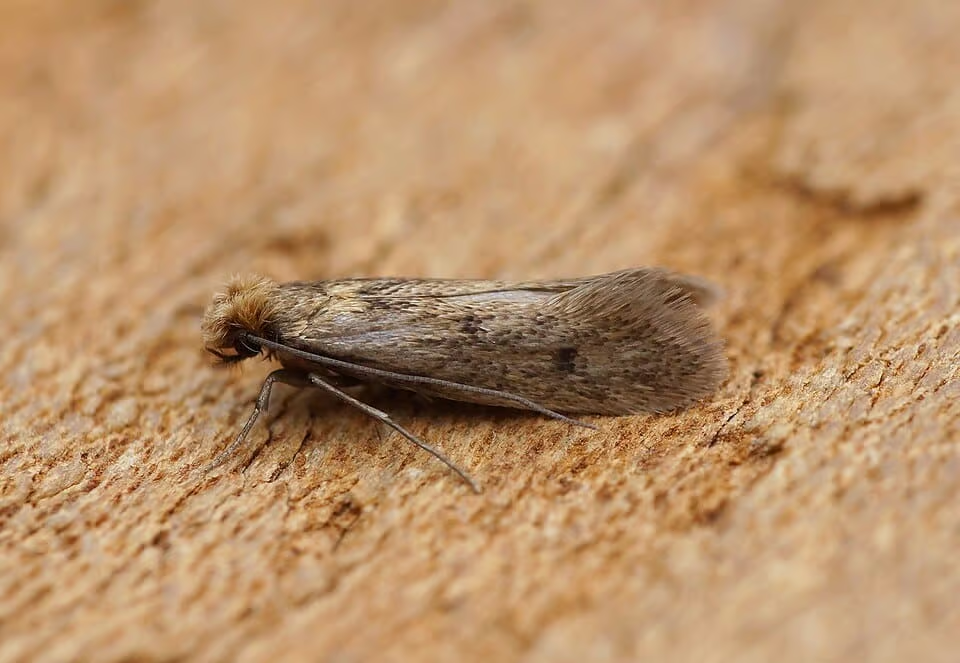
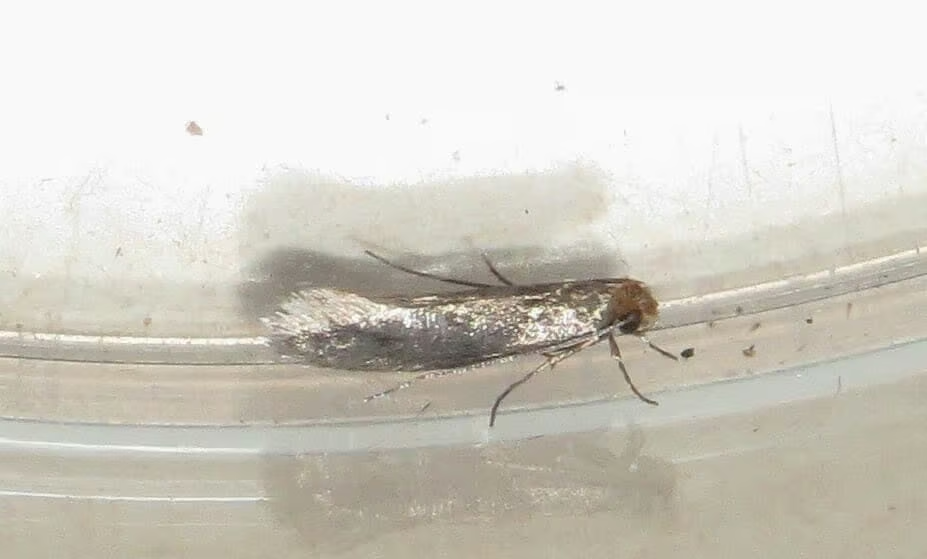
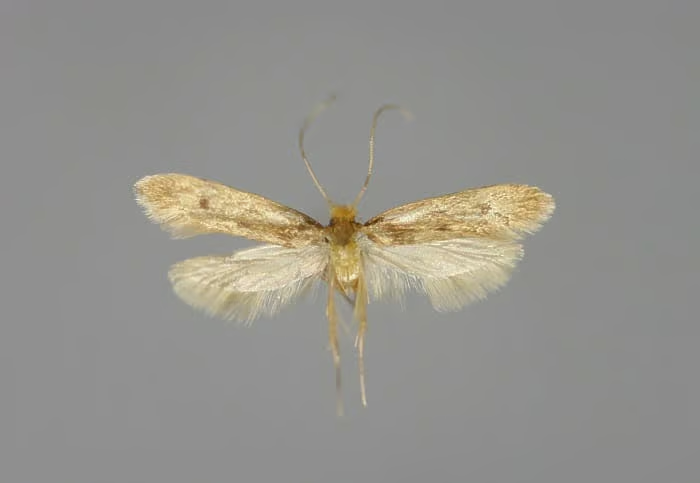
The casemaking clothes moth (Tinea pellionella) is a small moth in the family Tineidae. Adults are about half an inch in wingspan with tan to golden buff-colored wings marked with faint dark spots and long fringe hairs along the wing edges. They avoid light, fly weakly, and tend to run or hide rather than fly when disturbed. Finding a small buff-colored moth running along a baseboard or hiding in a clothing fold is a more typical encounter than seeing one in flight.
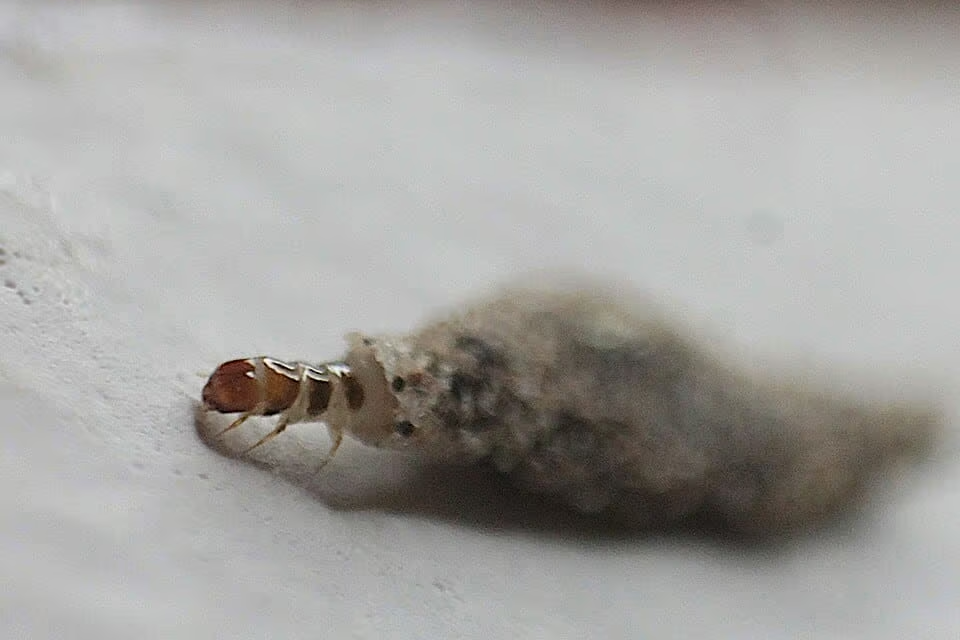
The larvae are the damaging stage. Creamy white caterpillars with brown heads, they construct and carry a small portable silk case covered with fibers and debris from the materials they’re feeding on. This case, which looks like a small tube or cigar, serves as both protection and camouflage. The larva feeds from within or near the case, dragging it as it moves, and the case grows as the larva develops. This behavior is the key distinguishing feature from the webbing clothes moth, whose larvae spin silk webbing over feeding areas rather than constructing a portable case. Casemaking clothes moth larvae feed on wool, silk, cashmere, fur, feathers, leather, and other keratin-rich animal-derived materials. According to the UMaine Extension clothes moths fact sheet, both clothes moth species thrive in dark, undisturbed areas with accumulated natural fiber materials and are among the most damaging fabric pests found in Maine homes.
Signs of a Casemaking Clothes Moth Infestation
The portable case is the most distinctive sign of casemaking clothes moths specifically. Once you know what to look for, it’s unmistakable:
- Small silk cases resembling tiny tubes or cigars, about 1/4 to 1/2 inch long, on or near infested fabrics, often matching the color of the material being consumed
- Irregular holes, thinning, or bare patches in wool, cashmere, silk, fur, or feather items, particularly in areas that receive little disturbance
- Fine, sand-like frass pellets scattered near damaged materials
- Empty larval cases or shed skins in corners, along baseboards, or on closet floors
- Small buff-colored adult moths running along baseboards, hiding in clothing folds, or resting in dark corners
- Silken debris trails mixed with fabric particles along feeding areas
- Damage to upholstery, natural fiber rugs, feather pillows, taxidermy mounts, or natural fiber brushes
In Biddeford and Saco homes, activity tends to increase in late winter and spring as temperatures rise and larvae that have been feeding slowly through winter become more active.
Risks in Southern Maine
Casemaking clothes moths pose no health risk to people or pets. They do not bite, sting, or spread disease. Unlike carpet beetle larvae, their hairs do not cause skin irritation.
The concern is entirely the damage to personal property. Wool rugs, heirloom quilts, cashmere sweaters, vintage fur, silk garments, taxidermy, and natural fiber upholstery are all vulnerable. What makes clothes moths particularly frustrating is how slowly and silently the damage accumulates. A larva feeding in the back corner of a closet shelf or in a stored box in an attic can work through an entire winter season with no visible indication until a garment is retrieved and found damaged. In commercial settings such as museums, antique dealers, theater costume departments, and hotels with natural fiber furnishings, clothes moth activity represents a significant liability.
Prevention Tips
Clothes moth prevention is primarily about eliminating the undisturbed, dark environments and soiled natural fiber materials that larvae require:
- Clean all wool, silk, cashmere, fur, and feather items thoroughly before storing them for the season, as soiled fabrics with body oils and perspiration are significantly more attractive to egg-laying adults
- Store susceptible clothing and textiles in sealed hard-sided containers or vacuum storage bags, as larvae can penetrate cardboard and paper
- Launder or professionally dry clean items in heat before putting them away, as heat kills eggs and larvae
- Freeze suspect items for 72 hours at zero degrees Fahrenheit to kill all life stages if heat treatment isn’t practical
- Vacuum closets, under furniture, along baseboards, and in storage areas regularly to remove the lint and debris that provide supplemental food for larvae
- Maintain indoor humidity below 50 percent, as clothes moths prefer humid environments
- Remove bird nests, accumulated dead insects, and animal hair from attics and wall voids, as these are prime undisturbed breeding sites
- Use pheromone traps specifically designed for clothes moths in closets and storage areas for early detection
- Consider a year-round protection plan for properties with significant natural fiber textile collections or recurring moth activity
Commonly Confused With
Casemaking clothes moths are most commonly confused with two other fabric-damaging pests:
The webbing clothes moth (Tineola bisselliella) is the most closely related and similarly behaved species. Adults are nearly identical in appearance. The key distinction is larval behavior: webbing clothes moth larvae spin silky webbing or sheets over the surface of infested material and feed from beneath it, leaving visible webbing on or in damaged fabrics. Casemaking clothes moth larvae carry a portable case and leave no stationary webbing. If you’re finding a portable tube-like case, it’s a casemaking clothes moth. If you’re finding flat silky webbing on the fabric surface, it’s a webbing clothes moth. Treatment for both species is essentially the same.
Carpet beetles damage the same types of materials and are the most important distinction to make for treatment purposes. Carpet beetle larvae are bristly, reddish-brown grubs with no associated case or webbing. They leave shed skins that look like hollow, spiky husks. Fabric damage from carpet beetles tends to be more irregular and widespread across a surface rather than concentrated in one area. Adult carpet beetles are small oval beetles found near windows and light fixtures in spring, not small buff-colored moths that avoid light. If you’re finding bristly skins rather than silk cases, carpet beetles are the more likely culprit.
Professional Casemaking Clothes Moth Control in Southern Maine
When casemaking clothes moths damage your fabrics or belongings I deliver precise low-impact professional treatment customized to every Southern Maine home and business. As a solo operator with years of hands-on local experience I begin every job with a detailed inspection of closets, attics, storage areas, and upholstery to locate all active larvae and cases.
I use targeted residual treatments and insect growth regulators applied only to infested cracks, crevices, and zones, never broad spraying. I also assist with proper cleaning, vacuuming, and safe disposal of heavily infested items. A single-family home in Biddeford with wool rugs receives focused closet and floor treatment plus humidity recommendations while a business in Saco with upholstered furniture gets complete targeted service plus ongoing monitoring. I handle the entire process myself from start to finish with follow-up visits included at no extra charge until the issue stays resolved. Learn more about my background and methods on the About page. Contact me today to schedule your free inspection on the Contact page. If casemaking clothes moths are damaging your clothing, rugs, or stored heirlooms, my common pest control services in Southern Maine provide targeted treatment to eliminate larvae, locate all active cases, and protect your belongings long term.
Frequently Asked Questions
No. Casemaking clothes moths pose no health risk to people or pets. They do not bite, sting, or cause skin irritation. Their impact is entirely on natural fiber materials like wool, silk, cashmere, fur, and feathers.
Adults fly in from outdoors or arrive on infested secondhand clothing, furniture, or textiles. They are drawn to dark, undisturbed areas with natural fiber materials and lay eggs directly on susceptible fabrics. Items purchased at thrift stores, antique shops, or estate sales are a common introduction route, as are stored items that have not been cleaned before being put away for the season.
With professional treatment and thorough sanitation, most active infestations resolve within one to three months. The egg stage is the most resistant to treatment, so monitoring and follow-up after the initial treatment is important to catch any newly hatched larvae before they cause additional damage.
Ready to Get Started?
If you’re finding portable silk cases, fabric damage, or small buff-colored moths in closets or storage areas, reach out for a free inspection and I’ll identify the species and locate all active feeding sites.