

Ants in Southern Maine:
Identification & Prevention
Ants are among the most common structural pests in Southern Maine, showing up in homes and buildings across Cumberland and York Counties every season. Some species are a nuisance, while others like carpenter ants cause real structural damage if left untreated. As an Associate Certified Entomologist (A.C.E.), accurate identification is where I always start, because treatment that works for one species can be completely ineffective for another. Browse the species below to identify what you’re dealing with, or contact me if you’d like a professional assessment.
Quick Fact: Ant colonies in Maine can number in the thousands, with queens living up to 15 years.
Common Ants in Southern Maine
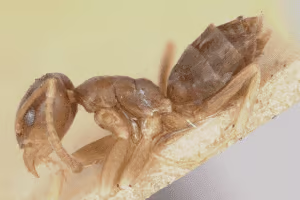
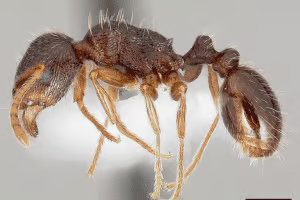
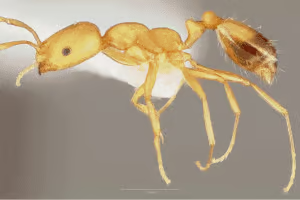
Why Do Ants Invade Structures in Southern Maine?
In Southern Maine’s temperate climate, ants typically enter structures during spring thaws when colonies become active, or in fall when temperatures drop and they seek warmth. They are drawn indoors by crumbs, spills, pet food, and moisture from leaky pipes or poorly sealed windows. Foraging workers lay pheromone trails back to the colony once a food source is found, quickly turning a single scout into a stream of hundreds.
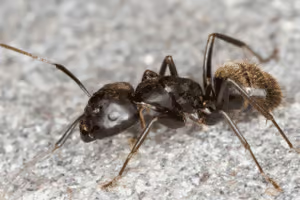
Carpenter ants specifically target damp or decaying wood, making older homes in wooded areas of Southern Maine particularly vulnerable. This is especially common in towns like Standish where heavily wooded properties and older structures create ideal nesting conditions. Odorous house ants are attracted to sugary residues in kitchens and bathrooms. Several species overwinter inside wall voids and foundations, becoming active again the following spring without any obvious new entry point.
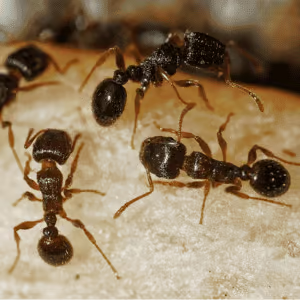
Identification Tips for Ants in Southern Maine
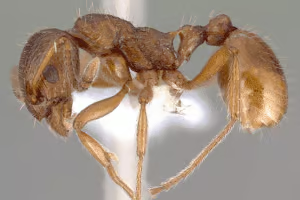
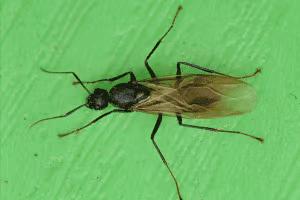
Ants share a few consistent features: segmented bodies with three distinct parts (head, thorax, abdomen), elbowed antennae, and a narrow pinched waist. Size and color vary significantly by species, from the small 2-4mm pavement ant to the large 6-12mm carpenter ant. Signs of activity include visible trails along baseboards or counters, small soil mounds near foundations, and sawdust-like frass near wooden structures.
A few quick identification clues by species:
- Odorous house ants emit a distinct rotten coconut smell when crushed
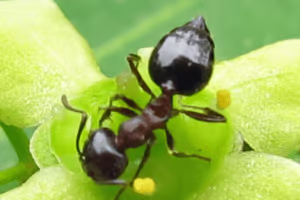
- Acrobat ants raise their heart-shaped abdomen upward when disturbed
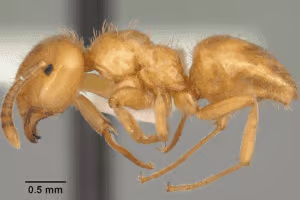
- Citronella ants release a lemon-like scent and are yellow in color
- Winged swarmers appear in spring and are often the first visible sign of a mature colony nearby
Behavior & Habits of Ants
Ants are highly social insects living in structured colonies with queens, workers, and males. Workers communicate through pheromones, creating reliable foraging trails once food or moisture is located. In Southern Maine, most species nest outdoors in soil, rotting wood, or under pavement but forage indoors regularly during warmer months. Activity peaks from late spring through early fall. Some species, particularly carpenter ants and odorous house ants, establish satellite colonies inside structures. Colonies can relocate quickly when disturbed, which is one reason store-bought sprays often scatter the problem rather than solve it.
Risks & Threats from Ants
Most ant species are primarily a nuisance, but some present real risks to health and property:
- Structural damage: Carpenter ants excavate wood to build galleries, weakening beams, sills, and framing over time. Unlike termites, they don’t eat wood, but the tunneling damage is significant in older or moisture-affected homes. Carpenter ants are classified as wood-destroying pests, alongside other insects that threaten the structural integrity of Maine homes.
- Stings and reactions: European fire ants are aggressive and deliver a painful sting that can cause swelling and allergic reactions in sensitive individuals.
- Food contamination: Several species, particularly pharaoh ants and odorous house ants, contaminate food surfaces and stored goods as they forage.
General Prevention Tips for Ants
- Keep kitchen surfaces clean and store food in sealed containers to remove the attractants that draw odorous house ants and pharaoh ants indoors
- Fix leaks and address moisture issues, particularly in basements and crawl spaces where carpenter ants are most likely to establish
- Seal cracks around doors, windows, and foundations before spring to block early-season entry
- Trim vegetation and keep mulch away from the foundation to reduce nesting sites for pavement ants and acrobat ants
- Consider a year-round protection plan if ant activity has been a recurring issue on your property. Proactive seasonal treatments are far more effective than reacting after a colony is already established
- For active infestations, professional treatment is far more reliable than store-bought sprays, which often scatter colonies without eliminating them. The University of Maine Cooperative Extension IPM program recommends an integrated approach that targets the colony rather than just the foraging workers you can see
Frequently Asked Questions
Ants enter through small cracks and gaps in search of food, water, or shelter. In Southern Maine, carpenter ants are often drawn to moisture-damaged wood around foundations, windows, and roof lines, while odorous house ants follow pheromone trails to kitchens and bathrooms. Identifying the species and entry point is the first step to solving the problem effectively.
It depends on the species. Carpenter ants can cause genuine structural damage by excavating wood galleries in beams, sills, and framing over time. European fire ants sting aggressively and can make yards unusable. Pharaoh ants contaminate food surfaces and are notoriously difficult to eliminate without professional treatment. Most other species are primarily a nuisance, but all are worth addressing before colonies grow larger.
Prevention starts with sealing entry points, eliminating moisture, keeping food in airtight containers, and keeping mulch and vegetation away from the foundation. For active infestations, the right treatment depends entirely on the species. What works for carpenter ants is completely different from what works for pharaoh ants. Store-bought sprays often scatter colonies without eliminating them, making the problem harder to resolve. Professional identification before treatment makes a significant difference in outcome.
Ants go through four stages: egg, larva, pupa, and adult. Queens can live up to 15 years in some species and produce thousands of workers over their lifetime. In Southern Maine, most species are active from late spring through early fall, though some overwinter inside wall voids and foundations and resume activity the following spring without any obvious new entry point.
Most common household ants in Southern Maine do not sting or bite effectively. European fire ants are the notable exception, delivering a painful sting that causes burning and inflamed welts. Carpenter ants can bite if handled but rarely do so unprovoked. Pharaoh ants and odorous house ants are nuisance pests with no meaningful sting or bite risk.
Ants are not known to transmit disease directly, but some species contaminate food surfaces by tracking bacteria from garbage, drains, and soil. Pharaoh ants are the most significant concern in this regard, as they have been associated with carrying Salmonella and Staphylococcus in commercial food environments. For most household ant species the health risk is limited to food contamination rather than disease transmission.
Commonly Confused With
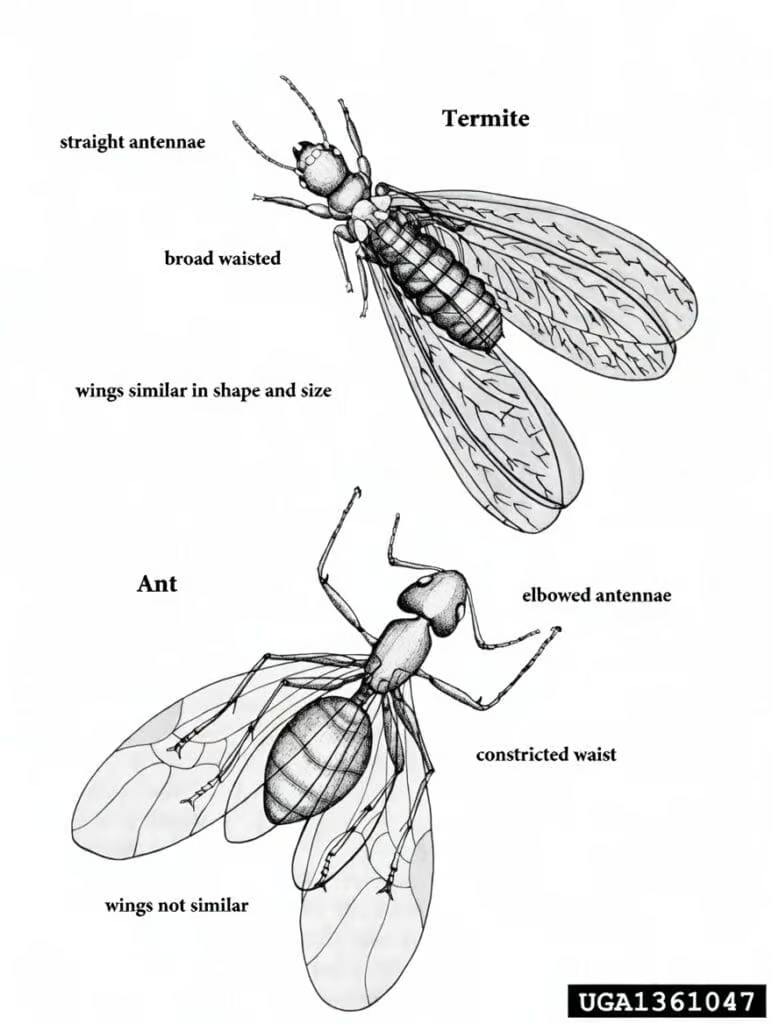
Winged ant swarmers are frequently mistaken for termites, especially in spring when both appear. The distinction matters because termites cause far more severe structural damage and require a completely different treatment approach. Key differences to look for are that ants have elbowed antennae and a narrow pinched waist, while termites have straight antennae and a thick, uniform waist. Ant wings are also unequal in size, with the front pair larger than the rear. If there is any uncertainty about what has been found, reach out for a professional identification before assuming it is one or the other.
Professional Ant Control in Southern Maine
Identifying the species correctly before treating is something I take seriously, and it directly affects whether a treatment works. Carpenter ants, pharaoh ants, and odorous house ants all require different approaches. If you’re seeing ant activity in or around your home or business, I’m happy to take a look. Learn more about my ant control services or contact me to schedule a free consultation.