

It’s the question I get asked more than almost any other: is this safe for my kids, or my dog, or my cat? I understand why it comes up every time, and I want to answer it honestly rather than just say yes and move on, because “safe” isn’t really a word that means anything precise in this context. It’s not a legal term, it’s not a regulatory category, and no responsible pest control company can promise it without qualification, because individual sensitivities vary and I don’t know your specific health situation or your pet’s. What I can do is walk you through how the system that governs these products actually works, so you can make an informed decision instead of just taking anyone’s word for it.
If you haven’t already, it’s worth reading how to read a Safety Data Sheet first. This post is really the other half of that conversation: the SDS tells you what’s in a product, and this one covers how that product got approved for use in the first place, and what “approved” actually means.
A quick note up front, same as last time: this is meant to help you understand the regulatory system, not to give you a personal medical judgment. If you, your child, or your pet has a specific health condition, a chemical sensitivity, or you’re pregnant, that conversation belongs with your doctor or veterinarian, who can weigh your actual situation. I’m not able to do that, and neither is a blog post.
What EPA Registration Actually Means
Every pesticide legally sold and applied in the United States has gone through EPA registration under a law called FIFRA, the Federal Insecticide, Fungicide, and Rodenticide Act. Registration involves the manufacturer submitting toxicology, environmental fate, and residue data, which EPA reviews before deciding whether to approve the product and, critically, exactly how it can legally be used.
Here’s the part that surprises people: EPA registration isn’t a certification that a product is harmless. It’s a risk/benefit determination, a legal standard requiring that the product not pose “unreasonable risk” to human health or the environment when used according to the label. That’s a meaningfully different standard than “safe,” and it’s worth understanding the difference. Risk isn’t eliminated, it’s evaluated, weighed against the product’s intended purpose, and then controlled through specific label requirements, application rates, protective equipment, re-entry intervals, and restrictions on where and how it can be used.
The Label Is a Legal Document
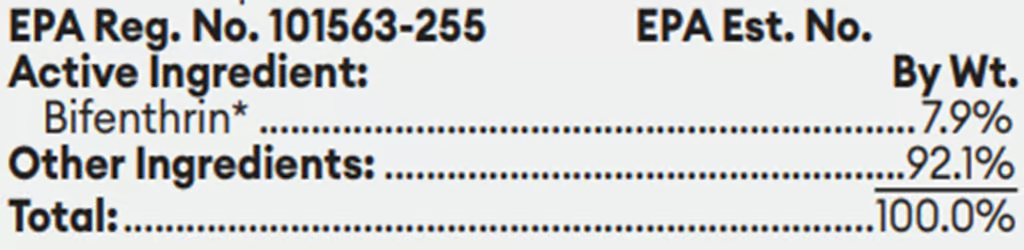
This is something every licensed applicator learns early: the product label isn’t a suggestion or marketing copy, it’s a legally enforceable document. Everything on it, application rate, target pests, protective equipment requirements, re-entry intervals, environmental precautions, was reviewed and approved by EPA as part of registration. Using a product in a way that contradicts its label is a violation of federal law, not just bad practice.
This matters directly to the “is it safe” question, because the honest answer is closer to “it’s approved for this specific use, at this specific rate, applied by a licensed applicator following this specific label” than a blanket yes or no. The label is what makes that determination meaningful. A product used off-label, at the wrong rate, or by someone untrained isn’t covered by any of the risk analysis that went into its registration.
One nuance worth knowing, since it sometimes gets misunderstood: the label doesn’t have to list every possible pest by name to be used legally. Under FIFRA Section 2(ee), a registered product can legally be applied against a pest that isn’t specifically named on the label, as long as the site itself is listed (a lawn, a home’s exterior, a crawl space, whatever the case may be) and the label doesn’t specifically prohibit that pest. What the law is strict about is the site, not necessarily every pest. This isn’t a loophole, it’s a deliberate part of how the label system was designed, since it would be impractical for every label to enumerate every possible pest a product might reasonably control at an approved site.
Maine’s Additional Layer
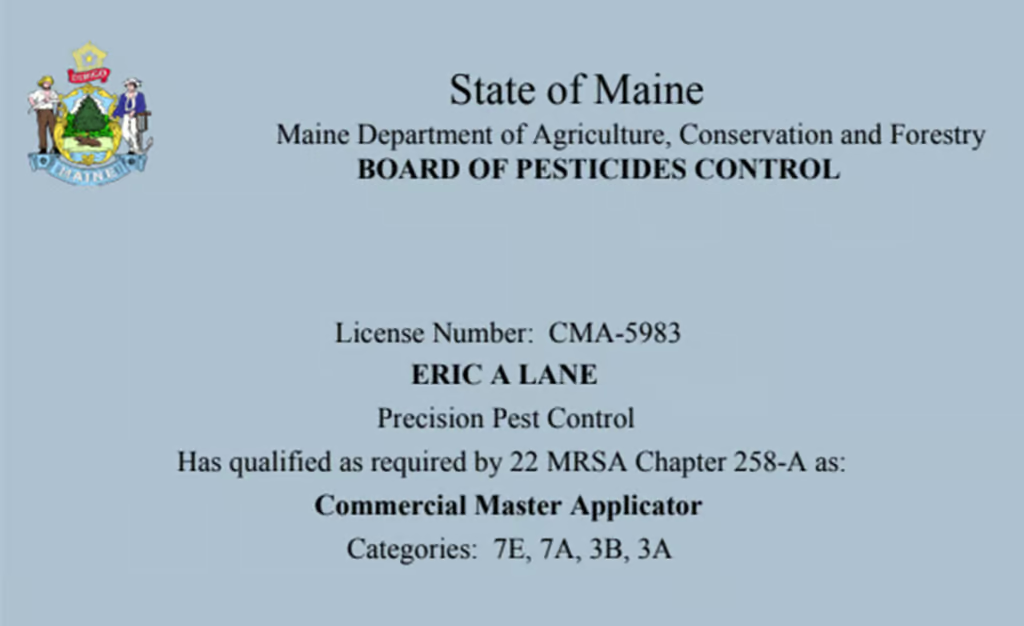
Federal registration isn’t the only regulatory layer. Maine regulates pesticide use through the Maine Board of Pesticides Control, which licenses applicators, can impose state-specific restrictions beyond federal requirements, and requires ongoing continuing education to maintain licensure. States are allowed to be more restrictive than federal law, though not less, and Maine has historically taken a fairly active role in pesticide oversight compared to some other states.
This is also why licensing matters when you’re choosing a pest control company. A current, valid applicator’s license means someone has passed testing on product knowledge, application methods, and safety practices, and is subject to state oversight and continuing education requirements, not just a one-time exam years ago.
A Brief, Honest History
It’s worth knowing that pesticide regulation as it exists today is relatively recent, and it exists because of real, documented problems with earlier products. FIFRA was first passed in 1947, but at that point it mostly just standardized labeling and registration, it didn’t give the government meaningful authority to evaluate safety. That changed in 1972, when Congress substantially rewrote the law and gave the newly formed EPA the authority to evaluate and restrict pesticides based on health and environmental data. That same year, EPA banned DDT for general use, a product that had been widely applied for decades before its environmental and health effects were fully understood.
That history matters for two reasons. First, it’s honest to acknowledge that the current regulatory system exists specifically because the previous one wasn’t sufficient, this isn’t a system that’s always gotten it right on the first try. Second, and more reassuringly, it shows the system is designed to keep evaluating products as new data comes in, not just approve something once and never look at it again. Products go through periodic re-registration review, and active ingredients can be, and have been, restricted or removed from use decades after their initial approval as more research accumulates.
What “Used as Labeled” Looks Like in Practice
The gap between “concentrated product in a jug” and “your yard after treatment” is where most of the actual safety margin lives, and it’s also the part an SDS or a registration document can’t fully capture, because it’s about application, not just the product itself.
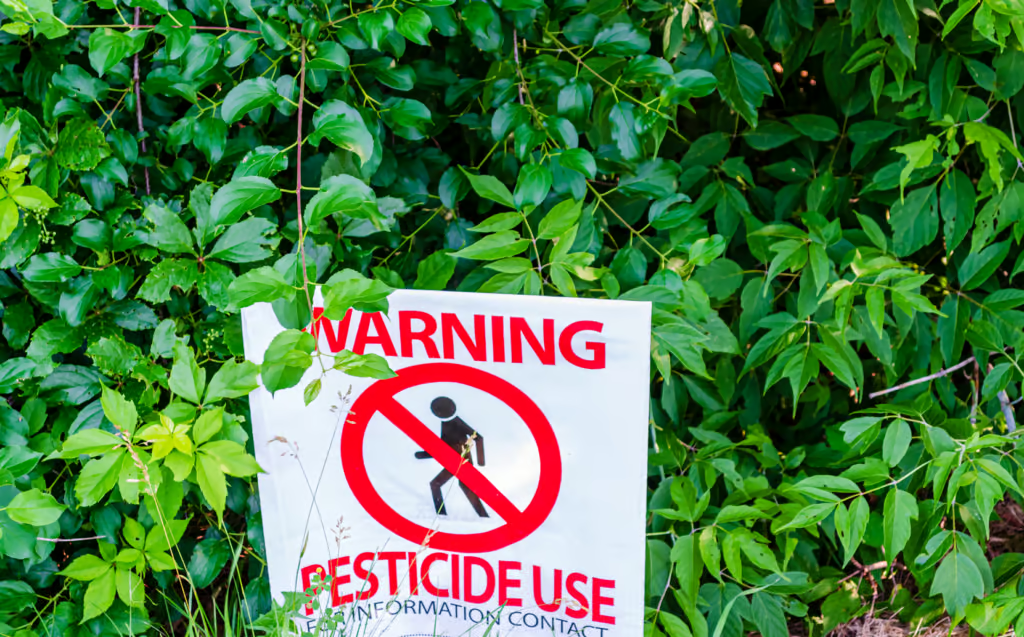
This is where things like re-entry intervals matter, the amount of time a treated area needs before it’s safe for people or pets to be in it again, and it’s specified on the label based on how long it takes a product to dry or bind to the surface it was applied to. It’s also where mixing to the correct rate, using the right equipment, and avoiding drift near water features, gardens, or areas pets frequent all come in. These aren’t optional extras, they’re part of what the registration and the label are actually designed around.
What I’d Actually Suggest
If you want a real answer about a specific product on your specific property, here’s what’s genuinely useful to ask, and any legitimate pest control company should be able to answer all of it without hesitation:
- What product is being used, and can I see the SDS?
- What’s the EPA registration number, so I can look it up independently?
- What’s the re-entry interval for this application?
- Are there any precautions for pets, gardens, or water features on my property?
That’s a more useful conversation than asking whether something is “safe,” because it gets you the actual information the regulatory system is built around, rather than a single word that can’t really carry the weight of the question.