


Hantavirus has been in the news lately, and the calls and questions have followed. As an Associate Certified Entomologist with more than 16 years of experience serving Cumberland and York Counties, I think the most useful thing I can do is separate what is actually happening from what people are afraid is happening. The headlines and the risk inside a Maine home are two very different things. Here is the full picture, with real numbers.
Why hantavirus is suddenly in the news
In early May 2026, an outbreak of hantavirus was reported aboard an expedition cruise ship, the MV Hondius, after it traveled through remote parts of the South Atlantic. By late May, public health agencies had confirmed roughly a dozen cases and three deaths among passengers and crew from more than 20 countries.
That outbreak was caused by the Andes virus, and this is the part that matters: Andes virus is the only hantavirus known to spread from person to person, and it lives in a South American rodent that does not exist in Maine. The U.S. CDC has confirmed no cases tied to that outbreak inside the United States and describes the risk to the American public as extremely low.
In other words, the virus making headlines is not the virus you could encounter in your basement, your camp, or your shed. They share a name and not much else.
What hantavirus actually is
“Hantavirus” is a group of related viruses carried by rodents. In the United States, the one that matters causes Hantavirus Pulmonary Syndrome, or HPS, a serious illness that affects the lungs. The main carrier nationally is the deer mouse, and the virus most associated with it is called Sin Nombre virus.
People become infected by breathing in airborne particles from the urine, droppings, saliva, or nesting material of an infected rodent. This usually happens when those materials get stirred up into the air, which is exactly what sweeping or dry-vacuuming a mousy area does. Infection from a rodent bite is possible but rare. Importantly, the North American strains do not spread between people.
Early symptoms look like the flu: fever, fatigue, muscle aches, and headache, sometimes with nausea. They typically appear one to eight weeks after exposure. In the cases that turn serious, coughing and shortness of breath follow as fluid builds in the lungs, and that stage can become life-threatening quickly. There is no specific cure and no approved vaccine in the United States, so treatment is supportive, and getting to a hospital early makes a real difference. Among patients who develop severe respiratory symptoms, the case fatality rate has been estimated at around 38 percent. That number sounds alarming on its own, which is exactly why the next section matters.
The Maine reality, in numbers
Here is the context the headlines leave out.
From 1993, when national surveillance began, through 2023, the CDC recorded roughly 890 confirmed hantavirus cases in the entire United States over three decades. About 94 percent of those occurred west of the Mississippi River, concentrated heavily in the Four Corners region of the Southwest. The eastern United States accounts for only about 3 percent of all cases.
In Maine specifically, there have been only two documented cases of HPS in more than 30 years of tracking. The first was a man in his seventies from Somerset County in 2011. The second was reported in 2025, in an adult who had been exposed to a rodent infestation on their property, had not traveled out of state, and recovered after hospital care.
Two cases in three decades. That is the honest scale of the risk here. Hantavirus in Maine is real, it can be severe, and it is also genuinely rare. Both things are true at once, and you do not have to choose between panic and carelessness.
One Maine-specific wrinkle worth knowing: the deer mouse that drives most western cases is far less common in the Northeast. Researchers believe the white-footed mouse is the more likely carrier here. Both species move indoors as the weather cools. The common house mouse, the one most people actually see, is not a known carrier of HPS, though it is still worth keeping out for plenty of other reasons.
Who faces the most risk in southern Maine
The pattern in nearly every case is the same: someone disturbs an accumulation of rodent droppings or nesting material in an enclosed, poorly ventilated space. In this part of Maine, that means a few specific situations are worth real attention.
Opening a camp or seasonal cabin in the spring is the classic one. A building closed up all winter gives mice months of undisturbed run of the place, and the first thing people do on arrival is sweep, shake out bedding, and clean. Sheds, barns, garages, crawl spaces, and the corners of basements where mice nest carry the same caution. This is especially common around the rural and farm properties in towns like Limington and Lyman, where outbuildings sit unused for long stretches. Anyone clearing out a space that has clearly had rodent activity should treat it as a job to do carefully, not quickly.
How to protect yourself, the right way
Prevention comes down to keeping rodents out and cleaning up safely when they have already been in.
Seal them out. Mice can pass through a gap about the width of a pencil. Seal openings around pipes, utility lines, foundations, door sweeps, and dryer vents. This is the single most effective long-term step, and it is the core of what I do on a rodent control job.
Remove the invitation. Store pet food and birdseed in sealed containers, keep trash covered, and move woodpiles, brush, and debris away from exterior walls so rodents have nowhere to stage near the house. Keeping mice down matters beyond hantavirus, too, since mice are a primary host that fuels the tick populations behind Lyme disease in southern Maine.
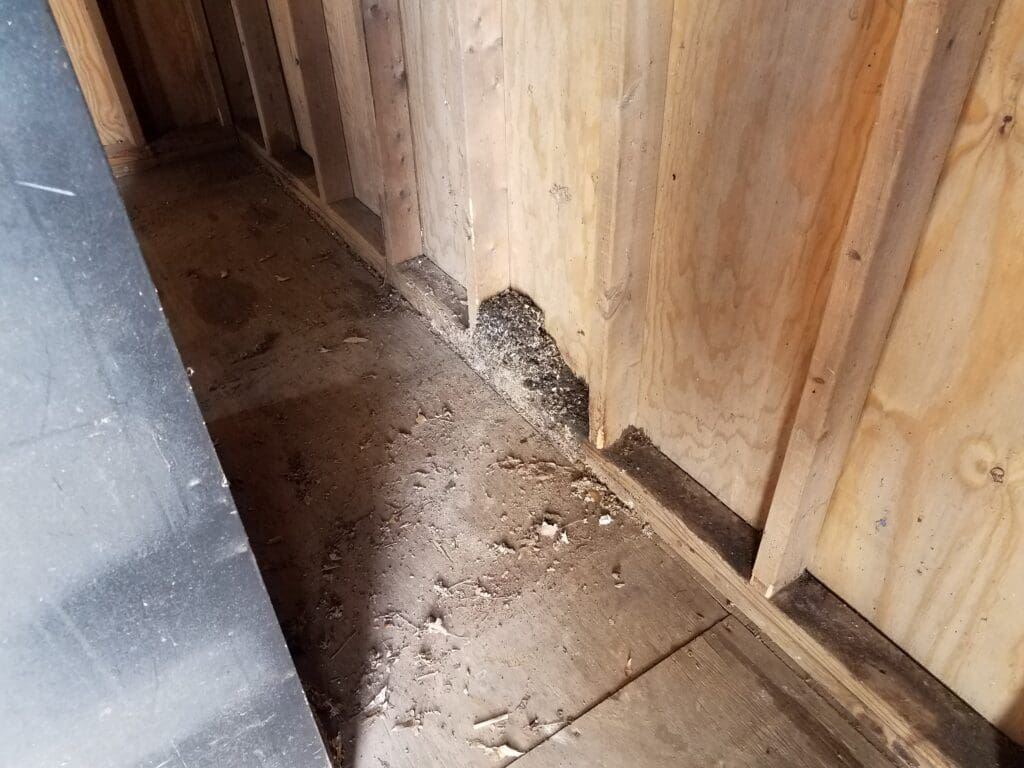
Clean up the safe way, which is the part most people get wrong. Never sweep or dry-vacuum droppings or nests, because that is precisely what puts the virus into the air you breathe. Following Maine CDC guidance, open the space up and let it air out for at least 30 minutes first. Then put on rubber gloves, spray the droppings and nesting material thoroughly with a disinfectant or a bleach solution of about one part bleach to ten parts water, and let it sit for several minutes. Wipe everything up with paper towels, double-bag the waste, and wash your hands well afterward. For a larger or heavily soiled area, add a properly fitted mask and consider a HEPA vacuum only after everything has been wetted down.

When to bring in help
A few droppings under the kitchen sink are something you can handle yourself with the steps above. A significant infestation, an attic or crawl space full of nesting material, or a seasonal property that has clearly housed mice all winter is a different matter. Those situations are worth a professional assessment, both to clean up safely and, more importantly, to find and seal the entry points so it does not happen again. A Year-Round Protection Program keeps those entry points monitored long after the first cleanup.
If you are dealing with a rodent problem on your property anywhere in Cumberland or York County, that is exactly the kind of work I handle. The goal is not just to remove the mice but to make the building one they cannot get back into.