

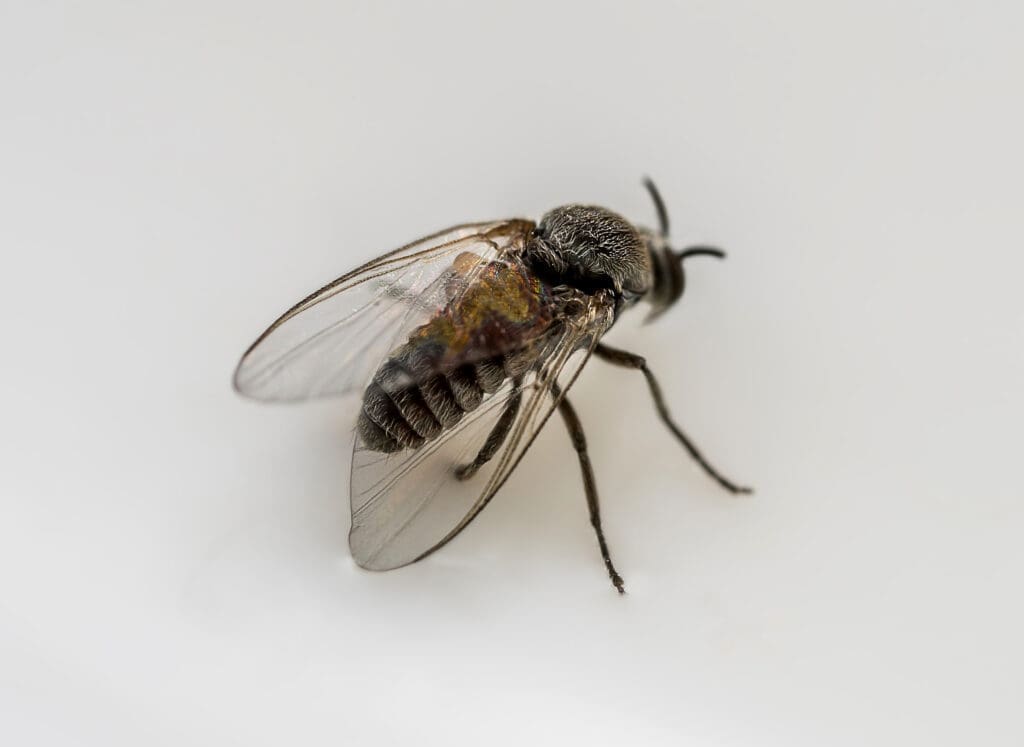
If you have spent any time outdoors in southern Maine during May or June, you know exactly what black fly season feels like. These small, persistent insects make outdoor work and recreation genuinely miserable during peak season, and every year the calls come in from people wondering if there is something that can be done about them on their property.
The short answer is no, and it is worth explaining why before getting into what actually does help.
Why Black Flies Cannot Be Treated by a Pest Control Company
Black flies breed exclusively in moving water. Rivers, streams, brooks, and any clean flowing water source are where the larvae develop, filter-feeding on organic material in the current. Treating those waterways with larvicide requires state and government permits that are well outside the scope of private pest control licensing.
Large-scale black fly management in Maine falls under programs like the Maine Black Fly Abatement Program, which coordinates treatments in select waterways using a naturally occurring biological larvicide. Coverage is limited and not available in every area. For most property owners in southern Maine, waiting out the season while managing exposure is the realistic approach.
Understanding Black Fly Behavior Helps
Knowing how black flies behave makes it easier to work around them. A few things worth knowing:
Black flies are daytime insects. They are not active at night, which means evening outdoor time is generally not an issue once the sun goes down.
They are most active during calm, humid, overcast conditions, particularly in the early morning and late afternoon. A sunny, breezy midday is considerably more tolerable than a still, cloudy morning.
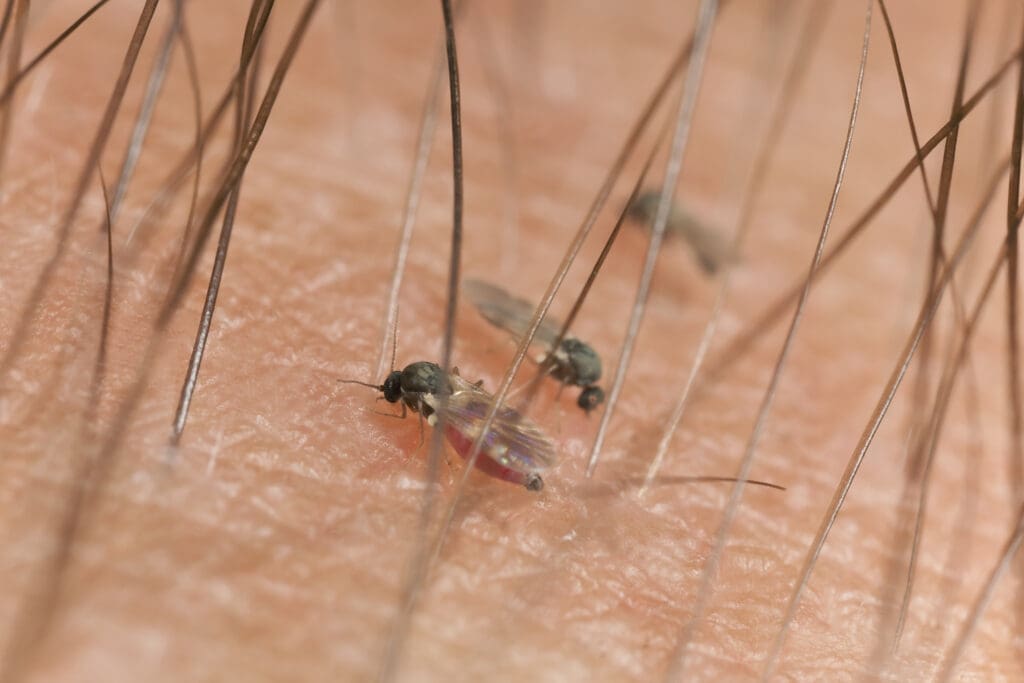
Black flies are attracted to dark colors, carbon dioxide, and body heat. They tend to target the head, neck, and any exposed skin near clothing edges. They do not just bite and leave. The females cut into the skin to feed, which is why bites often bleed and cause more irritation than a typical mosquito bite.
Black flies can travel several miles from their breeding sites, which is why properties with no moving water nearby can still have significant black fly pressure. They locate hosts by detecting carbon dioxide and body heat, and disrupting that process is one of the most effective tools available for managing exposure outdoors. That range is why I field calls from homes throughout Windham every May even when the nearest stream is nowhere in sight.
Black fly season in southern Maine typically peaks in May and runs into June before tapering off as temperatures climb and water levels drop.
Practical Ways to Manage Black Flies Outdoors
None of these eliminate black flies entirely, but used together they make a real difference in comfort during peak season.
Clothing Light-colored, tightly woven long sleeves and pants reduce exposed skin and are less attractive to black flies than dark clothing. Tucking pants into socks and wearing a hat with a brim helps. Head nets, while not stylish, are genuinely effective for extended outdoor work in heavily wooded areas or near streams.
Repellents DEET-based repellents are the most effective option available for black flies. Apply to all exposed skin and pay attention to collar and cuff edges where black flies commonly get underneath clothing. Picaridin-based repellents are a solid alternative for those who prefer to avoid DEET. Permethrin applied to clothing, not skin, adds another layer of protection for people spending extended time outdoors.
Fans For outdoor seating areas, decks, and patios, a box fan or oscillating fan pointed toward where people are sitting is one of the most effective and underrated tools available. Black flies locate hosts by detecting carbon dioxide and body heat, and moving air disrupts that process and makes it difficult for them to land. This is a simple and worthwhile setup for anyone who spends regular time on a deck or patio during May and June.
Timing Scheduling outdoor work and recreation around black fly activity patterns makes a real practical difference. Midday hours on sunny, breezy days are the most tolerable. Early mornings and late afternoons on calm, cloudy days are the worst. If you have flexibility in when you are outside, use it.
Location Heavily wooded areas, shaded stream corridors, and calm spots near moving water are the most intense areas during peak season. Anyone who walks the river trails in Westbrook in late May knows exactly what a shaded stream corridor feels like at peak season. Open, sunny areas with natural airflow are considerably more manageable. If you are doing yard work or outdoor projects, starting in open areas and saving work near treelines and water for later in the season is a reasonable approach.
What About the Rest of the Season
Black fly pressure drops considerably by late June in most of southern Maine as water temperatures rise and flows decrease. Mosquitoes become the dominant nuisance insect through the summer months, and unlike black flies, mosquitoes are something that can be addressed with professional treatment on your property.
If mosquito pressure is an issue on your property heading into summer, visit the contact page to ask about treatment options. In the meantime, use the strategies above and know that black fly season, while unpleasant, is one of the shorter ones on the Maine pest calendar.