Precision Pest Control

Occasional Invaders in Southern Maine:

Identification & Prevention

As a solo pest control operator serving York, Cumberland, and parts of Oxford counties, I focus on humane integrated pest management to handle occasional invaders. These pests enter homes sporadically, often due to weather changes, but they rarely establish indoors. I help identify and manage them safely. Learn about common types below, or contact me for expert help.

Quick Fact: Occasional invaders like boxelder bugs and stink bugs seek shelter in southern Maine homes during fall, but most do not breed inside structures.

Common Ants in Southern Maine
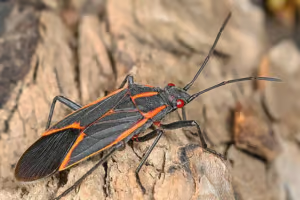
Eastern boxelder bug (Boisea trivittata) commonly invading homes in southern Maine as an occasional overwintering pest.
Boxelder Bugs
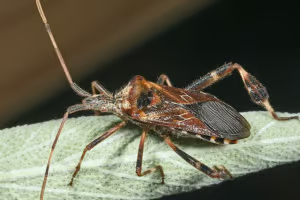
Western conifer seed bug (Leptoglossus occidentalis) commonly invading homes in southern Maine as an occasional overwintering pest.
Western Conifer Seed Bugs
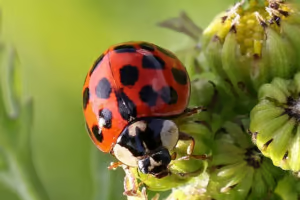
Multicolored Asian lady beetle (Harmonia axyridis) commonly found invading homes in southern Maine during fall and winter.
Asian Lady Beetles
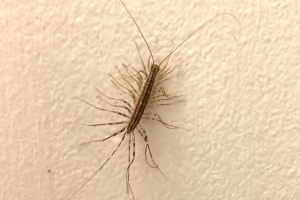
House centipede (Scutigera coleoptrata) commonly found in damp areas of homes in southern Maine as an occasional invader.
House Centipede
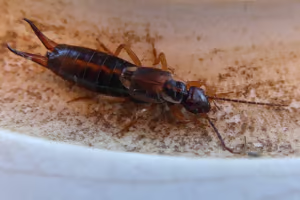
Adult European earwig (Forficula auricularia) showing elongated body and forceps-like cerci.
Earwigs
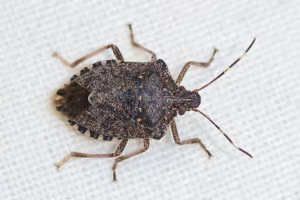
Adult brown marmorated stink bug (Halyomorpha halys) on a surface with legs visible and typical shield shape.
Brown Marmorated Stink Bugs
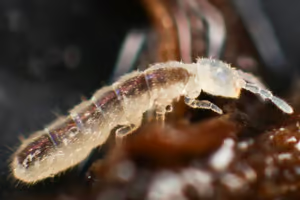
Springtail (Folsomia candida) commonly found in damp areas and invading homes in southern Maine as an occasional invader.
Springtails
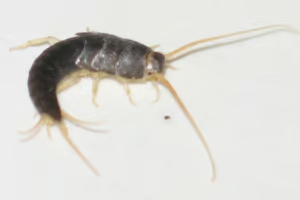
Silverfish (Lepisma saccharina) commonly found in damp areas of homes in southern Maine as an occasional invader.
Silverfish
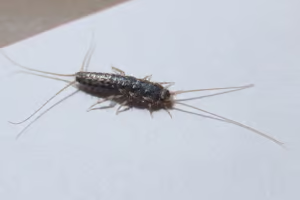
Firebrat (Thermobia domestica) commonly found in warm, damp areas of homes in southern Maine as an occasional invader.
Firebrats
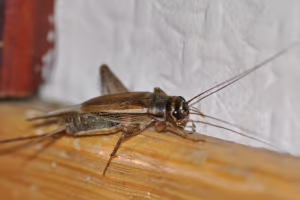
House cricket (Acheta domesticus) commonly invading homes in southern Maine as an occasional invader.
Crickets
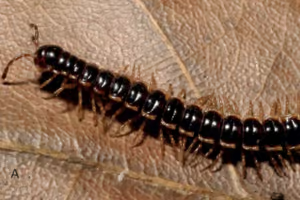
Greenhouse millipede (Oxidus gracilis) commonly invading homes in southern Maine as an occasional invader.
Millipedes
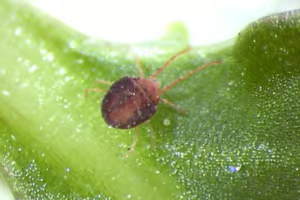
Clover mite (Bryobia praetiosa) commonly invading homes in southern Maine as an occasional invader.
Mites
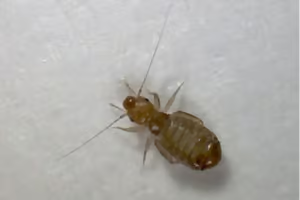
Booklouse (Liposcelis spp. or similar psocid) commonly found in humid areas of homes in southern Maine as an occasional invader.
Psocids

Why Do Occasional Invaders Invade Homes in Southern Maine?

Occasional invaders enter southern Maine homes when outdoor conditions become unfavorable. In fall, dropping temperatures drive them to seek warmth and shelter. During dry or hot spells, they look for moisture indoors. They slip through small gaps around doors, windows, and foundations. These pests live primarily outdoors and do not intend to stay long term. In areas like York and Cumberland counties, issues often start from unsealed entries or nearby vegetation. If you’re dealing with larger animals entering similarly, check out my wildlife page for more details.
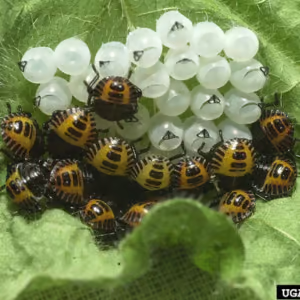
Brown marmorated stink bug (Halyomorpha halys) eggs and newly hatched nymphs on a leaf.

Identification Tips for Occasional Invaders in Southern Maine

Occasional invaders vary in appearance but share traits like sudden appearances in groups near entry points. Look for small insects or arachnids that do not seem established in your home.

  • Clusters of red-black bugs on sunny walls signal boxelder bugs.
  • Shield-shaped brown insects indicate stink bugs.
  • Tiny jumping specks in moist areas point to springtails.

Behavior & Habits of Occasional Invaders in Southern Maine

These pests typically reside outdoors in soil, mulch, or vegetation. They become active during seasonal shifts, migrating indoors accidentally. Most do not reproduce inside and die off naturally if conditions are dry. Some, like centipedes, hunt other insects, while others, like millipedes, feed on decaying matter. They often gather near light sources or damp spots. For behaviors overlapping with stinging pests, see my stinging insects section.

Risks & Threats from Occasional Invaders in Southern Maine

Occasional invaders pose minimal direct harm but can create issues.

  • Nuisance from large numbers, like Asian lady beetles clustering in attics.
  • Potential bites or pinches from centipedes or earwigs.
  • Foul odors released by stink bugs when crushed.
  • Allergens from mites contributing to respiratory problems.
  • Stains on fabrics or walls from crushed boxelder bugs.

For more on household pest prevention, visit the EPA’s pest control resources for residents.
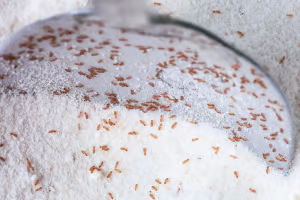
Close-up of common booklice (Liposcelis bostrychophila and Trogium pulsatorium) on a neutral background.

Prevention Tips for Occasional Invaders in Southern Maine

Keep occasional invaders out with basic maintenance.

  • Seal cracks and gaps around windows, doors, and foundations.
  • Install door sweeps and repair damaged screens.
  • Reduce outdoor moisture by clearing gutters and directing water away.
  • Trim vegetation and remove leaf piles near the home.
  • Use yellow exterior lights to attract fewer insects. 

Check the University of Maine Extension’s factsheets on household pests for local insights.

Frequently Asked Questions

Occasional invaders are outdoor pests that enter homes sporadically due to weather, like boxelder bugs in fall. They rarely breed indoors. 

Most are harmless nuisances, but some like centipedes can bite. Mites may trigger allergies. I assess risks during inspections.

They enter through tiny openings in foundations, doors, or windows seeking shelter. Sealing helps prevent this.

Basic steps like sealing entry points reduce entries, but professional help ensures thorough protection.

Vacuum them carefully and dispose outside. Avoid crushing stink bugs to prevent odors. Contact me for lasting solutions.

As a solo operator, I provide personalized, humane IPM in York and Cumberland counties. Call me for help.

Why Choose Precision Pest Control?

I offer reliable, humane pest management as a solo operator in southern Maine. No teams, just direct service from me. Contact me today.

Occasional Invaders background overlay (close-up of multicolored Asian lady beetle on surface): Title: Harmonia axyridis – Asian Lady Beetle, Author: Gimnazijalacbp, Source URL: https://commons.wikimedia.org/wiki/File:Harmonia_axyridis_2345.jpg, License: CC BY 4.0, Modifications: Cropped and optimized for web use.

Boxelder bug category thumbnail (side view of Eastern boxelder bug on natural surface): Title: Eastern Boxelder Bug – Boisea trivittata, Author: Judy Gallagher, Source URL: https://commons.wikimedia.org/wiki/File:Eastern_Boxelder_Bug_-_Boisea_trivittata,_Riverbend_Park,_Great_Falls,_Virginia,_April_8,_2022_(52260566986).jpg, License: CC BY 2.0, Modifications: Cropped to 300×300 square and optimized for web use.

Western conifer seed bug category thumbnail (close-up of Western conifer seed bug on white background): Title: Leptoglossus occidentalis – Western Conifer Seed Bug, Author: Didier Descouens, Source URL: https://commons.wikimedia.org/wiki/File:Leptoglossus_occidentalis_MHNT.jpg, License: CC BY-SA 4.0, Modifications: Cropped to 300×300 square and optimized for web use.

Asian lady beetle category thumbnail (close-up of Harlequin lady beetle on leaf): Title: Harmonia axyridis – Asian Lady Beetle, Author: Stu’s Images, Source URL: https://commons.wikimedia.org/wiki/File:Harmonia_axyridis,_Harlequin_lady_beetle,_Enfield,_UK.JPG, License: CC BY-SA 3.0, Modifications: Cropped to 300×300 square and optimized for web use.

House centipede category thumbnail (house centipede on indoor surface in Ontario): Title: Scutigera coleoptrata – House Centipede, Author: Gogerr, Source URL: https://commons.wikimedia.org/wiki/File:Scutigera_coleoptrata_in_London,_Ontario.jpg, License: CC BY-SA 4.0, Modifications: Cropped to 300×300 square and optimized for web use.

Earwig category thumbnail (European earwig on green leaf in Brentonico): Title: Forficula auricularia – European Earwig, Author: Syrio, Source URL: https://commons.wikimedia.org/wiki/File:Forficula_auricularia_Brentonico_01.jpg, License: CC BY-SA 4.0, Modifications: Cropped to 300×300 square and optimized for web use.

Brown marmorated stink bug category thumbnail (brown marmorated stink bug on leaf in October): Title: Halyomorpha halys – Brown Marmorated Stink Bug, Author: Alvesgaspar, Source URL: https://commons.wikimedia.org/wiki/File:Halyomorpha_halys_October_2025-1.jpg, License: CC BY-SA 4.0, Modifications: Cropped to 300×300 square and optimized for web use.

Springtail category thumbnail (macro of Folsomia candida springtail on surface): Title: Folsomia candida – Springtail, Author: Andy Murray, Source URL: https://commons.wikimedia.org/wiki/File:Folsomia_candida_(8416640195).jpg, License: CC BY-SA 2.0, Modifications: Cropped to 300×300 square and optimized for web use.

Silverfish category thumbnail (silverfish isolated on white background): Title: Lepisma saccharina – Silverfish, Author: Iblis-Lakon, Source URL: https://commons.wikimedia.org/wiki/File:Lepisma_saccharina_1.jpg, License: CC BY-SA 3.0, Modifications: Cropped to 300×300 square and optimized for web use.

Firebrat category thumbnail (firebrat on textured surface): Title: Thermobia domestica – Firebrat, Author: Syrio, Source URL: https://commons.wikimedia.org/wiki/File:Thermobia_domestica_04.JPG, License: CC BY-SA 4.0, Modifications: Cropped to 300×300 square and optimized for web use.

Cricket category thumbnail (house cricket isolated on white background): Title: Acheta domesticus – House Cricket, Author: Aiwok, Source URL: https://commons.wikimedia.org/wiki/File:Acheta_domesticus_1.JPG, License: CC BY-SA 3.0, Modifications: Cropped to 300×300 square and optimized for web use.

Millipede category thumbnail (greenhouse millipede on leaf in Okinawa): Title: Oxidus gracilis – Greenhouse Millipede, Author: Zoltán Korsós, Source URL: https://commons.wikimedia.org/wiki/File:Oxidus_gracilis,_Okinawa_Island,_Japan.jpg, License: CC BY 3.0, Modifications: Cropped to 300×300 square and optimized for web use.

Mite category thumbnail (clover mite on garden impatiens): Title: Bryobia praetiosa – Clover Mite, Author: Rayanne Lehman (Pennsylvania Department of Agriculture), Source URL: https://commons.wikimedia.org/wiki/File:Bryobia_praetiosa_Koch.jpg (via Bugwood.org), License: CC BY 3.0 US, Modifications: Cropped to 300×300 square and optimized for web use.

Psocid category thumbnail (macro close-up of booklouse on surface): Title: Liposcelis bostrychophila – Booklouse, Author: Alexis Tinker-Tsavalas, Source URL: https://www.inaturalist.org/photos/62240685, License: CC BY, Modifications: Cropped to 300×300 square and optimized for web use.

Stink bug eggs additional image (hatched eggs of brown marmorated stink bug on leaf): Title: Hatched Eggs of Brown Marmorated Stink Bug (Halyomorpha halys), Author: David R. Lance (USDA APHIS PPQ), Source URL: https://commons.wikimedia.org/wiki/File:Brown_marmorated_stink_bug_eggs_hatched.jpg, License: CC BY 3.0 US, Modifications: Cropped and optimized for web use.

Psocids group additional image (close-up laboratory image of adult booklouse): Title: Booklouse (Psocidae), Author: Mohammed El Damir, Source URL: https://bugwoodcloud.org/images/full/5548402.jpg (via Bugwood.org), License: CC BY 3.0 US, Modifications: Cropped and optimized for web use.