

Lyctid Beetles in Southern Maine:
Identification, Prevention, and Control
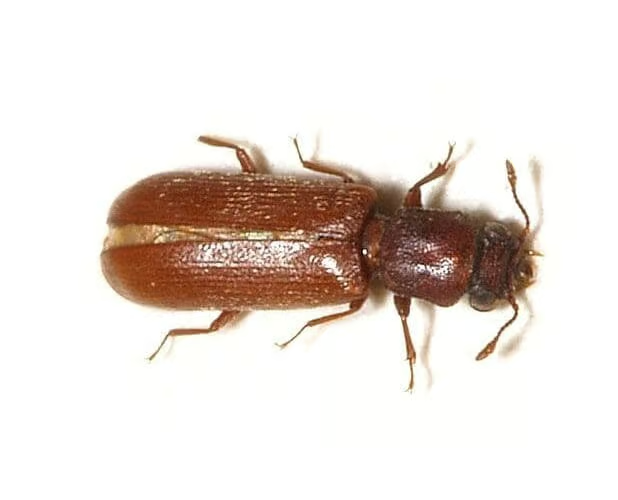
Lyctid beetles, commonly called true powderpost beetles, are the wood-boring pest I encounter most often in Southern Maine hardwood flooring, furniture, and millwork. I find their activity regularly in older homes throughout Limerick, Limington, Standish, and Hollis, where original hardwood floors, antique furniture, and custom millwork provide exactly the starch-rich seasoned hardwood these beetles require. What makes lyctid beetles frustrating is that the damage accumulates out of sight for months or years before the fine powder and exit holes appear at the surface. By the time a homeowner notices the frass, the infestation has typically been active through at least one full larval cycle. As an Associate Certified Entomologist (A.C.E.) with 16 years of experience in the region, accurate species identification is my starting point, because lyctid beetles require a different approach than the anobiid beetles that attack softwood framing. Browse the wood-destroying pests library to compare species, or contact me for identification and treatment help.
What Are Lyctid Beetles?
Lyctid beetles belong to the family Lyctidae, a group commonly called true powderpost beetles. Adults are small, 1/8 to 1/4 inch in length, with elongated reddish-brown to dark brown bodies and clubbed antennae. They’re rarely seen because adults are short-lived and primarily active at night.
The larvae are the damaging stage. Females lay eggs in the open pores of susceptible hardwood, and larvae hatch and tunnel through the sapwood consuming starch and other nutrients. They produce extremely fine, talc-like frass as they feed, which accumulates in the galleries and eventually sifts out through exit holes or cracks as the infestation progresses. The larval period typically lasts one to two years, after which adults emerge through round exit holes approximately 1/32 to 1/16 inch in diameter. Adults mate and females lay eggs in the same or nearby wood, restarting the cycle. Lyctid beetles attack only the sapwood of starch-rich, seasoned hardwoods including oak, ash, hickory, walnut, cherry, and maple. They do not attack softwoods, heartwood, or wood that has been painted, sealed, or otherwise finished. According to the Maine DACF Got Pests powderpost beetles page, lyctid beetles are the most frequently encountered wood-destroying beetles in Maine homes with hardwood floors and trim.
Signs of a Lyctid Beetle Infestation
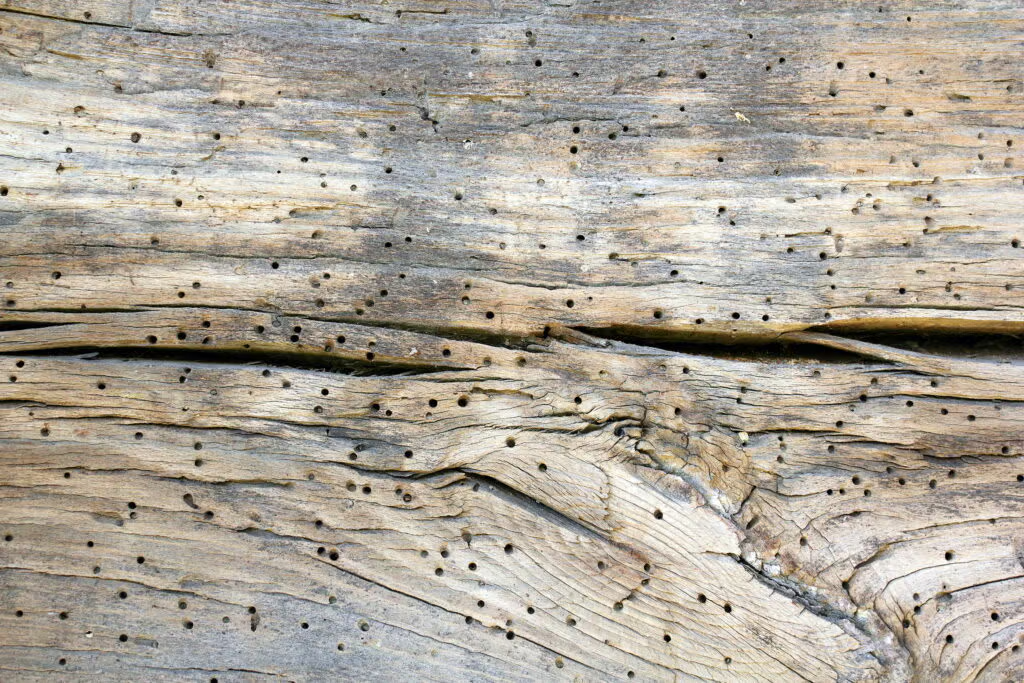
Lyctid beetle activity is identified primarily by the frass and exit holes the larvae and emerging adults leave behind. Because the beetles are nocturnal and rarely seen, these physical signs are almost always what prompts a call:
- Very fine, talc-like powder, white to yellow in color, sifting from small holes or accumulating in small piles on or below wood surfaces
- Small, perfectly round exit holes 1/32 to 1/16 inch in diameter in hardwood surfaces
- Fresh frass appearing after tapping or disturbing infested wood, which dislodges powder from galleries below the surface
- Powder streaming from cracks in flooring joints, baseboards, or furniture seams
- Repeated frass accumulation in the same locations year after year, indicating active reinfestation
- Adult beetles found on or near infested wood in late spring and summer during emergence season
In Limerick and Limington homes with original hardwood floors, activity typically becomes most visible from April through July as adults emerge with rising temperatures.
Risks in Southern Maine
Lyctid beetles pose no health risk to people or pets. They do not bite, sting, or spread disease. Their impact is entirely on wood.
The concern is cumulative structural and cosmetic damage to hardwood. In Southern Maine’s humid climate, unfinished hardwood floors, trim, and furniture in older homes are vulnerable to progressive damage that worsens with each generation of beetles. Lyctid beetle damage does not cause sudden structural failure, but sustained infestation over multiple seasons can reduce sapwood sections to powder, compromise the integrity of flooring boards and furniture joints, and create entry points for moisture and secondary pests. The damage is also irreversible once it occurs, which is why early identification and treatment matters more than waiting to see how bad it gets.
In commercial settings such as restaurants with hardwood floors, retail spaces with wood display fixtures, or businesses handling antique or reclaimed wood products, a lyctid beetle infestation can represent a significant financial liability if not caught early.
Prevention Tips
Lyctid beetle prevention is highly effective when applied consistently, because the beetles require specific conditions to establish:
- Seal, paint, varnish, or otherwise finish all exposed hardwood surfaces, as lyctid beetles cannot penetrate a well-maintained finish to lay eggs
- Maintain indoor humidity below 50 percent with dehumidifiers in basements and crawl spaces, as elevated moisture content in wood increases susceptibility
- Inspect all new hardwood flooring, furniture, and millwork carefully before installation or bringing it into the home, as infested wood is the primary introduction route
- Store firewood outdoors away from the structure rather than in basements or attached garages where adults could emerge and reinfest interior hardwood
- Inspect antique furniture, reclaimed wood, and secondhand wood items before bringing them indoors
- Have any suspicious frass or exit holes in hardwood professionally identified before assuming the problem is inactive
- Consider a year-round protection plan for properties with significant unfinished hardwood or a history of beetle activity
Commonly Confused With
Lyctid beetles are most commonly confused with two other wood-destroying beetle groups:
Anobiid beetles attack softwoods rather than hardwoods and produce distinctly different frass: gritty, bun-shaped pellets rather than fine talc-like powder. If the damaged wood is softwood framing, subfloor, or structural lumber rather than finished hardwood flooring or furniture, anobiid beetles are the more likely culprit. The distinction matters because treatment approach and the wood types at risk differ significantly between the two families.
Bostrichid beetles are occasionally confused with lyctid beetles since both attack hardwoods and produce similar frass. Bostrichids are generally larger, have a distinctive rasp-like roughened thorax, and produce slightly coarser frass. They are less commonly encountered in New England than lyctid beetles and are most often associated with imported tropical hardwoods and bamboo products rather than domestic species like oak and ash.
Termites are worth mentioning because homeowners finding wood damage sometimes fear termites first. Termite damage is characterized by galleries that contain soil or mud material and is accompanied by mud tubes along foundation walls. Lyctid beetle damage produces clean, dry exit holes with no soil content. The two are not difficult to distinguish once you know what to look for, but if there is any uncertainty, professional identification is the right call. Precision Pest Control does not treat termites, but I can confirm the identification and refer you to an appropriate specialist.
Professional Lyctid Beetle Control in Southern Maine
Effective lyctid beetle treatment requires confirming the infestation is active, identifying all affected wood, and applying the right products in the right locations. Surface treatments applied to exit holes without addressing the wood beneath are largely ineffective against larvae still tunneling inside. I start every job with a thorough inspection to assess the extent of the infestation, identify all affected surfaces, and confirm species. Treatment typically involves targeted borate-based applications to accessible wood surfaces, which penetrate into the sapwood and remain effective against larvae. Every affected hole is sealed with wood filler after treatment to prevent adult emergence and monitor for reinfestation. I’ve been assessing and treating wood-destroying beetle activity across Cumberland and York Counties for 16 years, and my common pests control service covers wood-destroying beetles alongside the full range of structural pests. Learn more about my background on the about page, or contact me to schedule a free inspection.
Frequently Asked Questions
No. Lyctid beetles do not bite, sting, or spread disease. Their only impact is on seasoned hardwood. The frass they produce is not a health hazard in normal exposure circumstances, though people with respiratory sensitivities may want to minimize contact with disturbed frass during cleaning.
Fresh frass is the most reliable indicator. Active infestations produce fine, light-colored powder that appears new after tapping or disturbing the wood surface. Old, inactive damage shows darkened frass and exit holes with no new powder appearing even after disturbance. New holes appearing in locations that were clean the previous season are a clear sign of ongoing reinfestation. Professional inspection is the most reliable confirmation.
Lyctid beetles spread to nearby susceptible hardwood, not throughout a structure the way a social insect colony might. Adults emerging from infested flooring can lay eggs in adjacent unfinished hardwood trim or furniture in the same room. They do not attack softwood, painted wood, or heartwood, so the spread is limited to the unfinished sapwood of susceptible hardwood species. Addressing the infestation before multiple generations have cycled limits how far it can progress.
Ready to Get Started?
If you’re finding fine powder and small exit holes in your hardwood floors, furniture, or trim, reach out for a free inspection and I’ll confirm the species and assess the extent of the activity.