

Bostrichid Beetles in Southern Maine:
Identification, Prevention, and Control
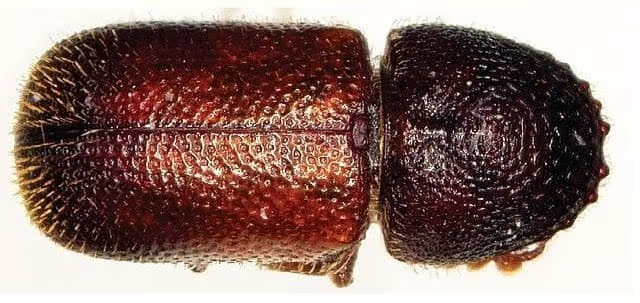
Bostrichid beetles, sometimes called false powderpost beetles, are one of three families of wood-boring beetles grouped under the powderpost beetle label, alongside lyctid beetles and anobiid beetles. They are the least commonly encountered of the three in Southern Maine, and when they do appear, it’s almost always in imported hardwoods, bamboo products, or reclaimed wood rather than in domestic construction lumber. I include this page because understanding all three powderpost beetle families is important for accurate identification, and because homeowners who bring infested bamboo flooring or imported furniture into their homes in Cornish, Dayton, and throughout Cumberland and York Counties do occasionally encounter bostrichid activity. As an Associate Certified Entomologist (A.C.E.) with 16 years of experience in the region, distinguishing between the three powderpost beetle families is something I do routinely, because the wood types at risk and the treatment approach differ meaningfully between them. Browse the wood-destroying pests library to compare all three species groups, or contact me if you’re seeing frass or exit holes in wood and aren’t sure what you’re dealing with.
What Are Bostrichid Beetles?
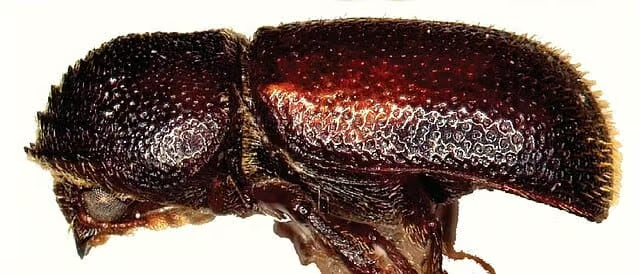
Bostrichid beetles belong to the family Bostrichidae, a large and diverse family of wood-boring beetles found worldwide. The species most commonly associated with household wood products in North America is Dinoderus minutus, sometimes called the bamboo powderpost beetle. Adults are small, 1/8 to 3/16 inch in length, cylindrical, and dark brown to black, with a distinctively rough, pitted thorax that gives the family a characteristic textured appearance. The head is partially concealed beneath the thorax when viewed from above.
Like lyctid and anobiid beetles, the larvae are the damaging stage. They tunnel through the sapwood of susceptible wood consuming starch, producing coarser frass than lyctid beetles but similar in some ways to anobiid frass, with a granular to flour-like texture and slightly larger exit holes of approximately 1/8 inch in diameter. Dinoderus minutus in particular is strongly associated with bamboo, which has high starch content and thin-walled structure that makes it especially vulnerable. It is also found in other imported tropical hardwoods and starchy wood products. In New England, bostrichid beetles are far less common than lyctid or anobiid beetles and are most often introduced through imported or reclaimed wood rather than established in domestic construction materials. The Maine DACF Got Pests powderpost beetles page provides useful local context on all three powderpost beetle families found in Maine.
Signs of Bostrichid Beetle Activity
Bostrichid activity follows the same general pattern as other wood-boring beetles but with distinguishing features in the frass texture and exit hole size:
- Granular to flour-like frass, coarser than lyctid powder, accumulating below or near exit holes in bamboo or imported hardwood
- Round exit holes approximately 1/8 inch in diameter in affected material
- Fresh frass appearing after tapping or disturbing infested wood
- Activity concentrated in a specific bamboo product, imported hardwood item, or reclaimed piece rather than distributed through domestic structural framing
- Adult beetles found on or near infested material in late spring and summer
- Frass accumulation below a specific piece of flooring, furniture, or decorative wood with no corresponding activity in adjacent domestic wood
In Cornish and Dayton homes, bostrichid activity when it does occur is almost always localized to a specific introduced item.
Risks in Southern Maine
Bostrichid beetles pose no health risk to people or pets. They do not bite, sting, or spread disease.
Their structural impact in Southern Maine is more limited than that of lyctid or anobiid beetles because they are primarily associated with imported materials rather than the domestic softwoods and hardwoods that make up most New England construction. An infestation confined to a bamboo floor section or an imported piece of furniture is a contained problem rather than a structural one. That said, adults emerging from infested material can potentially lay eggs in nearby susceptible unfinished domestic hardwood if conditions are favorable, which is why prompt identification and treatment of the source material matters.
In commercial settings that regularly handle, import, or display reclaimed or tropical hardwood products, bamboo goods, or decorative wood items, bostrichid beetles represent a more meaningful ongoing concern.
Prevention Tips
Because bostrichid beetles are introduced through infested wood rather than migrating in from outside, prevention focuses primarily on inspection of incoming materials:
- Inspect all bamboo flooring, imported hardwood furniture, and reclaimed or tropical wood products carefully before installation or bringing them into the home, looking for small exit holes or frass accumulation
- Quarantine any suspicious wood items in an outbuilding or garage before bringing them into the main structure until they can be professionally inspected
- Seal and finish all wood surfaces, as beetles cannot lay eggs through a well-maintained finish
- Maintain low indoor humidity with dehumidifiers in basements and crawl spaces, as elevated moisture content increases susceptibility to reinfestation
- Store firewood outdoors away from the structure and inspect it before bringing it inside
- Consider a year-round protection plan if your home or business regularly receives imported or reclaimed wood materials
Commonly Confused With
Bostrichid beetles are most often confused with the other two powderpost beetle groups, and the distinction matters because treatment approach and wood types at risk differ between them.
Lyctid beetles produce extremely fine, silky, talc-like frass and very small exit holes of 1/32 to 1/16 inch in domestic hardwoods like oak, ash, and walnut. If the frass is fine powder and the exit holes are very small, lyctid beetles are the more likely culprit. Lyctid beetles are significantly more common in Southern Maine than bostrichids and are the species most frequently found in hardwood floors and trim.
Anobiid beetles produce gritty, bun-shaped pellet frass and attack softwood structural framing, subfloors, and joists. If the activity is in pine or spruce framing rather than a specific imported item, anobiid beetles are considerably more likely. Anobiid beetles are the most structurally significant wood-destroying beetle in Southern Maine and the most common of the three families in older homes with unfinished crawl spaces and basements.
The wood type and the source of the material involved are almost always the most useful initial clues for distinguishing bostrichid activity from the other two groups.
Professional Bostrichid Beetle Control in Southern Maine
When bostrichid beetle activity is suspected, accurate species identification is the essential first step. Because bostrichids, lyctid beetles, and anobiid beetles all leave similar surface evidence, the frass texture, exit hole size, and type of wood involved are all part of a professional assessment that determines the right treatment approach. I start every wood-boring beetle job with a thorough inspection to confirm the species, identify all affected material, and assess whether the infestation is contained to a specific introduced item or has spread to nearby domestic wood. Treatment for confirmed bostrichid activity typically involves targeted borate-based applications to affected wood surfaces, finishing of any nearby susceptible unfinished wood to prevent egg-laying, and removal or quarantine of heavily infested items where appropriate. I’ve been assessing and treating wood-destroying beetle activity across Cumberland and York Counties for 16 years, and my common pests control service covers all three powderpost beetle families. Learn more about my background on the about page, or contact me to schedule a free inspection.
Frequently Asked Questions
No. Bostrichid beetles do not bite, sting, or spread disease. Their impact is entirely on wood. They are not a health concern for people or pets under any circumstances.
All three are grouped under the powderpost beetle label but are distinct families with different wood preferences and habits. Lyctid beetles attack domestic hardwoods like oak and ash and produce extremely fine talc-like powder frass through very small exit holes. Anobiid beetles attack softwood structural framing and produce gritty pellet frass through slightly larger holes. Bostrichid beetles are most often associated with bamboo, imported tropical hardwoods, and reclaimed wood, and produce granular to flour-like frass through holes approximately 1/8 inch in diameter. Of the three, bostrichids are the least commonly encountered in Southern Maine.
It is possible if adults emerging from infested imported material encounter nearby susceptible unfinished domestic hardwood. However, bostrichids do not typically establish in the softwoods used for structural framing in New England. The risk of spread is most relevant to unfinished hardwood surfaces adjacent to the infested item. Finishing all nearby unfinished hardwood and promptly treating the source material reduces this risk significantly.
Ready to Get Started?
If you’re finding frass or exit holes in bamboo flooring, imported furniture, or reclaimed wood and aren’t sure what you’re dealing with, reach out for a free inspection and I’ll identify the species and assess whether the activity is contained or has spread.