

Wood-Destroying Pests in Southern Maine:
Identification & Prevention
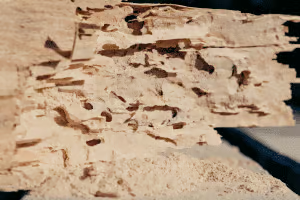
Wood-destroying beetles are a genuine concern in Southern Maine, and one of the more commonly misunderstood pest problems I encounter across Cumberland, York, and parts of Oxford County. Unlike carpenter ants, which excavate wood for nesting, powderpost beetles and their relatives actually consume wood as part of their larval development. That distinction matters because the damage accumulates silently over months or years before it becomes visible, and by the time frass and exit holes appear, an infestation has often been active for a long time. I find these beetles most often in older homes with unfinished hardwood floors, antique furniture, and structural lumber in Standish, Hollis, and Limington, where older construction and high humidity create favorable conditions. As an Associate Certified Entomologist (A.C.E.), accurate species identification is essential here because the beetle family determines which wood types are at risk and what treatment approach is appropriate. Browse the species below or contact me for identification help.
Quick Fact: Powderpost beetle larvae can tunnel through wood for one to five years before emerging as adults, meaning significant structural damage can accumulate long before any surface signs appear.
Common Wood-Destroying Pests in Southern Maine
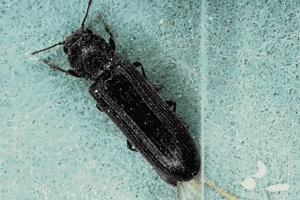
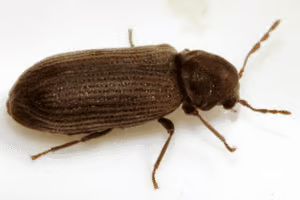
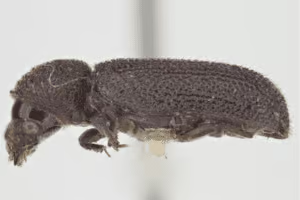
Why Wood-Destroying Beetles Invade Structures in Southern Maine
Wood-destroying beetles don’t invade structures the way rodents or cockroaches do. They arrive inside wood, either in infested lumber used during construction, in antique or secondhand furniture, in firewood brought indoors, or occasionally in decorative wood items. Once inside a structure, adults emerging from infested wood can reinfest nearby susceptible material, which is how a localized problem in a piece of furniture or a single floor section can spread over time.
Maine’s climate is a contributing factor. High humidity, particularly in unventilated basements, crawl spaces, and attics, raises the moisture content of structural wood above the threshold that lyctid and anobiid beetles prefer. Older homes throughout Waterboro, Buxton, and Cornish with unfinished softwood framing and poor crawl space ventilation are particularly susceptible to anobiid activity. Properties near the coast in Saco and Scarborough where ambient humidity is consistently higher face elevated risk as well.
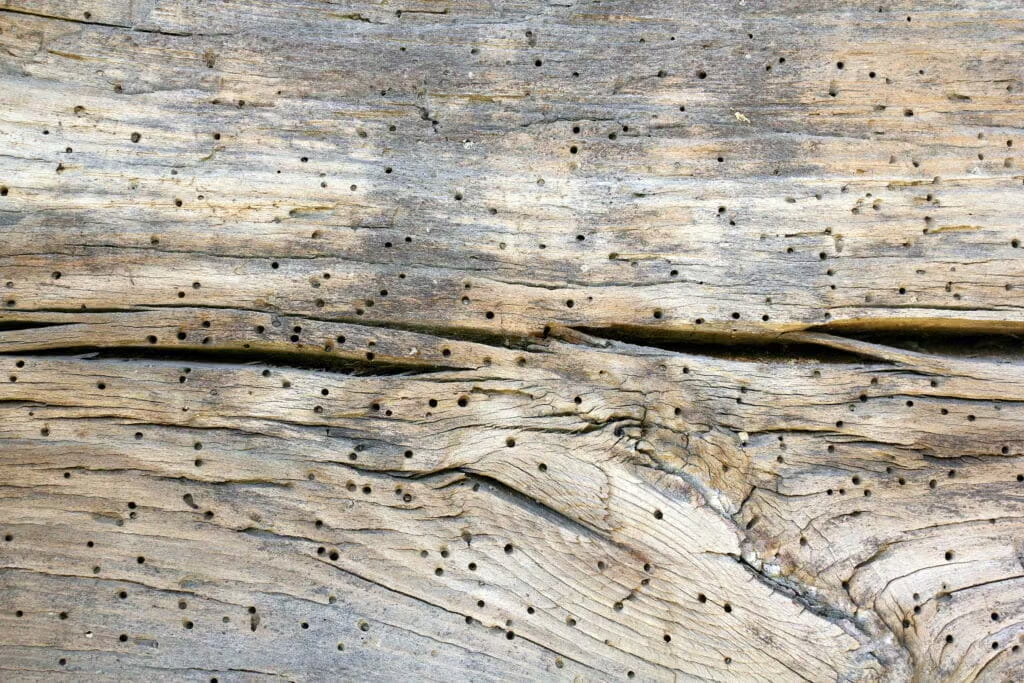
Identification Tips for Wood-Destroying Pests in Southern Maine
The beetles covered on this page are small and rarely seen as adults. The damage and frass they leave behind are almost always what prompts the call. Key identification features by family:
- Lyctid beetles: small (1/16 to 1/4 inch), reddish-brown to black, flattened body; attack hardwoods only, including oak, ash, hickory, and walnut; produce extremely fine, talc-like powder frass; exit holes are round, about 1/32 to 1/16 inch; most often found in hardwood floors, furniture, and trim
- Anobiid beetles: slightly larger (1/8 to 3/16 inch), reddish-brown to dark brown with a distinctive hooded thorax; attack softwoods including pine, spruce, and fir as well as some hardwoods; produce gritty, bun-shaped frass pellets rather than fine powder; exit holes are round, about 1/16 to 1/8 inch; most commonly found in structural framing, subfloors, and joists in basements and crawl spaces
- Bostrichid beetles: medium-sized (1/8 to 1/4 inch), dark brown to black with a rasp-like roughened thorax characteristic of the family; most species attack hardwoods with high starch content; produce coarser, flour-like to granular frass; exit holes are round and slightly larger than lyctid holes; less commonly encountered in New England than lyctid or anobiid beetles but occasionally found in imported hardwoods, bamboo products, and tropical wood items
Beyond the insects themselves, the signs to look for include:
- Small round exit holes in wood surfaces, ranging from pinhole size to about 1/8 inch depending on species
- Fine powder or gritty pellets accumulated below or near exit holes
- Weakened, hollow-sounding wood when tapped
- Fresh frass appearing seasonally as new adults emerge in late spring and summer
- Damage concentrated in sapwood rather than heartwood in most species
Behavior & Habits of Wood-Destroying Pests
Wood-destroying beetles share a common life cycle: adults lay eggs in wood pores or cracks, larvae hatch and tunnel through the wood consuming starch and cellulose, and adults eventually emerge through exit holes to mate and reinfest. The larval period is the damaging stage and can last one to five years depending on species, temperature, and wood moisture content. Adults are short-lived and rarely seen. Most activity and emergence occurs in late spring and early summer as temperatures rise, which is when fresh frass and new exit holes typically appear. Both lyctid and anobiid beetles preferentially attack sapwood, which contains the starches their larvae need. Heartwood is generally resistant.
Risks & Threats from Wood-Destroying Pests
The primary risk from wood-destroying beetles is cumulative structural damage. Lyctid beetles in hardwood flooring or trim cause cosmetic and functional deterioration that worsens over successive generations. Anobiid beetles in structural softwood framing, joists, and subfloors are the more serious structural concern, as repeated infestations over many years can meaningfully weaken load-bearing elements in older homes. The Maine DACF Got Pests powderpost beetles page provides useful local context on the species present in Maine and the conditions that favor them.
A secondary concern is reinfestation. Adults emerging from treated or damaged wood will attempt to lay eggs in nearby susceptible material, meaning an infestation that is not fully addressed can spread to other wood surfaces in the same space. In homes with significant amounts of unfinished hardwood or softwood, this cycle can be difficult to interrupt without professional treatment.
Carpenter ants are sometimes active in the same wood that supports beetle activity, particularly in wood with elevated moisture content. If you’re seeing both fine frass from beetles and coarser sawdust from carpenter ants, both problems may be present simultaneously and benefit from a coordinated approach through my ant control service.
General Prevention Tips for Wood-Destroying Pests
- Use kiln-dried lumber for all construction and renovation work, as beetles require wood with starch content that is substantially reduced by the kiln-drying process
- Inspect all firewood carefully before bringing it indoors, and store firewood outside rather than stacked in basements, garages, or against the house
- Control moisture in basements and crawl spaces with dehumidifiers and improved ventilation, as elevated wood moisture content significantly increases susceptibility to anobiid beetle activity
- Finish, paint, seal, or varnish all exposed wood surfaces, as beetles cannot penetrate a well-sealed finish to lay eggs
- Inspect antique furniture, secondhand wood items, and reclaimed lumber carefully before bringing them into the home
- Address any moisture intrusion or plumbing leaks promptly, particularly in crawl spaces where structural framing may be exposed to elevated humidity
- Consider a year-round protection plan for ongoing monitoring if your property has had previous beetle activity or significant amounts of unfinished softwood framing
Frequently Asked Questions
They arrive in infested wood rather than being attracted from outside the way many other pests are. Common introduction routes include infested firewood brought indoors, antique or secondhand furniture, and lumber used in construction or renovation that was not properly kiln-dried. Once inside, adults emerging from infested material can reinfest nearby susceptible wood. Elevated humidity in basements and crawl spaces accelerates the process significantly.
Fresh frass is the most reliable indicator of active infestation. Powderpost beetle frass is fine and light-colored when new, darkening over time as it oxidizes. Fresh exit holes also tend to have cleaner, sharper edges and lighter-colored wood around the opening. Old damage with no fresh frass or new holes may indicate a problem that has run its course, though professional inspection is the most reliable way to confirm activity status.
Lyctid beetles in hardwood floors and furniture cause cosmetic and functional damage but rarely threaten structural integrity. Anobiid beetles in softwood framing and joists are the more serious structural concern, particularly in older homes where infestations may have been active for many years without detection. Severe anobiid infestations in structural elements warrant professional assessment of both the biological activity and the extent of any structural compromise.
Yes. Adults emerging from infested wood will attempt to lay eggs in nearby susceptible material. Lyctid beetles spread to other unfinished hardwoods in the same space. Anobiid beetles will reinfest softwood framing in the same area. This reinfestation cycle is one of the primary reasons professional treatment is more effective than waiting for an infestation to resolve on its own.
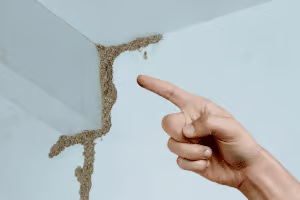
The key distinctions are frass type and the presence or absence of mud tubes. Beetle activity produces dry frass, either fine powder for lyctid beetles or gritty pellets for anobiid beetles, with no soil material. Termite damage involves galleries that contain soil or mud, and termites typically produce mud tubes along foundation walls. If you’re seeing mud tubes or soil inside damaged wood, that warrants immediate professional inspection.
DIY surface treatments applied to exit holes are generally ineffective because the larvae causing the damage are deep inside the wood. Effective treatment requires accurate species identification, assessment of infestation extent, and application of appropriate products to the right locations. Surface borate treatments on accessible wood are effective for prevention and can be part of a professional treatment plan, but require correct product selection and application to work as intended.
Commonly Confused With
Wood-destroying beetles are most commonly confused with two other wood-damage sources:
Termites are the most important to distinguish correctly. Eastern subterranean termites are present in Maine but are at the northern edge of their range and are most commonly found in coastal and southern counties. Termite damage involves galleries that contain soil or mud, and termites typically produce mud tubes along foundation walls as they move between soil and wood. Beetle damage produces clean exit holes and dry frass with no soil material. If you’re seeing mud tubes or soil-filled galleries, that warrants immediate professional inspection. Precision Pest Control does not treat termites, but I can confirm the identification and refer you to an appropriate specialist.
Carpenter ants are also commonly confused with wood-destroying beetles when homeowners find sawdust-like material near wood. Carpenter ants excavate wood for nesting but do not consume it, producing coarser, fibrous frass mixed with insect parts rather than the fine powder or pellets left by beetles. Carpenter ants are one of the most common pest calls I handle in Southern Maine and are fully covered under my ant control service.
Professional Wood-Destroying Pest Control in Southern Maine
Wood-destroying beetle problems require accurate species identification before any treatment decision is made, because the beetle family determines which wood is at risk, whether reinfestation is occurring, and what approach will actually work. I’ve been assessing and treating wood-destroying beetle activity across Cumberland and York Counties for 16 years, and my A.C.E. credential means I can distinguish between species accurately rather than guessing from surface signs alone. Treatment options range from surface borate applications on accessible wood to targeted residual treatments in crawl spaces and attics depending on the extent of the infestation and the species involved. Learn more about my background and approach on the about page, or visit my common pests control service page for a full overview of what I handle. Contact me to schedule a free consultation.