

Western Conifer Seed Bugs in Southern Maine:
Identification, Prevention, and Control
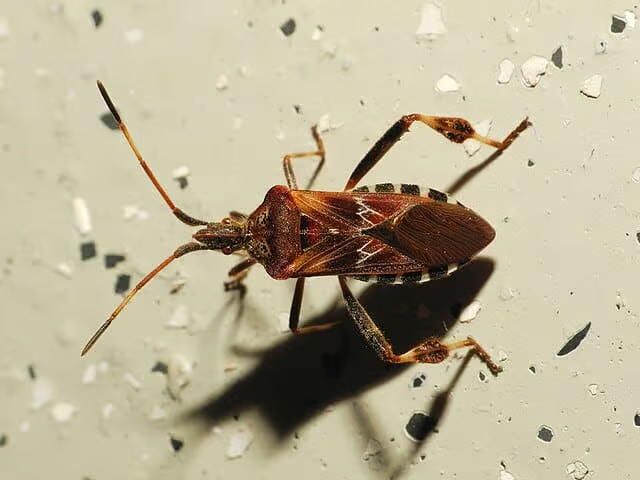
The western conifer seed bug is one of the most commonly misidentified occasional invaders in Southern Maine, largely because of its size. At three quarters of an inch long it is substantially larger than most household insects, and when one appears walking across a ceiling or flying toward a window on a fall afternoon, the reaction is usually alarm rather than recognition. It is entirely harmless. Western conifer seed bugs do not bite, do not sting, do not breed indoors, and cause no damage to structures or their contents. They are simply looking for a warm place to wait out winter, and Maine’s conifer-heavy landscape makes this state particularly hospitable to them. Properties bordered by white pine, spruce, fir, or hemlock throughout Standish, Raymond, Casco, and Parsonsfield tend to see the most consistent fall activity. As an Associate Certified Entomologist (A.C.E.) with 16 years of experience in the region, accurate identification is always my starting point. Browse the occasional invaders pest library to see other species found in the area, or contact me for identification and treatment help.
What Are Western Conifer Seed Bugs?
Western conifer seed bugs (Leptoglossus occidentalis) are true bugs in the family Coreidae, known as leaf-footed bugs. They are native to western North America and were first recorded in the Northeast in the 1990s, spreading steadily eastward as they established on eastern conifer species. They are now well-established throughout Maine and are one of the most frequently encountered fall and winter occasional invaders in the state.
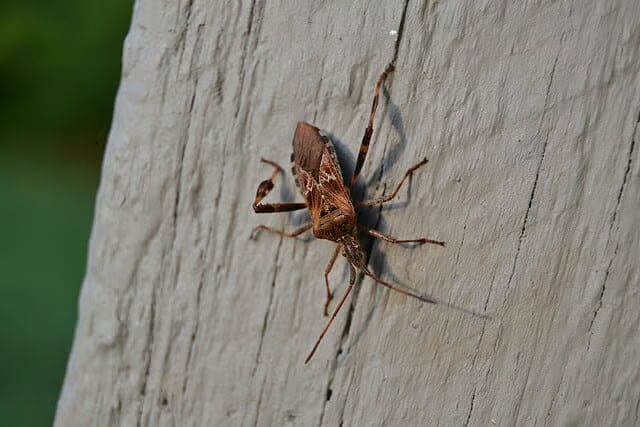
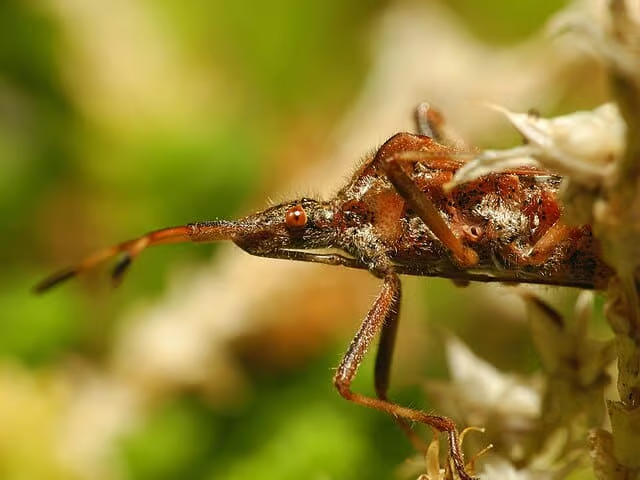
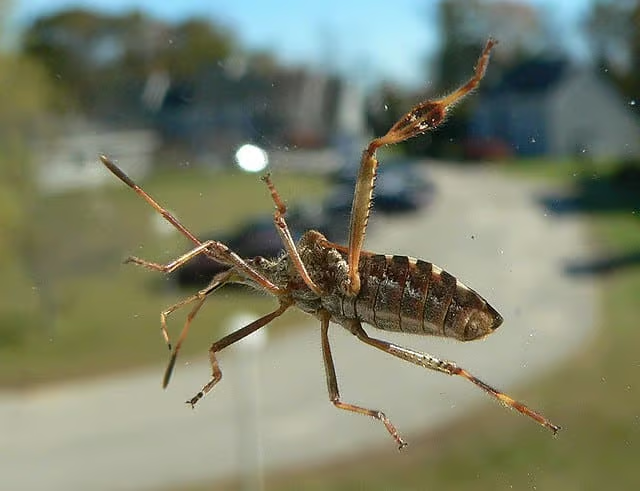
Adults are three quarters of an inch to just under one inch in length, making them noticeably larger than most household insects. The body is elongated and dull brownish-gray, with a faint white zigzag band running across the middle of the abdomen where the wings meet at rest. The most distinctive feature is the hind legs, which have a flattened, leaf-like expansion on the tibia that is immediately recognizable once you know what to look for. When the bug flies, orange-yellow coloring is visible on the underside of the abdomen. When disturbed or crushed, they release a strong pine or turpentine-like odor from scent glands, which is another reliable identification feature.
They feed on the developing seeds and cones of white pine, red pine, spruce, fir, hemlock, and other conifers using piercing-sucking mouthparts. One generation is produced per year. Adults overwinter in protected sites including wall voids, attics, and the spaces behind siding, emerging in spring to return to host trees. According to the UMaine Extension western conifer seed bug page, this species is particularly common in Maine due to the abundance of suitable conifer host trees throughout the state.
Signs of Western Conifer Seed Bug Activity
Unlike boxelder bugs and Asian lady beetles, western conifer seed bugs do not aggregate in large masses on exterior walls. They are solitary overwintering insects, which means indoor encounters typically involve single individuals rather than clusters.
Look for:
- Individual large brown insects found walking on interior walls, ceilings, or window sills, most commonly from September through November and again in March and April as they move back outdoors
- The distinctive buzz of a large flying insect indoors on warm fall or late winter days, as western conifer seed bugs are strong fliers and fly readily when warm
- The pine or turpentine-like odor produced when the bug is disturbed or handled, which is the most reliable identification confirmation
- Adults found on exterior walls and siding in fall, typically solitary rather than in groups
- Evidence of cone and seed feeding on nearby conifers, including resin-stained or malformed developing cones on white pine, spruce, or fir
Risks in Southern Maine
Western conifer seed bugs are one of the lower-risk occasional invaders in terms of practical impact. They do not bite, do not sting, do not reproduce indoors, and cause no damage to structures, furniture, or stored goods. A single individual found on the ceiling or flying toward a window requires nothing more than capturing it and releasing it outdoors or vacuuming it up.
The primary nuisance is the odor. The turpentine-like scent released when the bug is handled, crushed, or simply disturbed can be strong and persistent in an enclosed space, which is why vacuuming is preferable to swatting. In homes with significant overwintering populations inside wall voids, the accumulated odor of multiple disturbed individuals over a winter can become noticeable. This is more of a concern in older homes with unsealed wall voids and large numbers of nearby conifer host trees than in well-sealed modern construction.
Prevention Tips
Because western conifer seed bugs enter as solitary individuals rather than mass aggregators, the entry points are often smaller and harder to identify than with boxelder bugs or Asian lady beetles. Thorough sealing is the most effective prevention:
- Seal all gaps around window frames, door frames, utility penetrations, soffits, and siding with quality silicone or silicone-latex caulk before late summer, when fall movement toward structures begins
- Pay particular attention to gaps where siding meets window trim and at the roofline, as these are the most common entry routes for this species
- Install and maintain tight-fitting door sweeps on all exterior doors, including garage doors
- Screen attic louvers and ridge vents with fine-mesh hardware cloth, as western conifer seed bugs can enter through relatively small openings
- Repair damaged window and door screens before fall
- Keep garage doors closed in the evenings during fall, as these bugs fly readily at dusk and enter through any open large opening
- There is no practical host tree management recommendation for this species given how abundant suitable conifers are throughout southern Maine
Commonly Confused With
Western conifer seed bugs are frequently mistaken for more alarming insects because of their size and unfamiliar appearance:
Assassin bugs and wheel bugs are predatory true bugs that can deliver a painful bite and are sometimes confused with western conifer seed bugs due to similar size and brown coloring. The key differences are body shape and the leaf-like hind leg expansion, which is unique to Leptoglossus and not present on assassin bugs. Assassin bugs also have a distinctly curved beak held under the body at rest, which is visible on close inspection.
Brown marmorated stink bugs are another large brown overwintering true bug found in Maine homes in fall. Stink bugs have a broad shield shape rather than the elongated body of the western conifer seed bug, and lack the distinctive leaf-like hind leg expansion. Both species produce a defensive odor when disturbed, but the stink bug odor is often described as cilantro-like while the western conifer seed bug odor is distinctly piney or turpentine-like.
Boxelder bugs are smaller, aggregate in large numbers rather than appearing singly, and have the distinctive black and red-orange coloring that the uniformly brown western conifer seed bug lacks entirely.
Professional Western Conifer Seed Bug Control in Southern Maine
For most western conifer seed bug situations, sealing entry points and removing any individuals found indoors by vacuuming is the appropriate and sufficient response. Because they enter as solitary individuals rather than in mass aggregations, chemical perimeter treatments are rarely cost-effective compared to the exclusion work that addresses the entry point directly.
When overwintering populations inside wall voids are large enough to cause persistent odor or repeated indoor encounters throughout winter, a professional assessment to identify the primary entry points is the most productive approach. As an A.C.E.-credentialed pest professional I can confirm identification, distinguish western conifer seed bugs from species that look similar but behave differently, and identify the specific gaps driving the indoor occurrence. Learn more about my background and credentials on the about page, or visit the common pests service page for more detail. Contact me to schedule a free inspection.
Frequently Asked Questions
No. Western conifer seed bugs have piercing-sucking mouthparts adapted for feeding on conifer seeds and cones, not for defense. They do not bite people and do not sting. The alarm they cause is almost entirely due to their size and unfamiliar appearance. If you pick one up it may release its defensive odor, but it will not attempt to bite or injure you.
Western conifer seed bugs overwintering in wall voids and attics respond to warmth conducted through the wall from the heated interior of the house. On warm days in late winter, even when outdoor temperatures are still cold, the heat from inside the structure can warm the void enough to trigger activity, causing bugs to move toward light and emerge into the living space. This is not a sign of a new infestation but of existing overwintering bugs responding to temperature cues. The problem resolves on its own as they exit in spring, and can be prevented the following year by sealing the entry points before fall.
The odor comes from volatile compounds in the defensive secretion and dissipates on its own relatively quickly in a ventilated space. Wiping the surface with a damp cloth and mild detergent helps speed the process. Vacuuming is strongly preferable to crushing when dealing with these bugs indoors, both to avoid the odor and because vacuuming removes the bug rather than leaving it behind.
Ready to Get Started?
If western conifer seed bugs are getting into your home repeatedly or you are finding them indoors throughout winter and spring, reach out for a free inspection and I will identify the entry points and recommend the most practical exclusion approach for your situation.