

Brown Marmorated Stink Bugs in Southern Maine:
Identification, Prevention, and Control
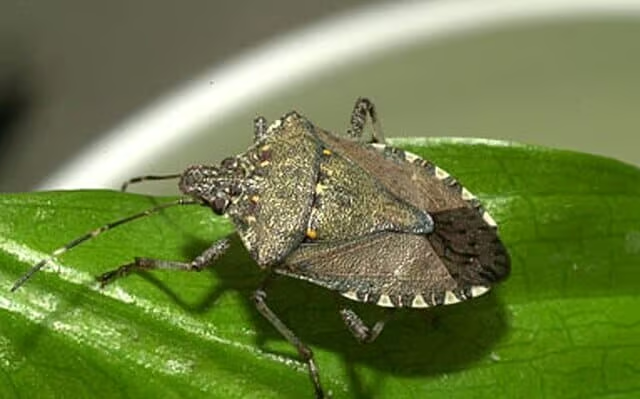
Brown marmorated stink bugs are an invasive species from eastern Asia that arrived in the United States in the late 1990s and have been working their way northward through New England ever since. In Southern Maine they are now a well-established fall nuisance, congregating on the sun-warmed exterior walls of homes in September and October as temperatures drop and they seek overwintering sites. They are entirely harmless to people and structures but cause two practical problems: the sheer number that can enter a home through unsealed gaps in a short window of time, and the strong, persistent odor they produce when disturbed or crushed. Properties across Cornish, Standish, Buxton, and Windham with mixed hardwood trees and gardens see the heaviest fall activity. As an Associate Certified Entomologist (A.C.E.) with 16 years of experience in the region, accurate identification is always my starting point. Browse the occasional invaders pest library to see other species found in the area, or contact me for identification and treatment help.
What Are Brown Marmorated Stink Bugs?
The brown marmorated stink bug (Halyomorpha halys) is a true bug in the order Hemiptera, native to China, Japan, Korea, and Taiwan. It was first detected in the United States in Allentown, Pennsylvania in 1998, likely arriving as a stowaway in shipping containers, and has since spread to most of the eastern United States and into New England. It is considered an invasive agricultural pest of significant concern because it feeds on an exceptionally wide range of host plants including apples, peaches, tomatoes, peppers, corn, and soybeans, causing direct damage to fruit and vegetable crops in addition to its role as a household nuisance.
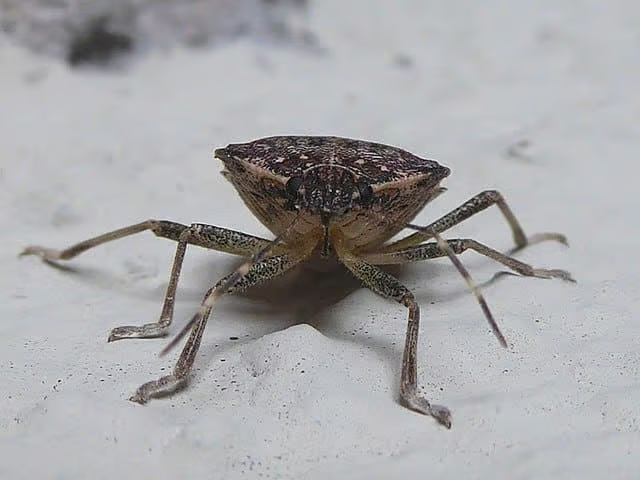
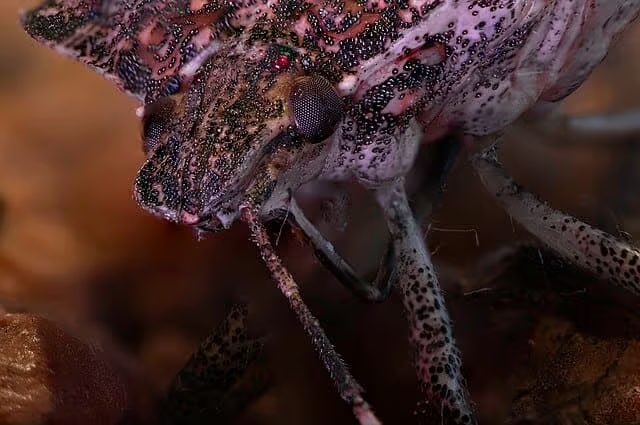
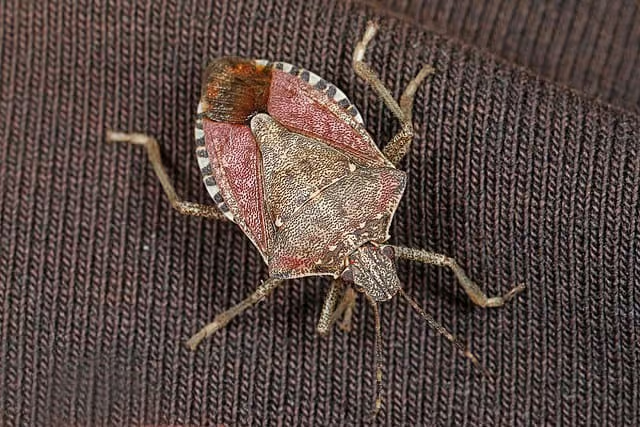
Adults are five eighths of an inch long with a broad, flattened shield shape characteristic of stink bugs. The body is mottled brown-gray on top, giving it the marmorated (marbled) appearance that the name refers to. The two most reliable identification features are the alternating light and dark banding on the last two antennal segments and the alternating black and pale banding along the outer edges of the abdomen visible from above. The underside is pale. When disturbed or crushed, the bug releases a defensive chemical from glands in the thorax that produces a strong odor often described as cilantro-like or coriander-like. Nymphs pass through five instars, ranging from yellowish with black and red markings in early stages to more closely resembling the adult by the final instar. According to the Maine DACF Got Pests stink bug page, the brown marmorated stink bug is now established in Maine and has been documented across the state.
Signs of Brown Marmorated Stink Bug Activity
Brown marmorated stink bugs follow a predictable seasonal pattern that makes identification straightforward once you know what to look for.
Look for:
- Individual or aggregating shield-shaped brown bugs on south and west-facing exterior walls, window frames, and roof edges on warm fall days from late September through November
- The characteristic cilantro-like odor near aggregation sites on exterior walls or from wall voids where bugs have entered
- Adults found on interior walls, ceilings, and window sills from October through early spring, typically appearing singly or in small numbers rather than the large clusters of boxelder bugs
- Bugs flying toward interior light sources on warm late-winter and spring days as overwintering individuals respond to rising temperatures
- Dark speckling or staining on interior window sills and wall surfaces where bugs have been resting or have been crushed
- Summer feeding damage to garden vegetables and fruit, including sunken, corky spots on apples, pears, and tomatoes with discolored tissue beneath the skin
Stink bug activity tends to peak on the first warm days following early fall cold snaps in Scarborough and Saco properties with south-facing walls and established fruit or ornamental trees nearby.
Risks in Southern Maine
Brown marmorated stink bugs do not bite, do not sting, do not damage structures, and do not reproduce indoors. The practical household risks are limited to the odor and minor staining.
The odor is the primary concern. Unlike the yellowish staining fluid of Asian lady beetles, stink bug defensive secretions are airborne and can rapidly fill an enclosed space when multiple bugs are disturbed or crushed simultaneously. Vacuuming rather than crushing is strongly preferable indoors. The smell can be persistent in a room where bugs have been present in quantity, and some individuals find the odor significantly more objectionable than others. Flushing vacuumed bugs down the toilet or sealing the vacuum bag outdoors before disposal prevents the odor from building up inside the machine.
Some individuals with insect-related sensitivities report allergic responses to stink bug exposure similar to those documented with Asian lady beetles, including respiratory irritation with prolonged exposure in enclosed spaces with large overwintering populations. According to the UMaine Extension stink bugs page, exclusion before fall is the most effective management approach for households in Maine.
Prevention Tips
Prevention for brown marmorated stink bugs is essentially identical to prevention for boxelder bugs and Asian lady beetles, since all three are mass-aggregating overwintering true bugs that enter through the same types of gaps:
- Seal all gaps around window frames, door frames, utility penetrations, and siding with quality silicone or silicone-latex caulk before mid-September, which is when fall aggregation typically begins
- Screen attic louvers, ridge vents, and soffit vents with fine-mesh hardware cloth
- Install and maintain tight-fitting door sweeps on all exterior doors
- Repair or replace damaged window and door screens before fall
- Reduce exterior lighting near entry points on fall evenings
- Vacuum aggregating bugs from exterior walls with a shop vac and dispose of the bag away from the structure
- Indoors, vacuum rather than swat or crush, and dispose of the bag promptly to avoid odor buildup
Commonly Confused With
Brown marmorated stink bugs are most commonly confused with two other species:
Western conifer seed bugs are a similar size and also brown, and both species enter homes in fall and produce a defensive odor when disturbed. The key differences are body shape and hind legs. Stink bugs have the broad, flat shield shape with banded antennal segments and banded abdomen edges. Western conifer seed bugs are more elongated with the distinctive leaf-like flattening on the hind tibia that stink bugs completely lack. The pine-like odor of western conifer seed bugs is also distinctly different from the cilantro-like odor of stink bugs.
Native stink bug species are present in Maine, including the green stink bug and the brown stink bug, and are occasionally confused with the invasive brown marmorated species. The banded antennae and alternating light and dark banding on the abdomen edge are the most reliable features distinguishing the brown marmorated stink bug from native species, which lack this consistent banding pattern.
Boxelder bugs share the overwintering aggregation behavior but are immediately distinguishable by their black and red-orange coloring, which bears no resemblance to the mottled brown of stink bugs.
Professional Brown Marmorated Stink Bug Control in Southern Maine
For most stink bug situations, thorough exterior sealing before fall and vacuuming of any individuals that make it indoors is the appropriate and sufficient response. When entry points are difficult to locate and seal on an older structure with complex rooflines, or when populations are consistently large enough to cause significant odor problems inside the structure, a targeted perimeter treatment applied before the fall aggregation period can provide meaningful reduction alongside exclusion work.
As an A.C.E.-credentialed pest professional I can identify the specific entry points driving indoor occurrence, distinguish brown marmorated stink bugs from native species, and recommend the most targeted and cost-effective response for your situation. Learn more about my background and credentials on the about page, or visit the common pests service page for more detail. Contact me to schedule a free inspection.
Frequently Asked Questions
The defensive secretion contains volatile chemical compounds called trans-2-decenal and trans-2-octenal that bind to surfaces and are slow to disperse in enclosed spaces. The odor from a single crushed bug in a room can persist for hours, and the smell from multiple bugs crushed over time accumulates. Ventilating the space and wiping surfaces with a damp cloth helps speed dissipation. Vacuuming rather than swatting is the most effective way to remove stink bugs indoors without triggering the odor.
Yes. Brown marmorated stink bug population levels vary year to year based on summer temperatures, host plant abundance, and the effectiveness of natural enemies. A warm summer that produces abundant fruit and vegetable crops tends to support larger populations that generate more substantial fall overwintering aggregations. The populations in any given area also fluctuate as the invasive species continues to establish and natural predators slowly begin to catch up with it.
If you grow apples, pears, peaches, tomatoes, peppers, or sweet corn, brown marmorated stink bugs can cause meaningful direct damage to the fruit and vegetables through their piercing-sucking feeding. The damage appears as sunken, corky, or discolored spots on fruit with mealy or cat-facing texture beneath the skin. For home gardeners, covering susceptible plants with row covers during peak bug season and removing overripe or damaged fruit promptly are the most practical protective measures.
Ready to Get Started?
If brown marmorated stink bugs are getting into your home in significant numbers or the odor from indoor congregations is a problem, reach out for a free inspection and I will identify the entry points and recommend the most practical approach for your situation.