

Indianmeal Moths in Southern Maine:
Identification, Prevention, and Control
Indianmeal moths are the most common pantry moth I encounter in Southern Maine homes, and the one most people are thinking of when they describe small moths flying around their kitchen at night. The distinctive two-toned wings make them recognizable once you know what to look for, but the larvae doing the damage inside food containers are often well established before adults are noticed. I find them regularly in homes throughout Waterboro and Westbrook as well as in Portland and Windham, where well-stocked pantries and humid conditions give populations everything they need. The silk webbing larvae produce inside food containers is the most distinctive sign of an active infestation and is what separates Indianmeal moth activity from the pantry beetles that infest similar products. As an Associate Certified Entomologist (A.C.E.) with 16 years of experience in the region, accurate identification is my starting point because moths and beetles found in the same pantry require different treatment approaches. Browse the stored product pests library to compare species, or contact me for identification and treatment help.
What Are Indianmeal Moths?
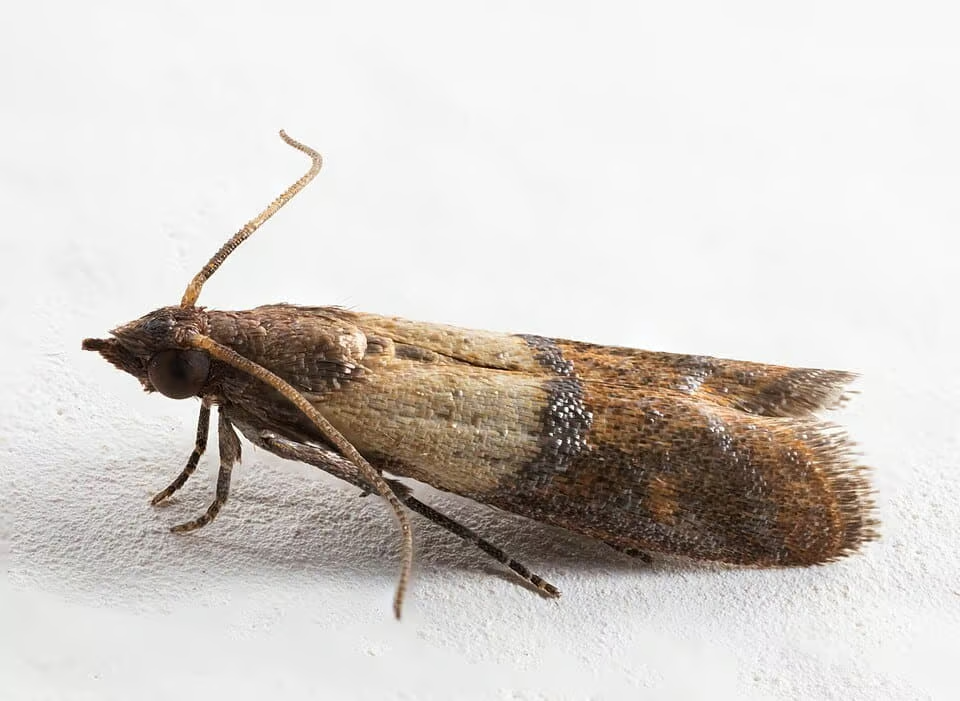
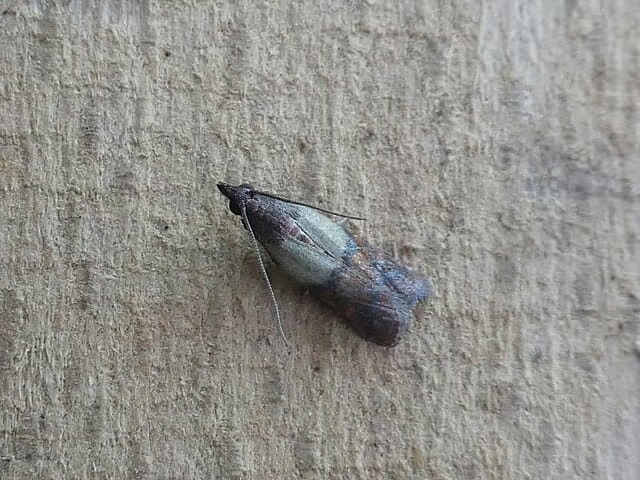
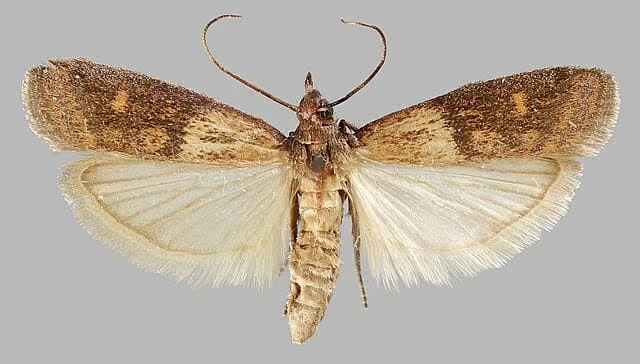
The Indianmeal moth (Plodia interpunctella) belongs to the family Pyralidae. Adults are about 5/8 inch in wingspan with distinctively two-toned forewings: the inner third is pale grayish-white and the outer two-thirds are coppery reddish-brown with a darker band at the junction. This two-toned pattern is the clearest visual identification feature. Adults fly actively at night and rest with wings folded flat over the body during the day, usually on walls, ceilings, or pantry surfaces near food storage.
The larvae are the feeding stage. Creamy white to pinkish caterpillars with brown heads, they spin silken webbing as they crawl through and feed on food products, clumping particles together and contaminating everything they contact with webbing, frass, and cast skins. Indianmeal moth larvae feed on a wide range of dried products including grains, flour, cereals, dried fruit, nuts, spices, chocolate, dried herbs, pet food, and birdseed. The webbing inside food containers is the most reliable sign of active larval feeding and the key distinguishing feature from stored product beetle activity. The Maine DACF Got Pests Indian meal moth page provides useful local context on this species in Maine.

Signs of an Indianmeal Moth Infestation
Indianmeal moth activity produces highly visible signs once populations are established, though the source can be difficult to locate because larvae wander from infested containers before pupating:
- Small adult moths with two-toned wings flying near ceilings, lights, or windows, particularly at dusk and after dark
- Silken webbing clumping food particles together inside containers, bags, or boxes
- Fine frass pellets scattered around infested products or on pantry shelves
- Creamy white to pinkish larvae crawling on pantry walls, shelves, or ceilings as they seek pupation sites
- Small cocoons or pupal cases in pantry corners, along ceiling edges, in cabinet crevices, or on walls away from food sources
- Damage concentrated in grains, cereals, dried fruit, nuts, chocolate, spices, pet food, or birdseed
- Webbing visible inside food packaging when containers are opened
- Musty or off odor from heavily infested products
In Waterboro and Westbrook homes, activity increases during warmer months and after introducing infested purchased products, with larvae often found wandering well away from the original infested container as they seek pupation sites.
Risks in Southern Maine
Indianmeal moths pose no health risk to people or pets. They do not bite, sting, or spread disease. Consuming food contaminated with larvae, webbing, or frass is unpleasant but not a meaningful health concern for most people.
The primary concern is food contamination and loss. A single infested package can seed an entire pantry over a generation or two as moths emerge and lay eggs on adjacent products. In commercial food service settings such as restaurants, bakeries, natural food retailers, and pet supply stores, Indianmeal moth activity is an immediate food safety and regulatory concern. The visible webbing is particularly problematic in commercial settings where product presentation matters.
Prevention Tips
Indianmeal moth prevention is primarily about proper storage and eliminating infested source materials before they can establish in a pantry:
- Transfer all dry pantry goods including grains, cereals, flour, dried fruit, nuts, spices, pet food, and birdseed into airtight glass or hard-sided plastic containers, as thin packaging does not contain emerging moths or prevent egg-laying
- Inspect new grocery items for webbing or larvae before storing them, as infestation is most commonly introduced through purchased products
- Store birdseed in sealed outdoor containers rather than bringing large quantities indoors
- Rotate stock consistently, using older products before newer ones
- Clean pantry shelves, corners, cabinet crevices, and ceiling edges regularly, as larvae wander widely before pupating and cocoons can be found far from the food source
- Discard any infested items in sealed bags in outdoor trash immediately
- Place pheromone monitoring traps designed for Indianmeal moths in pantry areas for early detection before populations build
- Consider a year-round protection plan for properties with persistent pantry pest activity or significant amounts of bulk dried food storage
Commonly Confused With
Indianmeal moths are most commonly confused with two other moths:
Casemaking clothes moths and webbing clothes moths are the most important comparison. Both are small household moths, but they target completely different materials. Clothes moths infest wool, silk, cashmere, and other animal-derived fibers, not pantry food products. Clothes moth adults are uniformly buff or golden colored with no two-toned pattern, and they avoid light and flutter close to the ground rather than flying toward light sources at night. If the moths are in closets and storage areas near clothing and textiles, they’re clothes moths. If they’re in the kitchen near food storage, they’re Indianmeal moths.
The Mediterranean flour moth (Ephestia kuehniella) is occasionally found in similar environments and can be confused with Indianmeal moths. It is similar in size but has grayish wings with a zigzag dark band rather than the clear two-toned copper pattern of Indianmeal moths, and is more strongly associated with flour mills and commercial flour storage than household pantries. It is less commonly encountered in Southern Maine homes than Indianmeal moths.
Professional Indianmeal Moth Control in Southern Maine
Effective Indianmeal moth treatment requires finding every infested food source, because treating surfaces and pantry crevices without removing what the larvae are feeding on produces only temporary results. The challenge with Indianmeal moths specifically is that larvae wander from infested containers before pupating, so cocoons and adults can appear far from the actual source. I start every job with a thorough inspection of all food storage areas and the surrounding surfaces to identify every active breeding site and all pupation locations. All confirmed infested products are identified for disposal. Targeted residual treatments and insect growth regulators are applied to cracks, crevices, and confirmed activity areas. Storage recommendations are part of every job. I’ve been handling pantry pest calls across Cumberland and York Counties for 16 years, and my common pests control service covers Indianmeal moths alongside the full range of stored product pests. Learn more about my background on the about page, or contact me to schedule a free inspection.
Frequently Asked Questions
No. Indianmeal moths do not bite, sting, or spread disease. Their impact is entirely on stored food products. Consuming food contaminated with larvae, webbing, or frass is unpleasant but not a meaningful health risk for most people.
They almost always arrive in infested purchased products, most commonly grains, cereals, dried fruit, nuts, pet food, or birdseed. Adults can also fly in from outdoors through open windows or doors, particularly in summer when they’re active. Once inside, a single female can lay hundreds of eggs directly on or near suitable food sources.
With thorough removal of all infested source materials, targeted professional treatment, and proper food storage, most active infestations resolve within four to eight weeks. Because larvae wander before pupating, cocoons in cabinet crevices and ceiling corners will continue producing adults for several weeks after the food source is removed. Monitoring with pheromone traps in the weeks following initial treatment helps confirm when the population has been fully eliminated.
Ready to Get Started?
If you’re finding small moths in your kitchen or webbing inside your pantry products, reach out for a free inspection and I’ll locate all active breeding sites and put together a plan to resolve it.