

House Spiders in Southern Maine:
Identification, Prevention, and Control
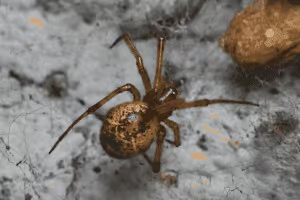
House spiders are the most frequently encountered spider indoors across Southern Maine, and in most cases they’re more of a nuisance than a genuine problem. I find them regularly in homes throughout Biddeford, Scarborough, Westbrook, and Saco, particularly in older construction where gaps around windows, foundations, and pipe penetrations give them easy access. As an Associate Certified Entomologist (A.C.E.) with 16 years of experience in the region, I can tell you that a house spider in the corner of a room is usually harmless, but a heavy population spread throughout a structure almost always points to an underlying insect prey issue worth addressing. Browse the spiders pest library to compare other species found in Southern Maine, or contact me if you’d like a professional assessment.
What Are House Spiders?
The common house spider (Parasteatoda tepidariorum) is a cobweb spider in the family Theridiidae. Adults are small, typically a quarter to three-eighths of an inch in body length, with a rounded mottled abdomen ranging from dirty white to brown or gray with darker markings. The cephalothorax is reddish-brown and the legs are long, thin, and banded. Females are larger than males and are the ones most commonly seen in established webs.
House spiders build irregular, tangled cobwebs in corners, along ceiling edges, behind furniture, and around window frames. They are not aggressive and rarely bite. A single female can produce multiple egg sacs over her lifetime, each containing 100 to 400 eggs, which is why populations can build noticeably in undisturbed areas of a home. They feed on flies, ants, mosquitoes, and other small insects, making them genuinely beneficial when present in modest numbers. According to the UMaine Extension spiders fact sheet, house spiders are among the most common arachnids encountered in Maine structures and pose no meaningful health risk to people.
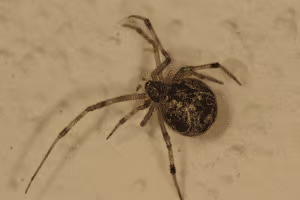
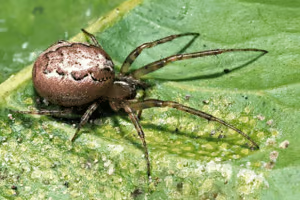
Signs of House Spider Activity
Because house spiders are web-builders that tend to stay in one location once they’ve found a productive spot, their presence is usually easy to spot once you know what to look for:
- Thin, irregular cobwebs in ceiling corners, doorways, window frames, or behind furniture
- Small tan to brown spiders hanging upside down in webs, often motionless during the day
- Shed skins or small dark fecal spots below established webs
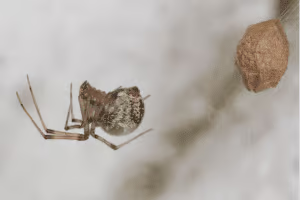
- Multiple egg sacs, small round brown papery cases, attached near or within a web
- Spiders moving across walls or floors when lights turn on at night
- Increased web presence in basements, attics, garages, or storage areas after periods of high insect activity
In Biddeford and Scarborough homes, web presence tends to increase in fall and winter as spiders settle into sheltered indoor locations for the season.
Risks in Southern Maine
House spiders pose almost no risk to people or pets. They are not medically significant, and bites, which are rare and only occur when a spider is directly compressed against skin, produce effects milder than a mosquito bite. They do not damage structures, contaminate food, or carry disease.
The main concerns are aesthetic: webs in visible areas of a home, the occasional startling encounter, and the general impression of an unkempt space. In commercial settings such as food service, healthcare, or retail environments, visible cobwebs represent a cleanliness and compliance concern regardless of the spider’s harmless nature.
The more substantive issue is what a heavy house spider presence indicates. House spiders don’t maintain large populations in a structure without a reliable insect food supply. If webs are appearing consistently throughout a home, there’s almost certainly an active population of flies, ants, or other insects supporting them. Addressing the prey population is the most effective way to reduce spider numbers long-term.
Prevention Tips
House spider populations indoors are manageable with consistent habits, particularly in Southern Maine’s older housing stock:
- Vacuum webs, egg sacs, and spiders regularly in corners, along baseboards, and behind furniture before populations establish
- Seal gaps around windows, doors, pipes, and foundations with caulk or weatherstripping to reduce entry for both spiders and their insect prey
- Address moisture in basements and crawl spaces, as high humidity supports the insects house spiders feed on
- Reduce indoor insect activity by keeping screens in good repair, sealing food properly, and addressing any fly or ant issues promptly
- Keep storage areas organized and reduce clutter that provides undisturbed harborage
- Minimize outdoor lighting near entry points to reduce the flying insects drawn to the perimeter of the structure
- Consider a year-round protection plan if spider activity is persistent, as ongoing insect control is the most effective way to reduce spider populations long-term
Commonly Confused With
House spiders are most often confused with black widows (Latrodectus variolus), the northern black widow being the species occasionally found in Maine. Both are cobweb-building spiders that build irregular, tangled webs in sheltered corners, garages, basements, and woodpiles, which is why the confusion is understandable. The distinction is straightforward once you know what to look for: black widows are shiny jet black with a distinctive red or orange marking on the underside of the abdomen, and their webs tend to be stronger and more irregular than a typical house spider web. House spiders are mottled brown or gray with a patterned abdomen and banded legs. Black widows in Maine are uncommon and are far more likely to be found in sheltered outdoor structures like woodpiles, sheds, and garages than inside a home, but the comparison is worth knowing.
Cellar spiders are sometimes loosely grouped with house spiders under the general “house spider” label, but they are a distinct species and look quite different up close. Cellar spiders have an extremely small body with disproportionately long, delicate legs and vibrate rapidly in their web when disturbed. House spiders are more compact with a clearly rounded abdomen and shorter, banded legs.
Professional House Spider Control in Southern Maine
For most homeowners, consistent vacuuming and exclusion work is enough to keep house spiders at manageable levels. When populations are heavy throughout a structure, I start by identifying and addressing the underlying insect prey population, because treating spiders without resolving what’s feeding them produces only temporary results. Every inspection includes a look at entry points, moisture conditions, and the insect activity supporting the spider population. Targeted treatments are applied only where evidence indicates they’re needed, with no broad spraying. Learn more about my approach on the about page, or visit my common pests control service page for a full overview of how I handle spiders and the insects that support them. Contact me to schedule a free consultation.
Frequently Asked Questions
House spiders have a rounded mottled brown or gray abdomen, reddish-brown cephalothorax, and long banded legs. They build messy cobwebs and hang upside down in them. Black widows are shiny black with a red hourglass marking on the underside and build webs in sheltered outdoor areas more than indoors. Brown recluses have a violin-shaped marking on the cephalothorax and are not established in Maine. Most spiders found indoors in Southern Maine homes are harmless.
House spiders bite only in rare defensive situations, such as being directly compressed against skin, and the effects are milder than a mosquito bite. They do not spread disease and are actually beneficial in modest numbers because they prey on flies, mosquitoes, ants, and other household insects.
Recurring spider populations almost always indicate an active insect food supply in the structure. If spiders keep returning despite regular cleaning, the more productive question is what insects are supporting them. Addressing the underlying prey population, often flies, gnats, or ants, is more effective than focusing solely on the spiders.
Ready to Get Started?
If house spiders are taking over corners and storage areas throughout your home, reach out for a free consultation and I’ll identify what’s driving the activity and put together a plan to reduce it.